
Loading vegetables...
Browse vegetables with complete nutrition facts, vitamins, minerals, and health benefits.
36 vegetables found
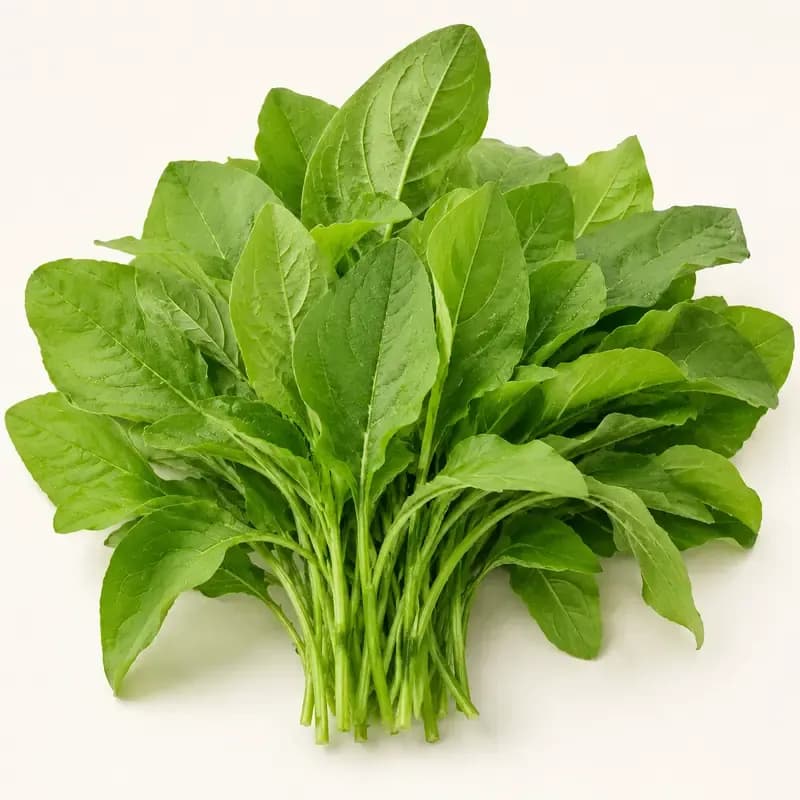
Amaranthus tricolor L. and other edible Amaranthus species
Amaranth leaves are tender leafy vegetables harvested from edible species of Amaranthus, especially Amaranthus tricolor, along with Amaranthus dubius, Amaranthus viridis, Amaranthus cruentus, and related cultivated forms. They are known by many regional names, including chaulai, lal saag, thotakura, keerai, callaloo, Chinese spinach, en choy, bayam, and African spinach. Depending on the species and cultivar, the leaves may be bright green, burgundy, purple-red, or dramatically variegated with yellow and crimson. Young leaves and stems are tender, mildly earthy, and subtly sweet, while mature foliage can develop a stronger mineral or slightly astringent flavor. Both the leaves and succulent stems are edible, although thick mature stalks require longer cooking. Amaranth greens are sautéed, steamed, boiled, braised, stir-fried, simmered in soups and dals, and cooked with coconut, legumes, grains, meat, or fish. Raw amaranth leaves provide vitamin K, vitamin C, folate, provitamin A carotenoids, manganese, copper, calcium, potassium, magnesium, iron, zinc, phosphorus, and protein for relatively few calories. Red cultivars additionally contain betalain pigments. Nutrient concentrations vary among species, cultivars, growing environments, and leaf ages, so the values presented here represent the USDA reference entry for raw amaranth leaves rather than every regional type.
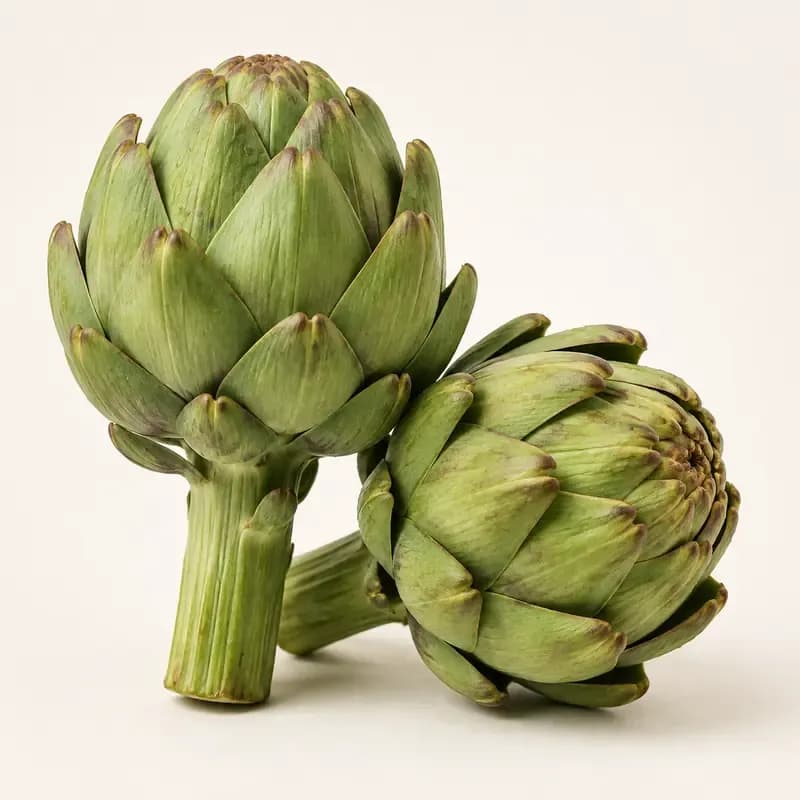
Cynara cardunculus L. Scolymus Group
The globe artichoke, scientifically classified as Cynara cardunculus Scolymus Group and also known by the synonym Cynara scolymus, is a cultivated Mediterranean thistle harvested for its immature flower head. What appears to be a single flower is actually a compact inflorescence composed of overlapping protective bracts surrounding many undeveloped florets. The edible portions include the tender bases of the bracts, the fleshy receptacle known as the heart, and the peeled upper stem. The fibrous central choke of a mature artichoke is removed before eating. Fresh artichokes have an earthy, nutty, mildly bitter flavor that can seem subtly sweet after each bite because compounds such as cynarin temporarily influence taste perception. Green, purple, round, elongated, smooth, and spiny cultivars are grown throughout Mediterranean climates and other suitable regions. Artichokes may be steamed, boiled, pressure-cooked, roasted, grilled, braised, baked, fried, stuffed, marinated, or eaten raw when exceptionally young and tender. Raw globe artichoke provides substantial fiber, copper, folate, magnesium, vitamin C, vitamin K, manganese, potassium, iron, phosphorus, niacin, pantothenic acid, vitamin B6, thiamin, zinc, and protein. It also contains inulin-type fructans, chlorogenic acid, cynarin, luteolin compounds, and other polyphenols.
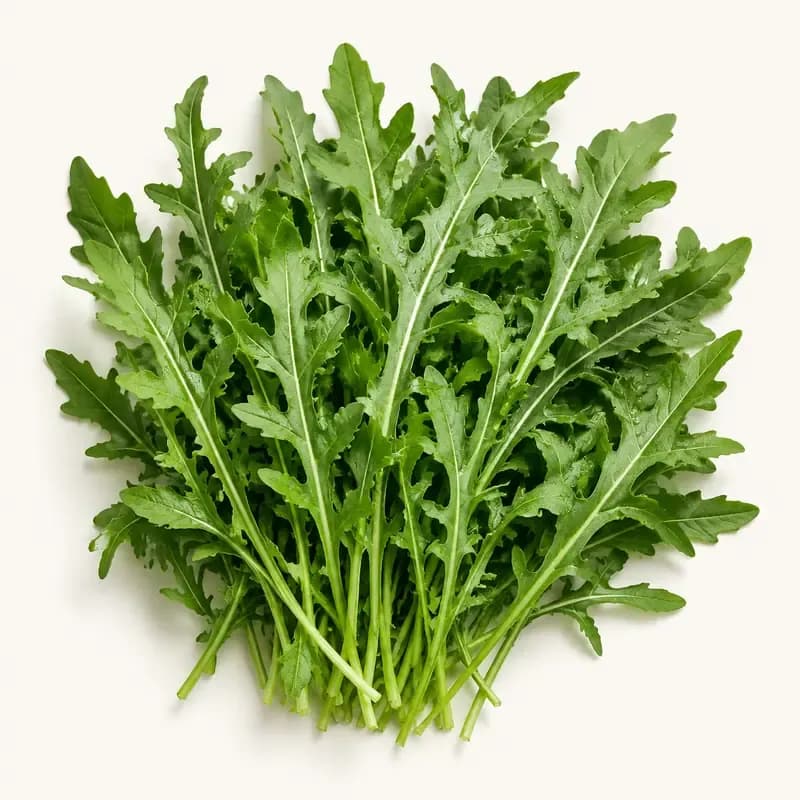
Eruca vesicaria subsp. sativa (syn. Eruca sativa)
Arugula, scientifically known as Eruca vesicaria subsp. sativa and also widely classified as Eruca sativa, is a peppery leafy vegetable in the mustard family, Brassicaceae. It is called rocket, salad rocket, garden rocket, roquette, rucola, and rugula in different regions. The plant produces elongated, deeply lobed green leaves with a distinctive flavor that ranges from mildly nutty and peppery in young leaves to sharply pungent and slightly bitter in mature or heat-stressed plants. Its tender leaves and stems are commonly eaten raw, while its flowers, flower buds, immature pods, and seeds are also edible. Arugula is especially associated with Mediterranean and Italian cuisine, where it appears in salads, pasta, pizza, sandwiches, risotto, sauces, and vegetable dishes. Brief cooking wilts the leaves and moderates their pungency without completely removing their mustard-like character. Raw arugula provides vitamin K, folate, vitamin C, provitamin A carotenoids, calcium, magnesium, manganese, potassium, iron, fiber, and sulfur-containing glucosinolates for relatively few calories. It grows rapidly in cool weather and is cultivated worldwide in fields, gardens, greenhouses, and hydroponic systems.
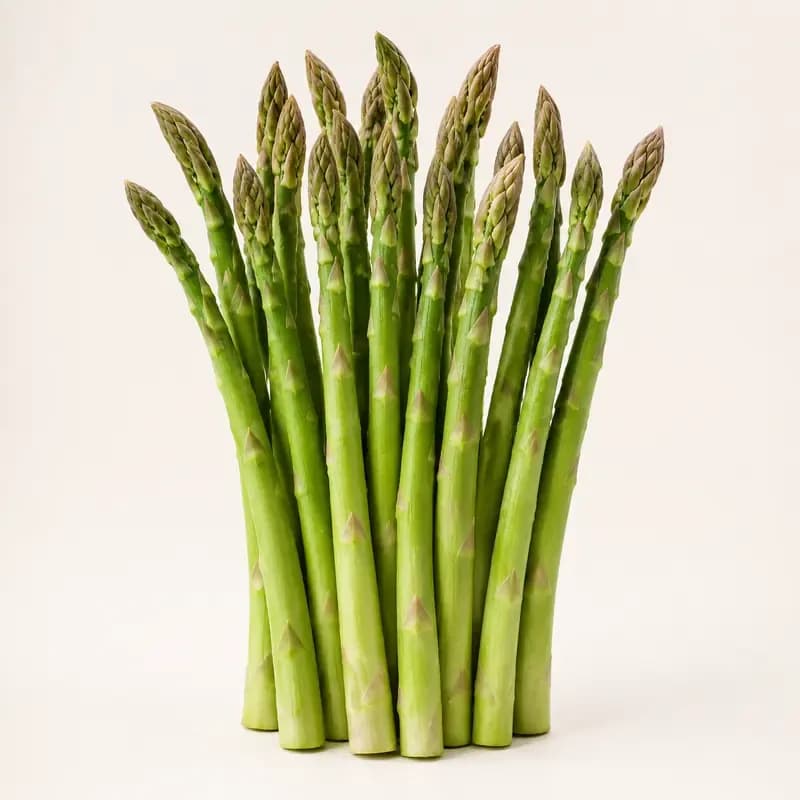
Asparagus officinalis L.
Asparagus, scientifically known as Asparagus officinalis, is a long-lived perennial vegetable cultivated for its tender young shoots. The edible spears emerge each spring from an underground crown and root system. If left unharvested, they rapidly elongate into tall, branching plants with delicate, fern-like cladodes. Green asparagus develops chlorophyll above the soil, white asparagus is protected from light by soil or opaque coverings, and purple cultivars contain anthocyanin pigments. Fresh spears have a grassy, subtly sweet, nutty flavor with mild sulfurous notes. Thin spears cook quickly, while thick spears often remain especially juicy when properly roasted, grilled, steamed, or blanched. Only the young shoots are normally eaten; mature foliage is tough, and the red berries produced by female plants should not be consumed. Raw asparagus provides vitamin K, copper, folate, thiamin, iron, riboflavin, vitamin B6, vitamin E, manganese, vitamin C, niacin, zinc, phosphorus, potassium, fiber, and protein for relatively few calories. It also contains rutin, quercetin, glutathione, fructans, saponins, and the distinctive sulfur-containing compound asparagusic acid. Asparagus is strongly associated with spring cuisine but is available year-round through production in different climates and international trade.
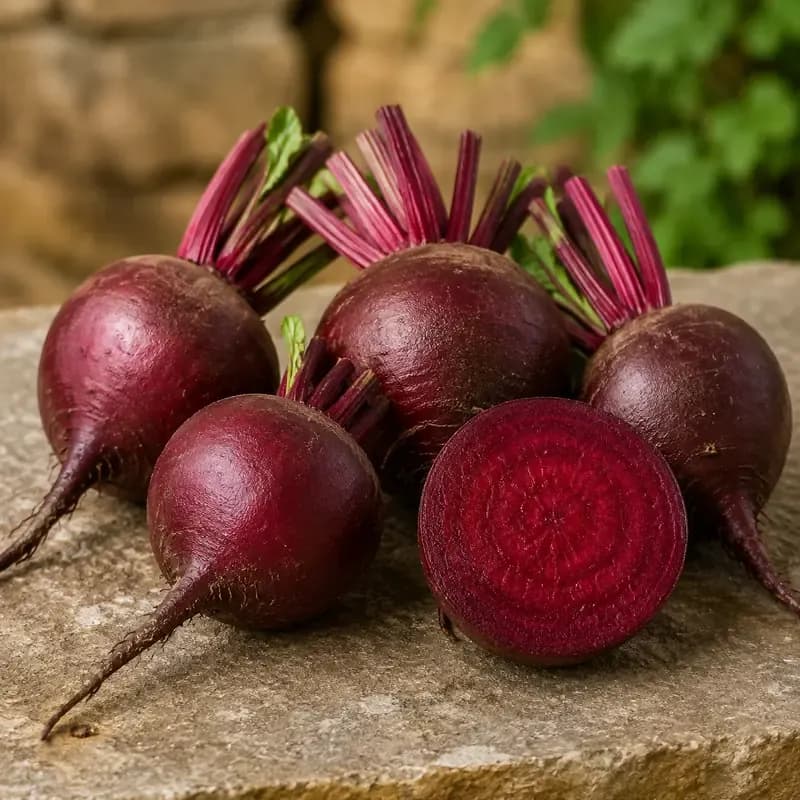
Beta vulgaris (Conditiva Group)
Beetroot, scientifically classified as Beta vulgaris within the Conditiva Group, is a cool-season root vegetable in the amaranth family, Amaranthaceae. Its rounded, cylindrical, or flattened edible body is formed from a swollen taproot together with the adjoining hypocotyl, making root the best botanical category for culinary classification. Although deep crimson beetroot is most familiar, cultivars also produce golden, white, pink, and striking red-and-white-ringed roots. Their flavor combines natural sweetness with an earthy aroma associated partly with geosmin. Beetroot may be eaten raw, roasted, steamed, boiled, pressure-cooked, pickled, fermented, juiced, or blended into soups, dips, breads, desserts, and savory dishes. The leaves and tender stalks are edible as well and can be cooked similarly to chard. Red and golden roots obtain their colors from betalains rather than anthocyanins, while naturally occurring nitrate, betaine, phenolic compounds, fiber, folate, manganese, potassium, copper, and magnesium contribute to their nutritional profile. Modern beetroot descends from wild sea beet native across coastal western Europe, the Mediterranean region, and western Asia. Early cultivation emphasized the leaves; selection for large, tender, swollen roots produced the table beet now grown around the world.
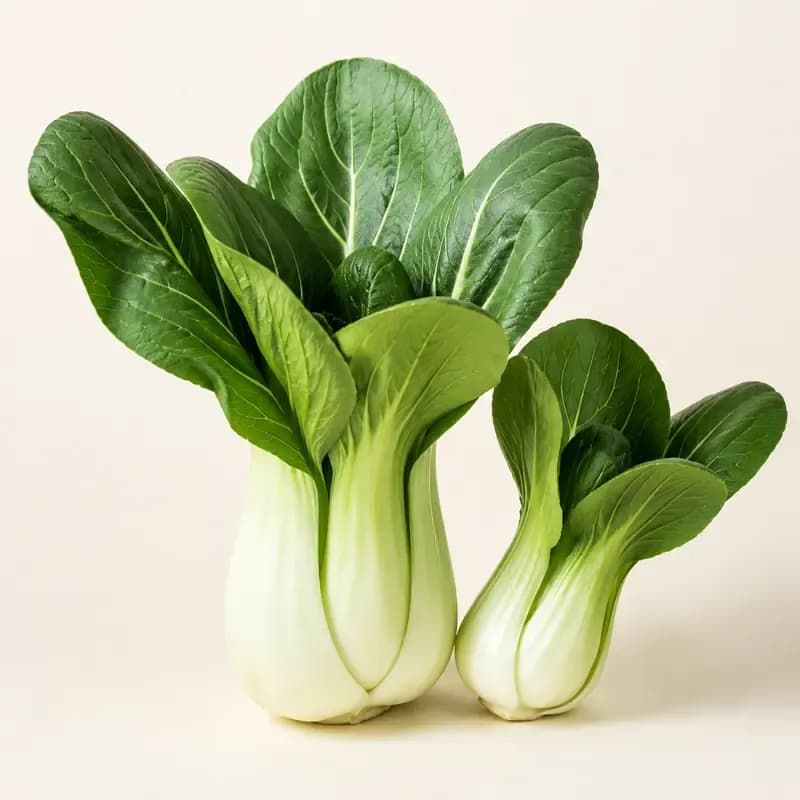
Brassica rapa subsp. chinensis
Bok choy, scientifically known as Brassica rapa subsp. chinensis, is a non-heading Chinese cabbage cultivated for its tender green leaves and crisp, succulent leaf stalks. It is also called pak choi, bok choi, pok choi, Chinese mustard cabbage, and spoon cabbage. Unlike napa cabbage, bok choy does not form a tight head; its leaves grow in an upright rosette with smooth or slightly crinkled blades and white, cream, or pale-green stalks. The entire above-ground vegetable is edible, including the leaves, petioles, tender stems, and young flowering shoots. Raw bok choy tastes fresh, mildly peppery, and subtly sweet, while brief cooking softens its brassica notes without eliminating its characteristic crunch. It is widely stir-fried, steamed, simmered, braised, grilled, roasted, pickled, and added to soups, noodles, dumplings, rice dishes, and salads. Raw bok choy is approximately 95% water and provides vitamin C, vitamin A from carotenoids, vitamin K, folate, vitamin B6, calcium, potassium, manganese, fiber, and glucosinolate compounds for very few calories. Its ability to mature quickly and thrive in cool weather has helped make it an important vegetable throughout China, East Asia, Southeast Asia, and increasingly across Europe, Australia, and North America.
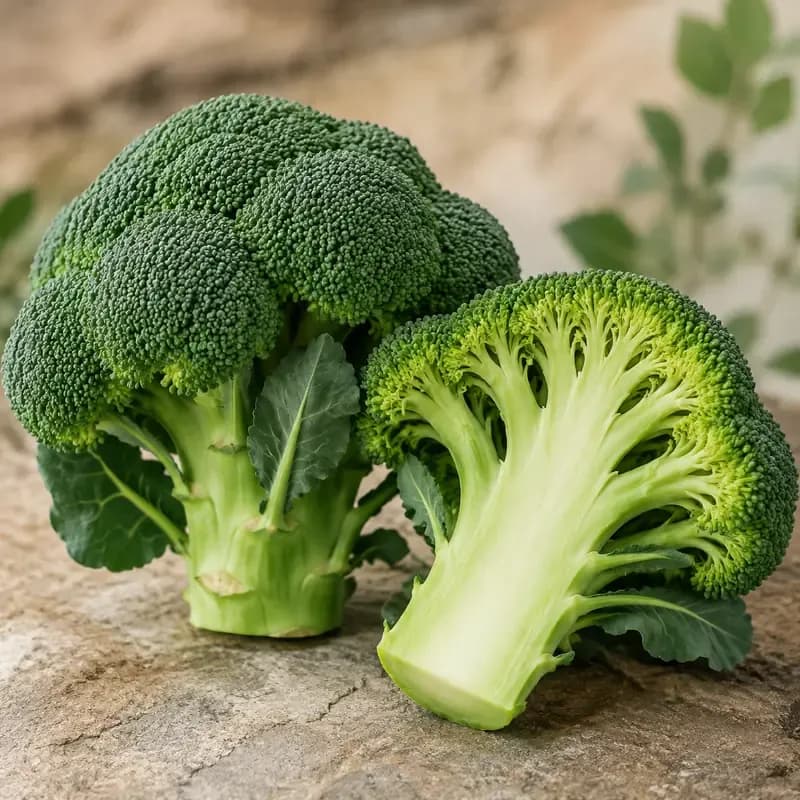
Brassica oleracea var. italica
Broccoli, scientifically known as Brassica oleracea var. italica, is a cool-season vegetable in the mustard family, Brassicaceae. Its familiar green crown consists of tightly packed immature flower buds supported by branching fleshy stems, making flower the best-fit botanical category. If left unharvested, those buds open into small yellow flowers. Broccoli usually has a deep green or blue-green central head, although purple, pale green, and sprouting forms are also cultivated. Raw broccoli is crisp, mildly peppery, and slightly grassy, while cooking softens its fibers and develops sweeter, nuttier, and more savory flavors. Nearly the entire plant is edible: florets, tender stems, the peeled main stalk, leaves, and young sprouts can all be used, though their nutrient profiles differ. Broccoli can be steamed, roasted, sauteed, stir-fried, grilled, blanched, boiled, fermented, or eaten raw. It provides vitamin C, vitamin K, folate, vitamin B6, pantothenic acid, fiber, potassium, phosphorus, manganese, and carotenoids with relatively few calories. Broccoli also contains glucosinolates, including glucoraphanin, which can form sulforaphane when plant tissue is chopped or chewed. Developed in the Mediterranean from cultivated wild cabbage, broccoli became strongly associated with Italy before spreading through Europe and eventually worldwide.
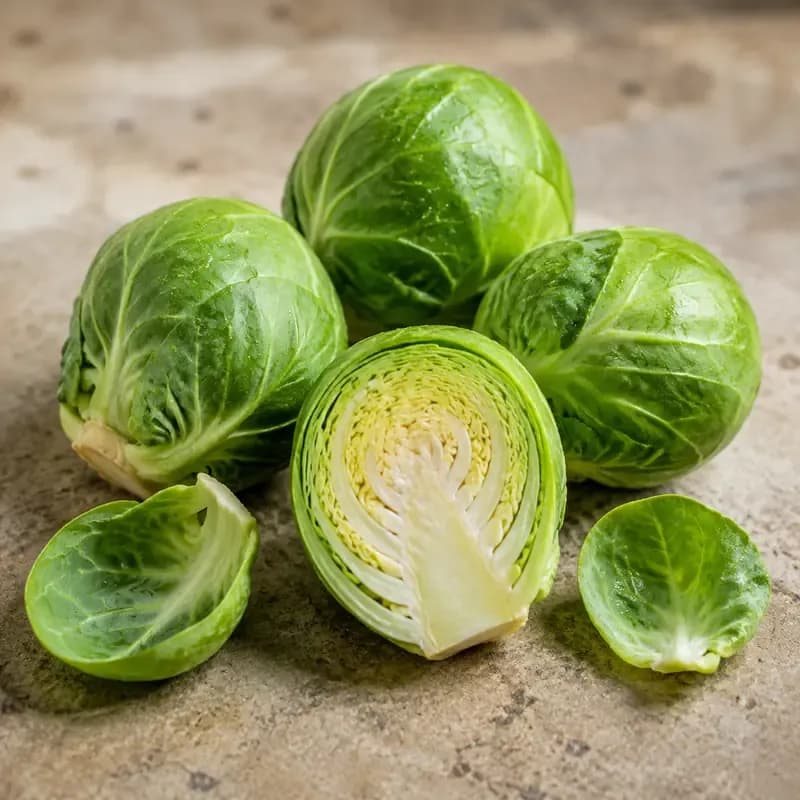
Brassica oleracea var. gemmifera
Brussels sprouts, scientifically known as Brassica oleracea var. gemmifera, are cool-season leafy vegetables belonging to the mustard family, Brassicaceae. The edible sprouts are compact axillary leaf buds that develop in rows along a tall central stalk, making leaf the best botanical category. Each sprout resembles a miniature cabbage because numerous small leaves overlap tightly around a short internal stem. Most cultivars produce green or blue-green sprouts, although purple and reddish varieties are also grown. Raw Brussels sprouts are firm, crisp, earthy, and mildly bitter, with the peppery character typical of cruciferous vegetables. Roasting, sauteing, grilling, or air-frying encourages browning and develops nutty sweetness, while overboiling can produce a soft texture and strong sulfurous aroma. Brussels sprouts can be halved, shredded, roasted whole, steamed, braised, grilled, pickled, or eaten raw in finely sliced salads. They provide vitamin K, vitamin C, folate, vitamin B6, thiamin, fiber, potassium, manganese, iron, and several antioxidants. Like other Brassica vegetables, they contain glucosinolates that form isothiocyanates and related compounds when their tissues are cut or chewed. Brussels sprouts were refined as a distinctive crop in northern Europe, particularly around the region of modern Belgium, before spreading internationally.
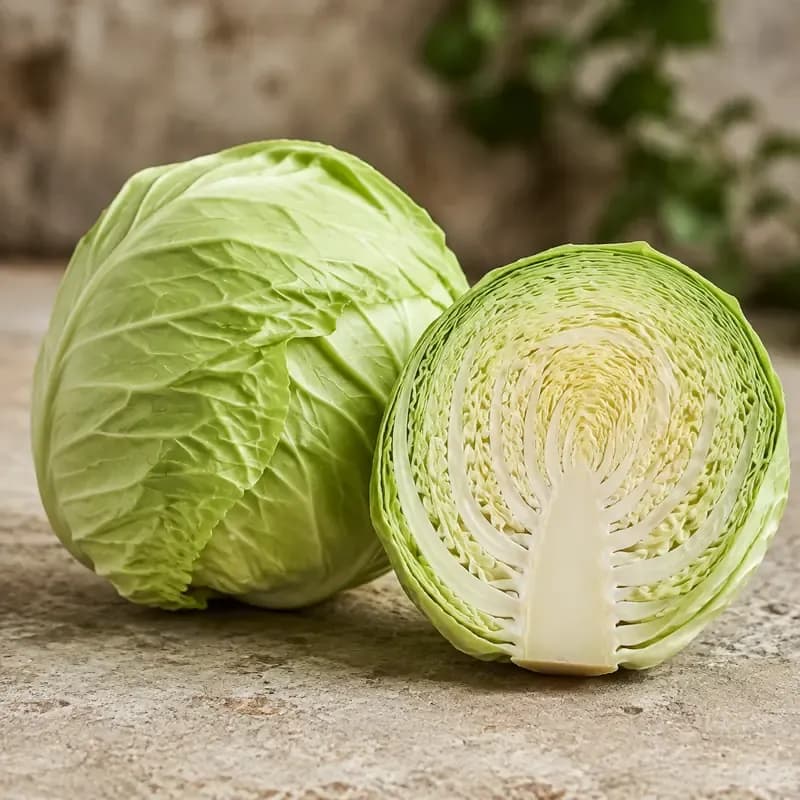
Brassica oleracea var. capitata
Cabbage, scientifically known as Brassica oleracea var. capitata, is a cool-season leafy vegetable that forms a dense head of overlapping leaves around a shortened stem. It belongs to the Brassicaceae family and shares its species with broccoli, cauliflower, kale, kohlrabi, and Brussels sprouts, each shaped by centuries of selective breeding for a different edible structure. Common green cabbage has crisp, pale-to-medium green leaves and a clean, mildly peppery flavor that becomes sweeter and softer with cooking. Red cabbage contributes purple-red color from anthocyanins, while Savoy cabbage has tender, deeply crinkled leaves. Raw green cabbage is low in calories and provides vitamin C, vitamin K, folate, fiber, vitamin B6, manganese, and smaller amounts of several other nutrients. Cutting or chewing brings glucosinolates into contact with the plant enzyme myrosinase, producing biologically active breakdown compounds such as isothiocyanates and indoles. Cabbage can be shredded for slaws, roasted in wedges, sautéed, braised, added to soups, stuffed, pickled, or fermented into foods such as sauerkraut and kimchi. This nutrition profile refers specifically to raw green cabbage; red, Savoy, Napa, cooked, and fermented products have different nutrient values.
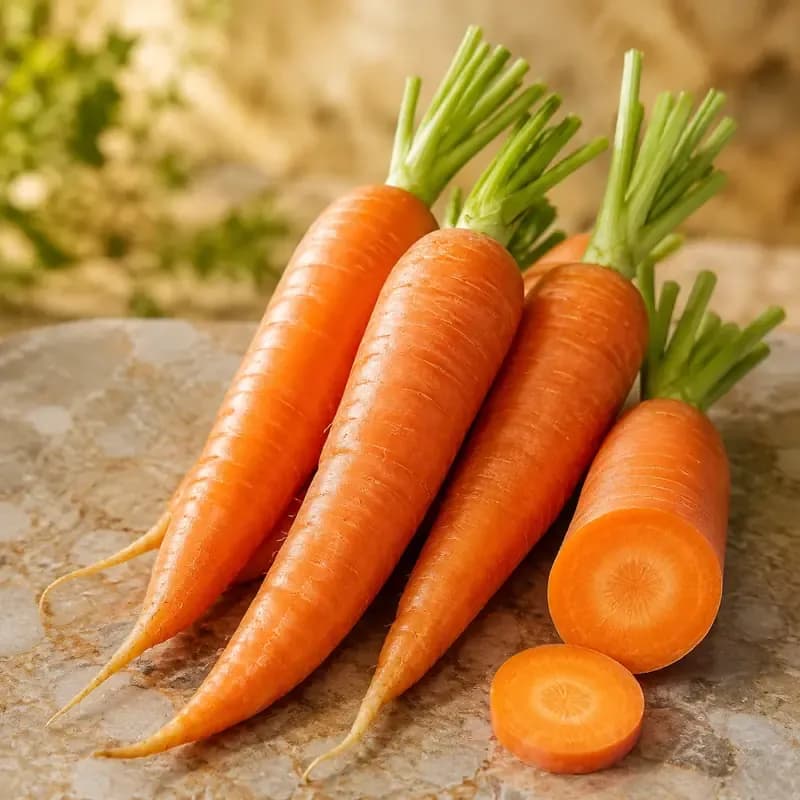
Daucus carota subsp. sativus
The carrot, scientifically known as Daucus carota subsp. sativus, is a cultivated biennial in the parsley family, Apiaceae. Its familiar edible portion is a thickened storage taproot rather than a stem or tuber. Although orange carrots dominate many markets, cultivated roots may also be purple, red, yellow, white, or nearly black, reflecting different mixtures of carotenoids, anthocyanins, and other pigments. Fresh carrots are crisp, juicy, mildly earthy, and naturally sweet; cooking softens their cell walls, intensifies sweetness, and can make their carotenoids easier to access during digestion. The root is eaten raw, roasted, steamed, boiled, braised, pickled, fermented, juiced, or baked into savory and sweet dishes. Tender carrot greens are also edible when correctly identified, thoroughly washed, and used like an herb, though the root remains the principal food crop. Carrots provide beta-carotene-derived vitamin A, vitamin K, fiber, potassium, vitamin B6, vitamin C, and diverse phytonutrients while remaining low in calories. Genetic and historical evidence places carrot domestication in western to Central Asia during the Early Middle Ages; later breeding produced sweeter, smoother roots, and high-carotenoid orange forms were selected in western Europe during the Renaissance.
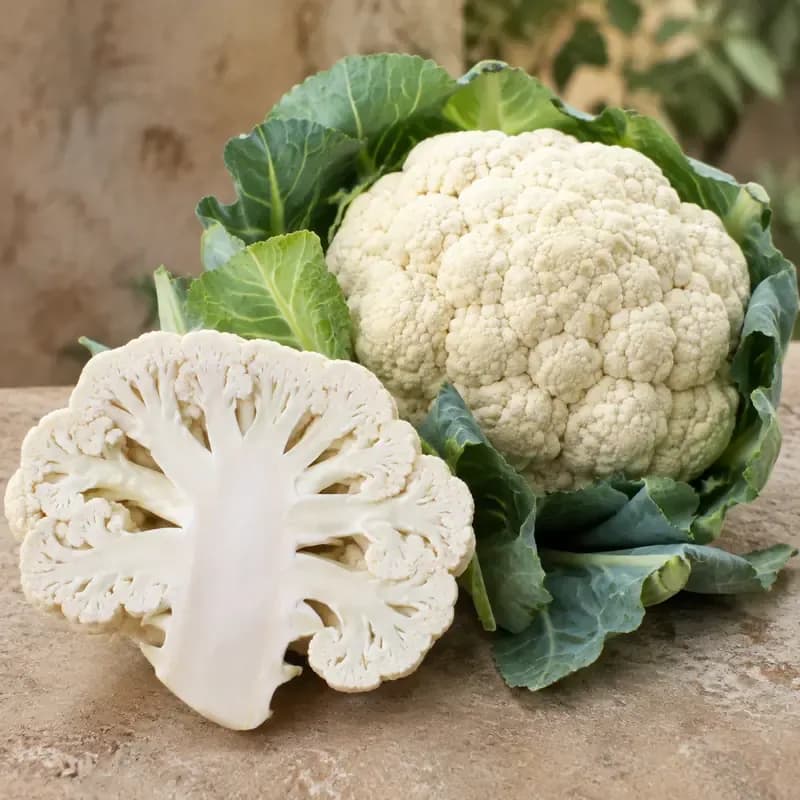
Brassica oleracea var. botrytis
Cauliflower, scientifically known as Brassica oleracea var. botrytis, is a cool-season vegetable in the mustard family, Brassicaceae. Its familiar edible head, called the curd, consists of densely clustered, undeveloped flowering structures and meristematic tissue supported by fleshy branching stems. This makes flower the best-fit botanical category, even though the compact head is harvested before individual flowers open. Classic cauliflower has an ivory-white curd surrounded by broad green leaves, but cultivars also produce orange, purple, green, and intricately spiraled Romanesco heads. Raw cauliflower is crisp, juicy, mildly peppery, and slightly nutty. Cooking softens its texture, moderates its mustard-like flavor, and can develop sweetness and savory browned notes. The florets, central stalk, tender stems, and leaves are all edible, making cauliflower a remarkably low-waste vegetable. It can be roasted, steamed, boiled, grilled, sauteed, mashed, pickled, fermented, or finely chopped into cauliflower rice. Raw cauliflower provides vitamin C, vitamin K, folate, vitamin B6, pantothenic acid, choline, fiber, potassium, manganese, and glucosinolates with relatively few calories. Developed from Mediterranean wild cabbage through centuries of selection, cauliflower became especially important in European and Asian cuisines and is now cultivated worldwide.
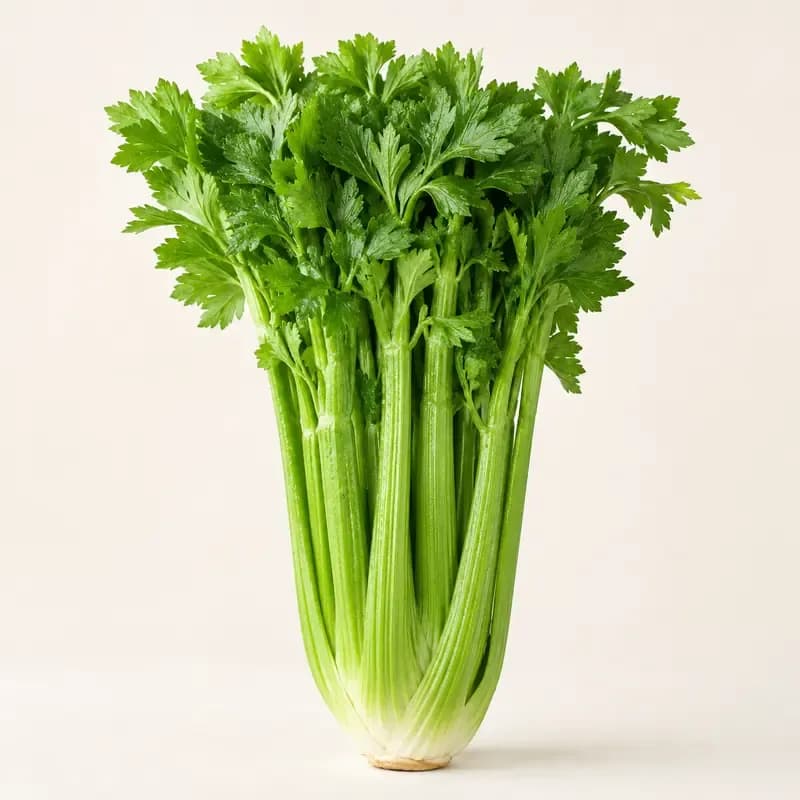
Apium graveolens L. Dulce Group
Celery, scientifically classified as Apium graveolens and represented by the Dulce Group of cultivated varieties, is an aromatic vegetable in the carrot family, Apiaceae. The crisp structures commonly called celery stalks are technically enlarged leaf stalks, or petioles, rather than true botanical stems. They surround a compact central growing point and carry strongly scented, divided green leaves. Celery has a clean, salty, mildly bitter flavor with herbal, grassy, and peppery notes. Pale inner stalks are usually sweeter and more tender, while dark outer stalks and leaves have a stronger aroma. The petioles, leaves, tender shoots, and seeds are edible, although celery seed is generally used as a spice. Closely related cultivated groups include leaf celery, selected for aromatic foliage, and celeriac, selected for a swollen edible stem base and hypocotyl. Celery may be eaten raw, juiced, sautéed, steamed, braised, roasted, grilled, simmered, or used as an aromatic foundation for soups, stocks, sauces, and stews. Raw celery is approximately 95% water and provides vitamin K, folate, potassium, fiber, pantothenic acid, vitamin B6, riboflavin, manganese, copper, vitamin C, calcium, and diverse aromatic phytochemicals for relatively few calories.
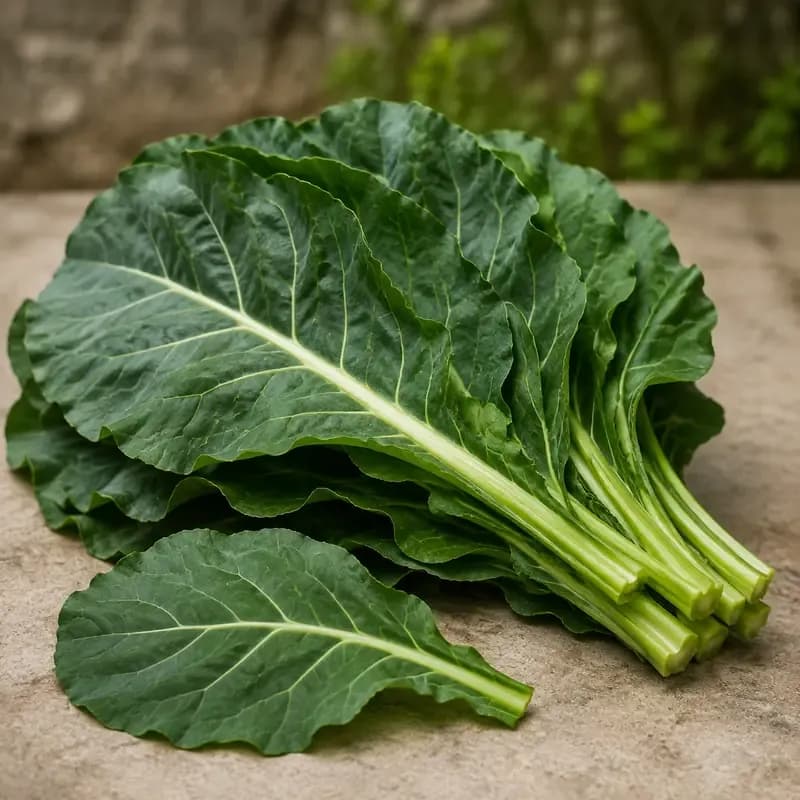
Brassica oleracea var. viridis
Collard greens, botanically classified as Brassica oleracea var. viridis, are broad-leaved vegetables belonging to the mustard family, Brassicaceae. They are members of the same species as cabbage, kale, broccoli, cauliflower, and Brussels sprouts, but collards grow as an open rosette rather than forming a compact head. Their large, sturdy leaves are usually blue-green or deep green, with prominent pale ribs and a slightly waxy surface. Raw collards taste earthy, vegetal, and mildly bitter, while slow cooking softens their fibers and develops a sweeter, richer flavor. Both the leaves and tender stalks are edible, although thick stems often need additional cooking time. Collard greens are deeply associated with the cuisines of the southern United States, where they are traditionally simmered with aromatics and smoked meat, but they also appear in Brazilian, Portuguese, East African, Indian, and Mediterranean cooking. Nutritionally, raw collards provide abundant vitamin K, vitamin C, folate, provitamin A carotenoids, calcium, manganese, fiber, and vitamin E. They also contain glucosinolates, carotenoids, flavonoids, and other phytonutrients. Their cold tolerance, productive leaves, and ability to withstand repeated harvesting make collards a valuable garden and agricultural crop.
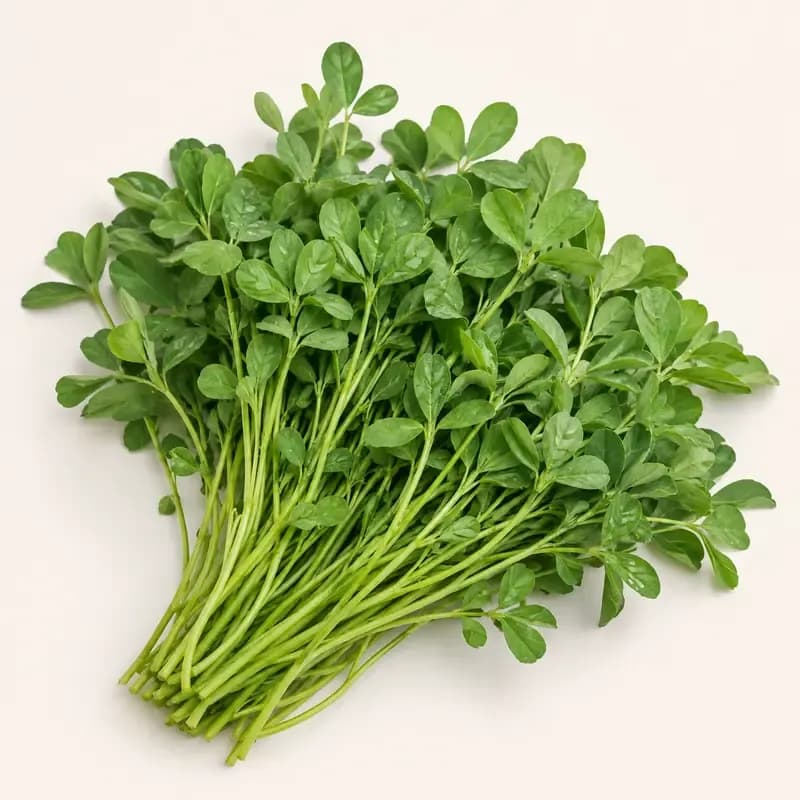
Trigonella foenum-graecum L.
Fenugreek leaves, the fresh foliage of Trigonella foenum-graecum, are aromatic leafy vegetables belonging to the legume family, Fabaceae. They are widely known as methi in India and by regional names such as menthya, vendhaya keerai, shambalileh, helba, and hilbeh. Each leaf is divided into three small leaflets, giving the annual plant a clover-like appearance. Fresh leaves and tender stems have a complex flavor that is grassy, pleasantly bitter, mildly nutty, and subtly reminiscent of maple or caramel. This characteristic aroma is associated partly with sotolon and other volatile compounds. Fenugreek leaves are especially important in Indian, Pakistani, Iranian, Afghan, Middle Eastern, and North African cooking. They are sautéed, simmered, steamed, mixed into dough, cooked with potatoes or legumes, and dried to produce fragrant kasuri methi. Fresh leaves contain protein, vitamin C, provitamin A carotenoids, riboflavin, calcium, iron, phosphorus, fiber, flavonoids, saponins, and other phytochemicals. Fenugreek is also cultivated for its yellow-brown seeds, but fresh leaves, dried leaves, sprouts, and seeds have substantially different nutrient concentrations and culinary uses. The nutritional values presented here describe fresh raw leaves rather than dried kasuri methi or fenugreek seeds.
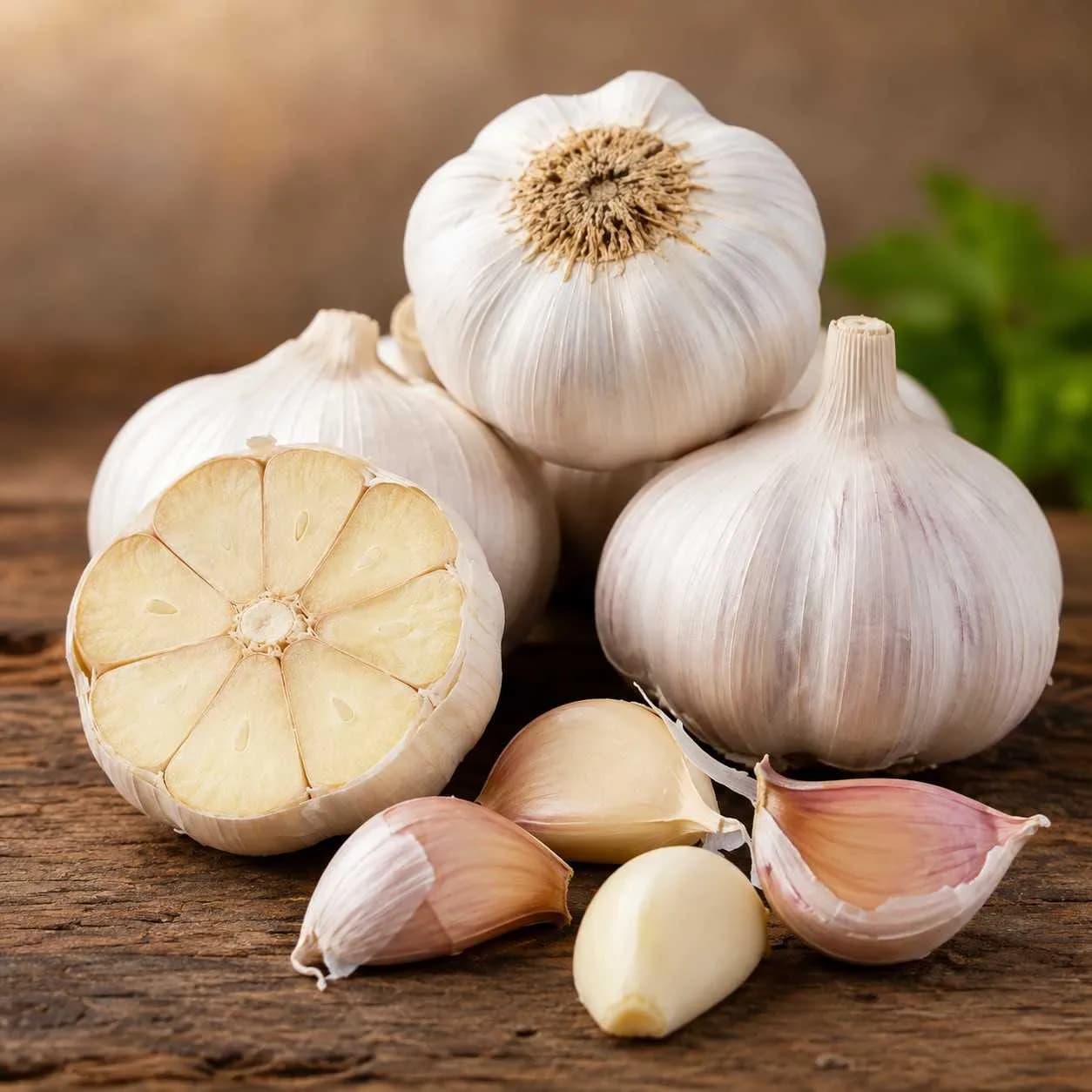
Allium sativum L.
Garlic is the strongly aromatic bulb of Allium sativum L., a perennial member of the Amaryllidaceae family and one of the world's most important culinary Allium vegetables. A mature garlic bulb, often called a head, is composed of multiple individual cloves wrapped in papery white, cream, pink, or purple-tinged skins. Raw garlic has an intense, hot, sulfurous flavor, while roasting or slow cooking transforms the cloves into soft, sweet, nutty, and deeply savory morsels. Garlic's characteristic aroma develops primarily after its tissues are cut, crushed, or chewed. Cell damage allows the enzyme alliinase to convert the sulfur compound alliin into allicin, a short-lived compound responsible for much of freshly crushed garlic's pungency and biological activity. Garlic is nutritionally concentrated compared with many vegetables, providing notable amounts of vitamin B6, manganese, vitamin C, selenium, copper, phosphorus, calcium, zinc, and protein per 100 grams, although typical serving sizes are much smaller. It is used throughout Mediterranean, Middle Eastern, Indian, Chinese, Korean, Southeast Asian, African, European, and Latin American cuisines. Garlic may be minced into sauces, roasted whole, sautéed with vegetables, blended into marinades, fried until crisp, or eaten in fermented and pickled preparations. Both softneck and hardneck forms are cultivated, with hardneck types also producing edible flower stalks called scapes.
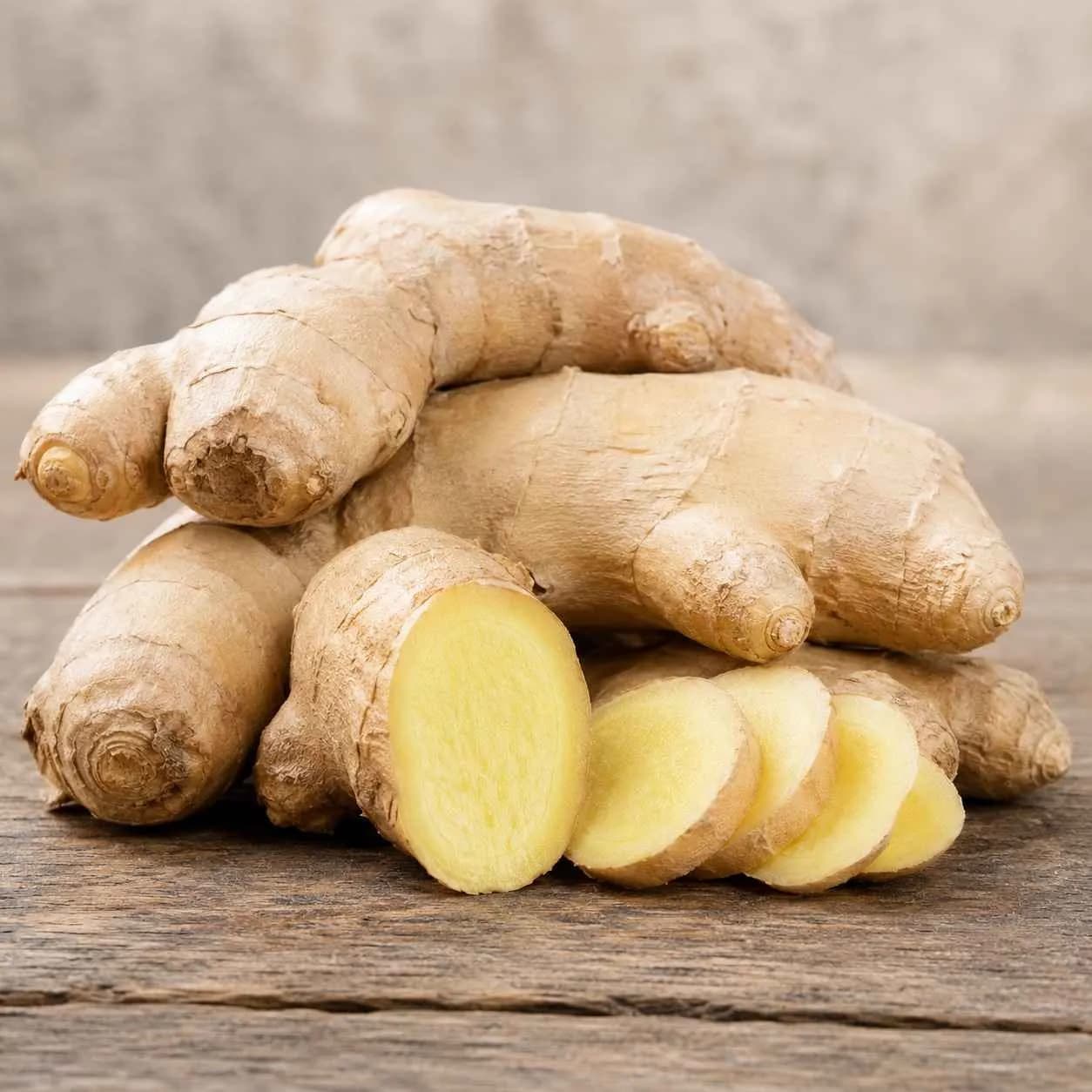
Zingiber officinale Roscoe
Ginger is the aromatic underground rhizome of Zingiber officinale Roscoe, a tropical flowering plant in the Zingiberaceae family. Although commonly called ginger root, the edible portion is botanically a rhizome, which is a modified underground stem that grows horizontally and produces both roots and leafy shoots. Fresh ginger has pale yellow to golden flesh beneath a thin tan skin and delivers a distinctive combination of citrusy fragrance, warming heat, peppery sharpness, and subtle sweetness. Its characteristic pungency comes largely from phenolic compounds known as gingerols, especially 6-gingerol. Drying and heating alter these compounds, increasing substances such as shogaols and zingerone and creating different flavor profiles. Ginger is essential in Indian, Chinese, Japanese, Southeast Asian, Middle Eastern, Caribbean, African, and Western cuisines. It can be grated into curries, sliced into stir-fries, simmered in soups, pickled, candied, baked into desserts, or infused into teas and other beverages. Nutritionally, fresh ginger is relatively low in calories and provides potassium, magnesium, manganese, copper, vitamin B6, vitamin C, and smaller quantities of several other vitamins and minerals. Its concentrated aroma means that typical culinary servings are much smaller than 100 grams, but ginger remains valued worldwide for both flavor and its extensively studied bioactive compounds.
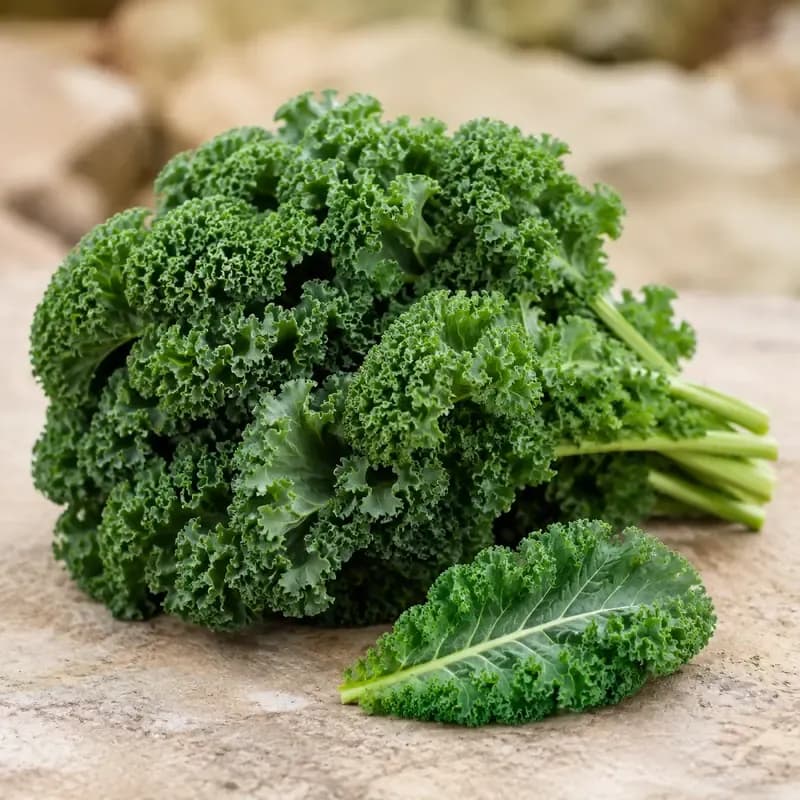
Brassica oleracea var. sabellica
Kale, commonly classified as Brassica oleracea var. sabellica and included within the non-heading Acephala group of Brassica oleracea, is a leafy vegetable in the mustard family, Brassicaceae. Unlike cabbage, kale does not form a compact head. Instead, its leaves grow openly around an upright central stem and may be tightly curled, flat, blistered, narrow, broad, blue-green, deep green, red, or purple. Raw kale has a firm texture and an earthy, grassy, mildly bitter flavor with the peppery character typical of cruciferous vegetables. Massaging finely sliced leaves with oil, salt, or an acidic dressing softens their structure for salads, while steaming, sauteing, braising, roasting, and stir-frying produce tender leaves with a sweeter, more savory flavor. The leaves, tender ribs, young stems, and flowering shoots are edible when properly prepared. Raw kale provides vitamin K, vitamin C, vitamin A carotenoids, riboflavin, folate, fiber, calcium, manganese, iron, magnesium, and potassium. It also contains glucosinolates, lutein, zeaxanthin, beta-carotene, kaempferol, and quercetin. Kale developed from ancient non-heading forms of wild cabbage cultivated around the Mediterranean and Europe. Its cold tolerance, productivity, and ability to remain in the field during winter made it an important traditional vegetable long before its modern popularity in salads, smoothies, soups, and baked chips.
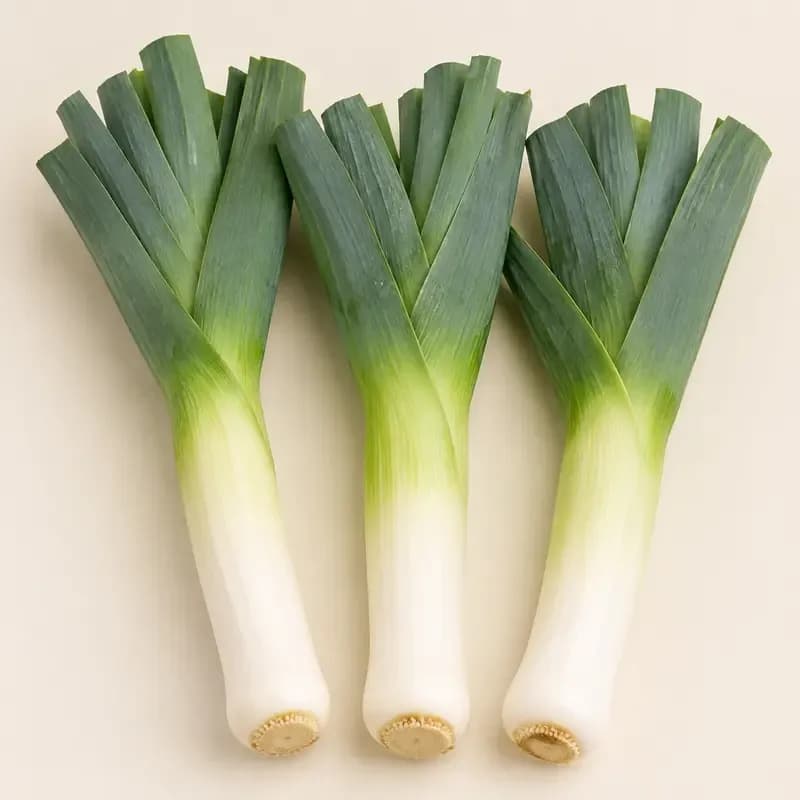
Allium ampeloprasum L. Leek Group
Leek, botanically classified as Allium ampeloprasum L. Leek Group and historically called Allium porrum, is a cool-season vegetable related to onions, garlic, shallots, and chives. Instead of producing the rounded storage bulb associated with an onion, a leek develops a long cylindrical shaft made from tightly overlapping leaf sheaths. Soil hilling or other blanching practices exclude light from the lower plant, creating the prized white and pale-green section. Its flavor is gently sweet, savory, and onion-like, with less pungency than most bulb onions. Slow cooking makes the layered tissues silky and mellow, while grilling or roasting creates caramelized edges. Raw young leek adds a crisp, sharper accent to salads and garnishes. The darker leaves are firmer but edible when sliced thinly, braised thoroughly, or used to flavor stocks, soups, and sauces. Leeks are central to dishes such as potato-leek soup, vichyssoise, cock-a-leekie soup, Welsh cawl, savory tarts, gratins, and braises. Raw leek supplies vitamin K, folate, vitamin B6, vitamin C, manganese, copper, iron, fiber, carotenoids, flavonoids, fructans, and characteristic Allium organosulfur compounds.
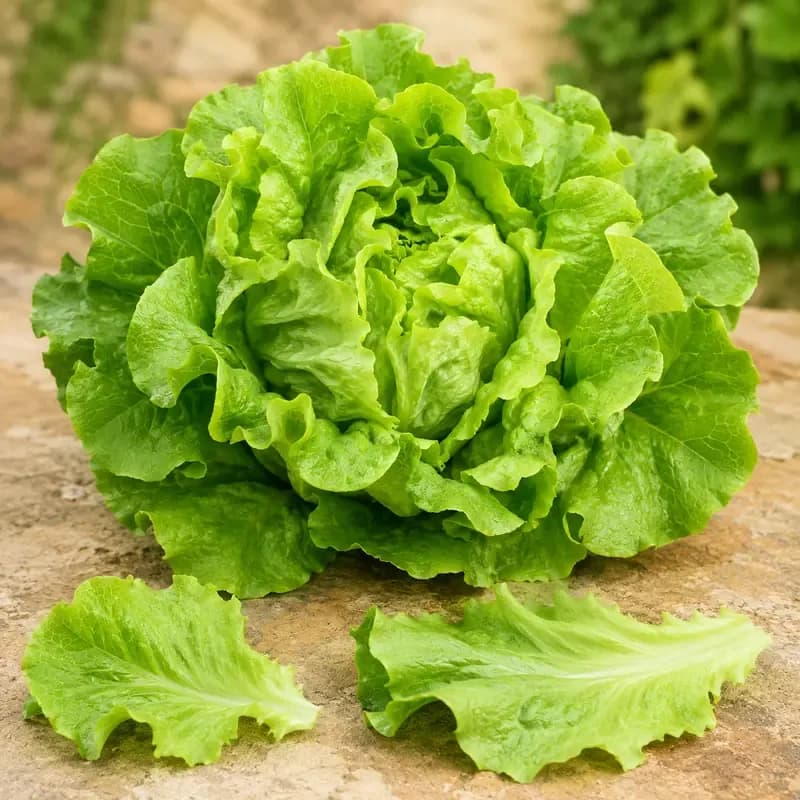
Lactuca sativa
Lettuce, scientifically known as Lactuca sativa, is a leafy vegetable in the daisy family, Asteraceae. Cultivated lettuce appears in many forms, from the crisp, tightly packed heads of iceberg lettuce to the elongated leaves of romaine, the soft folds of butterhead, and the colorful rosettes of loose-leaf cultivars. Its flavor ranges from delicate and mildly sweet to pleasantly bitter, while its texture may be tender, buttery, juicy, or distinctly crisp. Most lettuce is eaten raw in salads, sandwiches, wraps, and garnishes, but sturdy varieties can also be grilled, braised, sautéed, or added briefly to soups. Green leaf lettuce provides vitamin K, provitamin A carotenoids, folate, vitamin C, manganese, potassium, fiber, and substantial water with very few calories. Darker leaves generally contain higher concentrations of carotenoids and several vitamins than pale inner leaves. Lettuce was cultivated in the ancient Mediterranean and Near East, initially for its seeds and later for its edible foliage. Today, Lactuca sativa is grown worldwide in fields, greenhouses, hydroponic systems, and home gardens, making it one of the most familiar and versatile salad vegetables.
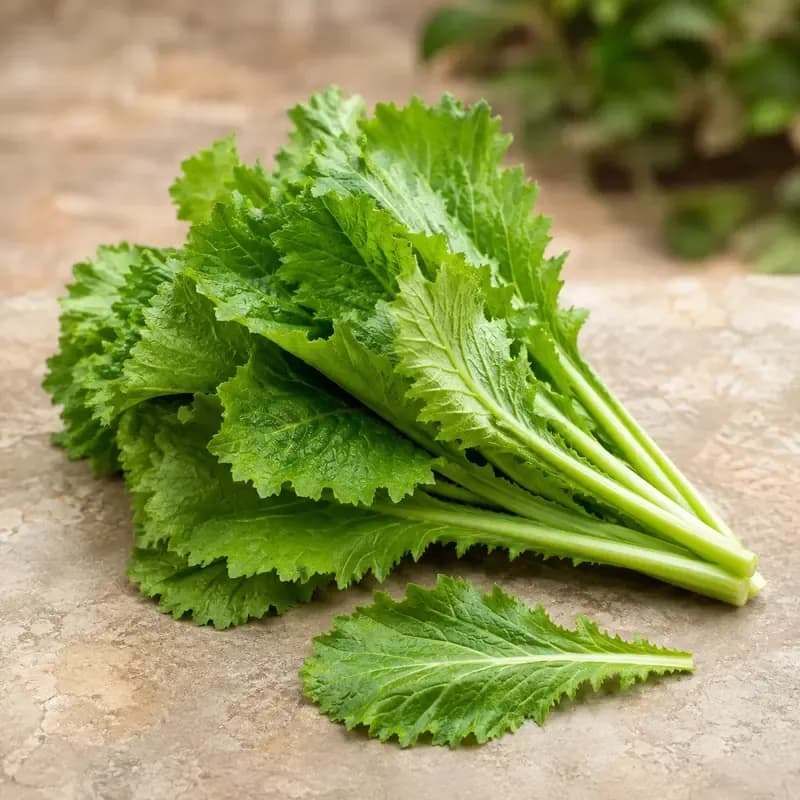
Brassica juncea
Mustard greens, commonly represented by the species Brassica juncea, are pungent leafy vegetables in the mustard family, Brassicaceae. Their leaves may be broad, flat, crinkled, deeply frilled, or divided, with colors ranging from bright green to purple-red. Raw mustard greens have a distinctive peppery heat created when damaged plant tissues allow the enzyme myrosinase to transform glucosinolates into pungent breakdown products. Cooking softens this sharpness and develops a milder, earthy, slightly bitter flavor. The leaves, tender stalks, young stems, and flowering shoots are edible and can be sautéed, steamed, boiled, braised, stir-fried, pickled, or added to soups, curries, dals, noodles, and fermented foods. Mustard greens are important in Indian, Chinese, Japanese, Korean, African, Mediterranean, and Southern American cuisines. Raw leaves provide vitamin K, vitamin C, provitamin A carotenoids, vitamin E, vitamin B6, manganese, copper, calcium, potassium, iron, fiber, and plant compounds such as glucosinolates, lutein, zeaxanthin, and flavonoids. Brassica juncea likely developed through natural hybridization between Brassica rapa and Brassica nigra, followed by extensive cultivation and selection across Asia. Its seeds are also used to produce mustard spice and oil.
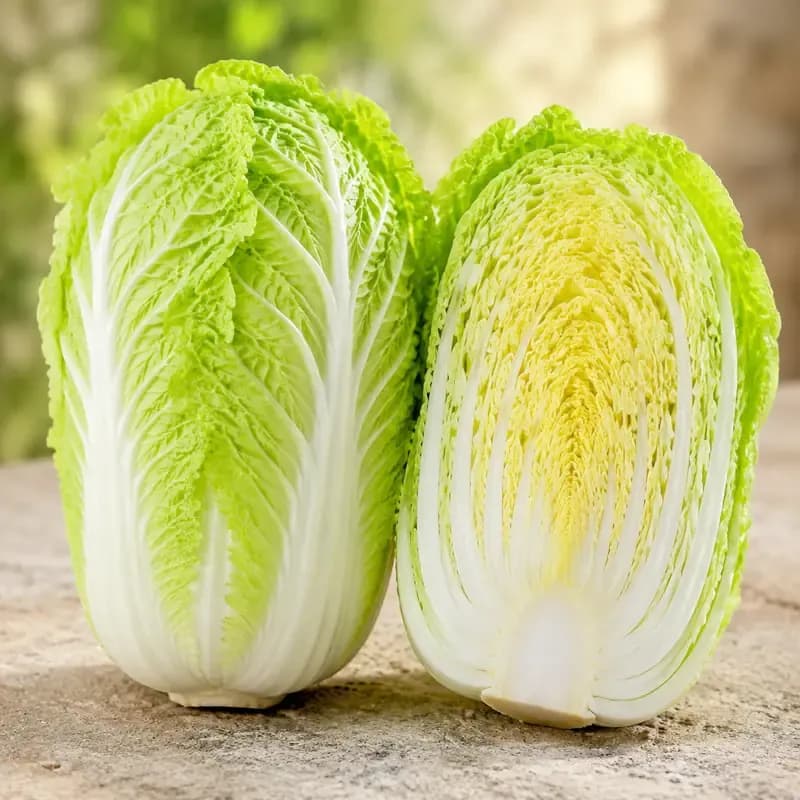
Brassica rapa subsp. pekinensis
Napa cabbage, scientifically known as Brassica rapa subsp. pekinensis, is an elongated leafy vegetable belonging to the mustard family, Brassicaceae. It is also called Chinese cabbage, pe-tsai, celery cabbage, and wombok. Unlike the dense round heads of European cabbage, Napa cabbage forms a tall, barrel-shaped head of pale green, delicately crinkled leaves supported by broad, crisp white ribs. The leafy portions are tender and mildly vegetal, while the juicy ribs provide a refreshing crunch and subtle sweetness. Its gentle flavor is less peppery than many other cabbages, making it suitable for raw salads, slaws, wraps, dumpling fillings, soups, hot pots, stir-fries, braises, pickles, and fermentation. Napa cabbage is the principal vegetable used in many forms of baechu kimchi. The leaves, ribs, and tender core are edible, allowing most of the head to be used. Raw Napa cabbage provides vitamin K, vitamin C, folate, vitamin B6, calcium, manganese, potassium, fiber, and several other micronutrients with very few calories. The crop developed in China from Brassica rapa vegetables and was refined through centuries of East Asian cultivation. It later became established in Korea, Japan, Southeast Asia, Europe, and the Americas, where its tenderness, rapid cooking, and ability to absorb seasonings made it internationally popular.
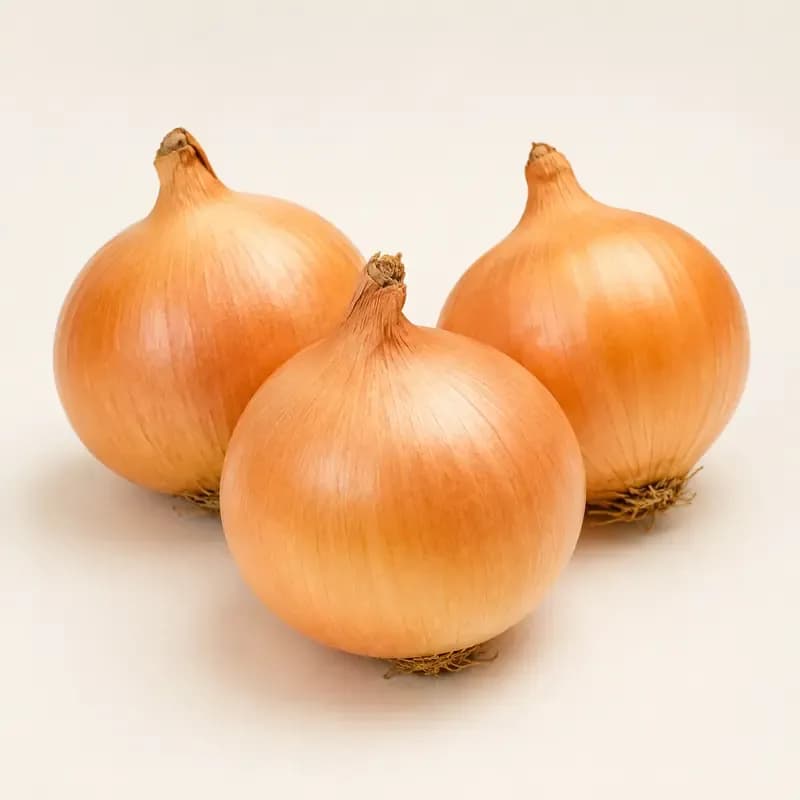
Allium cepa L.
Onion, scientifically known as Allium cepa L., is a bulb-forming vegetable in the Amaryllis family, Amaryllidaceae, and one of the world's most important culinary crops. Its layered bulb may have white, yellow, brown, pink, or deep purple skin, while the inner flesh ranges from crisp and intensely pungent to juicy, mild, and sweet. Raw onions add bite and freshness to salads, salsas, relishes, sandwiches, and pickles. Gentle sautéing transforms their sharp sulfur aroma into a mellow sweetness, while roasting, grilling, and caramelizing create deep savory flavors. Cutting onion tissues activates enzymes that generate sulfur compounds and the volatile irritant syn-propanethial-S-oxide, which can make the eyes water. Onions provide vitamin C, vitamin B6, folate, manganese, copper, potassium, fiber, and diverse phytochemicals including quercetin, anthocyanins in red onions, sulfur compounds, and fructans. Their versatility spans nearly every cuisine, from French onion soup and Indian curries to Mexican salsas, Middle Eastern salads, Korean pickles, and Mediterranean vegetable dishes. Bulb onions store well when kept dry, cool, dark, and ventilated.
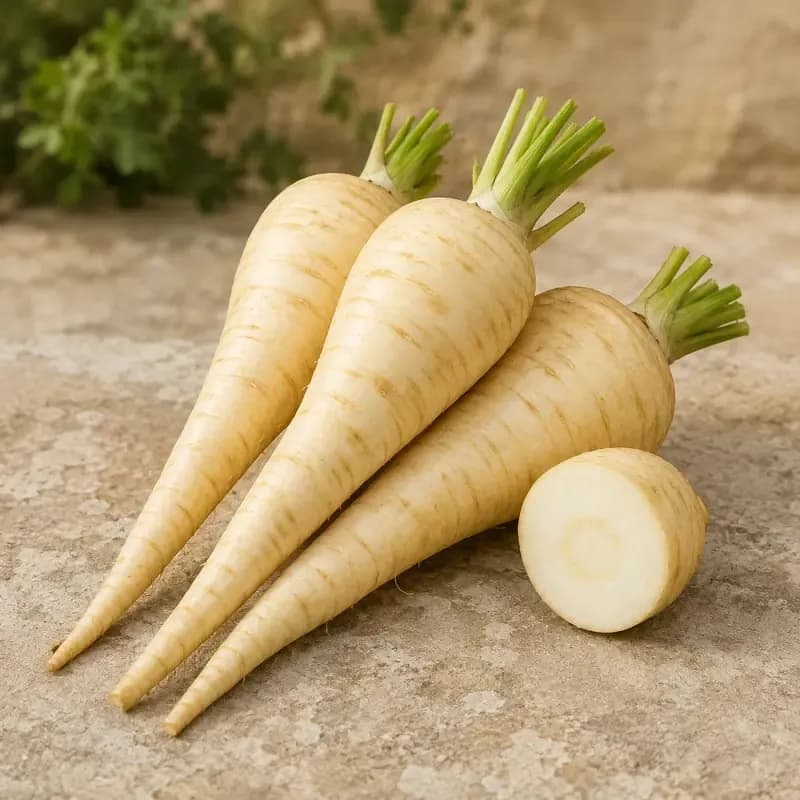
Pastinaca sativa
The parsnip, scientifically known as Pastinaca sativa, is a cream-colored root vegetable belonging to the carrot family, Apiaceae. Its long, tapering taproot resembles a pale carrot but has a distinctively sweet, earthy, nutty flavor with subtle notes of spice. Parsnips develop their familiar storage root during the first year of their biennial life cycle; if left in the ground, they produce tall flowering stems and umbrella-shaped clusters of yellow flowers during the second year. Cool weather and frost can make mature roots taste sweeter by encouraging the conversion of stored starches into sugars. Their firm raw texture becomes tender and aromatic when roasted, baked, steamed, boiled, braised, or pureed. Parsnips work especially well in winter soups, stews, mashes, gratins, curries, and trays of roasted vegetables. Raw roots provide carbohydrates, fiber, vitamin C, vitamin K, vitamin E, folate, potassium, manganese, copper, and several B vitamins. Unlike the edible root, parsnip foliage and sap can contain photoreactive furanocoumarins capable of causing skin inflammation after sunlight exposure, so the leaves and stems should not be treated as culinary greens. Native to Eurasia and cultivated since antiquity, parsnips were an important sweet and starchy food in Europe before potatoes and refined sugar became widely available.
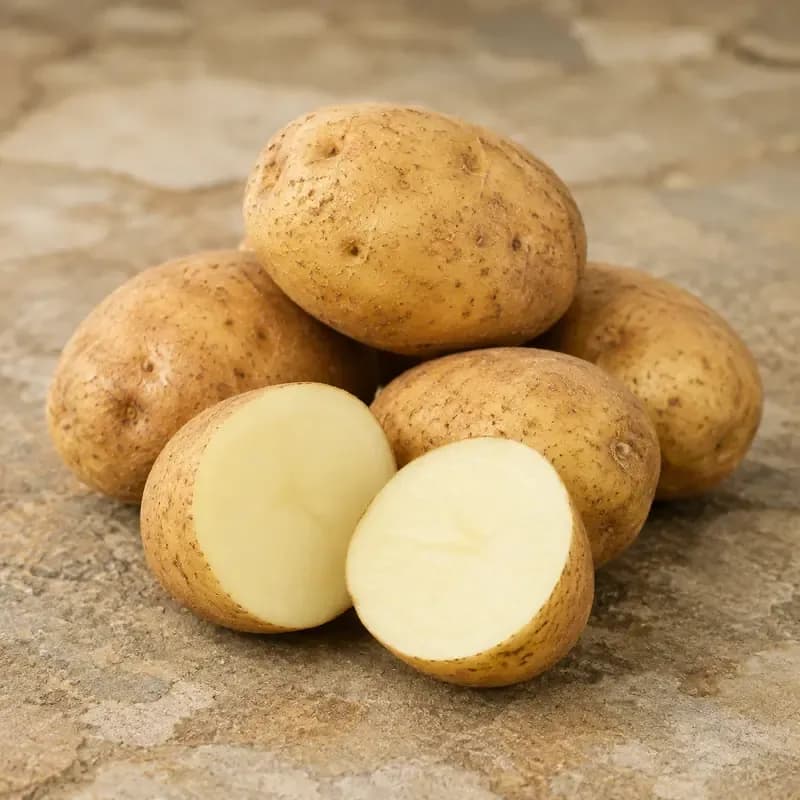
Solanum tuberosum
The potato, scientifically known as Solanum tuberosum, is an edible underground stem tuber belonging to the nightshade family, Solanaceae. Although commonly described as a root vegetable, it is botanically a swollen stem that stores energy for the plant in the form of starch. Potatoes range from small, waxy fingerlings to large, floury baking varieties, with skins and flesh appearing in white, yellow, red, blue, or purple. Their flavor is generally mild and earthy, while texture varies considerably according to starch and moisture content. Waxy potatoes hold their shape in salads and soups, whereas high-starch varieties become fluffy when baked, mashed, or fried. Potatoes provide carbohydrates, potassium, vitamin C, vitamin B6, fiber, and several other micronutrients. The skin is edible when sound, properly cleaned, and free from green discoloration. First domesticated in the Andean region of South America thousands of years ago, the potato later traveled to Europe and became one of the world's most important food crops. Its adaptability, productivity, affordability, and extraordinary culinary versatility now make it a staple ingredient across numerous cultures.
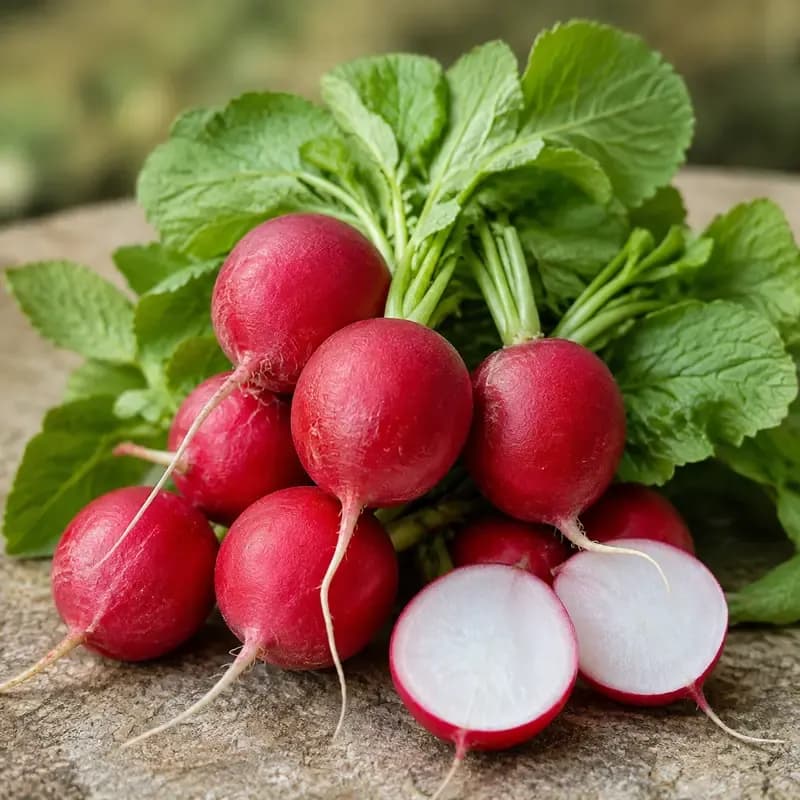
Raphanus raphanistrum subsp. sativus
The radish, scientifically accepted as Raphanus raphanistrum subsp. sativus and widely known by the synonym Raphanus sativus, is a fast-growing root vegetable in the mustard family, Brassicaceae. Its principal edible structure is a swollen taproot together with adjoining hypocotyl tissue, making root the best botanical category. Radishes range from marble-sized red globes to long white daikon, dense Korean radishes, black-skinned winter types, and watermelon radishes with green-white exteriors and vivid pink centers. Their texture is crisp and juicy, while flavor varies from mild and slightly sweet to sharply peppery. Cutting or chewing damages plant cells and allows the enzyme myrosinase to transform glucosinolates into pungent isothiocyanates. Raw radishes enliven salads, slaws, sandwiches, and garnishes; cooking softens their bite and can reveal gentle sweetness. The leaves, tender stems, sprouts, and young seed pods are also edible when properly handled. Raw roots provide abundant water, vitamin C, folate, potassium, copper, fiber, and small amounts of several other micronutrients. Radish has been cultivated for thousands of years, but its precise domestication center remains uncertain. Long selection in Europe and Asia produced the extraordinary range of shapes, colors, growing seasons, and culinary traditions seen today.
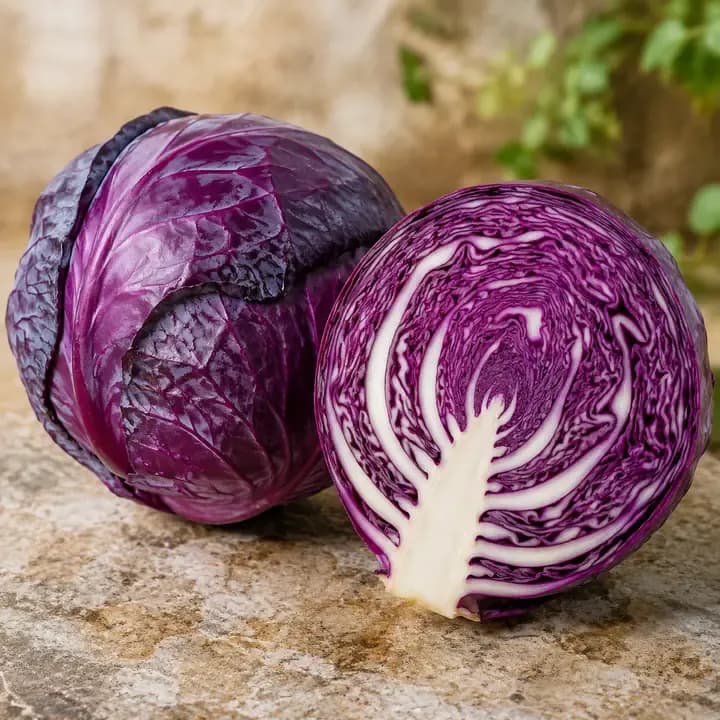
Brassica oleracea var. capitata f. rubra
Red cabbage, scientifically known as Brassica oleracea var. capitata f. rubra, is a compact leafy vegetable belonging to the mustard family, Brassicaceae. Despite its common name, its tightly layered leaves may appear burgundy, violet, blue-purple, or crimson, depending on the cultivar, soil conditions, and preparation. These dramatic colors come primarily from anthocyanins, water-soluble pigments that also act as natural pH indicators. Acidic ingredients such as vinegar or lemon juice shift cooked cabbage toward red or magenta, while alkaline conditions can produce blue-green tones. Raw red cabbage has a dense, crisp texture and a fresh, mildly peppery flavor. Cooking softens its fibers, reduces pungency, and develops earthy sweetness. It is widely shredded into salads and slaws, fermented into sauerkraut, quick-pickled, braised with fruit and spices, roasted, steamed, or stir-fried. Raw red cabbage provides vitamin C, vitamin K, vitamin B6, fiber, potassium, manganese, folate, and carotenoids with relatively few calories. It developed from the wild cabbage lineage native to coastal Europe and the Mediterranean region. Centuries of European selection produced firm, colorful heads suited to cool climates, winter storage, fermentation, and traditional sweet-and-sour dishes.
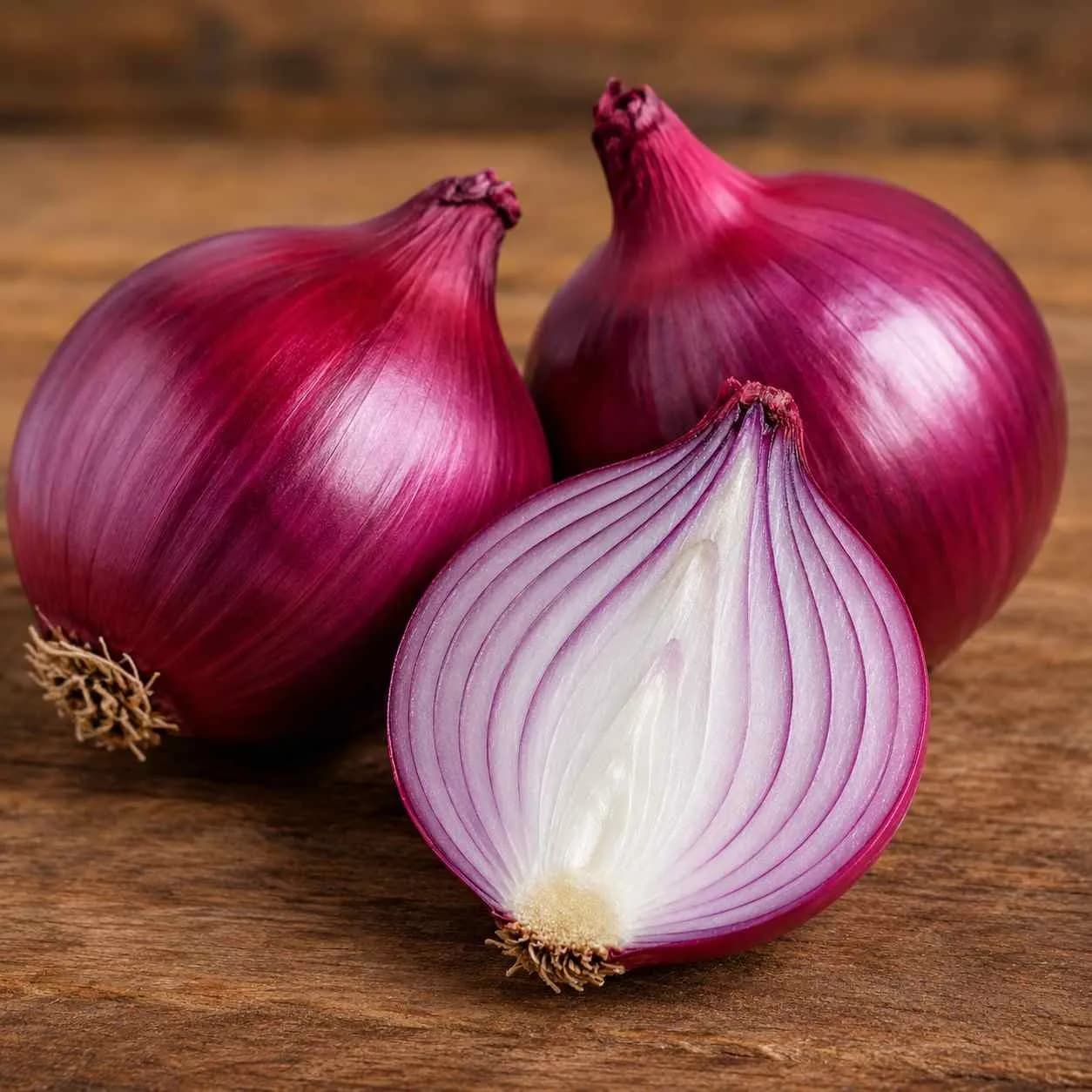
Allium cepa L.
Red onion is the colorful, pungent bulb of Allium cepa L., a cultivated member of the amaryllis family, Amaryllidaceae. Its papery outer skin ranges from burgundy and purple-red to deep violet, while the crisp inner layers are white to pale pink with red-purple margins. Compared with many yellow storage onions, red onions are often perceived as mildly sweet when raw, although their sharpness varies widely by cultivar, growing conditions, storage, and age. Their characteristic aroma and bite come from sulfur-containing compounds that are released when the cells are cut or crushed. The red-purple color is supplied by anthocyanin pigments, while flavonoids such as quercetin contribute additional antioxidant activity. Red onions are eaten raw in salads, sandwiches, salsas, relishes, and pickles, and they also perform well when grilled, roasted, sautéed, braised, or caramelized. Cooking softens their texture, reduces pungency, and develops sweeter, savory flavors through moisture loss and browning reactions. Nutritionally, raw onion is low in calories and fat, contains useful amounts of vitamin C, vitamin B6, folate, manganese, potassium, and fiber, and supplies prebiotic fructans that can support beneficial gut microbes in people who tolerate them. Because onions store well and complement acidic, fatty, spicy, and herbaceous ingredients, red onion is one of the most versatile everyday vegetables in cuisines around the world.
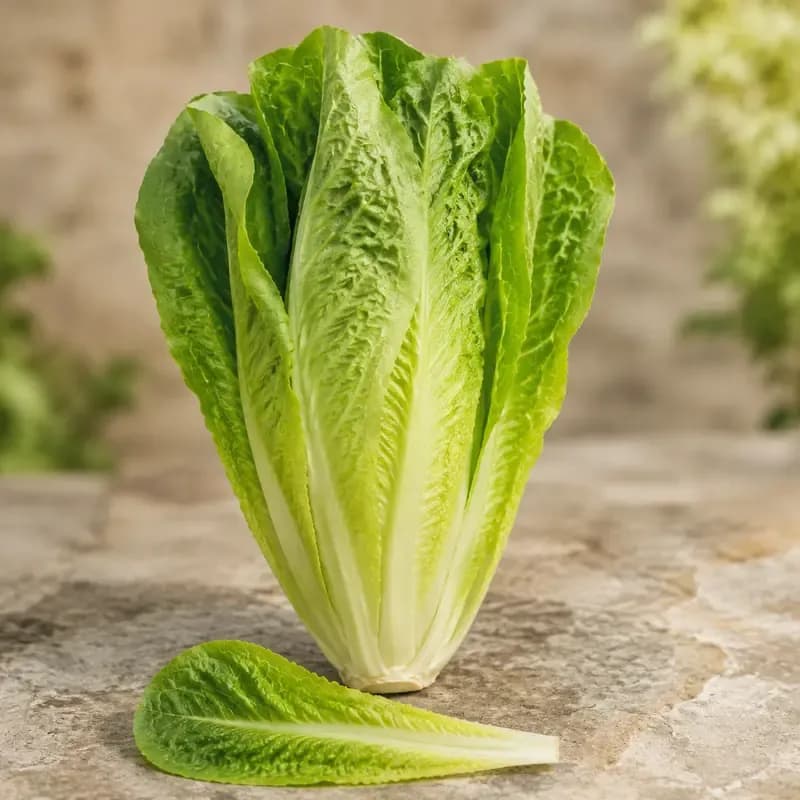
Lactuca sativa var. longifolia
Romaine lettuce, scientifically known as Lactuca sativa var. longifolia, is an upright leafy vegetable in the daisy family, Asteraceae. Also called cos lettuce, it forms a tall, elongated head rather than the round, tightly packed head associated with iceberg lettuce. Its dark green outer leaves surround a pale, compact heart, while prominent central ribs provide a juicy, satisfying crunch. Romaine has a fresh, mildly sweet flavor with a gentle bitterness that becomes more pronounced in mature outer leaves. It is best known as the foundation of Caesar salad, but its sturdy structure also makes it suitable for sandwiches, lettuce wraps, chopped salads, grilling, braising, sautéing, and brief roasting. Raw romaine provides vitamin K, folate, provitamin A carotenoids, fiber, potassium, manganese, and vitamin C while containing approximately 95 percent water and very few calories. Its darker leaves contain beta-carotene, lutein, zeaxanthin, chlorophyll, and phenolic compounds. Romaine belongs to the same cultivated species as iceberg, butterhead, loose-leaf lettuce, and celtuce. Its history is closely connected with the Mediterranean and Near East, where upright lettuces were cultivated for centuries before spreading throughout Europe and the wider world.
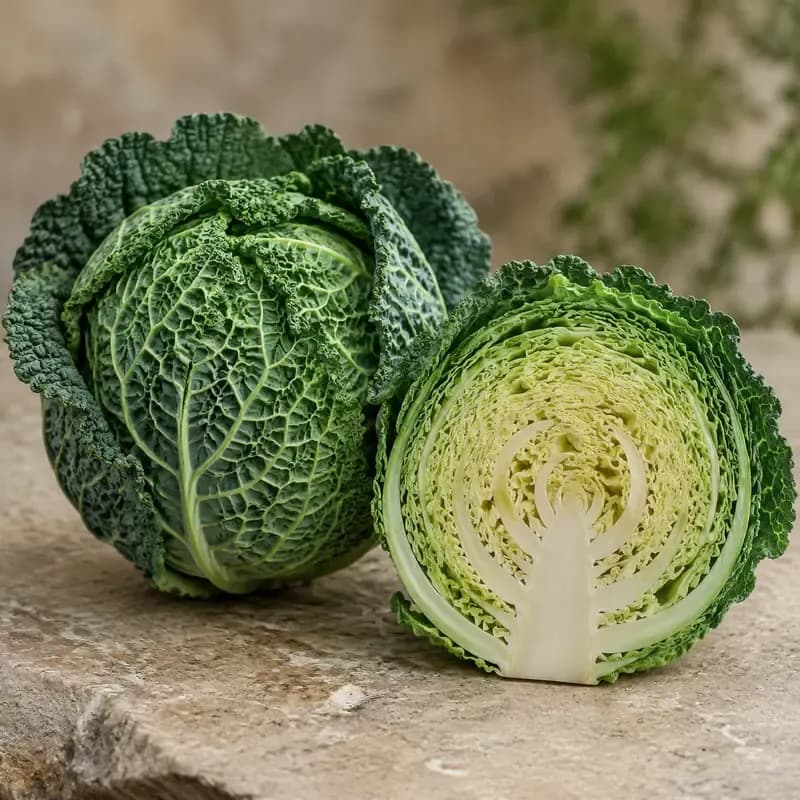
Brassica oleracea var. sabauda
Savoy cabbage, scientifically known as Brassica oleracea var. sabauda, is a cool-season leafy vegetable distinguished by its deeply crinkled, blistered leaves and loosely packed round head. It belongs to the mustard family, Brassicaceae, and shares the species Brassica oleracea with green cabbage, red cabbage, kale, broccoli, cauliflower, Brussels sprouts, and kohlrabi. Its outer leaves range from dark blue-green to forest green, while the tender inner layers are usually pale green or yellow-green. Savoy cabbage has a delicate, mildly sweet, earthy flavor and a softer texture than conventional smooth-leaved cabbage. Its flexible leaves make it particularly suitable for stuffed cabbage rolls, while its textured surface captures sauces, dressings, butter, and seasonings. It can be shredded raw for salads, briefly steamed, sauteed, stir-fried, braised, roasted, fermented, or added to soups and stews. Raw Savoy cabbage provides vitamin K, vitamin C, folate, vitamin B6, fiber, potassium, magnesium, manganese, copper, and carotenoids with relatively few calories. The crop was developed in Europe from the wild cabbage lineage and became closely associated with the historical Savoy region of the western Alps. Its attractive leaves, cold tolerance, and culinary versatility now make it a valued winter vegetable in European and international cuisines.
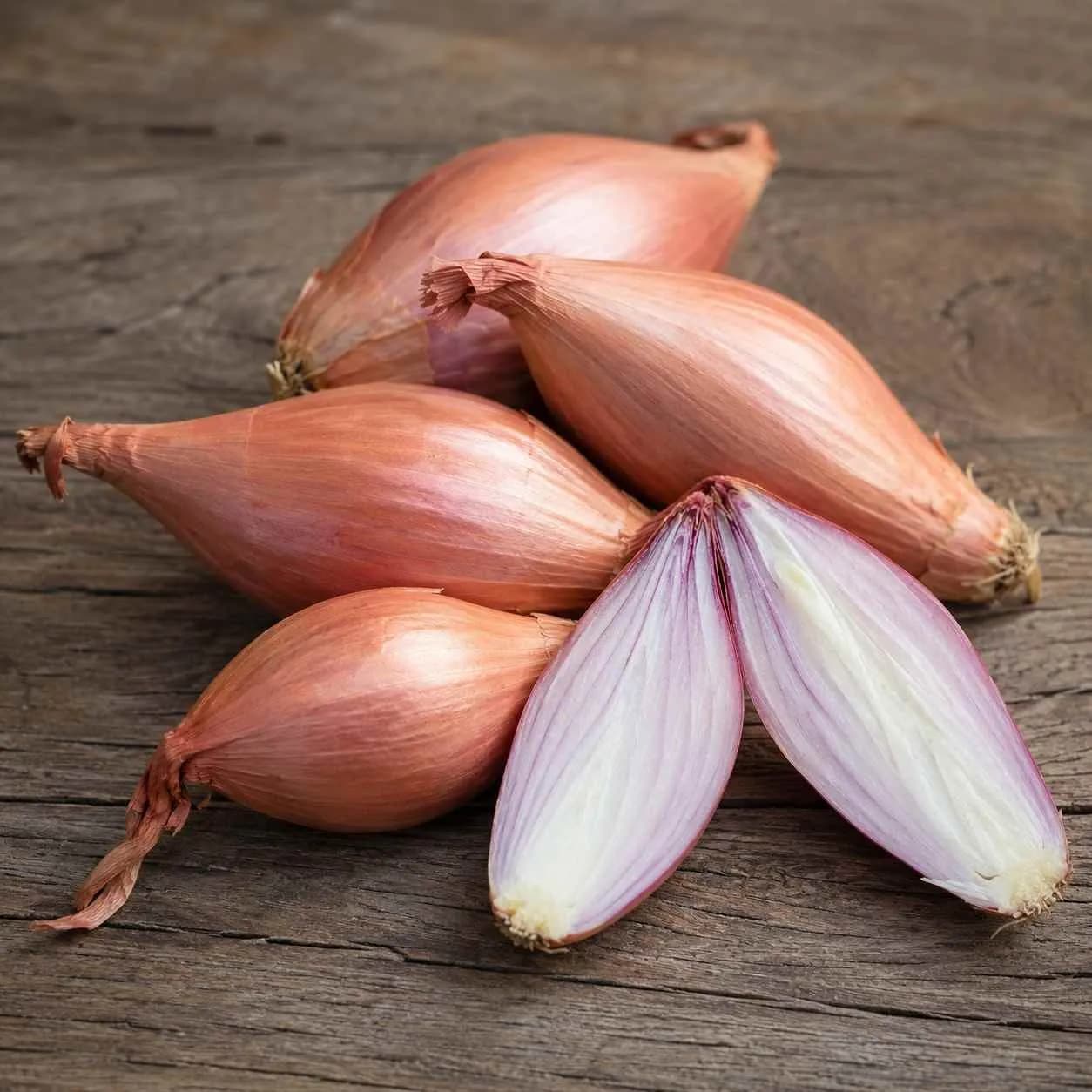
Allium cepa L. Aggregatum Group
Shallot is a small, aromatic bulb vegetable belonging to the onion species Allium cepa L., most commonly classified within the Aggregatum Group. Historically, shallots were also referred to as Allium ascalonicum, but modern botanical treatment generally places them within the cultivated onion complex. Shallot bulbs typically grow in clusters of several cloves or divisions beneath papery copper, brown, reddish, or purple skins. Their flesh may be white, pale pink, or purple-tinged depending on the cultivar. Compared with many mature onions, shallots usually have a more delicate, subtly sweet flavor with complex garlic-like and onion-like notes, making them especially prized in French, Southeast Asian, Indian, Middle Eastern, and Mediterranean cooking. They can be minced raw into vinaigrettes, sliced into salads, fried until crisp, caramelized, roasted whole, sautéed with vegetables, or slowly cooked into sauces and stews. Nutritionally, raw shallots provide carbohydrate, fiber, vitamin B6, vitamin C, potassium, manganese, iron, phosphorus, magnesium, copper, and smaller amounts of several B vitamins. Like other Allium vegetables, they also contain flavonoids such as quercetin and sulfur-containing compounds produced when their cells are chopped or crushed. Their combination of concentrated flavor, compact size, long storage potential, and culinary versatility makes shallots one of the most valued aromatic vegetables in professional and home kitchens.
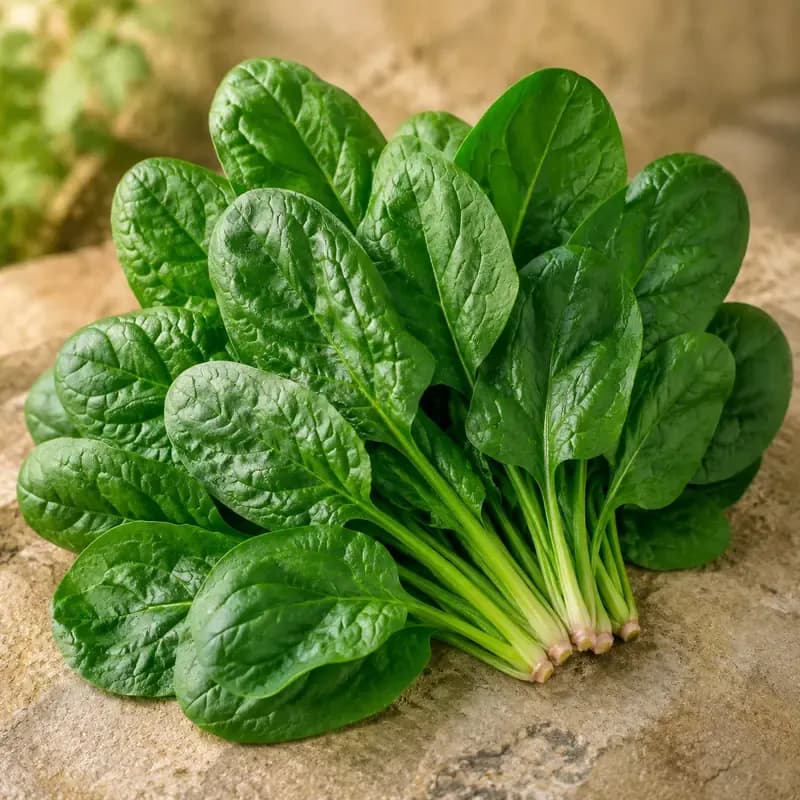
Spinacia oleracea
Spinach (Spinacia oleracea) is a cool-season leafy vegetable in the Amaranthaceae family, the same botanical family that includes beet and Swiss chard. It forms a low rosette of smooth, semi-savoyed, or deeply crinkled green leaves attached to tender petioles. Young leaves are mild, delicate, and suitable for salads, while mature leaves develop a fuller earthy flavor and sturdier texture that works well in sautés, curries, soups, pasta fillings, and baked dishes. Spinach is naturally low in calories and supplies vitamin K, provitamin A carotenoids, folate, vitamin C, magnesium, manganese, potassium, iron, lutein, and zeaxanthin. Its iron is non-heme iron, and its calcium and iron bioavailability can be limited by naturally occurring oxalates, so nutrient content should not be confused with the amount the body absorbs. Cooking causes the leaves to lose considerable volume; boiling and draining can also reduce some soluble oxalate while leaching certain water-soluble nutrients. Spinach most likely originated in ancient Persia or the wider central and western Asian region before spreading through Asia, the Mediterranean, Europe, and eventually the Americas. Today it is cultivated worldwide and sold fresh, frozen, and canned.
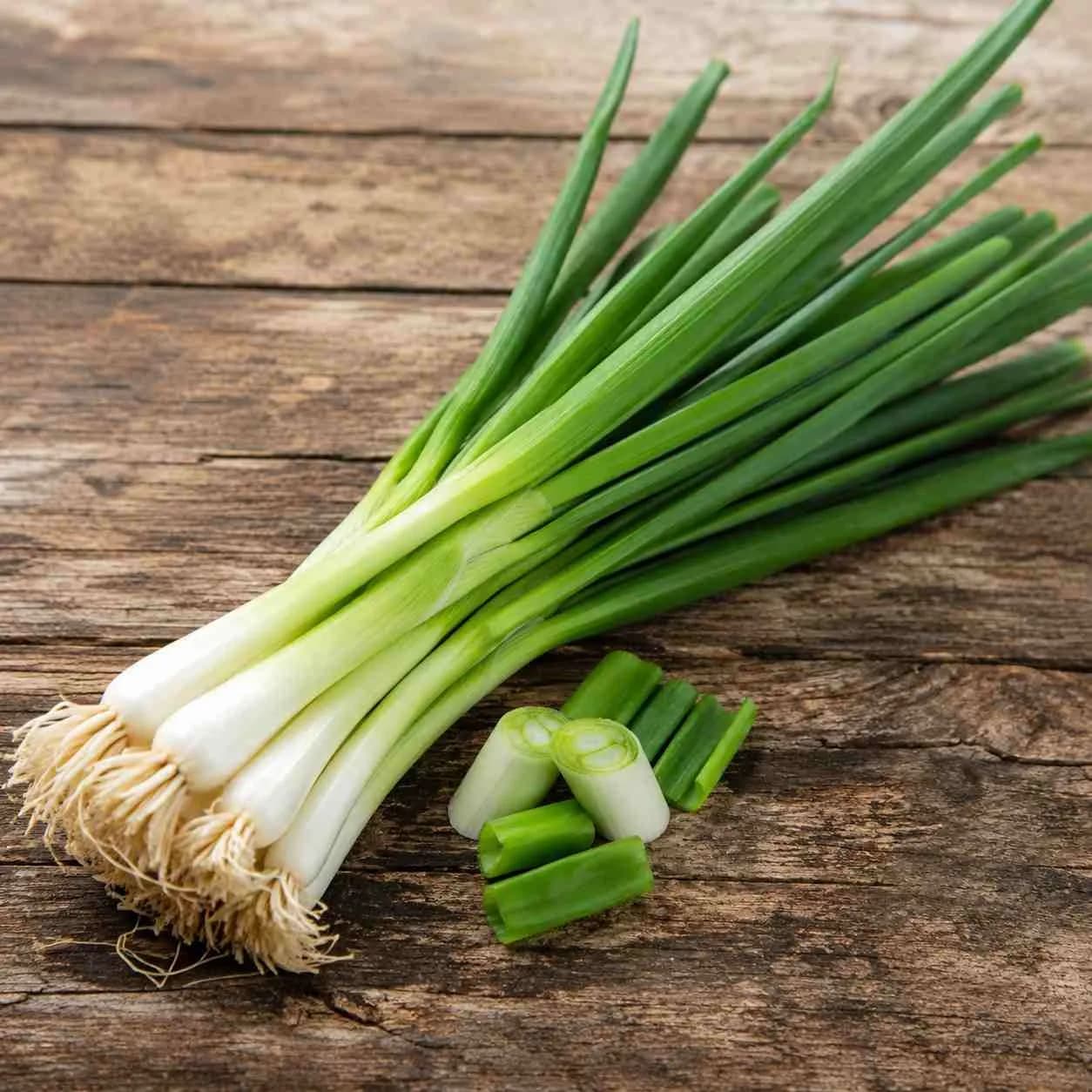
Allium cepa L.
Spring onion is a young, immature form of onion, most commonly Allium cepa L., harvested before the bulb has fully enlarged and matured. The vegetable is recognizable by its slender white base, sometimes developing into a small rounded bulb, and its long, hollow or tubular green leaves. Depending on region and cultivar, the terms spring onion, green onion, and scallion may overlap, although true scallions may also belong to Allium fistulosum and generally form little or no bulb. Spring onions have a fresher, milder, greener flavor than mature storage onions. The white portion delivers a gentle onion pungency, while the green tops have a grassy, herb-like character similar to mild chives. Nearly the entire plant can be eaten, making spring onion both versatile and relatively low-waste. Raw spring onions add crunch and brightness to salads, sandwiches, salsas, noodles, and garnishes, while sautéing, grilling, roasting, steaming, and stir-frying develop sweeter and more savory flavors. Nutritionally, spring onions are low in calories and provide particularly notable amounts of vitamin K, vitamin C, folate, fiber, carotenoids, and several minerals. Their green tissues also contain chlorophyll, flavonoids such as quercetin and kaempferol, and sulfur-containing compounds characteristic of the Allium family. Spring onions are widely used in Asian, European, Middle Eastern, Latin American, and North American cooking.
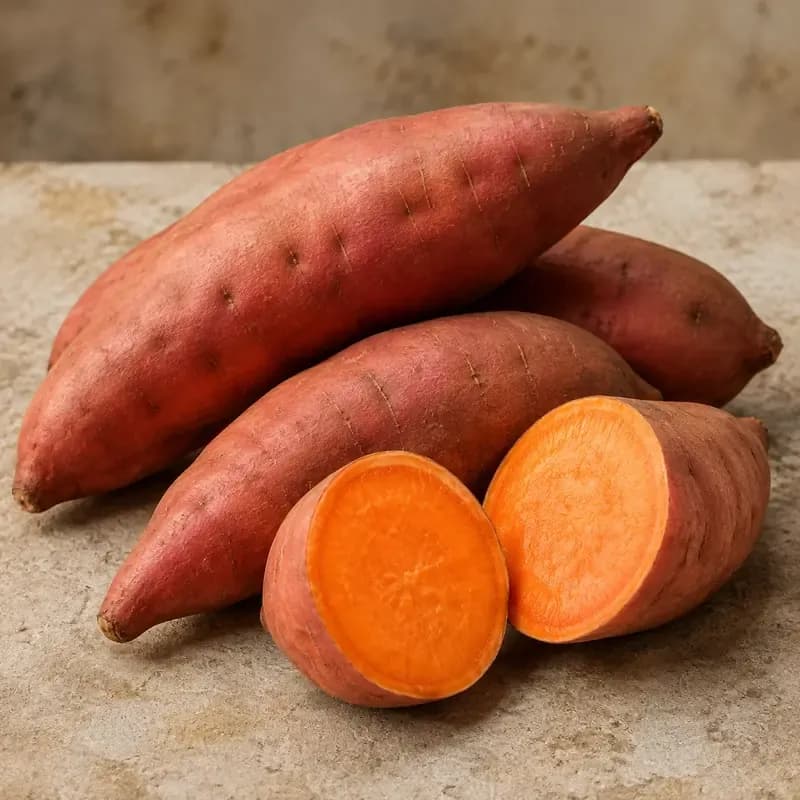
Ipomoea batatas
The sweet potato, scientifically known as Ipomoea batatas, is a warm-season root vegetable belonging to the morning glory family, Convolvulaceae. Despite its name, it is not closely related to the common potato and is botanically a swollen storage root rather than a stem tuber. Sweet potatoes vary dramatically in appearance and texture: their skins may be cream, copper, red, purple, or brown, while the flesh ranges from white and yellow to vivid orange or deep violet. Orange-fleshed varieties are usually moist and sweet, white and Japanese types tend to be drier and chestnut-like, and purple cultivars offer an earthy flavor with striking anthocyanin pigmentation. The roots can be baked, roasted, steamed, boiled, mashed, fried, pureed, or incorporated into curries, desserts, breads, soups, and savory fillings. Young leaves and tender shoots are also edible and are cooked as leafy greens in parts of Asia, Africa, and the Pacific. Raw sweet potato provides carbohydrates, fiber, potassium, copper, manganese, vitamin B6, pantothenic acid, and substantial provitamin A in orange-fleshed types. Domesticated in the tropical Americas thousands of years ago, this adaptable crop later spread throughout the Pacific, Europe, Africa, and Asia.
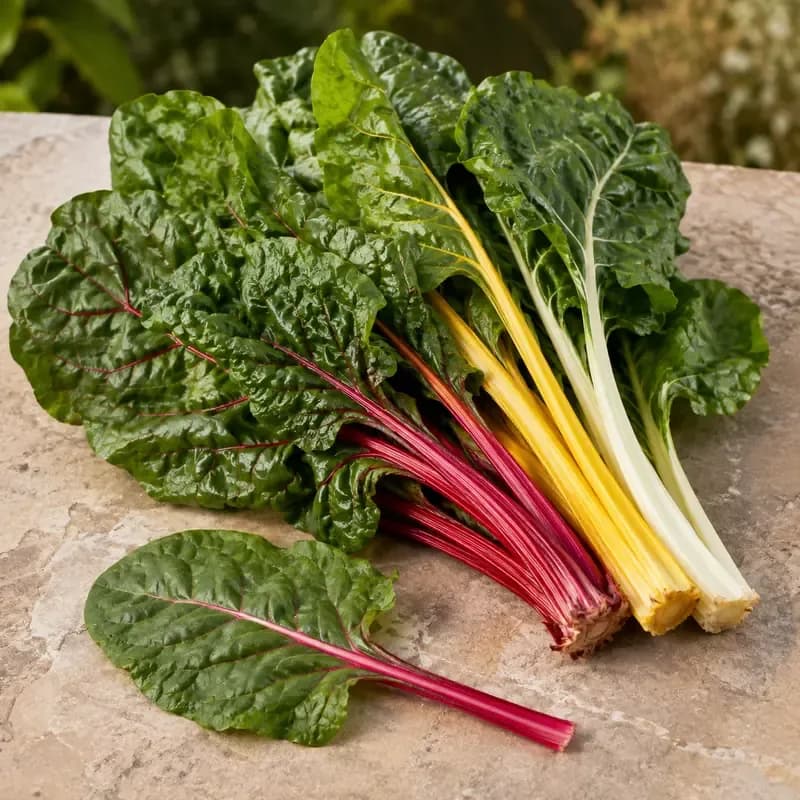
Beta vulgaris subsp. vulgaris (Cicla Group)
Swiss chard, botanically classified as Beta vulgaris subsp. vulgaris in the Cicla Group, is a leafy vegetable closely related to beetroot, sugar beet, and mangel. Unlike beetroot, which is cultivated primarily for its swollen storage root, Swiss chard has been selected for broad leaves and thick, succulent stalks. Its crinkled or smooth leaf blades range from bright green to deep emerald, while the ribs may be white, yellow, orange, pink, or ruby red. The leaves have an earthy, mildly bitter flavor resembling spinach and beet greens, whereas the stalks are crisp, juicy, and subtly sweet. Both portions are edible, although the firmer stalks generally require more cooking time than the tender leaves. Swiss chard can be sautéed, steamed, braised, boiled, roasted, grilled, or added to soups, stews, curries, pasta, and savory pies. Raw Swiss chard is exceptionally rich in vitamin K and also supplies provitamin A carotenoids, vitamin C, magnesium, copper, manganese, potassium, iron, fiber, and numerous plant pigments. Despite its common name, Swiss chard did not necessarily originate in Switzerland; its ancestry is associated with Mediterranean forms of Beta vulgaris cultivated since antiquity.
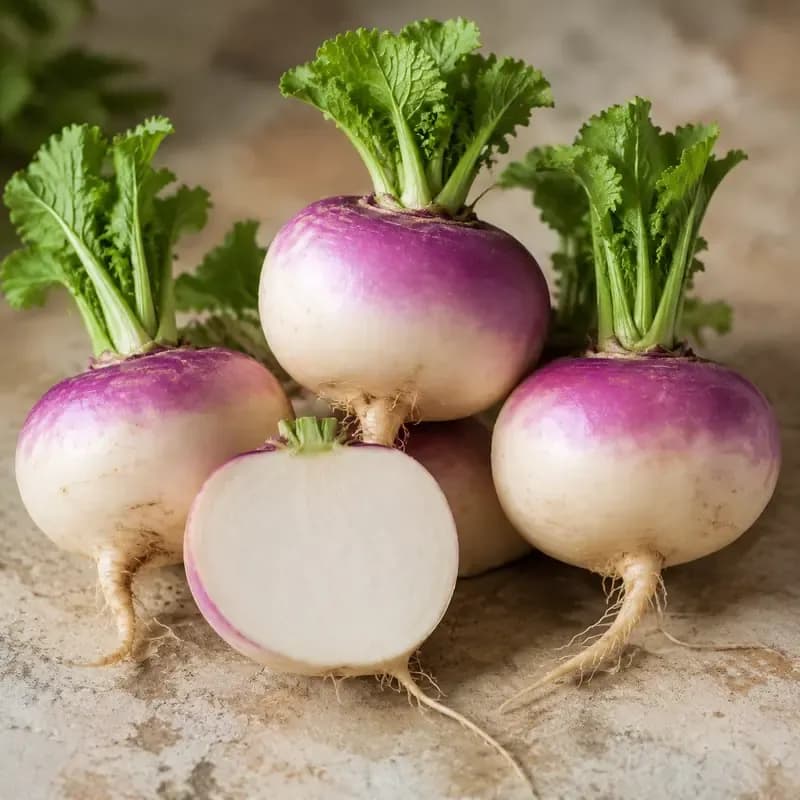
Brassica rapa subsp. rapa
The turnip, scientifically known as Brassica rapa subsp. rapa, is a cool-season root vegetable belonging to the mustard family, Brassicaceae. Its familiar rounded storage organ develops primarily from enlarged hypocotyl and taproot tissues, making root the best botanical category. Turnips vary from small, smooth, white roots with purple shoulders to golden, red-skinned, elongated, and Japanese salad types. Young roots are crisp, juicy, mildly sweet, and gently peppery, while larger or older turnips can develop a firmer texture and stronger mustard-like flavor. Cooking softens their pungency, concentrates their sweetness, and produces a tender texture suitable for roasting, mashing, braising, soups, curries, and stews. The leafy tops, called turnip greens, are also edible and possess a more assertive, pleasantly bitter flavor. Raw turnip roots contain abundant water and provide vitamin C, fiber, potassium, copper, manganese, folate, and several B vitamins with relatively few calories. Turnips have been cultivated since ancient times for human food, livestock fodder, and oil-rich relatives within the Brassica rapa species. They remain especially valuable in cool climates because they mature quickly, tolerate light frost, store well, and can supply both edible roots and nutritious greens.
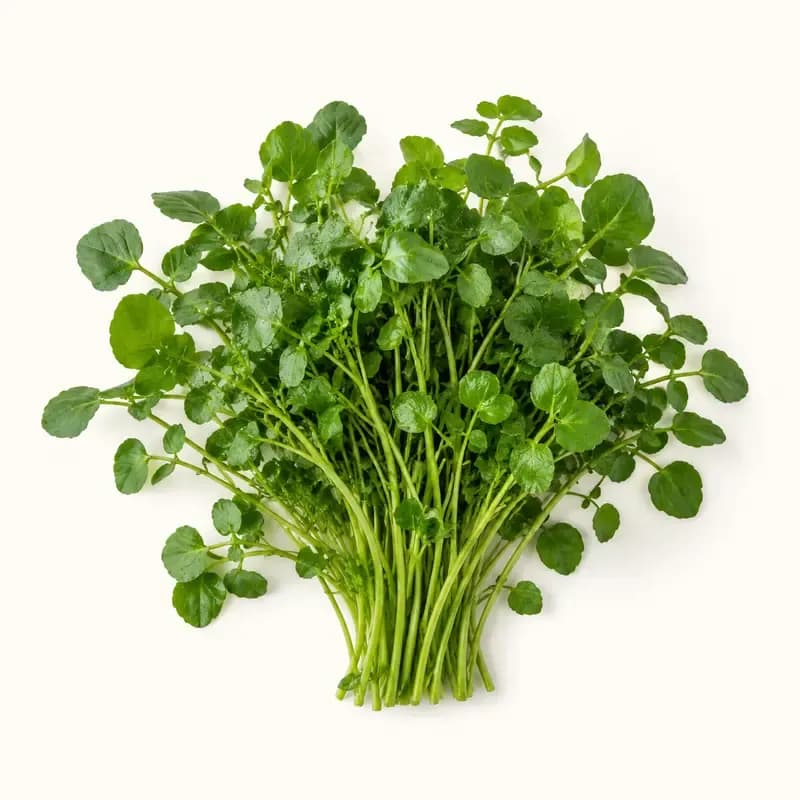
Nasturtium officinale W.T.Aiton
Watercress, scientifically known as Nasturtium officinale, is a fast-growing aquatic or semi-aquatic leafy vegetable in the mustard family, Brassicaceae. It is also called yellowcress, water rocket, and true watercress. The perennial plant develops creeping or floating hollow stems bearing clusters of smooth, rounded, deep-green leaflets and small white flowers. Its leaves, tender stems, young shoots, flower buds, and flowers are edible. Fresh watercress has a bright, peppery, slightly bitter flavor created partly by glucosinolates and their pungent breakdown products. Young shoots are generally milder, while mature or flowering plants can taste stronger. Watercress is eaten raw in salads and sandwiches, blended into sauces and soups, or briefly sautéed, steamed, simmered, and wilted. Raw watercress contains approximately 95% water and provides vitamin K, vitamin C, provitamin A carotenoids, manganese, calcium, riboflavin, copper, thiamin, vitamin B6, potassium, magnesium, phosphorus, and protein for very few calories. Native to Eurasia and neighboring parts of northern Africa, it has been cultivated and naturalized across many temperate regions. Commercial watercress is commonly produced in carefully managed flowing-water beds or hydroponic systems because wild plants from contaminated waterways can carry dangerous microorganisms or liver-fluke parasites.