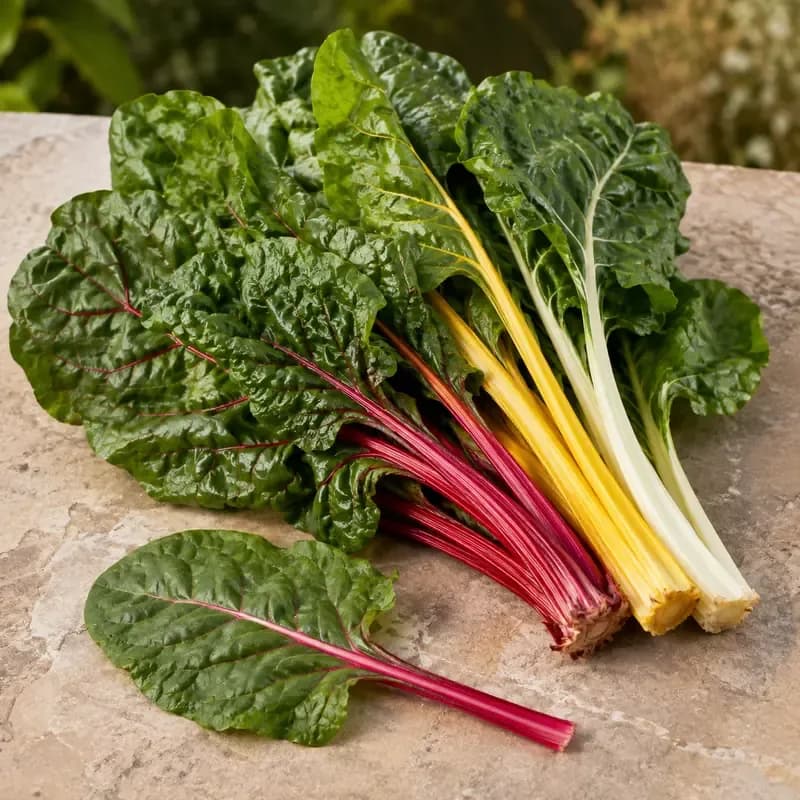
Swiss Chard
Beta vulgaris subsp. vulgaris (Cicla Group)
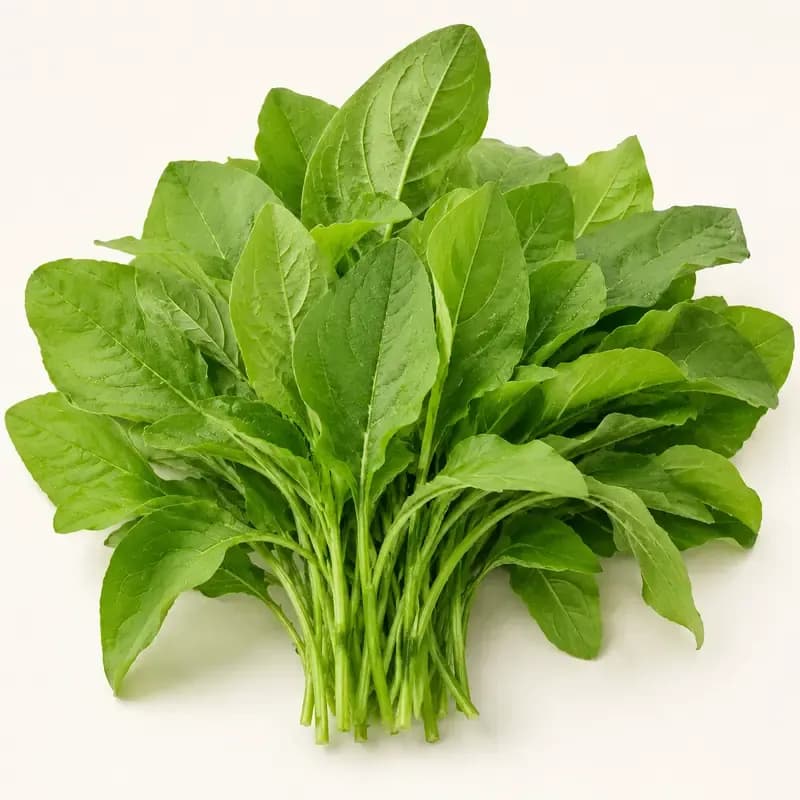
Swiss chard, botanically classified as Beta vulgaris subsp. vulgaris in the Cicla Group, is a leafy vegetable closely related to beetroot, sugar beet, and mangel. Unlike beetroot, which is cultivated primarily for its swollen storage root, Swiss chard has been selected for broad leaves and thick, succulent stalks. Its crinkled or smooth leaf blades range from bright green to deep emerald, while the ribs may be white, yellow, orange, pink, or ruby red. The leaves have an earthy, mildly bitter flavor resembling spinach and beet greens, whereas the stalks are crisp, juicy, and subtly sweet. Both portions are edible, although the firmer stalks generally require more cooking time than the tender leaves. Swiss chard can be sautéed, steamed, braised, boiled, roasted, grilled, or added to soups, stews, curries, pasta, and savory pies. Raw Swiss chard is exceptionally rich in vitamin K and also supplies provitamin A carotenoids, vitamin C, magnesium, copper, manganese, potassium, iron, fiber, and numerous plant pigments. Despite its common name, Swiss chard did not necessarily originate in Switzerland; its ancestry is associated with Mediterranean forms of Beta vulgaris cultivated since antiquity.
Swiss Chard Galeria de fotos
Explore Swiss Chard em detalhes
Swiss Chard - Vista principal
Swiss Chard Informações nutricionais
💊Vitaminas
Por 100 g
⚡Minerais
Por 100 g
Por porção
Detalhamento nutricional por porção
Benefícios para a saúde de Swiss Chard
Swiss Chard Origem e distribuição
The Mediterranean region and western Asia, where wild and early cultivated forms of Beta vulgaris developed
Swiss chard shares its ancestry with beetroot and other cultivated forms of Beta vulgaris. Ancient Mediterranean societies grew leafy beets long before the development of modern swollen-root beet cultivars. Greek and Roman writers described beet plants used for their leaves and stalks, and repeated selection produced forms with larger blades, broader ribs, and diverse stem colors. The English name Swiss chard appeared much later and may have been used to distinguish the vegetable from other plants called cardoon or chard; it does not establish Switzerland as the crop's birthplace. Today, chard is known by names including silverbeet, perpetual spinach, beet spinach, and seakale beet.
Swiss Chard Melhor época
Swiss chard is primarily a cool-season crop, but established plants tolerate moderate heat and can produce leaves for an extended period in suitable climates.
Swiss Chard Variedades
Cada variedade oferece sabores, texturas e usos culinários únicos
Fordhook Giant
Bright Lights
Ruby Red
Lucullus
Barese
Peppermint
Golden Chard
Swiss Chard Guia de armazenamento e seleção
Mantenha a fruta fresca por mais tempo
Como escolher a fruta perfeita
Choose Swiss chard with crisp, vibrant leaves and firm, juicy stalks.
Look for fresh coloration appropriate to the variety, without extensive yellowing, browning, or blackened edges.
Avoid bunches with slimy leaves, mold, sour odors, severely wilted blades, or dry and split stalks.
Select smaller leaves for tender raw preparations and larger leaves for cooking.
Check the base of the bunch for decay or excessive moisture before purchasing.
Métodos de armazenamento
Refrigerate Swiss chard promptly at 4°C or below and keep it separate from raw animal foods.
Store unwashed chard loosely inside a perforated bag or ventilated container in the refrigerator crisper drawer.
Wrap the stalk ends or entire bunch loosely in a clean, slightly damp towel if the leaves are prone to wilting.
If chard has been washed, dry it thoroughly before refrigeration because excess surface moisture encourages decay.
Remove slimy or badly damaged leaves promptly to prevent spoilage from spreading.
Guia de validade
Preparation Tips
Rinse each leaf and stalk under cool running water, paying attention to folds where soil can collect.
Trim dry or damaged stalk ends and discard leaves with slime, mold, or extensive decay.
Separate thick stalks from the leaves when cooking because the stalks generally require several additional minutes.
Slice stalks crosswise and begin cooking them before adding the chopped leaves.
Young, tender leaves may be used raw, while mature leaves are generally more palatable after cooking.
To reduce soluble oxalates, boil chard in ample water and discard the cooking liquid, recognizing that this also reduces some water-soluble nutrients.
Do not wash chard with soap, detergent, bleach, or household disinfectants.
Instruções para congelar
Preserve a frescura por meses
Wash the leaves and stalks thoroughly, then separate them because the stalks require more blanching time.
Blanch chopped leaves for approximately 1 to 2 minutes and stalk pieces for about 2 to 3 minutes.
Cool blanched chard immediately in ice water, drain it thoroughly, and squeeze excess moisture from the leaves.
Freeze portions in airtight containers or freezer bags and use them in cooked dishes after thawing.
Label frozen chard with the date and minimize trapped air to reduce freezer burn.
Dica
Identifique itens congelados com a data para acompanhar a frescura. A maioria das frutas mantém a qualidade por 2-3 meses quando congelada corretamente. Para melhores resultados, use recipientes herméticos ou sacos próprios para congelador para evitar queimadura de freezer.
Jornada culinária
Descubra possibilidades deliciosas
Usos comuns
Combinações perfeitas
Receitas populares
Cooking Methods
Bebidas refrescantes
Informações de segurança
Swiss chard allergy is uncommon but possible. Reactions could include oral itching, hives, swelling, digestive symptoms, breathing difficulty, or, rarely, anaphylaxis. Individuals with known allergy to beetroot or related Beta vulgaris foods may require professional assessment before consuming chard. Severe symptoms such as throat swelling, breathing difficulty, faintness, or widespread hives require urgent medical attention.
Pesticide use and residue levels vary by country, farm, season, and production method. Rinse individual leaves and stalks thoroughly under running water, paying attention to folded or crinkled surfaces where soil can collect. Washing can reduce dirt, microorganisms, and some surface residues but cannot remove every residue. Organic chard should also be washed because organic production does not eliminate microbial contamination.
- • People with a diagnosed Swiss chard, beetroot, or related food allergy should avoid it unless cleared by an allergy specialist.
- • People taking warfarin or another vitamin K antagonist should maintain a consistent intake and consult their clinician before making substantial changes.
- • Individuals with recurrent calcium oxalate kidney stones or a prescribed low-oxalate diet should seek personalized medical or dietetic guidance.
- • People with kidney disease who must restrict potassium should ask their renal clinician or dietitian about suitable portions.
- • Anyone should avoid chard that is slimy, moldy, foul-smelling, extensively decayed, or stored at unsafe temperatures.
- •Large servings may cause gas, bloating, or digestive discomfort in people unaccustomed to fiber-rich vegetables.
- •The vegetable's oxalates may be unsuitable in large quantities for people prone to calcium oxalate kidney stones.
- •Sudden changes in intake may affect anticoagulation in people taking warfarin because Swiss chard is exceptionally rich in vitamin K.
- •Chard naturally contains sodium, so very large portions may require consideration in strictly sodium-restricted diets.
- •Contaminated raw leaves can transmit foodborne pathogens if they are handled or stored improperly.
- • Wash hands, knives, cutting boards, bowls, and other equipment before preparing Swiss chard.
- • Keep raw chard separate from raw meat, poultry, seafood, eggs, and their juices.
- • Rinse the leaves and stalks under cool running water without using soap, detergent, bleach, or household disinfectants.
- • Refrigerate cooked chard within two hours, or within one hour when ambient temperatures are very high.
- • Discard chard that develops slime, mold, a foul odor, or extensive decay.
- • People advised to limit oxalates should follow their clinician's preparation and portion recommendations.
Curiosidades sobre Swiss Chard
Fatos surpreendentes que você vai amar!
Swiss chard is botanically the same species as beetroot, sugar beet, and mangel.
The vegetable's name does not establish Switzerland as its place of origin.
Swiss chard is commonly called silverbeet in Australia and New Zealand.
Rainbow chard is usually a mixture of differently colored cultivars rather than a single botanical variety.
Red and yellow stalks contain betalain pigments related to those found in beetroot.
Both the leaf blades and colorful stalks are edible.
Chard is a biennial plant commonly harvested as an annual vegetable.
Repeated harvesting of outer leaves allows the center of the plant to continue producing new growth.
Perguntas frequentes
Is Swiss chard actually from Switzerland?
GeneralSwiss chard is not known to have originated in Switzerland. It belongs to Beta vulgaris, a species with wild ancestors associated with Mediterranean and western Asian coastal regions. Leafy forms were cultivated by ancient Mediterranean societies long before the modern name appeared. The word Swiss may have been added by seed sellers or writers to distinguish chard from other vegetables with similar common names. Today, chard is grown worldwide and is called silverbeet in Australia and New Zealand, while other names include perpetual spinach, beet spinach, and seakale beet.
Are Swiss chard stems edible?
PreparationYes. The colorful or white stalks are edible and should not automatically be discarded. They are firmer and require more cooking time than the leafy blades, so it is helpful to separate the two portions. Slice the stalks and begin sautéing, steaming, or braising them several minutes before adding the leaves. Thick stalks can also be roasted, pickled, gratinéed, or added to soups. Very mature stalks may have fibrous strings that can be peeled away, but most fresh stalks become tender with appropriate cooking.
How is Swiss chard related to beetroot?
ScienceSwiss chard and beetroot are cultivated forms of the same species, Beta vulgaris. Plant breeders and farmers selected beetroot for an enlarged, fleshy storage root, while chard was selected for broad leaves and substantial leaf stalks. This relationship explains their similar earthy flavors, colorful pigments, and seed structures. Chard may form a small root, but it does not produce the round storage organ expected from beetroot cultivars. Sugar beet and mangel also belong to Beta vulgaris, demonstrating how human selection can create dramatically different vegetables from one botanical species.
Is Swiss chard healthier raw or cooked?
HealthBoth forms have advantages. Raw chard retains more heat-sensitive vitamin C and provides crisp texture, but mature leaves can be bitter and contain substantial oxalates. Cooking reduces volume, making it easier to eat a larger quantity, and softens the leaves and stalks. Boiling in ample water and discarding the liquid can reduce soluble oxalates, although it also removes some vitamin C, folate, and minerals. Steaming or sautéing generally retains more water-soluble nutrients. The most appropriate method depends on dietary needs, taste, portion size, and medical guidance.
Does Swiss chard contain oxalates?
HealthYes. Swiss chard naturally contains oxalates, compounds that can bind minerals and contribute to calcium oxalate stone formation in susceptible people. Most healthy individuals can include reasonable portions as part of a varied diet. People with recurrent calcium oxalate kidney stones, certain kidney disorders, or medically prescribed low-oxalate diets should obtain individualized advice. Boiling chard in water and discarding the liquid can reduce soluble oxalates more effectively than dry cooking, but it does not remove them completely and also lowers some water-soluble nutrients.
Why does Swiss chard contain so much vitamin K?
ScienceVitamin K1, or phylloquinone, is concentrated in the photosynthetic tissues of green plants because it participates in processes associated with chloroplasts. Swiss chard has large, deeply green leaves, which helps explain its exceptionally high vitamin K concentration. The body uses vitamin K to activate clotting factors and several proteins involved in bone metabolism. This is beneficial for most people, but a sudden change in intake can interfere with warfarin therapy. People taking vitamin K antagonist medication should keep consumption consistent and follow clinical guidance.
How should Swiss chard be stored to keep it fresh?
PreparationRefrigerate chard promptly without washing it first unless it will be dried thoroughly. Place the bunch loosely in a perforated bag or ventilated container, optionally wrapping it in a clean, slightly damp towel to reduce wilting. Keep it at 4°C or below and away from raw meat, poultry, and seafood. Chard is highly perishable and is usually best within three to five days. Before use, discard slimy, moldy, foul-smelling, or extensively yellowed leaves. Freezing requires blanching because raw frozen leaves develop poor texture.
Can people taking warfarin eat Swiss chard?
HealthSwiss chard contains approximately 692% of the Daily Value for vitamin K per 100 g, making consistency especially important for people taking warfarin or another vitamin K antagonist. These medicines work partly by interfering with vitamin K recycling. Patients are generally not advised to eliminate nutritious leafy vegetables automatically, but sudden large changes in intake may affect anticoagulation. A person using warfarin should follow instructions from the prescribing clinician or registered dietitian, maintain a predictable dietary pattern, attend monitoring appointments, and avoid changing medication independently.