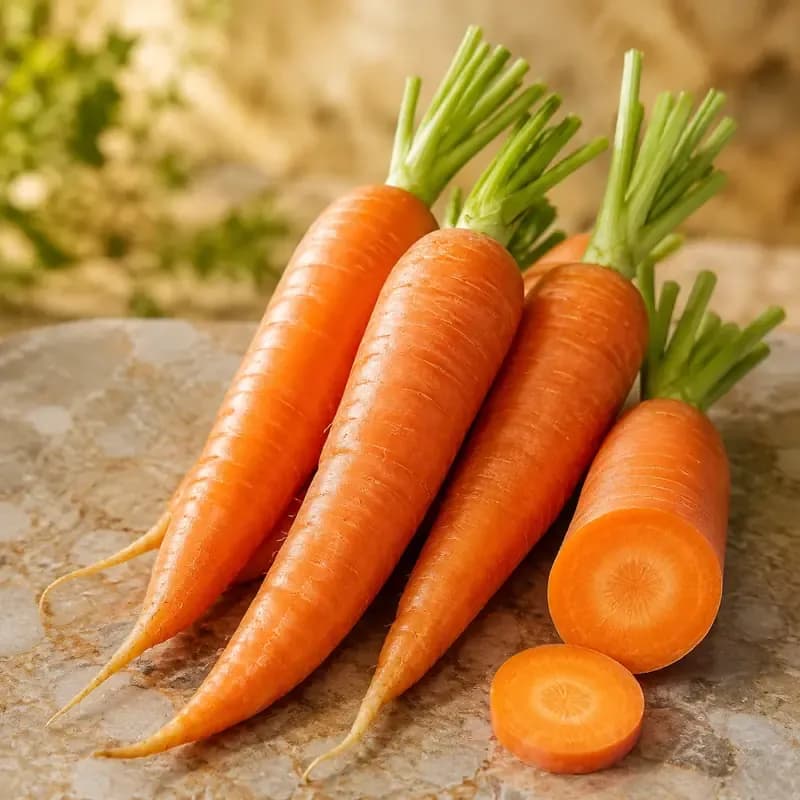
Carrot
Daucus carota subsp. sativus
The carrot, scientifically known as Daucus carota subsp. sativus, is a cultivated biennial in the parsley family, Apiaceae. Its familiar edible portion is a thickened storage taproot rather than a stem or tuber. Although orange carrots dominate many markets, cultivated roots may also be purple, red, yellow, white, or nearly black, reflecting different mixtures of carotenoids, anthocyanins, and other pigments. Fresh carrots are crisp, juicy, mildly earthy, and naturally sweet; cooking softens their cell walls, intensifies sweetness, and can make their carotenoids easier to access during digestion. The root is eaten raw, roasted, steamed, boiled, braised, pickled, fermented, juiced, or baked into savory and sweet dishes. Tender carrot greens are also edible when correctly identified, thoroughly washed, and used like an herb, though the root remains the principal food crop. Carrots provide beta-carotene-derived vitamin A, vitamin K, fiber, potassium, vitamin B6, vitamin C, and diverse phytonutrients while remaining low in calories. Genetic and historical evidence places carrot domestication in western to Central Asia during the Early Middle Ages; later breeding produced sweeter, smoother roots, and high-carotenoid orange forms were selected in western Europe during the Renaissance.
Carrot Galeria de fotos
Explore Carrot em detalhes
Carrot - Vista principal
Carrot Informações nutricionais
💊Vitaminas
Por 100 g
⚡Minerais
Por 100 g
Por porção
Detalhamento nutricional por porção
Benefícios para a saúde de Carrot
Carrot Origem e distribuição
Western to Central Asia; cultivated carrot was likely domesticated across the region that includes present-day Afghanistan, Iran, and neighboring areas
Genomic research and historical records indicate that cultivated carrot arose in western to Central Asia during the Early Middle Ages. Early domesticated carrots were commonly purple or yellow and were selected for fleshy, minimally branched storage roots. The crop moved west through Asia Minor and the Mediterranean and east toward China and Japan. High-carotenoid orange carrots were later selected in western Europe during the Renaissance. Continued breeding produced roots with smoother skins, smaller cores, greater sweetness, uniform shapes, and colors ranging from white and yellow to orange, red, purple, and nearly black. Carrots are now grown globally; international production statistics commonly aggregate carrots with turnips, so country rankings refer to that combined reporting category.
Carrot Melhor época
Carrots are cool-season crops. Regional planting, protected cultivation, and cold storage make them available year-round, with young spring carrots and mature autumn storage carrots offering different textures and sweetness.
Carrot Variedades
Cada variedade oferece sabores, texturas e usos culinários únicos
Nantes
Chantenay
Danvers
Imperator
Shin Kuroda
Pusa Rudhira
Carrot Guia de armazenamento e seleção
Mantenha a fruta fresca por mais tempo
Como escolher a fruta perfeita
Choose carrots that are firm, crisp, smooth, and brightly colored for their cultivar, without sliminess, mold, deep cracks, or extensive dark decay.
For bunched carrots, look for fresh green tops without severe wilting, but remove the tops soon after purchase because they draw moisture from the roots.
Select slender, evenly shaped carrots for raw eating and quick cooking; larger mature roots often suit roasting, soups, stocks, and grating.
A pale white surface film on cut baby carrots is often dehydration rather than mold, but discard carrots that are slimy, sour-smelling, mushy, or visibly moldy.
Métodos de armazenamento
Remove leafy tops, place unwashed roots in a perforated bag or moisture-retaining container, and refrigerate them in the crisper drawer.
Keep carrots away from ethylene-producing fruits such as apples and ripe pears because ethylene can accelerate quality loss and create bitter flavors.
Maintain refrigeration at 4 degrees Celsius or below and avoid standing water unless cut carrots are intentionally submerged in clean water that is changed regularly.
Store cooked carrots in a shallow airtight container and refrigerate promptly; discard them if they develop mold, slime, or an off odor.
Guia de validade
Preparation Tips
Rinse carrots under cool running water and scrub them with a clean vegetable brush; do not use soap or household detergent.
Trim the root tip and leafy crown. Peeling is optional for young, sound carrots, but older or rough-skinned roots may benefit from a thin peel.
Cut pieces to a similar thickness so they cook evenly; diagonal slices increase surface area for browning and seasoning.
For salads or crudites, slice or grate shortly before serving and keep cut carrots chilled to preserve crispness.
For freezing, blanch pieces for the recommended time, cool them rapidly in ice water, drain well, and package with minimal air.
A small amount of oil, nuts, seeds, yogurt, or another fat-containing food can help the body absorb fat-soluble carotenoids from carrots.
Instruções para congelar
Preserve a frescura por meses
Remove tops, wash, peel if desired, and cut carrots into uniform slices, dice, strips, or small whole pieces.
Water-blanch small whole carrots for 5 minutes and diced, sliced, or lengthwise strips for 2 minutes.
Cool blanched carrots promptly in ice water for about the same time as blanching, then drain and dry thoroughly.
Freeze pieces in a single layer before packing airtight if you want them to remain separate, label the package, and use within 10 to 12 months for best quality.
Dica
Identifique itens congelados com a data para acompanhar a frescura. A maioria das frutas mantém a qualidade por 2-3 meses quando congelada corretamente. Para melhores resultados, use recipientes herméticos ou sacos próprios para congelador para evitar queimadura de freezer.
Jornada culinária
Descubra possibilidades deliciosas
Usos comuns
Combinações perfeitas
Receitas populares
Cooking Methods
Bebidas refrescantes
Informações de segurança
Carrot allergy is uncommon but can occur. Raw carrot may trigger pollen-food allergy syndrome, especially in people sensitized to birch or mugwort pollen, causing itching or swelling of the lips, mouth, tongue, or throat. Cooking may reduce reactions to some heat-sensitive proteins but does not make carrot safe for everyone with an allergy. Systemic reactions are possible, and breathing difficulty, faintness, or rapidly progressing swelling requires emergency care and specialist evaluation.
Pesticide use and measured residues vary by farm, country, and season. Wash carrots thoroughly under running water and scrub off adhering soil before cutting or eating. Peeling can reduce some surface residues but also removes edible tissue and does not replace agricultural safety controls. Do not use soap, bleach, or household detergent on produce. Consumers seeking current residue information should consult their national food-safety authority.
- • People with a diagnosed carrot allergy should avoid carrots in the forms identified by their allergy specialist.
- • Individuals who have had significant pollen-associated reactions to raw carrot should follow personalized medical guidance rather than testing tolerance on their own.
- • Infants and young children should not receive hard raw carrot coins or chunks because they are a choking hazard; use age-appropriate grated, finely cut, or thoroughly softened pieces.
- • People following a clinician-prescribed potassium restriction should account for carrot portions within their individualized plan rather than assuming all vegetables are unrestricted.
- •Very high, sustained intake of carotenoid-rich foods can cause carotenemia, a harmless yellow-orange discoloration of the skin that usually fades when intake decreases.
- •A sudden increase in carrot and other fiber-rich foods may cause temporary gas, bloating, or changes in bowel habits in sensitive people.
- •Large amounts of carrot juice can provide the carbohydrate and natural sugar of several carrots quickly while supplying less fiber than whole carrots.
- •Allergic reactions can range from localized oral itching to hives, gastrointestinal symptoms, breathing problems, or rarely anaphylaxis.
- • Wash carrots under running water and scrub them before cutting so surface soil is not transferred to the interior.
- • Discard carrots that are moldy, slimy, rotten, sour-smelling, or extensively damaged rather than merely trimming obvious decay from heavily spoiled roots.
- • Cut raw carrots into age-appropriate shapes and sizes for children; hard round coins and large chunks are choking hazards.
- • Never eat a foraged carrot-family plant based only on superficial resemblance because poisonous hemlock and other toxic Apiaceae can be mistaken for wild carrot.
- • Refrigerate cooked carrots within two hours, or within one hour in very hot conditions, and use refrigerated leftovers within 3 to 4 days.
- • Use a clean cutting board and knife, and keep soil-covered carrots separate from ready-to-eat foods until washed.
Curiosidades sobre Carrot
Fatos surpreendentes que você vai amar!
Carrot belongs to the Apiaceae family alongside parsley, celery, fennel, dill, and parsnip.
The cultivated carrot is usually biennial: it stores energy in its taproot during the first season and flowers during the second.
Early domesticated carrots were often purple or yellow; genomic evidence indicates that high-carotenoid orange carrots were selected later in western Europe.
Most supermarket baby carrots are larger carrots cut and polished into small pieces rather than a separate baby variety.
The orange color comes mainly from carotenoids, while purple carrots owe much of their color to anthocyanins.
The claim that carrots let people see exceptionally well in darkness was amplified by British wartime propaganda; carrots support normal vision but do not create superhuman night sight.
Carrot flowers form umbrella-shaped clusters called umbels, a hallmark of the parsley family.
International agricultural statistics often report carrots and turnips together, so global production rankings may represent the combined category.
Perguntas frequentes
Is a carrot botanically a root or a stem?
ScienceA cultivated carrot is botanically a root vegetable. The main edible orange, purple, red, yellow, or white structure is a swollen storage taproot, not a stem or tuber. It develops from root tissue and stores carbohydrates that help the biennial plant survive and flower in its second year. The leafy crown above the root is stem and leaf tissue. If a carrot is left to complete its life cycle, it produces an upright flowering stalk, white compound umbels, and dry fruits containing seeds. This anatomy distinguishes carrots from stem tubers such as potatoes.
Are raw carrots healthier than cooked carrots?
HealthNeither form is universally healthier. Raw carrots retain crisp texture and avoid heat-related losses of some vitamin C and other water-soluble compounds. Cooking softens cell walls and can make beta-carotene and alpha-carotene more accessible to digestive enzymes, particularly when carrots are chopped or pureed and eaten with a small amount of fat. Boiling may transfer water-soluble nutrients into cooking liquid, while steaming or roasting reduces that loss. A practical approach is to enjoy both raw and cooked carrots, choose gentle methods, and use cooking liquid in soups or sauces when possible.
Do carrots need to be peeled before eating or cooking?
PreparationPeeling is optional for fresh, sound carrots. The outer surface is edible, and thorough rinsing plus scrubbing usually removes soil while preserving more of the root and reducing food waste. A thin peel can improve texture when carrots are older, rough, bitter, deeply marked, or destined for an especially smooth puree. Always trim the crown and damaged areas, and discard roots that are moldy, slimy, rotten, or sour-smelling. Wash before peeling so the peeler does not drag surface dirt across freshly exposed tissue, and never wash produce with soap or detergent.
Do purple, red, yellow, white, and orange carrots have different nutrients?
ScienceYes, color often reflects differences in dominant pigments, although amounts vary by cultivar and growing conditions. Orange carrots are especially rich in beta-carotene and alpha-carotene, which contribute vitamin A activity. Purple and nearly black carrots contain anthocyanins, red carrots may be relatively rich in lycopene, and yellow cultivars contain xanthophyll carotenoids. White carrots contain fewer colored pigments but still provide water, fiber, and other nutrients. No color is a complete nutritional winner, and pigment content alone does not prove disease prevention. Eating several colors can broaden the range of phytonutrients in the diet.
Can people with diabetes eat carrots?
HealthCarrots can generally fit into a diabetes eating plan. Raw carrot contains 9.58 g of carbohydrate and 2.8 g of fiber per 100 g, but the glucose response depends on portion size, cultivar, cooking, processing, and the rest of the meal. Whole, chopped, or lightly cooked carrots retain fiber and are usually easier to portion than strained juice, which can deliver the carbohydrate from several carrots quickly with less fiber. Pairing carrots with protein, healthy fat, and other fiber-rich foods may moderate the overall meal response. Individual medication and glucose targets should guide advice from a clinician or dietitian.
Do carrots really improve eyesight and night vision?
HealthCarrots support normal vision because their carotenoids provide vitamin A activity. Vitamin A is needed to make retinal, part of the light-sensitive pigment rhodopsin used by rod cells in dim conditions. If someone is vitamin A deficient, correcting the deficiency can improve impaired night vision. Eating extra carrots does not give a well-nourished person superhuman sight or eliminate the need for glasses. Eye health also depends on genetics, age, disease, and a broader dietary pattern. Persistent night-vision changes or other visual symptoms require assessment by a qualified eye-care professional rather than dietary self-treatment.
What is the best way to store fresh carrots?
GeneralRemove green tops because they continue to draw moisture from the root, then place whole, unwashed carrots in a perforated bag or moisture-retaining container in the refrigerator crisper. Keep them away from ethylene-producing fruits such as apples and ripe pears, which can shorten storage life and encourage bitterness. Under standard home refrigeration, carrots generally keep about two to three weeks from purchase, although freshness and storage conditions matter. Limp but otherwise sound carrots may regain some crispness in ice water; discard roots that are slimy, moldy, mushy, or sour-smelling.
Are baby carrots a separate carrot variety?
GeneralMost packaged baby-cut carrots are not a distinct miniature variety. Producers typically shape larger carrots into short, smooth pieces, then wash and package them. True baby carrots also exist; these are ordinary carrots harvested while still young and may retain their tapered shape and tops. Baby-cut carrots are nutritionally similar to other raw carrots, although trimming removes some outer tissue and their larger exposed surface can lead to a harmless white dehydration film. Keep them refrigerated and sealed, rinse before eating, and discard them if they develop slime, mold, a sour odor, or extensive soft decay.
Why do carrots taste sweeter after roasting?
ScienceHeat changes both texture and flavor perception. As roasting removes water, naturally occurring sugars and flavor compounds become more concentrated. High, dry heat also promotes surface browning through caramelization and Maillard reactions involving sugars and amino compounds, producing toasted and savory aromas that make sweetness seem more pronounced. Cooking softens cell walls, so the root releases flavor more readily during chewing. Uniform pieces, adequate spacing, and a light coating of oil encourage browning. Added honey or sugar is optional rather than necessary, and very dark or burned surfaces can taste bitter instead of sweet.