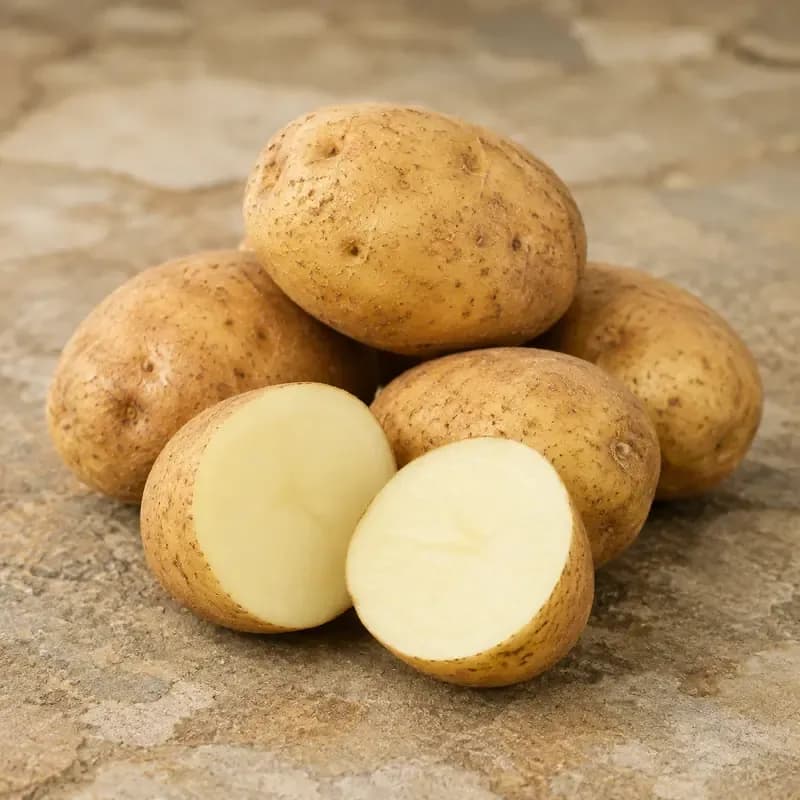
Potato
Solanum tuberosum
The potato, scientifically known as Solanum tuberosum, is an edible underground stem tuber belonging to the nightshade family, Solanaceae. Although commonly described as a root vegetable, it is botanically a swollen stem that stores energy for the plant in the form of starch. Potatoes range from small, waxy fingerlings to large, floury baking varieties, with skins and flesh appearing in white, yellow, red, blue, or purple. Their flavor is generally mild and earthy, while texture varies considerably according to starch and moisture content. Waxy potatoes hold their shape in salads and soups, whereas high-starch varieties become fluffy when baked, mashed, or fried. Potatoes provide carbohydrates, potassium, vitamin C, vitamin B6, fiber, and several other micronutrients. The skin is edible when sound, properly cleaned, and free from green discoloration. First domesticated in the Andean region of South America thousands of years ago, the potato later traveled to Europe and became one of the world's most important food crops. Its adaptability, productivity, affordability, and extraordinary culinary versatility now make it a staple ingredient across numerous cultures.
Potato Galeria de fotos
Explore Potato em detalhes
Potato - Vista principal
Potato Informações nutricionais
💊Vitaminas
Por 100 g
⚡Minerais
Por 100 g
Por porção
Detalhamento nutricional por porção
Benefícios para a saúde de Potato
Potato Origem e distribuição
The Andean highlands of South America, particularly areas of present-day Peru and Bolivia
Indigenous communities domesticated potatoes in the Andes thousands of years ago, selecting diverse plants suited to high elevations and difficult climates. Spanish voyagers carried the crop to Europe during the sixteenth century. Adoption was initially uneven, but potatoes eventually became vital to European food security because they produced substantial nourishment on relatively small areas of land. European settlement and international trade subsequently spread the crop worldwide. Today, thousands of traditional and commercial varieties reflect both the potato's Andean heritage and centuries of agricultural selection.
Potato Melhor época
Potatoes are harvested at different times according to climate and cultivar. New potatoes are usually seasonal, while mature potatoes can be stored and sold throughout the year.
Potato Variedades
Cada variedade oferece sabores, texturas e usos culinários únicos
Russet Burbank
Yukon Gold
Red Pontiac
Kufri Jyoti
Purple Majesty
Fingerling
Maris Piper
Potato Guia de armazenamento e seleção
Mantenha a fruta fresca por mais tempo
Como escolher a fruta perfeita
Choose potatoes that feel firm, heavy for their size, and dry, with intact skin.
Avoid tubers with extensive green areas, bitter odor or taste, deep cuts, wet decay, mold, or pronounced shriveling.
Select varieties according to the recipe: floury, high-starch potatoes for fluffy mash and baking; waxy potatoes for salads, soups, and dishes that require intact pieces.
Small sprouts can indicate aging. Avoid severely sprouted, soft, green, or badly deteriorated potatoes.
Métodos de armazenamento
Keep potatoes in a cool, dark, dry, well-ventilated location, ideally in a breathable paper bag, basket, or perforated container.
Protect potatoes from sunlight and prolonged artificial light because light encourages greening and glycoalkaloid accumulation.
Do not seal raw potatoes in an airtight plastic bag, as trapped moisture can encourage decay.
Store potatoes away from onions because moisture and gases released during storage may accelerate deterioration.
Check stored potatoes regularly and remove any that become rotten, leaking, or moldy.
Guia de validade
Preparation Tips
Rinse potatoes under cool running water and scrub the surface with a clean vegetable brush; do not use soap or household detergent.
Cut away bruised or damaged tissue. Discard potatoes that are extensively green, very bitter, badly sprouted, soft, moldy, or decayed.
Peeling is optional for sound potatoes. Leaving clean skin on can retain additional fiber, but green skin and underlying green flesh should be removed generously.
After cutting, keep pieces in cold water for a short period if necessary to limit discoloration, then drain and dry them thoroughly before roasting or frying.
For freezing or make-ahead dishes, blanch evenly sized pieces briefly and cool them promptly in ice water to slow enzymatic deterioration.
Cut potatoes into similar-sized pieces so that they cook evenly and reach a safe, palatable texture at approximately the same time.
Instruções para congelar
Preserve a frescura por meses
Do not freeze whole raw potatoes because their high water content can produce a grainy, watery texture after thawing.
Blanch cut potatoes briefly, cool them rapidly in ice water, drain thoroughly, and freeze in a single layer before transferring to an airtight freezer container.
Mashed, roasted, or partially cooked potatoes generally freeze more successfully than completely raw potatoes.
Label frozen potatoes with the date and minimize air exposure to reduce freezer burn.
Dica
Identifique itens congelados com a data para acompanhar a frescura. A maioria das frutas mantém a qualidade por 2-3 meses quando congelada corretamente. Para melhores resultados, use recipientes herméticos ou sacos próprios para congelador para evitar queimadura de freezer.
Jornada culinária
Descubra possibilidades deliciosas
Usos comuns
Combinações perfeitas
Receitas populares
Cooking Methods
Informações de segurança
Potato allergy is uncommon but possible. Reactions may involve potato proteins such as patatin and can include oral itching, hives, digestive symptoms, respiratory symptoms, or, rarely, anaphylaxis. Some people with latex sensitivity or pollen-associated oral allergy syndrome may cross-react. Anyone experiencing a serious reaction should seek urgent medical care and consult a qualified allergy specialist.
Agricultural practices and measured residues vary by country, farm, and season. Wash potatoes thoroughly under running water and scrub away adhering soil before cutting or cooking. Peeling can reduce some surface residues but also removes some fiber and does not replace appropriate production controls. Consumers concerned about residues can consult current guidance from their national food-safety authority or choose produce grown under verified standards.
- • People with a diagnosed potato allergy should avoid potato and obtain individualized medical guidance.
- • People with kidney disease or another condition requiring potassium restriction should consult their clinician or renal dietitian about suitable portions.
- • Individuals managing diabetes should account for potato carbohydrate and portion size rather than treating potatoes as a non-starchy vegetable.
- • Anyone should avoid potatoes that are extensively green, intensely bitter, badly sprouted, moldy, rotten, or severely deteriorated.
- •Large portions may raise post-meal blood glucose, particularly when potatoes are highly processed or served without protein, fiber-rich foods, or fat.
- •Frequent consumption of deep-fried or heavily salted potato products can contribute substantial calories, sodium, and fat.
- •Excessive glycoalkaloid exposure from green, bitter, or damaged potatoes may cause nausea, vomiting, abdominal pain, diarrhea, headache, confusion, or other neurological symptoms.
- •Suddenly increasing potato skin and other fiber-rich foods may cause temporary gas or digestive discomfort in sensitive individuals.
- • Do not eat potato leaves, stems, flowers, or berry-like fruits because non-tuber plant parts can contain higher concentrations of glycoalkaloids.
- • Discard potatoes with extensive greening, severe sprouting, bitterness, rot, or mold; cooking is not a dependable method for eliminating glycoalkaloids.
- • Keep raw potato away from ready-to-eat foods and wash hands, knives, boards, and work surfaces after contact with soil.
- • Cook potatoes until tender and refrigerate leftovers within two hours, or within one hour in very hot conditions.
- • When frying or roasting, avoid excessive dark browning. Aim for a golden-yellow color to help limit acrylamide formation.
- • Dry potatoes thoroughly before adding them to hot oil to reduce splashing and burn risk.
Curiosidades sobre Potato
Fatos surpreendentes que você vai amar!
The eyes of a potato are stem buds, providing visible evidence that the tuber is a modified stem rather than a true root.
Potato belongs to the Solanaceae family alongside tomato, eggplant, and pepper.
The Andean region preserves thousands of traditional potato varieties with remarkable differences in color, shape, flavor, and climate tolerance.
Purple and blue potatoes obtain much of their color from anthocyanin pigments.
Potato plants produce above-ground flowers, and some cultivars may form small berry-like fruits that should not be eaten.
Potatoes were among the first food crops tested for cultivation in space-related research.
The word potato entered English through Spanish terminology influenced by Indigenous American crop names.
Perguntas frequentes
Is a potato botanically a root vegetable?
ScienceA potato is commonly grouped with root vegetables in cooking, but botanically it is a tuber rather than a true root. More precisely, the edible potato is a swollen underground stem of Solanum tuberosum. Its small surface indentations, known as eyes, are buds capable of producing shoots, which is a stem characteristic. True storage roots, such as sweet potatoes and carrots, develop from root tissue and do not have comparable stem nodes and buds. This distinction explains why potatoes and sweet potatoes are unrelated plants despite their similar culinary roles.
Are potatoes healthy?
HealthPlain potatoes can be part of a balanced diet. Raw potato provides about 77 calories per 100 g, along with carbohydrate, potassium, vitamin C, vitamin B6, fiber, and small amounts of protein and other micronutrients. Preparation and portion size greatly influence the finished dish. Boiled, steamed, or baked potatoes generally contain much less added fat and sodium than fries, crisps, or potatoes covered with butter, cream, and salty cheese. Healthfulness also depends on the overall meal, so pair potatoes with vegetables, protein-rich foods, and appropriate portions rather than judging the tuber in isolation.
Should potatoes be peeled before cooking?
PreparationPeeling is not always necessary. The skin of a sound, mature potato is edible after thorough washing and scrubbing, and retaining it can preserve some fiber and reduce food waste. Peeling may be desirable for exceptionally smooth mash, damaged skin, thick-skinned older potatoes, or recipes requiring a delicate texture. Green areas require special attention because greening can accompany increased glycoalkaloids. Remove limited green tissue generously, but discard a potato that is extensively green, bitter, strongly sprouted, soft, or deteriorated. Regardless of peeling, wash potatoes before cutting so surface dirt is not transferred inward.
Why do cut potatoes turn brown, and how can discoloration be reduced?
ScienceCut potatoes can darken when enzymes in damaged cells interact with oxygen and naturally occurring phenolic compounds. This enzymatic browning is usually a quality issue rather than an immediate sign that the potato is unsafe. To slow it, place peeled or cut pieces in cold water until cooking, preferably for only a short time. Extended soaking may leach some water-soluble nutrients, including vitamin C and certain B vitamins. Drain the pieces and dry them thoroughly before frying or roasting, because excess surface water interferes with browning and can cause dangerous splattering in hot oil.
Do potatoes have a high glycemic index?
HealthPotatoes do not have one universal glycemic-index value. The response varies substantially with cultivar, starch structure, maturity, cooking method, cooking duration, whether the potato is eaten hot or cooled, portion size, and the foods served with it. Fluffy, highly processed, or very soft-cooked potatoes often produce a faster glucose response than firmer waxy varieties. Cooling cooked potatoes can increase resistant starch, although it does not eliminate digestible carbohydrate. People managing diabetes should consider portion size and total carbohydrate and combine potatoes with fiber-rich vegetables, protein, and healthy fats according to individualized clinical advice.
What is the best way to store potatoes and prevent sprouting?
GeneralStore potatoes in a cool, dark, dry, well-ventilated place inside a breathable container such as a paper bag, open basket, or perforated box. Light encourages greening, while warmth can accelerate sprouting and moisture can encourage rot. Avoid airtight plastic bags and inspect the supply periodically so one decaying potato does not affect the others. Keep potatoes separate from onions. Standard refrigeration is generally not preferred for raw potatoes because cold storage can increase reducing sugars, leading to excessive browning and potentially more acrylamide during high-temperature cooking. Never eat badly deteriorated or extensively green potatoes.
Are green or sprouted potatoes safe to eat?
HealthGreen color is chlorophyll and is not itself the toxin, but it indicates light exposure that may accompany increased steroidal glycoalkaloids, particularly alpha-solanine and alpha-chaconine. Small sprouts and a limited green patch may sometimes be removed generously from an otherwise firm potato, but peeling does not reliably make a heavily affected potato safe. Discard potatoes that are extensively green, bitter, burning-tasting, strongly sprouted, soft, shriveled, or damaged. Cooking does not reliably eliminate all glycoalkaloids. Children may be more vulnerable because of their smaller body size, so questionable potatoes should not be served.
Does cooling cooked potato create resistant starch?
ScienceYes. When a cooked potato cools, some gelatinized starch chains realign into structures that digestive enzymes cannot break down as readily, a process called retrogradation. The resulting resistant starch reaches the large intestine, where microbes can ferment part of it and produce short-chain fatty acids. The amount varies with potato variety, cooking method, cooling time, storage conditions, and reheating. Cooling does not turn all potato starch into resistant starch or make carbohydrate negligible. Cooked potatoes must be cooled promptly, refrigerated safely, and reheated properly if they are not being eaten cold.