Loading Fruit Details...
Please wait while we fetch nutritional information and health benefits
Please wait while we fetch nutritional information and health benefits
Recommended Products
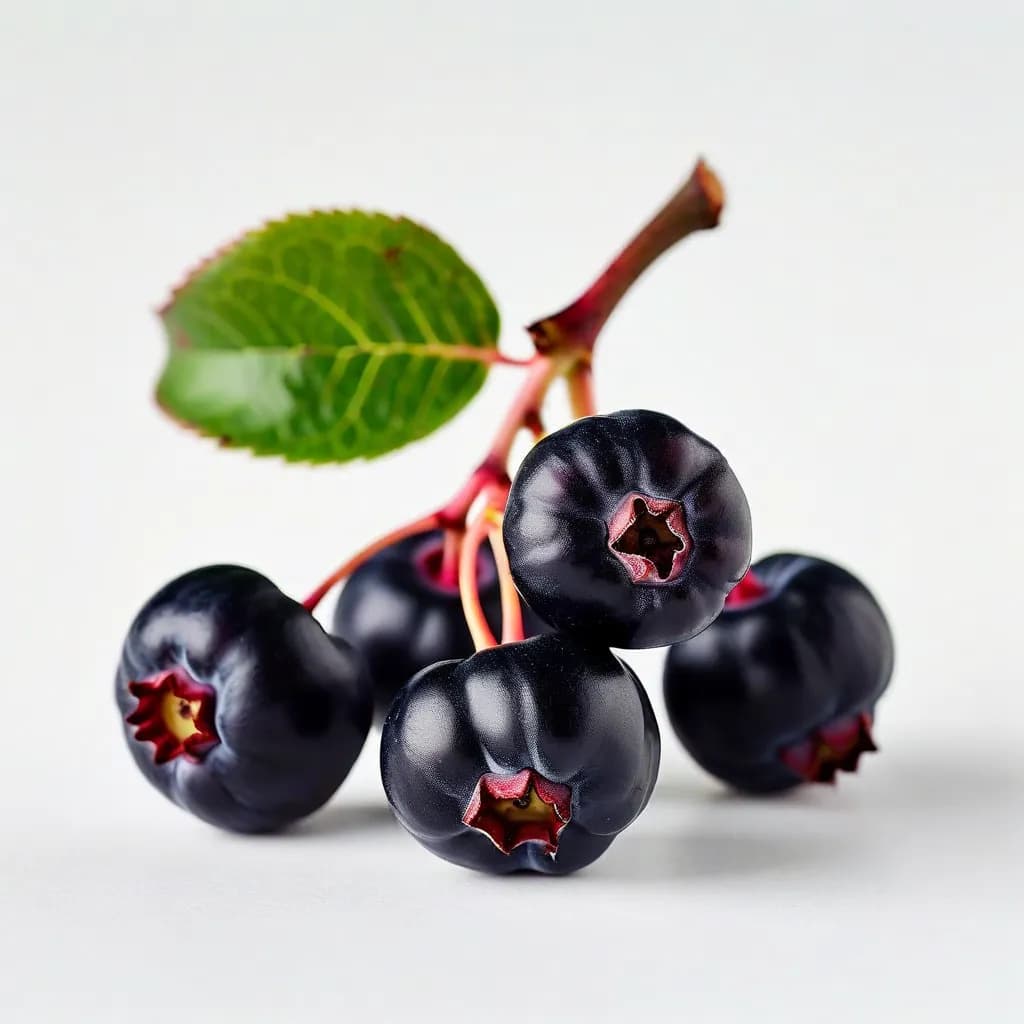
Aronia melanocarpa
Aronia, scientifically known as Aronia melanocarpa, is a small, dark purple-black berry that packs a powerful punch of flavor and nutrition. Often called the chokeberry, this fruit is about the size of a large blueberry but with a unique, intensely tart and astringent taste that mellows into a pleasantly complex, wine-like sweetness when fully ripe or processed. The berries grow in dense clusters on hardy, cold-tolerant shrubs native to North America. Their deep, almost ink-black skin is smooth and glossy, encasing a juicy, crimson flesh that stains vividly. Beyond its striking appearance, Aronia is celebrated as one of nature's most potent antioxidant superfoods, boasting an exceptionally high concentration of anthocyanins and polyphenols. This nutritional profile has earned it the nickname 'the healthiest fruit in the world' in some circles. While rarely eaten fresh due to its mouth-puckering astringency, Aronia is a versatile culinary ingredient, transformed into rich juices, syrups, jams, powders, and dietary supplements. Its rise from a wild, foraged fruit to a cultivated superfood is a testament to growing global recognition of its remarkable health-promoting properties.
Explore Aronia in stunning detail
Aronia - Main View
Per 100g
Per 100g
Nutrition breakdown for one serving
Eastern North America
Aronia melanocarpa is indigenous to the wetlands and forests of eastern North America, where it was traditionally used by Native American tribes both as a food source and for medicinal purposes, often dried and mixed with pemmican. It was introduced to Europe, particularly Russia and Scandinavia, in the early 20th century as an ornamental and potential fruit crop. Its commercial cultivation truly blossomed in Eastern Europe, especially Poland, from the 1970s onward, where it was selected for higher yields and processed into juices, colorants, and nutraceuticals. The late 20th and early 21st-century superfood movement propelled Aronia into global prominence, with scientific research validating its extraordinary antioxidant capacity. Today, it is a major agricultural crop in several countries, bridging its Native American heritage with modern functional food markets.
Late Summer to Early Autumn
Each variety offers unique flavors, textures, and culinary applications
Keep your fruit fresh and delicious for longer
Look for plump, firm berries with a uniformly deep, glossy black or purple-black color.
Avoid berries that are shriveled, soft, bruised, or have any signs of mold or moisture.
If buying fresh, check the stem end; it should be intact and not discolored.
For processed products like juice or powder, choose brands that specify 100% Aronia with no added sugars or fillers.
When possible, purchase from local growers during peak season (late summer) for the freshest quality.
Store fresh Aronia berries unwashed in a single layer on a paper towel-lined container in the refrigerator.
Keep them in the crisper drawer to maintain high humidity and prevent drying out.
Do not store in sealed plastic bags without ventilation, as this can promote mold growth.
Wash berries only immediately before use to extend their shelf life.
Preserve freshness for months
Wash and thoroughly dry berries, then spread them in a single layer on a baking sheet to pre-freeze (flash freeze).
Once frozen solid, transfer to airtight freezer bags or containers, removing as much air as possible to prevent freezer burn.
Frozen Aronia berries can be stored for 10-12 months and used directly from frozen in smoothies, baking, or cooking.
Label frozen items with the date to track freshness. Most fruits maintain quality for 2-3 months when properly frozen. For best results, use airtight containers or freezer bags to prevent freezer burn.
Discover delicious possibilities
Allergic reactions to Aronia are rare but possible. Individuals with known allergies to other fruits in the Rosaceae family (e.g., apples, pears, peaches, almonds) may be at a slightly higher risk due to potential cross-reactivity. Symptoms could include oral allergy syndrome (itchy mouth, lips), hives, or digestive distress.
Aronia berries are generally considered a low-pesticide crop. The shrubs are naturally resistant to many pests and diseases, reducing the need for chemical treatments. However, as with any produce, washing thoroughly or choosing organic products can minimize any potential residue.
Surprising trivia you'll love!
Aronia berries have one of the highest antioxidant levels ever measured in a fruit, with an ORAC value exceeding 16,000 µmol TE/100g, nearly three times that of blueberries.
Native American tribes like the Potawatomi used dried Aronia berries as a primary ingredient in pemmican—a long-lasting, high-energy travel food made from meat, fat, and berries.
The intense purple-black pigment of Aronia juice is so potent it was historically used as a natural dye for textiles and even as ink.
During the Cold War, Aronia was planted extensively in Eastern Bloc countries as a hardy, reliable source of vitamins and nutrients for their populations.
Aronia shrubs are extremely cold-hardy and can survive winter temperatures as low as -40°F (-40°C), making them ideal for northern climates.
Despite its name 'chokeberry', the fruit is not toxic to birds; in fact, birds often wait until after a frost (which sweetens the berries) before devouring them.
Fresh Aronia berries are famously tart and astringent, creating a strong mouth-puckering sensation due to their high tannin content—similar to an extremely dry red wine or an unripe persimmon. The flavor profile is deep, earthy, and slightly bitter, with subtle underlying notes of cherry and dark chocolate. This intense taste makes them rarely eaten raw out-of-hand. However, when cooked, sweetened, or processed into juices, jams, or supplements, the astringency mellows significantly, revealing a rich, complex, and pleasantly tangy fruit flavor that pairs wonderfully with sweeteners and other ingredients.
There are countless delicious ways to incorporate Aronia berries by transforming their intense flavor. Cooking is key: simmer them with a sweetener like honey or maple syrup to make a versatile syrup for pancakes or soda water. Blend frozen berries into smoothies with sweet fruits like bananas and mangoes—the other ingredients mask the tartness. Baking them into muffins, breads, or crisps allows their flavor to meld and mellow. You can also dehydrate them into chewy snacks or purchase them in convenient forms like powder (stirred into yogurt or oatmeal) or juice (often blended with apple or grape juice). The rule of thumb is to pair them with fat, sweetness, or heat to balance their powerful astringency.
While declaring any single fruit 'the healthiest' is subjective, Aronia consistently ranks at the very top for its unparalleled antioxidant capacity. Scientific analyses, such as ORAC (Oxygen Radical Absorbance Capacity) tests, frequently place Aronia berries above acai, blueberries, and pomegranates in terms of antioxidant concentration per serving. This is primarily due to their exceptionally high levels of anthocyanins and proanthocyanidins. These compounds are linked to a wide array of proven health benefits, from reducing inflammation to supporting heart and brain health. Therefore, while a balanced diet includes a variety of fruits, Aronia is undoubtedly one of the most potent, nutrient-dense superfruits you can add to your regimen for a concentrated antioxidant boost.
Absolutely! Aronia melanocarpa is an excellent choice for home gardeners, particularly in temperate climates. These shrubs are remarkably hardy (USDA zones 3-8), resistant to most pests and diseases, and tolerate a wide range of soil conditions, including wetter soils. They prefer full sun to partial shade. Plants are typically purchased as bare-root or potted shrubs and will begin bearing fruit in 2-3 years. They require minimal pruning and are largely self-pollinating. Not only will you get a harvest of superfood berries in late summer, but many varieties also offer stunning white spring flowers and brilliant red-purple fall foliage, making them a beautiful ornamental addition to any landscape.
Aronia and chokeberry are two names for the exact same fruit from the plant Aronia melanocarpa. 'Aronia' is the botanical genus name and has become the more common marketing term, especially within the health food industry. 'Chokeberry' is the traditional common name, derived from the fruit's mouth-puckering, astringent effect (making one feel 'choked'). It's crucial not to confuse chokeberry (Aronia) with chokecherry (Prunus virginiana), which is a completely different plant in the stone fruit family. To avoid confusion, using the term 'Aronia berry' or the full scientific name is most precise. Both names refer to the same small, dark, antioxidant-rich berry native to North America.
Aronia is generally recognized as safe for most people when consumed in normal food amounts. However, due to its high tannin and fiber content, overconsumption (especially of concentrated extracts or large amounts of juice) may cause digestive upset like stomach cramps, diarrhea, or constipation in some individuals. Those with a known allergy to related fruits in the Rosaceae family (like apples, pears, peaches) should exercise caution. Because Aronia may affect blood sugar and blood pressure, individuals on medication for diabetes or hypertension should consult a doctor, as it could potentiate the effects of these drugs. As with any new supplement, pregnant or breastfeeding women should seek medical advice before consuming large, medicinal quantities.
Aronia powder, typically made from freeze-dried and ground berries, offers a highly concentrated and convenient form of the fruit's nutrients. The freeze-drying process preserves most of the heat-sensitive antioxidants and vitamins, making the powder nutritionally comparable, and sometimes even more potent by weight, than fresh berries. It's an excellent shelf-stable option for adding to smoothies, baked goods, or oatmeal. However, the powder lacks the fresh berry's water content and full sensory experience. Fresh berries provide dietary fiber in its whole form and are preferable for recipes like jams or baked goods where texture matters. For maximum health benefits and versatility, incorporating both forms into your diet can be ideal.
Poland emerged as the world's leading producer of Aronia due to a combination of historical, climatic, and agricultural factors. After being introduced from North America, Eastern European countries recognized the shrub's hardiness and potential. Poland's soil and climate proved exceptionally suitable for large-scale cultivation. Starting in the 1970s, state-sponsored agricultural research programs actively developed high-yielding cultivars (like 'Galicjanka' and 'Hugin') and optimized growing techniques. Following the political changes of the 1990s, private farmers rapidly expanded plantations to meet growing Western European demand for healthy juices and natural colorants. Today, Poland's vast, organized plantations and advanced processing infrastructure allow it to dominate the global market, supplying over 80% of the world's Aronia berries.
Aronia can be a supportive component of a weight management plan, though it's not a magic bullet. Its benefits stem from its low calorie and high nutrient profile. The significant fiber content (over 5g per 100g) promotes feelings of fullness and satiety, which can help reduce overall calorie intake. The polyphenols may support healthy metabolism and reduce inflammation associated with obesity. Furthermore, its low glycemic index helps prevent blood sugar spikes and crashes that can lead to cravings. Incorporating Aronia berries, powder, or unsweetened juice into a balanced diet rich in whole foods, protein, and healthy fats can therefore aid weight loss efforts by providing essential nutrients without excess calories and helping to regulate appetite.
The 'best' way depends on your goals and lifestyle. For overall dietary inclusion, consuming 100% unsweetened Aronia juice (about 1-2 ounces daily, diluted) or a tablespoon of Aronia powder in a smoothie or yogurt provides a concentrated dose of antioxidants. Eating the whole, fresh or frozen berry (even in small quantities) ensures you get the full spectrum of fiber and nutrients in their natural matrix. High-quality, standardized supplements (capsules or extracts) can be useful for targeted, therapeutic doses under guidance. Consistency is key—regular, moderate intake is more beneficial than occasional large doses. To maximize absorption of fat-soluble antioxidants, consider pairing your Aronia intake with a source of healthy fat, like nuts, seeds, or avocado.
Sustainability insights
Aronia cultivation is generally considered sustainable. The shrubs are perennial, requiring no annual replanting, and their deep root systems help prevent soil erosion. They thrive in marginal soils with minimal fertilizer needs and are drought-tolerant once established. Their natural pest resistance reduces pesticide reliance.
The carbon footprint is relatively low, especially for locally grown berries. As a perennial shrub that sequesters carbon, its long-term cultivation has a positive impact compared to annual crops. The primary footprint comes from processing (drying, juicing) and international transport for exported products.
Aronia is a water-efficient crop. Native to wetland edges, it tolerates periodic wet conditions but is also drought-resistant due to its deep root system. Commercial cultivation typically requires less irrigation than many fruit crops, especially in regions with consistent rainfall.
Choosing locally grown Aronia (in regions like North America or Northern Europe) significantly reduces transportation emissions. Imported berries, often from Poland, have a higher footprint due to long-distance shipping. Supporting local growers also bolsters regional agriculture and provides fresher product.
We aim to keep this Aronia profile accurate and easy to understand. Nutrition values and % Daily Value figures are based on established reference databases and standard daily value guidance.
Last updated: September 20, 2026
Medical disclaimer
This page is for general educational purposes and does not replace professional medical advice.
Found an issue? Contact us.