Loading Fruit Details...
Please wait while we fetch nutritional information and health benefits
Please wait while we fetch nutritional information and health benefits
Recommended Products
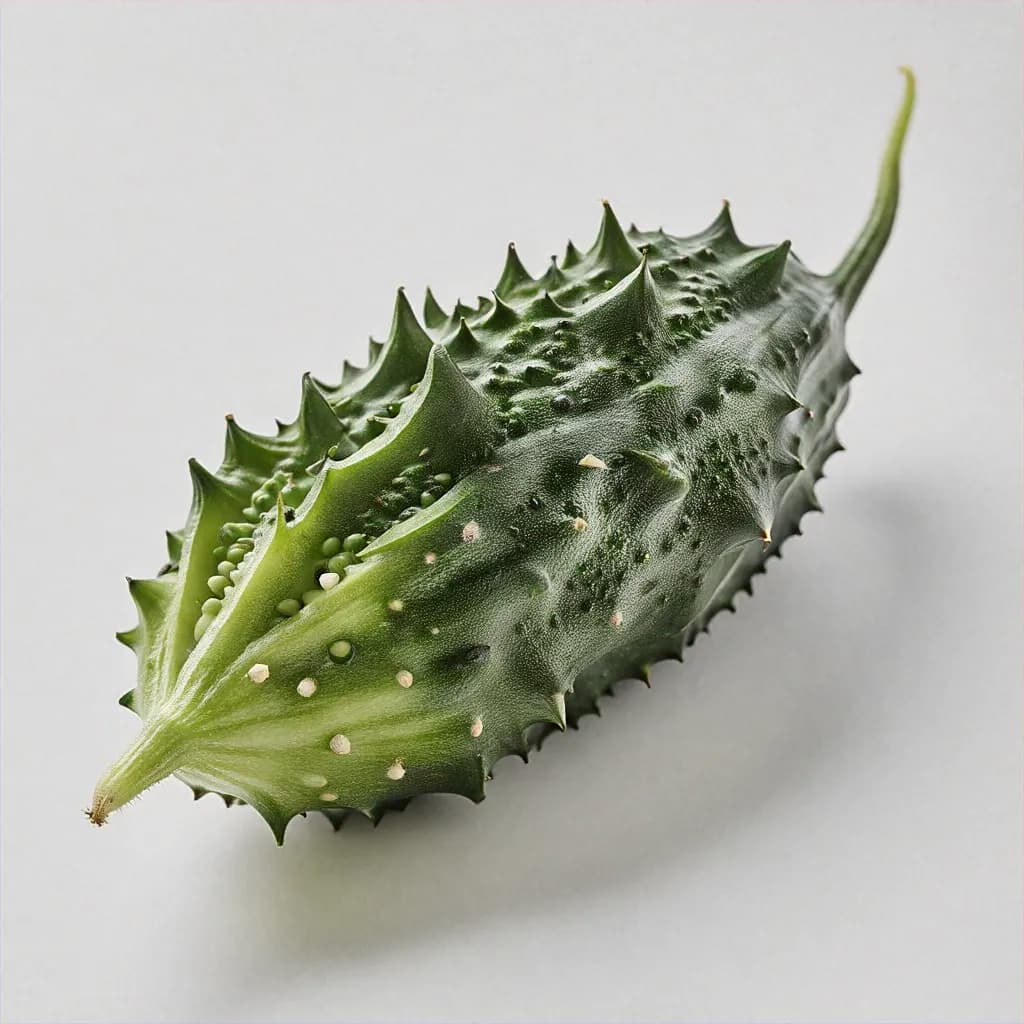
Cucumis metuliferus
The African Horned Cucumber, scientifically known as *Cucumis metuliferus*, is a striking and exotic fruit native to sub-Saharan Africa, celebrated for its vibrant orange skin adorned with distinctive spiky protrusions resembling horns. Often referred to as the "kiwano" or "jelly melon," this fruit offers a unique sensory experience: its gelatinous, lime-green interior bursts with a refreshing blend of flavors reminiscent of banana, lime, and cucumber, with subtle hints of tartness. The texture is akin to a cross between a kiwi and a passion fruit, making it a fascinating addition to both sweet and savory dishes. Rich in essential nutrients like vitamin C, vitamin A, and magnesium, the African Horned Cucumber is not only a culinary delight but also a powerhouse of hydration and antioxidants. Its high water content (over 88%) makes it an excellent choice for replenishing electrolytes, while its low calorie count (just 44 calories per 100g) appeals to health-conscious consumers. Cultivated primarily in arid regions, this drought-resistant fruit thrives in warm climates and has gained global popularity for its versatility, nutritional benefits, and eye-catching appearance.
Explore African Horned Cucumber in stunning detail
African Horned Cucumber - Main View
Per 100g
Per 100g
Nutrition breakdown for one serving
Sub-Saharan Africa, particularly the Kalahari Desert region spanning Botswana, Namibia, and South Africa
The African Horned Cucumber has been a staple in the diets of indigenous peoples in sub-Saharan Africa for centuries, particularly among the San people of the Kalahari Desert, who valued it as a source of hydration and nutrition in arid environments. The fruit was traditionally foraged from wild plants, but its global popularity surged in the late 20th century when commercial cultivation began in New Zealand, where it was rebranded as "kiwano" for export markets. The name "kiwano" was coined to capitalize on the success of the kiwifruit, leveraging its exotic appeal. Today, it is grown in several countries with suitable climates and is prized in gourmet cuisine for its unique appearance and refreshing taste. Its drought-resistant nature makes it an attractive crop for regions facing water scarcity, further boosting its agricultural importance.
Year-round in tropical and subtropical regions, with peak production during the warm summer months (November to March in the Southern Hemisphere, June to September in the Northern Hemisphere).
Each variety offers unique flavors, textures, and culinary applications
Keep your fruit fresh and delicious for longer
Select fruits with a bright, uniform orange color and firm, intact spines. Avoid fruits with dull, greenish, or brown patches, as these indicate underripeness or spoilage.
Gently press the fruit; it should yield slightly under pressure but not feel mushy. Overly soft fruits may be overripe or fermented.
Check for a sweet, tropical aroma at the stem end. A strong, unpleasant odor suggests the fruit is past its prime.
Opt for medium-sized fruits (about 10-15 cm in length) for the best balance of flavor and texture. Larger fruits may have a higher seed-to-flesh ratio.
Avoid fruits with visible mold, cracks, or punctures, as these can introduce bacteria and accelerate spoilage.
Store unripe African Horned Cucumbers at room temperature (around 20°C/68°F) for 3-5 days to allow them to ripen fully. Place them in a well-ventilated area away from direct sunlight.
Once ripe, transfer the fruit to the refrigerator to slow further ripening. Store it in the crisper drawer for up to 7-10 days to maintain freshness and texture.
Keep the fruit in a perforated plastic bag or wrap it loosely in paper towels to absorb excess moisture and prevent mold growth.
Avoid storing the fruit near ethylene-producing fruits like apples or bananas, as this can accelerate ripening and spoilage.
Preserve freshness for months
To freeze African Horned Cucumber, scoop out the flesh and seeds, discarding the skin. Spread the pulp in a single layer on a baking sheet and freeze for 1-2 hours to prevent clumping.
Transfer the frozen pulp to an airtight container or freezer bag, leaving about 1 inch of headspace to allow for expansion. Label with the date and freeze for up to 3 months.
Thaw frozen pulp in the refrigerator overnight before using in smoothies, sauces, or desserts. Note that freezing may alter the texture, making it less suitable for fresh consumption.
Label frozen items with the date to track freshness. Most fruits maintain quality for 2-3 months when properly frozen. For best results, use airtight containers or freezer bags to prevent freezer burn.
Discover delicious possibilities
African Horned Cucumber is not commonly associated with allergic reactions, but individuals with known sensitivities to other members of the Cucurbitaceae family (such as melons, cucumbers, or squash) may experience cross-reactivity. Symptoms of an allergic reaction may include itching, swelling, hives, or digestive discomfort. If you experience any adverse reactions after consuming the fruit, discontinue use and consult a healthcare professional.
Like many commercially grown fruits, African Horned Cucumbers may be treated with pesticides to protect against pests and diseases. To minimize exposure, choose organic varieties when possible and wash the fruit thoroughly under running water before consumption. Peeling the skin (if using in recipes) can also reduce pesticide residue, though the skin is typically not eaten. If you are particularly concerned about pesticides, consider growing the fruit at home or sourcing it from trusted, pesticide-free suppliers.
Surprising trivia you'll love!
The African Horned Cucumber is sometimes called the "blowfish fruit" due to its spiky exterior, which resembles the spiny skin of a blowfish.
In its native Africa, the fruit is often foraged from wild plants and has been a traditional food source for the San people of the Kalahari Desert for centuries.
The fruit's gelatinous interior was historically used as a natural hair gel by some African tribes, who applied it to their hair for styling and conditioning.
Despite its name, the African Horned Cucumber is not closely related to cucumbers. It belongs to the same family (Cucurbitaceae) as melons, squash, and gourds.
The fruit is sometimes used in traditional African medicine to treat conditions like malaria and diarrhea, thanks to its antimicrobial and anti-inflammatory properties.
In New Zealand, where the fruit is commercially cultivated, it was rebranded as "kiwano" in the 1980s to capitalize on the success of the kiwifruit and appeal to international markets.
The African Horned Cucumber is one of the few fruits that can be grown in arid conditions, making it a valuable crop for regions facing water scarcity and climate change challenges.
The African Horned Cucumber offers a unique flavor profile that blends the sweetness of banana with the tartness of lime and the refreshing crispness of cucumber. Its gelatinous, lime-green flesh has a jelly-like texture with a slight crunch from the edible seeds. When fully ripe, it delivers a mild sweetness with a tangy, citrusy finish, making it a versatile ingredient in both sweet and savory dishes. Some describe its taste as a cross between kiwi, passion fruit, and cucumber, with a hint of tropical melon. The flavor can vary slightly depending on ripeness, with unripe fruits being more tart and less sweet, while overripe fruits may develop a fermented or mushy taste.
Eating African Horned Cucumber is simple and fun! Start by rinsing the fruit under cool water to remove any dirt or debris. Slice it in half lengthwise to reveal the vibrant, jelly-like interior. You can scoop out the flesh and seeds with a spoon, discarding the spiky skin, which is not edible. The seeds are safe to eat and add a slight crunch to the texture. For a quick snack, sprinkle the flesh with a pinch of salt, sugar, or chili powder to enhance its natural flavors. It can also be added to fruit salads, smoothies, or yogurt for a tropical twist. For savory dishes, try incorporating it into salsas, ceviche, or chutneys, where its tangy flavor complements spicy or rich ingredients. If you prefer a smoother texture, you can blend the pulp and strain out the seeds before using it in recipes like sorbets or cocktails.
Yes, the African Horned Cucumber can be a great addition to a weight loss diet due to its low calorie count (just 44 calories per 100g) and high fiber content (3.7g per 100g, or 13% of the daily value). Fiber promotes satiety by slowing digestion and keeping you feeling full for longer, which can help reduce overall calorie intake. Additionally, its high water content (89%) contributes to hydration and volume without adding significant calories, making it a satisfying snack for those looking to manage their weight. The fruit's low glycemic index (42) and glycemic load (3) also help stabilize blood sugar levels, reducing cravings and preventing energy crashes. However, it's important to consume it as part of a balanced diet and not rely solely on one food for weight loss. Pairing it with protein-rich foods like Greek yogurt or nuts can further enhance its satiating effects and support healthy weight management.
The distinctive spiky protrusions on the African Horned Cucumber serve several important biological and ecological functions. From a botanical perspective, the spines act as a defense mechanism, deterring herbivores and animals from eating the fruit before it fully ripens. This protection ensures that the seeds inside have enough time to mature and develop, increasing the chances of successful reproduction. Additionally, the spines help regulate the fruit's internal temperature by providing shade and reducing water loss in hot, arid environments where the plant naturally grows. The spikes also play a role in seed dispersal; when the fruit falls to the ground, the spines can catch on the fur of passing animals or the clothing of humans, aiding in the spread of seeds to new locations. Interestingly, the spines are not sharp enough to cause injury, making the fruit safe to handle despite its intimidating appearance. This unique adaptation highlights the plant's resilience in its native habitat and its ability to thrive in challenging conditions.
Sustainability insights
The African Horned Cucumber is a relatively sustainable crop due to its drought-resistant nature, which allows it to thrive in arid and semi-arid regions with minimal irrigation. This makes it an attractive option for farmers in water-scarce areas, reducing the need for extensive water resources compared to more water-intensive crops like almonds or avocados. Additionally, the plant's ability to grow in poor soil conditions with minimal fertilizer input further enhances its sustainability profile. However, like all agricultural products, its environmental impact depends on farming practices. Organic and regenerative farming methods can minimize soil degradation and pesticide use, while monoculture farming may lead to biodiversity loss and soil depletion.
The carbon footprint of African Horned Cucumber varies depending on its country of origin and transportation methods. Locally grown fruits have a significantly lower carbon footprint compared to those imported from distant countries due to reduced transportation emissions. For example, fruits grown in New Zealand or Israel and shipped to the U.S. or Europe will have a higher carbon footprint than those grown in California or Florida. Choosing locally sourced or seasonally available fruits can help reduce the environmental impact associated with long-distance transportation.
The African Horned Cucumber is well-adapted to dry climates and requires significantly less water than many other fruits, such as almonds, avocados, or citrus. Its deep root system allows it to access moisture from deeper soil layers, reducing the need for frequent irrigation. On average, the plant requires about 300-500 mm of water per growing season, making it a water-efficient crop for regions facing water scarcity. This low water requirement contributes to its sustainability and makes it an attractive option for farmers in drought-prone areas.
Choosing locally grown African Horned Cucumbers over imported varieties can significantly reduce the environmental impact associated with transportation, refrigeration, and packaging. Locally sourced fruits support regional farmers, reduce carbon emissions from long-distance shipping, and often have a smaller ecological footprint due to shorter supply chains. However, in regions where the fruit is not locally grown, imported options may still be a sustainable choice if sourced from countries with responsible farming practices. When purchasing imported fruits, look for certifications like Fair Trade or organic to ensure ethical and environmentally friendly production methods.
We aim to keep this African Horned Cucumber profile accurate and easy to understand. Nutrition values and % Daily Value figures are based on established reference databases and standard daily value guidance.
Last updated: September 18, 2026
Medical disclaimer
This page is for general educational purposes and does not replace professional medical advice.
Found an issue? Contact us.