Loading Fruit Details...
Please wait while we fetch nutritional information and health benefits
Please wait while we fetch nutritional information and health benefits
Recommended Products
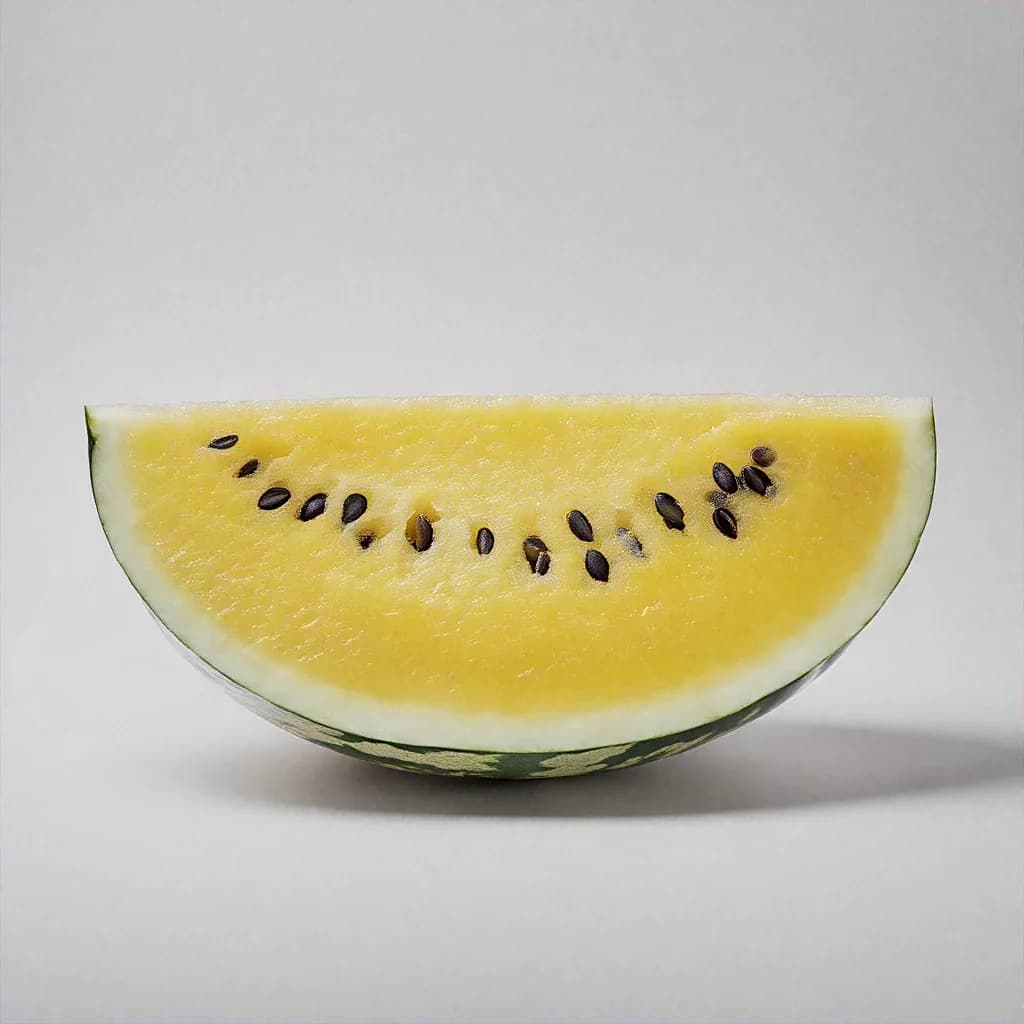
Citrullus lanatus
Yellow watermelon is a sweet, juicy fruit with vibrant yellow flesh and a refreshing flavor. It is a good source of vitamin C (14% DV), vitamin A (7% DV), and potassium (4% DV), supporting hydration, immunity, and heart health. Very low in calories (30 per 100g), yellow watermelon is ideal for healthy snacking and summer hydration. Enjoyed fresh or in salads, it is valued for its nutrition and unique color.
Explore Yellow Watermelon in stunning detail
Yellow Watermelon - Main View
Per 100g
Per 100g
Nutrition breakdown for one serving
Africa
Yellow watermelon is an ancient variety native to Africa. It is now grown worldwide and is prized for its sweet flavor, high water content, and vibrant yellow flesh.
Peak season May-September in Northern Hemisphere
Each variety offers unique flavors, textures, and culinary applications
Keep your fruit fresh and delicious for longer
Select firm, heavy watermelons with uniform shape
Look for a creamy yellow spot indicating ripeness
Avoid bruises or soft spots
Store whole at room temperature until cut, then refrigerate
Refrigerate cut watermelon for up to 3 days
Best consumed fresh for optimal hydration
Preserve freshness for months
Cube and freeze for up to 6 months
Use frozen watermelon in smoothies or desserts
Label frozen items with the date to track freshness. Most fruits maintain quality for 2-3 months when properly frozen. For best results, use airtight containers or freezer bags to prevent freezer burn.
Discover delicious possibilities
Watermelon allergies are rare but possible, especially in people with pollen allergies. Symptoms are usually mild.
Watermelons may have pesticide residues. Wash thoroughly or choose organic when possible.
Surprising trivia you'll love!
Yellow watermelon is an ancient variety predating red watermelon
Contains lycopene and beta-carotene for antioxidant benefits
Naturally sweeter than most red watermelons
High water content makes it excellent for hydration
Yellow watermelon is often seedless or has small edible seeds
Yellow watermelon is rich in vitamin C, provides vitamin A and potassium, and contains antioxidants that support hydration, immunity, and heart health.
Yellow watermelon is delicious fresh, in salads, smoothies, desserts, and juices. Its sweet flavor and vibrant color make it versatile for many dishes.
Yellow watermelon is generally safe for most people. Rarely, some may have fruit allergies. Wash before eating, and consult a doctor if you have known fruit allergies.
Yellow watermelon originated in Africa and is now grown worldwide. Its peak season is May to September, but it is available year-round in some regions.
Sustainability insights
Watermelon fields can be managed sustainably. Choose local or organic watermelons to reduce environmental impact.
Imported watermelons have a higher carbon footprint due to transportation. Local watermelons are more eco-friendly.
Watermelon plants require moderate to high water. Efficient irrigation and rain-fed fields are best for sustainability.
Buying local yellow watermelons supports farmers and reduces environmental impact. In-season watermelons are fresher and more sustainable.
We aim to keep this Yellow Watermelon profile accurate and easy to understand. Nutrition values and % Daily Value figures are based on established reference databases and standard daily value guidance.
Last updated: September 8, 2026
Medical disclaimer
This page is for general educational purposes and does not replace professional medical advice.
Found an issue? Contact us.
.webp&w=3840&q=75)