Loading Fruit Details...
Please wait while we fetch nutritional information and health benefits
Please wait while we fetch nutritional information and health benefits
Recommended Products
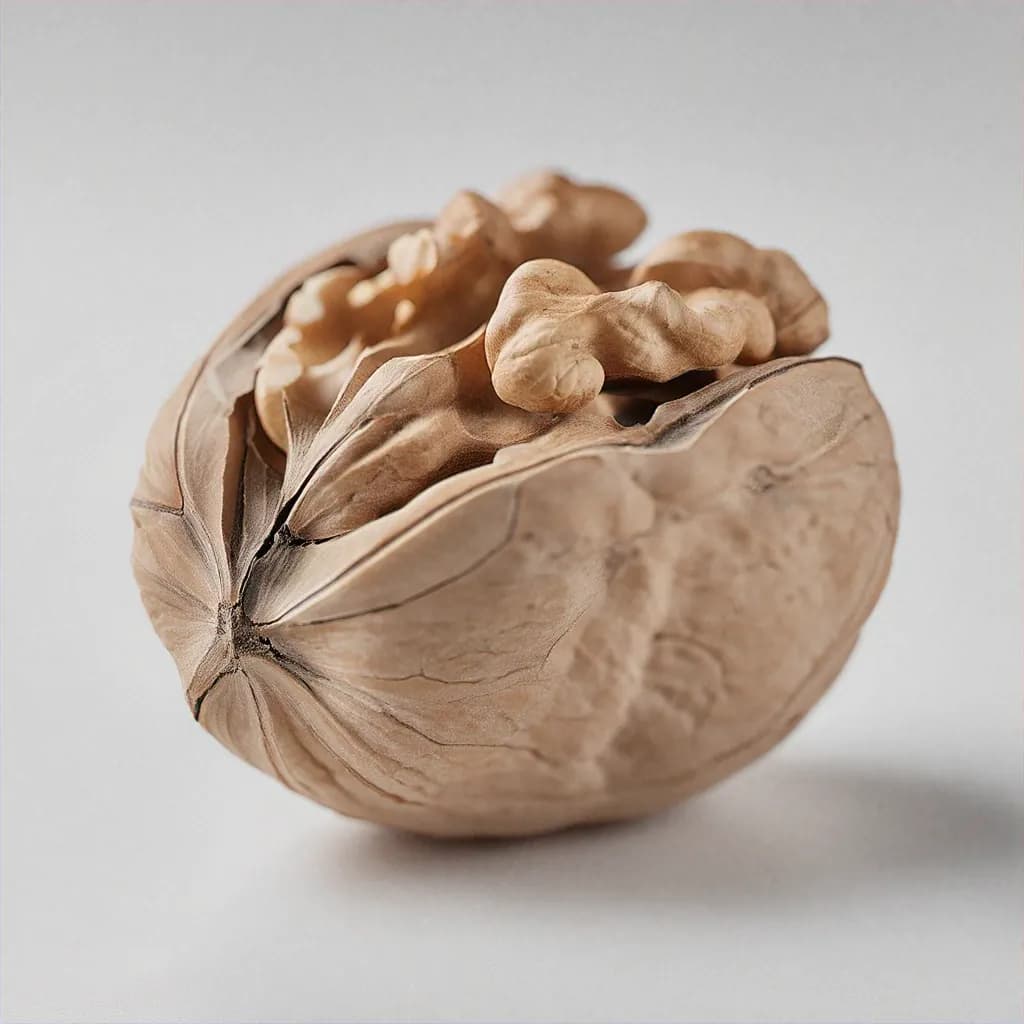
Juglans regia
Walnut is a nutrient-dense tree nut superfruit with exceptional omega-3 fatty acids (152% DV per 100g), outstanding manganese (148% DV per 100g), and remarkable brain health benefits. Also known as English walnut or common walnut, walnut delivers comprehensive nutritional benefits with heart-healthy polyunsaturated fats and potent antioxidant profile. At 654 calories per 100g with excellent fiber content (24% DV) and extraordinary polyphenol profile, walnut is prized in Mediterranean cuisine, contemporary wellness practices, and cognitive health applications worldwide. Perfect for fresh snacking, brain nutrition, premium cooking, and comprehensive health optimization.
Explore Walnut in stunning detail
Walnut - Main View
Per 100g
Per 100g
Nutrition breakdown for one serving
Central Asia and Eastern Europe
Walnut (Juglans regia) originated in Central Asia and Eastern Europe with cultivation dating back thousands of years. Historically valued for nutrition, oil production, and traditional medicinal applications, walnut has been fundamental to Mediterranean diets, Eastern European cuisine, and global food traditions. Ancient Greeks and Romans recognized walnut's cognitive and nutritional benefits. The fruit's exceptional omega-3 content and brain health properties made it invaluable for human development and longevity. Today, California and China dominate global walnut production while Iran maintains traditional cultivation. Walnut continues to be prized for exceptional nutritional density, brain health benefits, and comprehensive wellness applications.
Peak harvest August-October
Each variety offers unique flavors, textures, and culinary applications
Keep your fruit fresh and delicious for longer
Select walnuts with intact shells free of cracks or damage
Choose walnuts that feel heavy for their size indicating quality meat
Look for uniform color without discoloration or mold
Avoid shriveled or discolored walnuts indicating age or improper storage
Select raw or roasted based on personal preference and application
Reputable brands ensure quality and food safety standards
Store raw walnuts in cool, dark location away from direct sunlight
Refrigerate walnuts in airtight containers to preserve freshness
Keep in cool environment (below 65°F) to maintain omega-3 integrity
Store in sealed containers away from moisture and strong odors
Keep away from heat which can degrade beneficial oils
Properly stored walnuts maintain freshness for up to 1 year
Preserve freshness for months
Freeze walnuts in airtight freezer bags for extended storage
Frozen walnuts maintain quality for 2-3 years
Use directly from freezer in cooking or baking applications
Thaw at room temperature before consuming as snack
Keep frozen walnuts in sealed containers to prevent moisture absorption
Do not refreeze walnuts after thawing for optimal quality
Label frozen items with the date to track freshness. Most fruits maintain quality for 2-3 months when properly frozen. For best results, use airtight containers or freezer bags to prevent freezer burn.
Discover delicious possibilities
Tree nut allergies including walnut affect approximately 0.4-0.6% of population. Walnut allergies can be severe; those with tree nut allergies should avoid.
Purchase walnuts from certified organic growers when available. California walnut growers typically use minimal pesticides. Choose certified sources from reputable suppliers ensuring food safety standards.
Surprising trivia you'll love!
Walnut (Juglans regia) is one of the oldest cultivated tree nuts with evidence dating back 7,000 years
Walnuts have been called 'brain food' by ancient healers due to their brain-shaped appearance and cognitive benefits
Walnut contains exceptional omega-3 ALA at 152% DV per 100g, among the highest in all plant foods
A handful of walnuts (about 28g) provides approximately 2.5g of omega-3 fatty acids
China produces over 2.5 million tons of walnuts annually, making it the world's largest producer
California produces approximately 1.7 billion pounds of walnuts annually for global markets
French Noix de Grenoble holds protected designation of origin status, ensuring quality and authenticity
Walnut has exceptional polyphenol content supporting powerful antioxidant benefits for brain health
The walnut tree can live for over 200 years and produce nuts throughout its lifespan
Walnuts have the lowest glycemic index (15) among all tree nuts, supporting stable blood sugar
Walnut (Juglans regia) is a tree nut superfruit with exceptional omega-3 fatty acids (152% DV per 100g), outstanding manganese (148% DV), excellent magnesium (38% DV), and comprehensive brain health benefits. Also called English walnut, walnut delivers extraordinary polyphenols, potent antioxidants, and comprehensive nutritional benefits.
Walnut delivers exceptional omega-3 ALA (152% DV per 100g) for brain health, exceptional manganese (148% DV) for metabolism, excellent magnesium (38% DV) for cognitive support, excellent copper (64% DV) for immunity, and excellent vitamin B6 (32% DV). At 654 calories per 100g with excellent protein (18% DV) and fiber (24% DV), walnut provides exceptional nutritional benefits.
Yes, walnuts are exceptional for brain health with exceptional omega-3 ALA (152% DV per 100g), excellent manganese for cognitive function, excellent magnesium for brain support, excellent vitamin B6 for neurotransmitter synthesis, and extraordinary polyphenol antioxidants. Regular walnut consumption supports cognitive wellness and neuroprotection.
Yes, walnuts are excellent for heart health with exceptional omega-3 ALA supporting cardiovascular wellness, polyunsaturated fats for cholesterol management, comprehensive polyphenols for cardiovascular support, very low glycemic index (15), and potent flavonoids. Regular walnut consumption supports heart health and comprehensive wellness.
Walnuts have exceptional omega-3 ALA content (152% DV) compared to other nuts, extraordinary polyphenol profile, very low glycemic index (15), outstanding manganese (148% DV), and specialized brain health benefits. Walnuts are unique among nuts for plant-based omega-3 content and cognitive support properties.
Soak 1 cup raw walnuts for 4-8 hours, drain, blend with 4 cups water until smooth, strain through nut milk bag, and refrigerate for up to 5 days. Homemade walnut milk provides maximum omega-3 preservation without additives.
Quality walnuts are available at health food stores, bulk retailers, farmer's markets, and online specialty retailers. California, French (Noix de Grenoble), and Persian walnuts offer premium options. Choose certified organic when available from reputable suppliers.
Store walnuts in cool, dark, airtight containers below 65°F to protect omega-3 fatty acids. Refrigeration or freezing preserves freshness and nutritional integrity. Avoid heat and light exposure which can degrade beneficial oils.
Sustainability insights
Walnut cultivation supports agricultural livelihoods and food security. Support sustainably grown walnuts from certified sources using efficient practices and water conservation.
California walnuts have lower carbon footprint with efficient production. Choose locally sourced walnuts when available to minimize transportation impact.
Walnut cultivation requires moderate water resources in California. Support drought-resistant cultivation and water-efficient irrigation practices for sustainable agriculture.
California and French walnuts support different agricultural communities. Choose based on sourcing preferences and sustainability values aligned with personal ethics.
We aim to keep this Walnut profile accurate and easy to understand. Nutrition values and % Daily Value figures are based on established reference databases and standard daily value guidance.
Last updated: September 18, 2026
Medical disclaimer
This page is for general educational purposes and does not replace professional medical advice.
Found an issue? Contact us.