Loading Fruit Details...
Please wait while we fetch nutritional information and health benefits
Please wait while we fetch nutritional information and health benefits
Recommended Products
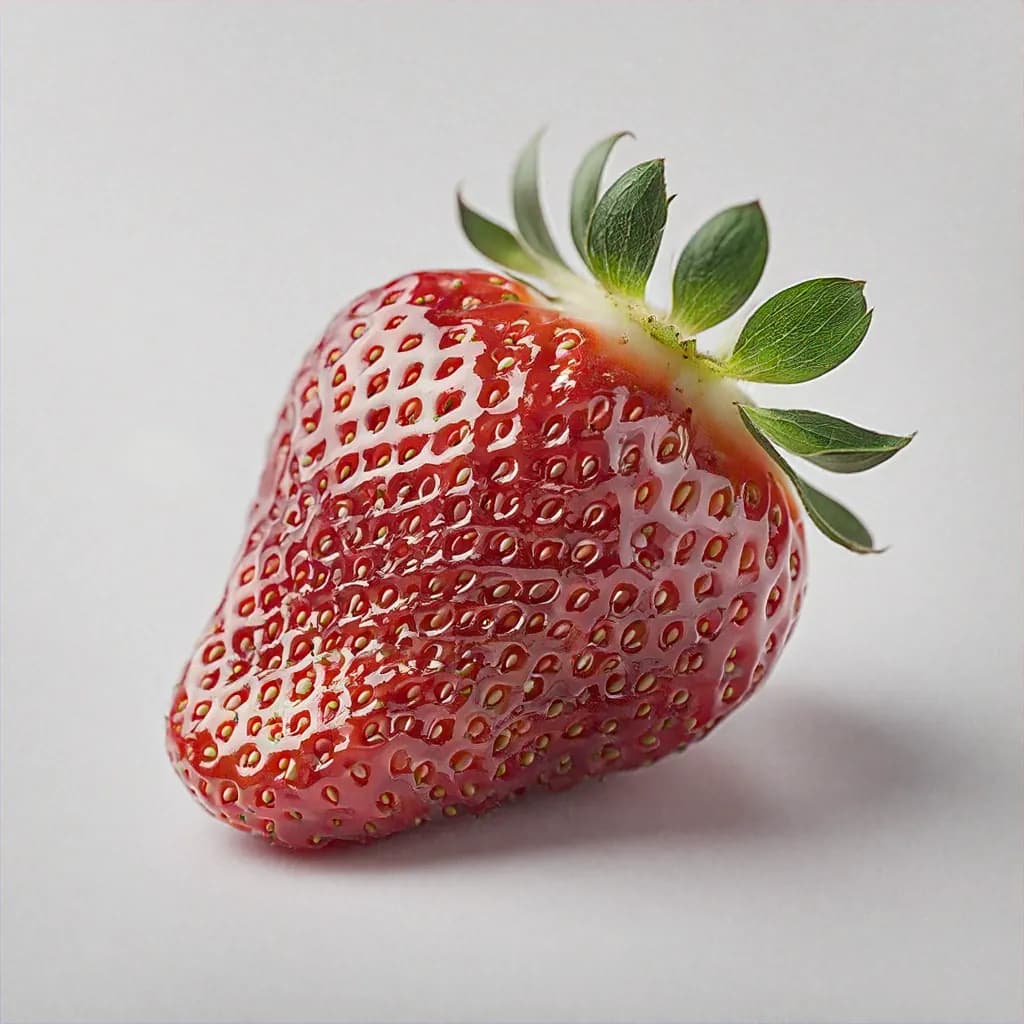
Fragaria × ananassa
A vibrant, heart-shaped red fruit prized for its sweetness, juicy texture, and distinctive aroma. Botanically an 'aggregate accessory fruit' of the Rosaceae family, strawberries are unique for wearing their seeds on the outside. Packed with Vitamin C, antioxidants, and manganese, this low-calorie superfood is a versatile favorite for healthy snacking, desserts, salads, and smoothies.
Explore Strawberry in stunning detail
Strawberry - Main View
Per 100g
Per 100g
Nutrition breakdown for one serving
Brittany, France (First garden strawberry hybrid)
Wild strawberries were known to ancient Romans for medicinal use. The modern garden strawberry (*Fragaria × ananassa*) is a happy accident of botany from 18th-century France. It resulted from crossing the spicy, hardy Virginia strawberry (*Fragaria virginiana*) from North America with the large Chilean strawberry (*Fragaria chiloensis*) brought back by explorer Amédée-François Frézier.
Year-round globally; Peak North American season is April to July
Each variety offers unique flavors, textures, and culinary applications
Keep your fruit fresh and delicious for longer
Select berries that are bright red from tip to stem; white or green shoulders indicate unripeness
Choose berries with fresh, green, intact caps (calyx)
Look for dry, firm, and plump berries; avoid any that look shriveled or leaky
Check the bottom of the container for staining or mold (fuzzy white/grey spots)
Smell the package; a sweet fragrance indicates good flavor
Size does not always equal sweetness; smaller berries can be more flavorful
Ideally, buy local and in-season for maximum nutrient retention and taste
Do NOT wash until ready to eat (moisture accelerates spoilage)
Refrigerate immediately after purchasing
Store in the original clamshell or a single layer in a paper-towel-lined container
Remove any molded or bruised berries immediately to protect the rest
Keep in the main part of the fridge, not the crisper drawer (needs airflow)
For longer life, try a vinegar bath (1:3 vinegar/water), dry thoroughly, then store
Preserve freshness for months
Wash gently and hull (remove green cap)
Leave whole or slice as desired
Flash freeze in a single layer on a baking sheet for 2-4 hours
Transfer to airtight freezer bags or vacuum seal
Can be frozen for up to 12 months without significant loss of nutrients
Frozen berries are perfect for smoothies and cooked sauces
Label frozen items with the date to track freshness. Most fruits maintain quality for 2-3 months when properly frozen. For best results, use airtight containers or freezer bags to prevent freezer burn.
Discover delicious possibilities
Common allergen. Can cause Oral Allergy Syndrome (OAS) in people with birch pollen allergies. Symptoms include itching/swelling of mouth and throat. Hives and anaphylaxis are possible but less common.
High concern. Strawberries consistently rank #1 on the EWG Dirty Dozen list. Conventional berries may carry multiple pesticide residues. Washing helps, but buying Organic is strongly recommended.
Surprising trivia you'll love!
Strawberries are the only fruit with seeds on the outside.
The average strawberry has about 200 seeds.
Strawberries are members of the rose family (Rosaceae), making them relatives of apples and blackberries.
Belgium has a museum dedicated entirely to strawberries (Le Musée de la Fraise).
Ancient Romans used strawberries to treat depression, fever, and sore throats.
California produces about 90% of the strawberries grown in the U.S.
There is a fear of strawberries called fragariaphobia.
Native Americans mixed strawberries with cornmeal to make 'strawberry bread', which inspired the modern strawberry shortcake.
Strawberries are the first fruit to ripen in the spring.
Giant strawberries exist; the heaviest recorded strawberry weighed 289 grams (10.19 oz) in Israel.
NASA stores freeze-dried strawberries for astronauts.
Strawberries can be white, yellow, or purple, not just red.
Botanically speaking, no. True berries (like blueberries or cranberries) have seeds inside. Strawberries are 'aggregate accessory fruits' because the fleshy part we eat is actually the swollen receptacle of the flower, and the 'seeds' on the outside (called achenes) are the actual individual fruits.
Strawberries frequently top the Environmental Working Group's (EWG) 'Dirty Dozen' list because they are prone to pests and fungal diseases, leading to heavy pesticide use in conventional farming. Their thin skin allows chemicals to be absorbed easily. Buying organic strawberries significantly reduces exposure to these residues.
Yes, dogs can eat strawberries in moderation. They are a healthy treat rich in fiber and vitamin C. However, they are high in sugar, so they should be given sparingly. Always remove the stem and wash them first. Never give strawberries dipped in chocolate or xylitol-sweetened products to pets.
You cannot ripen strawberries after they are picked. Unlike bananas or avocados, strawberries stop ripening the moment they are harvested. If you buy white or green strawberries, they will not turn red or become sweeter. Always choose fully red, ripe berries at the store.
Both are excellent choices. Fresh strawberries are best for texture and immediate eating. Frozen strawberries are often picked at peak ripeness and flash-frozen, preserving their nutrient content (especially Vitamin C) sometimes better than fresh ones that have been shipped long distances. Frozen is ideal for smoothies and baking.
White strawberries, or Pineberries, are a specific cultivar (hybrid) that lacks the protein responsible for turning red. They are not unripe; they are fully mature when white with red seeds. They typically have a softer texture and a flavor profile reminiscent of pineapple and strawberry.
Strawberries contain malic acid, which acts as a natural astringent and can help remove surface discoloration on teeth. Some people mash strawberries with baking soda for a natural whitening treatment. However, frequent use isn't recommended as the acid and sugar can damage tooth enamel over time.
A standard serving (1 cup of halves) contains only about 49-50 calories. This makes them an incredibly low-calorie density food, allowing you to eat a satisfying portion for very little caloric cost, perfect for weight management diets.
Rinse them under cool, running water immediately before eating. For a deeper clean to remove potential pesticide residue or bugs, soak them in a solution of 4 parts water to 1 part white vinegar for 5-10 minutes, then rinse thoroughly with fresh water and pat dry.
Yes, ounce for ounce, strawberries contain slightly more Vitamin C than oranges. A single cup of strawberries provides over 100% of the recommended daily intake of Vitamin C.
Yes, strawberry leaves (the calyx) are edible and contain antioxidants. They can be brewed into tea or added to smoothies, although they have a slightly bitter, leafy taste compared to the fruit.
Yes, strawberries are one of the most keto-friendly fruits. A 100g serving contains only about 5-6g of net carbs, allowing them to fit into a ketogenic diet in moderation compared to higher sugar fruits like bananas or mangoes.
The 'seeds' are actually tiny individual dry fruits called achenes, each containing a single seed inside. The red fleshy part helps attract animals to eat the fruit and disperse these achenes.
Strawberry allergies are often caused by a protein similar to one found in birch pollen (causing Oral Allergy Syndrome). Symptoms can include itching mouth, hives, or swelling. Cooking the strawberries may destroy this protein and make them safe for some sensitive individuals, but consult an allergist first.
You can use a paring knife to cut a cone shape around the stem. Alternatively, push a plastic drinking straw through the bottom tip of the strawberry straight up through the top to pop the stem right off without wasting fruit.

Sustainability insights
Conventional strawberry farming is intensive, often using soil fumigants (like methyl bromide alternatives) and plastic mulch which can be environmentally damaging.
Moderate. Air-freighting out-of-season berries significantly increases the footprint. Trucking from Mexico/California to other parts of North America also adds food miles.
High. Strawberries have shallow roots and require consistent moisture, often grown in water-scarce regions like California.
Opting for local, in-season berries supports smaller farms and drastically reduces transportation emissions.
We aim to keep this Strawberry profile accurate and easy to understand. Nutrition values and % Daily Value figures are based on established reference databases and standard daily value guidance.
Last updated: September 20, 2026
Medical disclaimer
This page is for general educational purposes and does not replace professional medical advice.
Found an issue? Contact us.