Loading Fruit Details...
Please wait while we fetch nutritional information and health benefits
Please wait while we fetch nutritional information and health benefits
Recommended Products
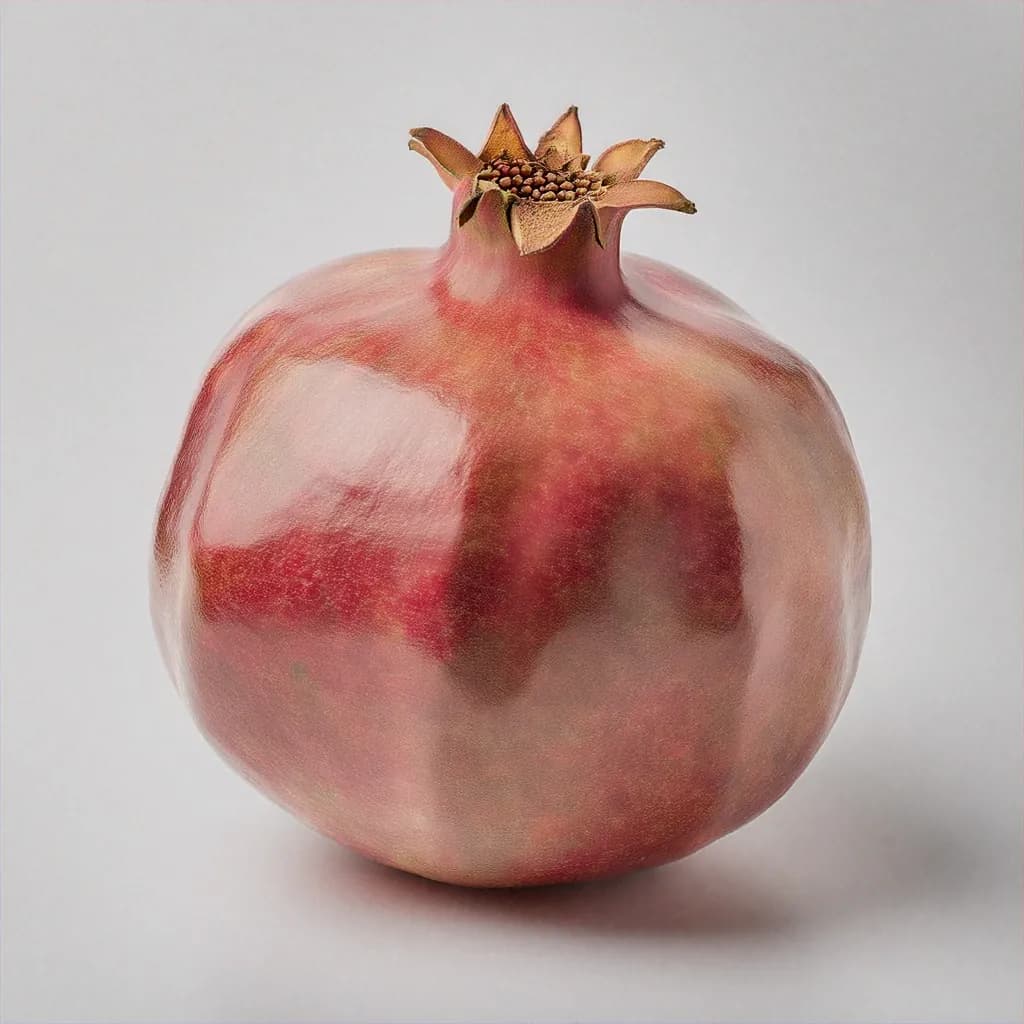
Punica granatum
Pomegranates are distinctive crown-topped fruits with thick leathery rind, jewel-like arils (seed sacs), and tart-sweet juice - offering exotic superfruit experience and exceptional nutritional profile. These ancient Lythraceae family members (3-5 inches diameter) originating from Mediterranean and Middle East regions thrive in warm climates worldwide, becoming symbol of luxury and health. Pomegranates deliver outstanding nutritional density - exceptional polyphenolic antioxidants (punicalagins, anthocyanins) providing powerful cellular protection, significant vitamin C (17% DV) supporting immune function, valuable folate (5% DV) supporting cell division, and high fiber (3.7g per 100g) supporting digestive health. The distinctive jewel-like ruby-red arils, tart-sweet complex flavor, refreshing juice, and elegant appearance make pomegranates premium fruit deserving celebration and regular consumption. Traditional cultures across Mediterranean, Middle East, and Asia recognize pomegranates as health-promoting fruit symbolizing fertility, abundance, and longevity. Modern research increasingly validates pomegranate's remarkable benefits - cardiovascular support, antioxidant protection, anti-inflammatory effects, and disease prevention through multiple pharmacologically active mechanisms. The integration of pomegranate into juice, salads, cuisine, and traditional medicine reflects the fruit's legendary status and exceptional functional properties.
Explore Pomegranate in stunning detail
Pomegranate - Main View
Per 100g
Per 100g
Nutrition breakdown for one serving
Mediterranean basin and Middle East regions
Pomegranates originate from Mediterranean basin and Middle East with cultivation dating over 3,000 years. Ancient Mesopotamia, Egypt, and Mediterranean civilizations extensively cultivated pomegranates. Persian and Greek cultures recognized pomegranate health properties. Islamic and Jewish traditions hold pomegranate as sacred fruit. Pomegranate traveled trade routes establishing cultivation across Mediterranean, Middle East, North Africa, and Asia. Spanish and Portuguese colonizers introduced pomegranates to Americas and other regions. Modern cultivation spans multiple continents with India and Iran as major producers. Scientific research increasingly validates ancient traditional health applications and identifies active compounds responsible for health benefits.
Peak September-December in Northern Hemisphere; March-June in Southern Hemisphere
Each variety offers unique flavors, textures, and culinary applications
Keep your fruit fresh and delicious for longer
Select pomegranates that feel heavy for their size (indicates juice content)
Choose pomegranates with deep color appropriate to variety
Look for thin unblemished skin - thin rind indicates ripeness and juice content
Fragrant sweet aroma indicates ripeness and quality
Avoid bruised, cracked, or moldy pomegranates
Deep color preferred - pale indicates underripeness
Listen for cracking sound when gently squeezed (indicates seed separation)
Pomegranate should feel slightly soft (not hard)
Ripe pomegranates keep refrigerated 2-3 months in crisper drawer - exceptional storage life
Room temperature storage acceptable 1-2 weeks for ripe fruit
Whole pomegranates keep longer than most fruits
Do not wash before storage - moisture accelerates spoilage
Store separately from other fruits to prevent ethylene exposure
Extracted arils keep refrigerated 3-5 days in airtight container
Pomegranate juice keeps refrigerated 2-3 days
Frozen pomegranate arils preserve quality well for 6-12 months
Dried pomegranate seeds keep several months in airtight container
Pomegranate molasses stores indefinitely at room temperature
Preserve freshness for months
Extract arils and freeze on baking sheet (2-3 hours)
Transfer frozen arils to freezer bags or containers
Label with date for tracking
Frozen arils preserve well for 6-12 months
Use for smoothies, cooking, and juice applications
Texture changes with freezing - less ideal for fresh eating but excellent for processing
Label frozen items with the date to track freshness. Most fruits maintain quality for 2-3 months when properly frozen. For best results, use airtight containers or freezer bags to prevent freezer burn.
Discover delicious possibilities
Pomegranate allergies are relatively uncommon but documented particularly in individuals with reactions to other fruits. Allergic reactions typically present as oral allergy syndrome - itching, tingling, or swelling of mouth, lips, and throat particularly with fresh arils. Heat processing (cooking, juice concentration) may denature some allergenic proteins. Severe reactions rare but documented.
Conventionally grown pomegranates may contain pesticide residues. Proper washing: Rinse pomegranate exterior gently under cool running water for 15-20 seconds before cutting. Pat dry with clean towel. This removes surface pesticides and contaminants. Organic pomegranates eliminate synthetic pesticide concerns. Peeling removes surface pesticides automatically.
Surprising trivia you'll love!
Pomegranate is botanically a berry despite its complex structure with multiple chambers - scientifically classified as Hesperidium or modified berry type
Pomegranate has over 600 arils per fruit containing seeds surrounded by juice sacs - extraordinary internal complexity visible when cut open
Pomegranate grenadine syrup historically made from pomegranate juice concentrate - original grenadine traditional recipe used fresh pomegranate molasses
Persian culture designates pomegranate as most important fruit - pomegranate cultivation and consumption central to Persian civilization for millennia
Ancient pomegranate cultivation so extensive in Mediterranean that Romans named pomegranate 'malum punicum' (Carthaginian apple) reflecting cultivation importance
Pomegranate has crown-like calyx structure at top giving distinctive appearance - crown formation actual flower remnant preserved on mature fruit
Punica granatum scientific name etymology from Latin 'Punica' (Carthage/Phoenicia) and 'granatum' (seeded) - reflecting ancient Carthaginian cultivation prominence
Pomegranate tree produces fruit for 100+ years when well-maintained - exceptional tree longevity makes long-term agricultural investment
Pomegranate juice staining is nearly permanent on fabrics - Romans apparently used pomegranate juice as natural dye for luxury textiles
Pomegranate featured prominently in Spanish coat of arms symbolizing Granada conquest - Granada name derives from Arabic pomegranate word 'granado'
Extracting pomegranate arils efficiently requires understanding fruit structure and using proper techniques for minimal mess and maximum yield. WATER METHOD (CLEANEST): Fill large bowl with cool water. Cut pomegranate into quarters. Submerge quarters in water. Gently rub pomegranate under water separating arils from pith - arils sink while pith floats. Strain arils through fine sieve. Pat dry with paper towels. This method minimizes juice staining and mess. SECTION METHOD: Cut pomegranate in half. Score sections around natural lines creating segments. Hold pomegranate half over bowl with cut side down. Tap back of pomegranate with spoon causing arils to fall into bowl below. Repeat with other half. Efficient and relatively clean. DIRECT JUICE METHOD: Cut pomegranate in half. Use citrus juicer or manual juicer pressing halves extracting juice directly. Place cut-side down and apply pressure. Yield concentrated juice quickly. Some aril pulp included in juice. SIMPLE CUTTING: Quarter pomegranate. Hold over bowl. Pull arils out with fingers. Messy but straightforward. Works best over large bowl or sink. YIELD CONSIDERATION: Standard pomegranate yields approximately 1/2 to 3/4 cup arils. Juice yield varies by variety and ripeness. SEED REMOVAL: If removing seeds (optional), gently bite into arils separating seed from juice sac - this is traditional consumption method. JUICE SEPARATION: If extracting pure juice from arils, blend arils briefly then strain through fine sieve. Collect liquid. Process multiple times for purity. STORAGE: Fresh extracted juice keeps refrigerated 2-3 days. Freeze in ice cube trays for convenient portions. Arils keep refrigerated 3-5 days in airtight container. BOTTOM LINE: Water method offers cleanest aril extraction with minimal staining. Section/tap method efficient for speed. Juicer best for pure juice extraction. Multiple methods accommodate different preferences and yields.
Pomegranate contains extraordinary polyphenolic antioxidants particularly punicalagins providing exceptional cellular protection unmatched by most fruits - understanding these compounds reveals pomegranate's superfruit status. PUNICALAGINS: Pomegranate's primary active compounds - extraordinarily powerful polyphenols with exceptional antioxidant capacity. Concentration in pomegranate unmatched by most other fruits. Punicalagins demonstrate remarkable disease-preventing potential. ANTIOXIDANT POWER: Punicalagins have antioxidant capacity approximately three times higher than red wine or green tea - exceptional concentration. Single pomegranate contains powerful antioxidant load. Regular consumption provides significant protective benefit. CELLULAR PROTECTION: Polyphenolic compounds neutralize free radicals preventing cellular damage. Free radical reduction decreases oxidative stress. Protection supports cellular health and longevity. Disease prevention mechanisms prevent DNA damage. BIOAVAILABILITY: Pomegranate polyphenols demonstrate excellent bioavailability - significant absorption and utilization by body. Gut bacteria metabolize some compounds creating additional active metabolites. Extended systemic benefit from consumption. ANTHOCYANINS: Purple-red arils contain anthocyanins - powerful polyphenols providing additional antioxidant protection. Multiple antioxidant compounds work synergistically. Diverse antioxidant profile more protective than single compound. ELLAGIC ACID: Pomegranate contains ellagic acid - polyphenol with antimicrobial and anticancer research support. Additional protective mechanism beyond punicalagins. Tannins present provide additional antioxidant effects. ANTI-INFLAMMATORY EFFECTS: Polyphenolic compounds demonstrate powerful anti-inflammatory activity. Chronic inflammation reduction through regular consumption. Anti-inflammatory benefits support overall health and disease prevention. DISEASE PREVENTION MECHANISMS: Research demonstrates antioxidant and anti-inflammatory effects supporting cardiovascular health, cancer prevention, neurological health, and disease prevention. Multiple protective mechanisms identified. COPPER SYNERGY: Exceptional copper (28% DV) acts as cofactor for antioxidant enzyme systems. Copper and polyphenols work synergistically. Combined effect exceeds individual benefit. TRADITIONAL VALIDATION: Pomegranate's ancient medicinal use reflected by modern identification of powerful active compounds. Traditional wisdom validated by scientific research. Ancient physicians intuitively recognized pomegranate power. BOTTOM LINE: Pomegranate contains extraordinary punicalagins and diverse polyphenolic compounds providing exceptional antioxidant and anti-inflammatory protection unmatched by most fruits - making pomegranate legitimate superfruit with powerful cellular protection mechanisms.
Pomegranate demonstrates exceptional cardiovascular benefits and powerful anti-inflammatory effects through multiple pharmacologically active mechanisms making it a functional food for heart and vascular health. POLYPHENOLIC MECHANISMS: Pomegranate polyphenols provide direct cardiovascular benefit through multiple pathways. Punicalagins and anthocyanins target vascular health specifically. Research demonstrates measurable cardiovascular improvements. BLOOD PRESSURE SUPPORT: Polyphenolic compounds support healthy blood pressure through vasodilation and arterial flexibility. Potassium (5% DV) provides additional blood pressure support. Regular pomegranate consumption may support blood pressure management. CHOLESTEROL MANAGEMENT: Research demonstrates pomegranate polyphenols support cholesterol profile optimization. LDL oxidation prevention through antioxidant protection. HDL support through polyphenolic mechanisms. Lipid profile improvement documented in research. ARTERIAL FUNCTION: Pomegranate supports endothelial function and arterial flexibility. Vascular health improvement through polyphenolic mechanisms. Blood flow optimization through improved vascular function. Arterial stiffness reduction with regular consumption. ANTI-INFLAMMATORY HEART EFFECTS: Pomegranate provides exceptional anti-inflammatory support directly benefiting cardiovascular system. Systemic inflammation reduction supporting heart health. Chronic inflammation underlying many cardiovascular conditions reduced through polyphenols. PLAQUE REDUCTION: Research suggests pomegranate consumption may support atherosclerosis reduction through antioxidant and anti-inflammatory effects. LDL particle oxidation prevention. Arterial plaque development slowing. THROMBOSIS PREVENTION: Pomegranate compounds support healthy blood flow preventing excessive clotting. Platelet aggregation support through polyphenolic mechanisms. Blood flow optimization for cardiovascular health. METABOLIC EFFECTS: Pomegranate polyphenols support healthy glucose metabolism and insulin sensitivity. Metabolic syndrome component improvement through consumption. Systemic health improvement supporting cardiovascular function. COPPER AND HEART HEALTH: Exceptional copper (28% DV) supports cardiac muscle function and collagen formation in cardiovascular tissue. Copper essential for cardiovascular enzyme function. VITAMIN K BONE AND VESSEL HEALTH: Vitamin K (13% DV) supports both bone and vessel calcification regulation. Cardiovascular calcium deposition prevention. Healthy arterial mineralization support. SYNERGISTIC EFFECTS: Multiple polyphenolic compounds, vitamins, and minerals work synergistically providing superior cardiovascular benefit. Whole fruit consumption optimal compared to isolated compounds. TRADITIONAL VALIDATION: Pomegranate's traditional use for heart health and vitality validated by modern research documenting cardiovascular benefits. Ancient wisdom supported by scientific evidence. BOTTOM LINE: Pomegranate provides exceptional cardiovascular and anti-inflammatory support through multiple mechanisms including blood pressure regulation, cholesterol optimization, arterial function improvement, and chronic inflammation reduction - making pomegranate exceptional functional food for vascular and heart health.
Dogs can safely eat pomegranate flesh and arils in moderation as occasional treat - pomegranate is non-toxic and generally safe though some precautions apply. SAFETY: Pomegranate flesh and arils are non-toxic to dogs - no compounds inherently poisonous. Limited portions safe for consumption. PIT AND SEED SAFETY: Pomegranate pits and seeds are safe (unlike some fruits) - digestible without toxicity concern. Pits and seeds do not pose toxicity risk like peach or plum pits. RIND SAFETY: Pomegranate rind is not toxic but very tough and indigestible - choking hazard and GI obstruction risk. Never offer rind to dogs. Remove all rind before offering pomegranate. JUICE SAFETY: Pomegranate juice is safe but highly concentrated sugar. Moderation essential. Diluted juice better than undiluted. BENEFITS: Vitamins support immune function. Fiber supports digestive health in moderation. Water content provides hydration. Antioxidants provide cellular protection. CONCERNS: SUGAR CONTENT: Fresh pomegranate contains 13.67g sugar per 100g - significant for dogs. High sugar contributes to obesity, dental problems, and diabetes. TANNINS: Pomegranate tannins can cause digestive upset in some dogs. Individual tolerance varies. ACIDITY: Pomegranate acidity may upset sensitive digestive systems. PORTION GUIDELINES: Small dogs (under 20 lbs): 1-2 small pomegranate seeds/arils maximum. Medium dogs (20-50 lbs): 2-3 small pieces maximum. Large dogs (over 50 lbs): 3-5 small pieces maximum. Frequency: No more than 1-2 times per month as very occasional treat. PREPARATION: Remove rind completely - essential safety concern. Remove all white pith if possible. Offer arils and flesh only. Rinse to remove any remaining rind fragments. Start with tiny amount to test tolerance. WHEN TO AVOID: Dogs with diabetes must avoid (sugar content). Overweight dogs should avoid (sugar and calories). Dogs with sensitive digestive systems should avoid. Dogs with tannin sensitivity should avoid. Puppies should avoid until mature. DIGESTIVE CONSIDERATIONS: Fresh pomegranate generally not recommended for dogs. Individual tolerance varies. Tannins can cause upset. Safer alternatives exist. BOTTOM LINE: Dogs can technically safely consume small amounts of pomegranate flesh and arils as very occasional treat with strict precautions. Remove rind completely. Better fruit alternatives exist for dogs with lower sugar and better digestibility.
Pomegranate molasses is concentrated pomegranate juice reduction creating thick dark syrup with intense tart flavor - valuable ingredient in Middle Eastern and Mediterranean cuisine and traditional medicine. DEFINITION: Pomegranate molasses is concentrated pomegranate juice reduced through slow simmering to thick syrup consistency. No added sugar or sweetener - pure pomegranate concentration. Color darkens to deep brown-black with concentration. FLAVOR PROFILE: Intensely tart, complex, concentrated pomegranate taste. Less juice sweetness, more concentrated tang. Rich complex flavor from Maillard reaction during concentration. MAKING POMEGRANATE MOLASSES: Extract fresh pomegranate juice from arils (approximately 2-3 medium pomegranates yield 2 cups juice). Pour juice into heavy-bottomed pot. Bring to boil then reduce heat to low simmer. Simmer gently 45-60 minutes stirring occasionally. Juice gradually thickens and darkens to deep brown. Continue until reaches syrup consistency (coats back of spoon). Should reduce to approximately 1/4 to 1/3 original volume. Cool completely - thickens further as it cools. Transfer to sterilized jar for storage. DONENESS TEST: Spoon test - drop small amount on plate. Tilts like syrup when cooled - ready. Sheet test - molasses coats sheet when dripped. SHELF STABILITY: Pomegranate molasses keeps indefinitely at room temperature in airtight jar. No refrigeration needed. Exceptional shelf stability. Years-long storage possible. CULINARY USES: Middle Eastern salads with pomegranate molasses drizzle. Marinades for meat and poultry. Dressing for grains and vegetables. Cocktail and beverage ingredient. Yogurt sauce for savory dishes. Braising liquid for meats. Reduction for Middle Eastern cuisine. HEALTH BENEFITS: Concentrated antioxidants from polyphenolic compounds. Polyphenolic concentration higher than fresh juice. Small quantities provide significant antioxidant benefit. Traditional use in Middle Eastern medicine. TRADITIONAL APPLICATION: Pomegranate molasses central ingredient in Persian, Lebanese, Syrian, and Palestinian cuisine. Traditional medicine application for digestive and inflammatory support. Thousands of years culinary and medicinal tradition. COMMERCIAL AVAILABILITY: Store-bought pomegranate molasses available in international markets and online. Homemade superior freshness though more time-intensive. STORAGE: Refrigeration not required though cold extends shelf stability. Can freeze for extended storage. Thaws easily for use. BOTTOM LINE: Pomegranate molasses is concentrated juice reduction creating intensely flavored syrup - traditional Middle Eastern ingredient combining concentrated antioxidants, exceptional shelf stability, and versatile culinary applications for both sweet and savory preparations.
Pomegranates have profound historical significance spanning over 3,000 years with deep cultural, religious, and medicinal roots across Mediterranean, Middle Eastern, and Asian civilizations. ANCIENT ORIGINS: Pomegranate originates from Mediterranean basin and Middle East with cultivation dating over 3,000 years. Archaeological evidence shows ancient pomegranate cultivation. Early civilizations recognized pomegranate nutritional and medicinal value. MESOPOTAMIAN RECORDS: Ancient Mesopotamian texts reference pomegranate cultivation and use. Early civilizations documented pomegranate health properties. Summerian and Babylonian records mention pomegranate. EGYPTIAN SIGNIFICANCE: Ancient Egypt cultivated pomegranates extensively. Pomegranates depicted in Egyptian art and hieroglyphics. Pomegranate seeds found in Egyptian tombs reflecting sacred status. PERSIAN CULTURE: Persia cultivated pomegranates as central cultural crop. Persian poetry extensively features pomegranate symbolism. Pomegranate part of Persian medical tradition. Persian cultivation influenced global distribution. GREEK AND ROMAN: Greeks cultivated pomegranates establishing Mediterranean tradition. Pomegranate appears in Greek mythology. Romans adopted Greek cultivation expanding production. Roman culture integrated pomegranate into cuisine and medicine. MEDITERRANEAN EXPANSION: Mediterranean civilizations recognized pomegranate health properties. Pomegranate cultivation integrated throughout Mediterranean. Traditional medicine applications developed. JEWISH TRADITION: Jewish culture holds pomegranate as sacred fruit - appears in Torah and religious traditions. Pomegranate symbolizes fertility and abundance. Jewish holidays traditionally include pomegranate. ISLAMIC TRADITION: Islamic texts reference pomegranate as valued fruit. Pomegranate part of Islamic medical tradition. Middle Eastern Islamic culture central to pomegranate tradition. MEDIEVAL PERIOD: Medieval Europe cultivated pomegranates in Mediterranean regions. Monastic medicine incorporated pomegranate. European cultivation continued Mediterranean tradition. COLONIAL EXPANSION: Spanish and Portuguese colonizers introduced pomegranates to Americas and other regions. Colonial trade distributed pomegranate globally. Cultivation established in warm climates worldwide. CULTURAL SYMBOLISM: Pomegranate symbolizes fertility, abundance, and longevity across cultures. Represents prosperity and generosity in Mediterranean and Middle Eastern traditions. Appears extensively in art, literature, and religious iconography. LITERARY SIGNIFICANCE: Pomegranate appears extensively in classical literature. Greek mythology features pomegranate (Persephone myth). Persian poetry extensively references pomegranate. Asian literature includes pomegranate symbolism. TRADITIONAL MEDICINE: Pomegranate part of Ayurvedic medicine in India. Middle Eastern traditional medicine incorporated pomegranate. Chinese medicine included pomegranate applications. Western herbal tradition adopted pomegranate uses. SCIENTIFIC VALIDATION: Modern research increasingly validates traditional pomegranate health applications. Ancient wisdom reflected in scientific discovery of bioactive compounds. Traditional use justified by identification of polyphenolic mechanisms. MODERN GLOBAL CULTIVATION: Pomegranate cultivation spans multiple continents. India, Iran, Turkey major modern producers. Mediterranean continues significant production. California cultivation developed in Americas. Global recognition of pomegranate superfruit status. BOTTOM LINE: Pomegranate represents 3,000+ year cultural heritage spanning Mediterranean, Middle East, Persia, India, and beyond - symbolizing fertility, abundance, and longevity across civilizations. Extensive traditional medicinal use validated by modern research. Pomegranate central to multiple religious and cultural traditions making fruit profoundly significant in human history.
Sustainability insights
Pomegranate cultivation represents warm-climate orchard agriculture with specific environmental considerations. Benefits include perennial trees producing for 100+ years eliminating annual replanting, excellent drought tolerance once established, cultivation in marginal lands unsuitable for water-intensive crops, and minimal processing for fresh consumption. Challenges include conventional agriculture pesticide use, water usage in semi-arid regions, pest management inputs, and tree-care requirements. Sustainable practices include organic pomegranate production, integrated pest management reducing chemical inputs, drought-resistant varieties, regional production promoting local supply, and water-efficient irrigation systems.
Pomegranate carbon footprint is low-moderate due to warm-climate cultivation, minimal processing, and extended harvest window reducing concentration of transportation. Fresh whole pomegranates require no processing - carbon footprint primarily from cultivation and transportation. Pomegranate juice concentrate allows concentrated transportation significantly reducing carbon per serving compared to whole fruit. Juice pasteurization requires energy input but maintains nutritional benefit. Per-serving carbon impact is low considering concentrated nutrition and exceptional shelf stability of whole fruit. To minimize carbon footprint: Purchase fresh pomegranates during season when available locally, choose pomegranate juice concentrate or molasses for off-season with lower transportation carbon per nutritional unit, support regional producers, and appreciate pomegranate's long storage allowing non-concentrated distribution.
Pomegranate tree cultivation requires low-moderate water with water footprint approximately 850-1,100 liters per kilogram - excellent efficiency considering fruit density. Mature trees develop extensive root systems allowing exceptional drought tolerance once established. Semi-arid and arid regions minimize supplemental irrigation due to pomegranate's natural adaptation to dry climates. Modern sustainable practices include drip irrigation reducing waste, mulching decreasing evaporation, soil moisture monitoring, and efficient water management. Pomegranates represent relatively low water-use cultivation well-suited to water-constrained regions.
Supporting local pomegranates maximizes sustainability when available. Pomegranates are cultivated globally in warm regions including India, Iran, Turkey, Mediterranean, California, and many other locations. For residents in pomegranate-growing regions, local fruit provides minimal transportation carbon and superior freshness. Exceptional storage life (60-90 days refrigerated) allows extended local availability. Pomegranate juice concentrate enables year-round availability with significantly reduced transportation carbon. BEST PRACTICES: Buy fresh local pomegranates during season when available, choose pomegranate juice concentrate or molasses for off-season with lower transportation carbon, support regional farmers, and appreciate pomegranate's exceptional storage allowing sustainable year-round enjoyment.
We aim to keep this Pomegranate profile accurate and easy to understand. Nutrition values and % Daily Value figures are based on established reference databases and standard daily value guidance.
Last updated: September 7, 2026
Medical disclaimer
This page is for general educational purposes and does not replace professional medical advice.
Found an issue? Contact us.