Loading Fruit Details...
Please wait while we fetch nutritional information and health benefits
Please wait while we fetch nutritional information and health benefits
Recommended Products
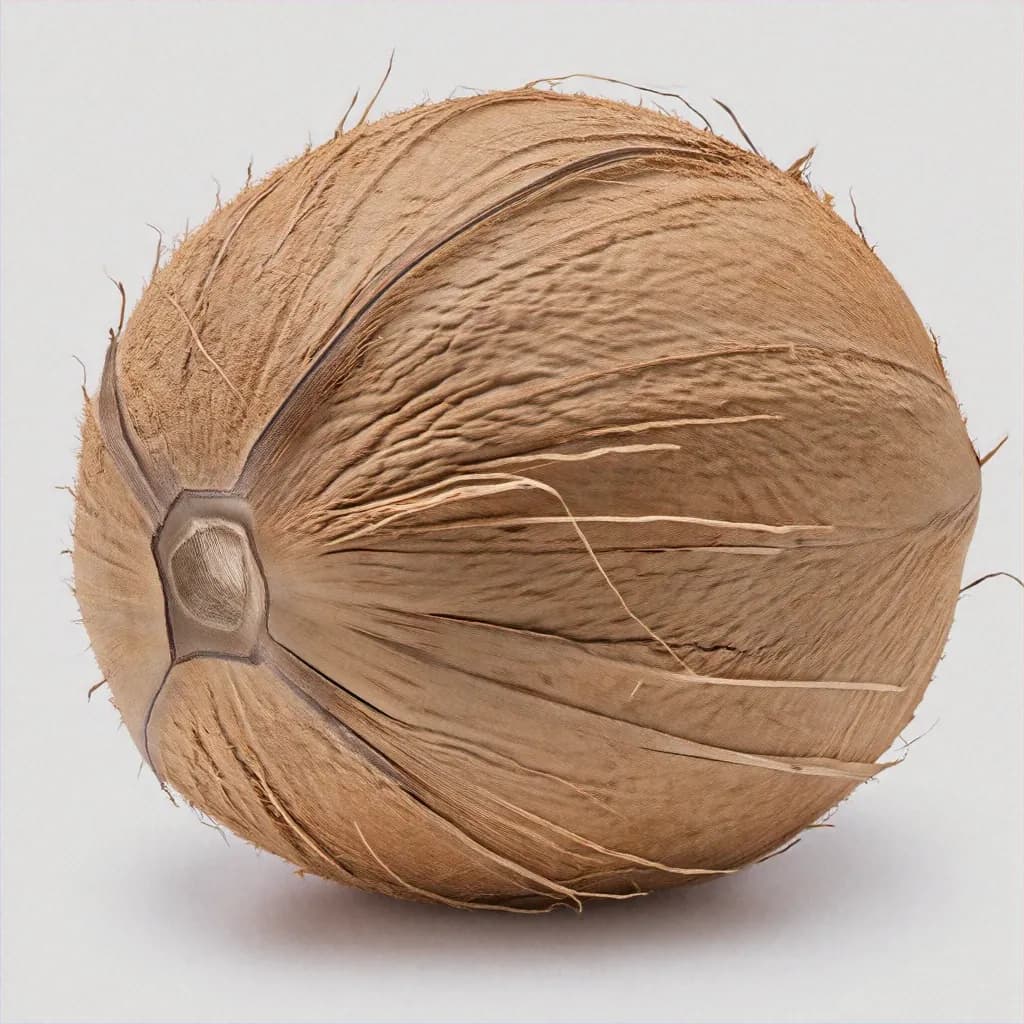
Cocos nucifera
Coconuts are tropical drupes with hard brown shells containing white flesh and nutritious water. Rich in medium-chain triglycerides (MCTs), fiber, and manganese supporting energy and metabolism. Excellent source of manganese (26% DV) for bone health and antioxidant support. Contains lauric acid with potential antimicrobial properties. Native to Southeast Asia, coconuts thrive in tropical coastal climates and provide versatile superfruit benefits from fresh consumption to oil and milk applications.
Explore Coconut in stunning detail
Coconut - Main View
Per 100g
Per 100g
Nutrition breakdown for one serving
Southeast Asia and Indo-Pacific region
Coconuts originated in Southeast Asia and spread globally through ocean currents and human trade. Documented in ancient Asian and Pacific civilizations spanning thousands of years. Polynesian and Micronesian cultures built entire societies around coconuts. European colonization expanded coconut cultivation to tropical regions worldwide. Modern commercial production provides diverse coconut products globally.
Year-round with peak seasons varying by region
Each variety offers unique flavors, textures, and culinary applications
Keep your fruit fresh and delicious for longer
For fresh coconuts, listen for water inside when shaken
Choose heavy coconuts with brown husk color
Avoid coconuts with cracks or soft spots
Green coconuts best for water consumption
Brown mature coconuts best for flesh and oil
Check for mold or sprouting at stem end
Smell for fresh coconut aroma without mustiness
Room temperature 2-4 weeks for whole coconuts
Refrigerate opened coconut up to 5 days
Freeze shredded coconut 6-8 months
Coconut water refrigerate 3-5 days after opening
Store in airtight containers preventing oxidation
Keep away from strong odors
Preserve freshness for months
Shred fresh coconut meat before freezing
Freeze coconut water in ice cube trays
Freeze in airtight containers up to 8 months
Thaw in refrigerator before use
Works well in smoothies and cooking after thawing
Label frozen items with the date to track freshness. Most fruits maintain quality for 2-3 months when properly frozen. For best results, use airtight containers or freezer bags to prevent freezer burn.
Discover delicious possibilities
Coconut allergies uncommon but documented in some individuals. Allergic reactions typically mild - itching or throat irritation. Cross-reactivity with tree nuts possible but rare. Severe reactions very rare. Those with nut allergies should consult allergist.
Coconut farming generally uses fewer pesticides than other crops. Organic coconut products available. Choose fair trade certified coconuts supporting sustainable practices. Conventional coconuts acceptable with normal washing.
Surprising trivia you'll love!
Coconuts originated in Southeast Asia spreading globally through ocean currents and human trade over thousands of years
Manganese content (65% DV) among highest in fruits supporting bone health and metabolism
Copper content (48% DV) exceptional for collagen formation and immune function
Coconut palms produce year-round with some regions harvesting coconuts constantly
Each coconut palm produces 50-200 coconuts annually depending on conditions
Coconut water isotonic matching human blood plasma composition for optimal hydration
Medium-chain triglycerides (MCTs) unique fatty acids metabolized rapidly for energy
Coconut palms among most useful plants providing food, oil, fiber, and materials
Pacific Island cultures built entire societies around coconut cultivation
Coconuts naturally float enabling spread across ocean to distant islands
Coconut water and MCT oil exceptional health benefits through unique nutrient profile and medium-chain triglyceride composition. COCONUT WATER HYDRATION: Natural electrolytes potassium, sodium, and magnesium support optimal hydration. More electrolytes than many sports drinks with minimal calories. Naturally isotonic matching body fluid composition. Quick absorption supporting rapid rehydration. Potassium supports muscle function and cardiovascular health. MEDIUM-CHAIN TRIGLYCERIDES (MCTs): MCTs unique fatty acids metabolized differently than long-chain fats. Rapidly absorbed and converted to energy in liver. Support quick energy availability for physical activity. Enhance metabolic rate and thermogenesis. Do not require bile acids for digestion unlike other fats. MCT OIL METABOLISM: Pure MCT oil concentrated energy source for athletes and active individuals. Supports sustained energy without energy crashes. Enhances fat oxidation and energy expenditure. Rapid absorption minimizing digestive stress. Supports mental clarity and cognitive function. MANGANESE METABOLISM SUPPORT: Manganese (65% DV) essential for metabolism and energy production. Supports carbohydrate and fat metabolism. Antioxidant enzyme production requires manganese. Bone formation and growth dependent on manganese. Blood sugar regulation supported by manganese. COPPER ENERGY PRODUCTION: Copper (48% DV) essential for ATP production and energy metabolism. Supports iron metabolism critical for oxygen transport. Electron transport chain requires copper for energy production. Mitochondrial function depends on adequate copper. NATURAL ELECTROLYTES: Coconut water contains naturally balanced electrolytes. Superior to artificial sports drinks with whole food source. Supports hydration during and after physical activity. Regulates nerve and muscle function. Maintains cardiovascular health. DIGESTIVE EFFICIENCY: MCTs minimal digestive effort unlike other fats. Support healthy gut bacteria growth. May enhance nutrient absorption. Gentle on digestive system. WEIGHT MANAGEMENT: MCTs support satiety and fullness sensation. Enhanced fat oxidation supports healthy weight management. Increased thermogenesis burns more calories during digestion. Metabolic rate enhancement documented in studies. BOTTOM LINE: Coconut water and MCT oil exceptional for energy, hydration, and metabolism through natural electrolytes, medium-chain triglycerides, manganese, and copper supporting rapid energy, enhanced metabolism, and sustained performance.
Coconut products diverse with distinct compositions and applications. COCONUT WATER: Clear liquid inside young green coconuts. Minimal fat content (0.2g per 100ml) and low calories (46 per 100ml). Rich in potassium (600mg per cup) and natural electrolytes. Naturally hydrating with rapid absorption. Best consumed fresh or refrigerated shortly after opening. Mild sweet flavor appealing to most people. Primary use hydration and beverage. COCONUT MILK: Extracted from mature coconut flesh with water addition. Higher fat content (5-20% depending on thickness). Rich, creamy texture for cooking applications. Contains MCTs and saturated fats. Used in curries, soups, and desserts. Available canned for convenience. Separate fat layer when sitting - natural variation. COCONUT OIL: Extracted from mature coconut meat through pressing or extraction. Nearly 100% fat content - primarily saturated fats. High smoke point suitable for high-heat cooking. Solid at room temperature, liquid when warm. Superior for baking and high-heat cooking. Contains lauric acid with potential antimicrobial properties. Health benefits debated among nutritionists. COMPOSITION COMPARISON: Coconut water - hydrating, low fat, natural electrolytes. Coconut milk - creamy, moderate fat, cooking ingredient. Coconut oil - cooking fat, high saturation, culinary uses. CULINARY APPLICATIONS: Coconut water - beverages and smoothies. Coconut milk - curries, soups, desserts, beverages. Coconut oil - cooking, baking, skincare. NUTRITIONAL PROFILES: Coconut water - natural hydration, minimal calories, electrolyte-rich. Coconut milk - creamy texture, MCTs, fat-soluble vitamins. Coconut oil - pure fat, sustained energy, cooking properties. STORAGE DIFFERENCES: Coconut water - refrigerate after opening, consume within days. Coconut milk - refrigerate after opening, use within days. Coconut oil - room temperature storage, long-term stability. BOTTOM LINE: Coconut water hydrating beverage with electrolytes, coconut milk creamy cooking ingredient with MCTs, and coconut oil cooking fat with high smoke point - each serving distinct culinary and nutritional purposes.
Coconuts safe and nutritious for children supporting growth, development, and energy with proper preparation. NUTRITIONAL BENEFITS: Manganese (65% DV) supports bone development and formation. Copper (48% DV) supports collagen formation essential for tissue development. Fiber (28% DV) supports digestive health and regularity. Iron (13% DV) supports oxygen transport and cognitive development. Phosphorus supports bone health and cellular function. LOW ALLERGEN: Coconut allergies uncommon in children. Rarely allergenic with minimal cross-reactivity. Generally well-tolerated when introduced properly. Severe reactions very rare. INTRODUCTION GUIDELINES: Introduce gradually starting with small quantities. Begin with coconut water for hydration benefits. Monitor for rare allergic reactions. Supervise young children during consumption. PREPARATION FOR CHILDREN: Shredded coconut can be choking hazard for very young children. Blend into smoothies for safer consumption. Coconut water natural hydrating beverage. Coconut milk mixed into foods. CHOKING PRECAUTIONS: Avoid whole coconut chunks for children under 4 years. Mix shredded coconut into other foods. Cut coconut into appropriate sizes. Supervise all eating preventing choking. FLAVOR APPEAL: Naturally sweet taste appeals to most children. Tropical flavor interesting for palate development. Coconut water refreshing natural beverage. Creative recipes engaging children. PORTION SIZES: Young children - 2-3 tablespoons shredded coconut daily. Older children - quarter cup with other foods. Coconut water - small portions supplementing regular water. Include with balanced diet. DEVELOPMENT SUPPORT: Manganese supports bone growth and development. Copper supports tissue formation. Phosphorus supports skeletal development. Fiber supports healthy digestion. Iron supports brain development. ENERGY SUPPORT: Natural fats provide sustained energy for active children. MCTs rapidly converted to energy. Perfect snack for physical activity. Supports play and development. BOTTOM LINE: Coconuts safe and nutritious for children supporting bone growth, development, and energy through manganese, copper, and fiber with attention to age-appropriate preparation preventing choking hazard.
Coconuts exceptional cultural significance in Southeast Asian and Pacific Island societies spanning thousands of years. ANCIENT HISTORY: Coconut palms originated in Indo-Pacific region with evidence of cultivation in ancient Southeast Asia. Polynesian navigators spread coconuts across Pacific Islands through ocean voyages. Archaeological evidence shows coconut use 5,000+ years ago. Ancient trade routes expanded coconut cultivation across tropical regions. CULINARY FOUNDATION: Southeast Asian cuisines centered around coconut products. Thai, Vietnamese, and Philippine dishes featuring coconut milk fundamental. Coconut foundational ingredient in tropical cooking. Regional recipes developed over generations. Family traditions passed through generations. PACIFIC ISLAND TRADITIONS: Pacific Islanders developed complete cultures around coconuts. Coconuts provided food, oil, fiber, and shelter. Every part of coconut utilized - zero waste practices. Ceremonial significance in island cultures. Social gathering traditions around coconut harvesting. NUTRITION CORNERSTONE: Coconut provided primary calorie source historically. Sustained populations on isolated islands. Nutritional security in tropical regions. Supported growth and development. Energy source for physical activity. MEDICINAL TRADITIONS: Traditional medicine applications documented historically. Ayurvedic and Southeast Asian medicine incorporated coconut. Antimicrobial properties recognized traditionally. Digestive health support documented. Skin health applications traditional practice. MODERN CULINARY APPLICATIONS: Contemporary chefs celebrating coconut diversity. Fine dining incorporating traditional applications. Fusion cuisine blending traditions and innovation. Health food movement recognizing superfruit status. SUSTAINABILITY PRACTICES: Coconut farming sustainable and traditional. Agroforestry integration with other crops. Zero-waste practices maximizing all parts. Fair trade practices emerging. GLOBAL EXPANSION: Coconut products now worldwide availability. Coconut oil health trend emergence. Plant-based alternatives growing market. Sustainable sourcing increasing importance. BOTTOM LINE: Coconuts represent 5,000+ year cultural heritage from Southeast Asian and Pacific Island origins through culinary foundations, ceremonial significance, and sustainable practices spanning entire cultures and now globally recognized superfruit.
Sustainability insights
Coconut cultivation represents sustainable agricultural practice when managed responsibly. Benefits include year-round production, agroforestry integration, minimal pesticide use, and zero-waste utilization. Challenges include water requirements in some regions, deforestation concerns, and monoculture practices. Sustainable practices include organic cultivation, intercropping, rainwater harvesting, and fair trade certification.
Coconut carbon footprint low-to-moderate depending on cultivation and transportation. Coconut palms sequester significant carbon. Minimal processing for fresh coconut. Carbon footprint primarily from transportation and processing. Local sourcing dramatically reduces footprint. Sustainable farming reduces overall environmental impact.
Coconut palms moderate water requirements reflecting tropical climate adaptation. Deep root systems access groundwater. Rainfall primary water source in tropical regions. Irrigation supplementation minimal in established plantations. Significantly less water than many crops.
Supporting sustainable coconut producers maximizes environmental benefit. Fair trade certification ensures farmer welfare. Organic coconut farming reduces environmental impact. Peak availability year-round varies by region. BEST PRACTICES: Choose fair trade certified products, support organic coconut farming, source from responsible producers, minimize processing for fresh consumption.
We aim to keep this Coconut profile accurate and easy to understand. Nutrition values and % Daily Value figures are based on established reference databases and standard daily value guidance.
Last updated: September 19, 2026
Medical disclaimer
This page is for general educational purposes and does not replace professional medical advice.
Found an issue? Contact us.