Loading Vegetable Details...
Please wait while we fetch nutritional information and health benefits
Please wait while we fetch nutritional information and health benefits
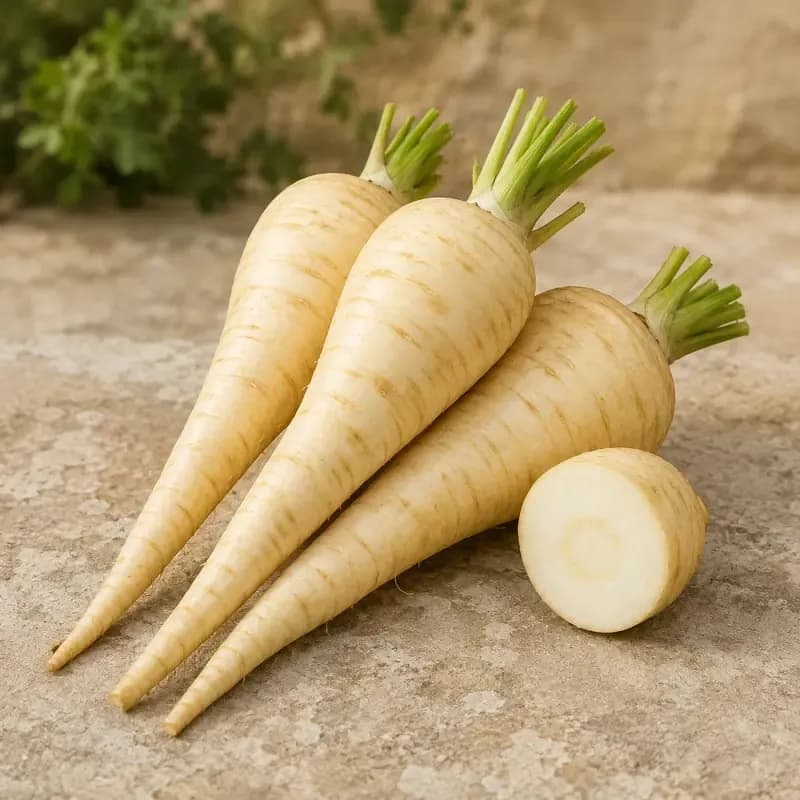
Pastinaca sativa
The parsnip, scientifically known as Pastinaca sativa, is a cream-colored root vegetable belonging to the carrot family, Apiaceae. Its long, tapering taproot resembles a pale carrot but has a distinctively sweet, earthy, nutty flavor with subtle notes of spice. Parsnips develop their familiar storage root during the first year of their biennial life cycle; if left in the ground, they produce tall flowering stems and umbrella-shaped clusters of yellow flowers during the second year. Cool weather and frost can make mature roots taste sweeter by encouraging the conversion of stored starches into sugars. Their firm raw texture becomes tender and aromatic when roasted, baked, steamed, boiled, braised, or pureed. Parsnips work especially well in winter soups, stews, mashes, gratins, curries, and trays of roasted vegetables. Raw roots provide carbohydrates, fiber, vitamin C, vitamin K, vitamin E, folate, potassium, manganese, copper, and several B vitamins. Unlike the edible root, parsnip foliage and sap can contain photoreactive furanocoumarins capable of causing skin inflammation after sunlight exposure, so the leaves and stems should not be treated as culinary greens. Native to Eurasia and cultivated since antiquity, parsnips were an important sweet and starchy food in Europe before potatoes and refined sugar became widely available.
Explore Parsnip in stunning detail
Parsnip - Main View
Per 100g
Per 100g
Nutrition breakdown for one serving
Temperate Eurasia, particularly Europe and western Asia
Wild parsnip is native to Eurasia, and cultivated forms have been known in Europe since antiquity. Greek and Roman writers described pale edible roots that may have included both carrots and parsnips because the crops were not always distinguished clearly. During the Middle Ages, parsnips became important sources of starch and sweetness across northern Europe. Their naturally sweet roots were used before refined sugar was widely accessible and before potatoes became a dominant staple. European settlers later introduced cultivated parsnips to North America, Australia, and New Zealand, where escaped plants sometimes naturalized. Modern agricultural statistics frequently combine parsnips with other root vegetables, so a dependable current ranking of parsnip-producing countries is not supplied here.
Parsnips are cool-season vegetables generally harvested from late autumn through early spring. They can remain in the ground during cold weather where conditions permit, and mature roots can also be stored for winter use.
Each variety offers unique flavors, textures, and culinary applications
Keep your fruit fresh and delicious for longer
Choose parsnips that feel firm, dense, and relatively smooth, without slime, mold, soft spots, deep cuts, or extensive shriveling.
Select small to medium roots for a tender texture; very large parsnips may develop woody cores that require removal.
Look for cream-colored roots with a fresh appearance rather than severely browned, rubbery, or dehydrated surfaces.
If tops are attached, avoid handling the foliage with bare skin and select roots without signs of crown rot or decay.
Remove any attached foliage while wearing gloves, then store the unwashed roots in a perforated or loosely closed bag in the refrigerator crisper.
Do not store parsnips while wet because excess surface moisture can encourage decay.
Keep cut parsnips in an airtight container in the refrigerator and use them promptly.
For longer traditional storage, sound mature roots may be kept in cold, humid conditions or packed in slightly damp sand where appropriate.
Inspect stored roots regularly and discard any that become moldy, slimy, leaking, rotten, or strongly off-smelling.
Rinse parsnip roots under cool running water and scrub away soil with a clean vegetable brush; do not use soap or household detergent.
Trim the crown and thin root tip. Peeling is optional for small, young parsnips but usually improves the texture of larger or older roots.
Cut large parsnips lengthwise and remove a tough or woody central core before cooking.
Place cut pieces in acidulated water for a short period if necessary to limit discoloration, then drain and dry them before roasting.
Cut parsnips into similarly sized pieces so they roast, steam, boil, or braise evenly.
Wear gloves when removing or handling attached foliage because plant sap can cause phototoxic skin reactions after exposure to sunlight.
Preserve freshness for months
Wash, peel if desired, and cut parsnips into uniform cubes, slices, or batons.
Blanch the pieces in boiling water for approximately 2 minutes, then cool them promptly in ice water.
Drain and dry blanched parsnips thoroughly before freezing them in a single layer.
Transfer frozen pieces to airtight freezer bags or containers, remove excess air, and label them with the date.
Cooked parsnip mash and roasted parsnips can also be frozen, although their texture may soften after thawing.
Label frozen items with the date to track freshness. Most fruits maintain quality for 2-3 months when properly frozen. For best results, use airtight containers or freezer bags to prevent freezer burn.
Discover delicious possibilities
Parsnip allergy is uncommon but possible. Reactions may include oral itching, hives, swelling, digestive symptoms, breathing difficulty, or, rarely, anaphylaxis. Cross-reactivity may occur in some people with pollen-food allergy syndrome or allergies to related Apiaceae foods such as carrot, celery, parsley, fennel, or coriander. Anyone experiencing breathing difficulty, faintness, or rapidly progressing swelling should seek emergency care, while suspected parsnip allergy should be evaluated by a qualified allergy specialist.
Agricultural practices and measured residues vary by farm, country, and season. Wash parsnip roots thoroughly under running water and scrub away adhering soil before peeling or cutting. Peeling may reduce some surface residues but does not replace agricultural safety controls. Do not use soap, bleach, or household detergent on produce. Consumers seeking current residue information should consult their national food-safety authority.
Surprising trivia you'll love!
Parsnip belongs to the Apiaceae family alongside carrot, celery, parsley, fennel, and coriander.
Cold weather can encourage the conversion of stored starch into sugar, making mature parsnips taste sweeter.
Before potatoes and refined sugar became widely available, parsnips were important sources of starch and sweetness in Europe.
The edible parsnip is a taproot rather than a stem tuber.
Parsnip flowers grow in umbrella-like clusters called umbels.
Parsnip is a biennial plant that normally produces its storage root in the first year and flowers in the second.
Wild and cultivated parsnip foliage can cause phytophotodermatitis when sap-exposed skin receives ultraviolet light.
Roasting parsnips intensifies their sweetness through moisture loss and surface browning.
Yes. The edible portion of a parsnip is an enlarged taproot that stores carbohydrates and other nutrients during the plant's first growing season. Parsnip is a biennial plant: if the root remains in the ground, it can produce a tall flowering stem during its second year. This makes parsnip different from potato, which is a modified underground stem tuber with buds or eyes. The botanical classification of root accurately describes the familiar cream-colored structure used in cooking. Parsnip leaves and stems should not be treated as edible greens because their sap can be phototoxic.
No. Parsnips and carrots are related members of the Apiaceae family, but they belong to different genera and species. Parsnip is Pastinaca sativa, while the cultivated carrot is Daucus carota subsp. sativus. Parsnips are usually cream-colored, broader at the shoulder, more fibrous, and distinctly sweet, earthy, nutty, and spicy. White carrot varieties lack orange pigment but still have the characteristic flavor and structure of carrots. Their nutrient profiles also differ: parsnips generally contain more calories, carbohydrate, fiber, folate, and potassium per 100 g than common raw carrots.
Young, tender parsnip roots can be eaten raw after thorough washing and preparation. They may be peeled and grated, shaved into thin ribbons, or finely sliced for salads and slaws. Raw parsnip is crisp, sweet, aromatic, and somewhat firmer than carrot. Large or older roots can have tough skins and woody cores that should be removed. Cooking generally produces a softer texture and mellower flavor. Anyone sensitive to high-fiber raw vegetables may tolerate cooked parsnip better. Only the root should be used; attached foliage is not suitable as a salad green.
Cold weather can alter carbohydrate metabolism in parsnip roots. As temperatures fall, some stored starch may be converted into soluble sugars, which help protect plant tissues against freezing and make the root taste sweeter. This is why parsnips harvested after frost are often prized for winter cooking. The effect varies with cultivar, maturity, soil conditions, temperature, and storage. Frost is not essential for making parsnips edible, and roots harvested earlier can still be sweet. Refrigerated storage may also influence flavor, although it does not perfectly reproduce field conditions.
Plain parsnips can contribute useful nutrients to a balanced diet. Raw parsnip provides about 75 calories per 100 g, along with 4.9 g of fiber, vitamin C, vitamin K, vitamin E, folate, potassium, manganese, copper, and several B vitamins. Their carbohydrate content is higher than that of many non-starchy vegetables, so portions still matter when tracking carbohydrate. Roasting, steaming, boiling, and pureeing can all be nutritious methods. Generous additions of oil, butter, cream, honey, maple syrup, or salt can substantially change the finished dish's calorie, sugar, fat, or sodium content.
Parsnips can fit into a diabetes eating plan, but they contain more carbohydrate than radishes, turnips, or leafy vegetables. Raw parsnip provides approximately 18 g of carbohydrate and 4.9 g of fiber per 100 g. Portion size, cooking method, texture, and the other foods in the meal can influence the glucose response. Pairing parsnips with protein, healthy fat, legumes, and non-starchy vegetables may create a more balanced meal. Sweet glazes and parsnip-potato mash require additional carbohydrate accounting. Individual glucose targets and medications should guide personalized advice.
Small, young parsnips have relatively tender skin and may only need thorough scrubbing. Larger or older roots usually benefit from peeling because their skin can be tough or slightly bitter. Trim the crown and narrow root tip, peel thinly, and inspect the central core after cutting the parsnip lengthwise. A large woody core can be removed with a knife before cooking. Peeling does not make spoiled produce safe, so discard roots that are moldy, slimy, leaking, deeply decayed, or strongly off-smelling. Wear gloves if attached leaves or stems must be handled.
Parsnip foliage and sap contain furanocoumarins, natural defensive compounds that can make skin unusually sensitive to ultraviolet light. When sap contacts the skin and the area is subsequently exposed to sunlight, a reaction called phytophotodermatitis may develop. Symptoms can include redness, burning, swelling, blisters, and later dark discoloration. The reaction is not necessarily an allergy. Wear gloves, long sleeves, and eye protection when handling foliage, particularly on sunny days. Wash exposed skin promptly with soap and water, avoid sunlight, and seek medical advice for severe blistering or eye exposure.
Remove attached foliage while wearing gloves, but leave the roots unwashed until preparation because excess moisture can encourage decay. Place the parsnips in a perforated or loosely closed bag in the refrigerator crisper. They generally retain good quality for about two to three weeks, although very fresh roots can last longer under controlled cold, humid storage. Keep cut parsnips in an airtight refrigerated container and use them promptly. Roots that become moldy, slimy, leaking, deeply soft, rotten, or strongly off-smelling should be discarded rather than trimmed and eaten.
Sustainability insights
Parsnips are cool-season crops that can remain in suitable soil into winter, potentially reducing immediate storage requirements. Their environmental performance depends on yield, fertilizer, irrigation, soil preparation, pest management, refrigeration, packaging, and waste. Crop rotation, cover cropping, integrated pest management, efficient nutrient application, reduced soil compaction, and accurate harvesting can improve sustainability.
Fresh, minimally processed parsnips generally have a relatively low greenhouse-gas footprint compared with most animal-derived foods, although no universal value applies. Heated greenhouse production, long refrigerated storage, air freight, plastic packaging, processing, and energy-intensive cooking can increase emissions. Seasonal field production, regional distribution, minimal packaging, and efficient batch cooking can reduce energy requirements.
Parsnip water requirements vary with climate, soil depth, cultivar, growing period, yield, and irrigation efficiency. Even moisture supports straight, tender roots, while drought can reduce growth and excessive irrigation can waste water or encourage disease. Deep, well-prepared soil, mulching, soil-moisture monitoring, and appropriately scheduled irrigation can improve water-use efficiency.
Local, seasonal parsnips may require less transport and prolonged refrigeration, but distance alone does not determine environmental impact. Efficiently grown imports transported by ship or truck can sometimes compare favorably with heated or low-yield local production. Buying firm roots in suitable quantities, storing them correctly, using edible peel when appropriate, and preventing household waste can reduce the impact of each serving.
We aim to keep this Parsnip profile accurate and easy to understand. Nutrition values and % Daily Value figures are based on established reference databases and standard daily value guidance.
Last updated: August 24, 2026
Medical disclaimer
This page is for general educational purposes and does not replace professional medical advice.
Found an issue? Contact us.