Loading Vegetable Details...
Please wait while we fetch nutritional information and health benefits
Please wait while we fetch nutritional information and health benefits
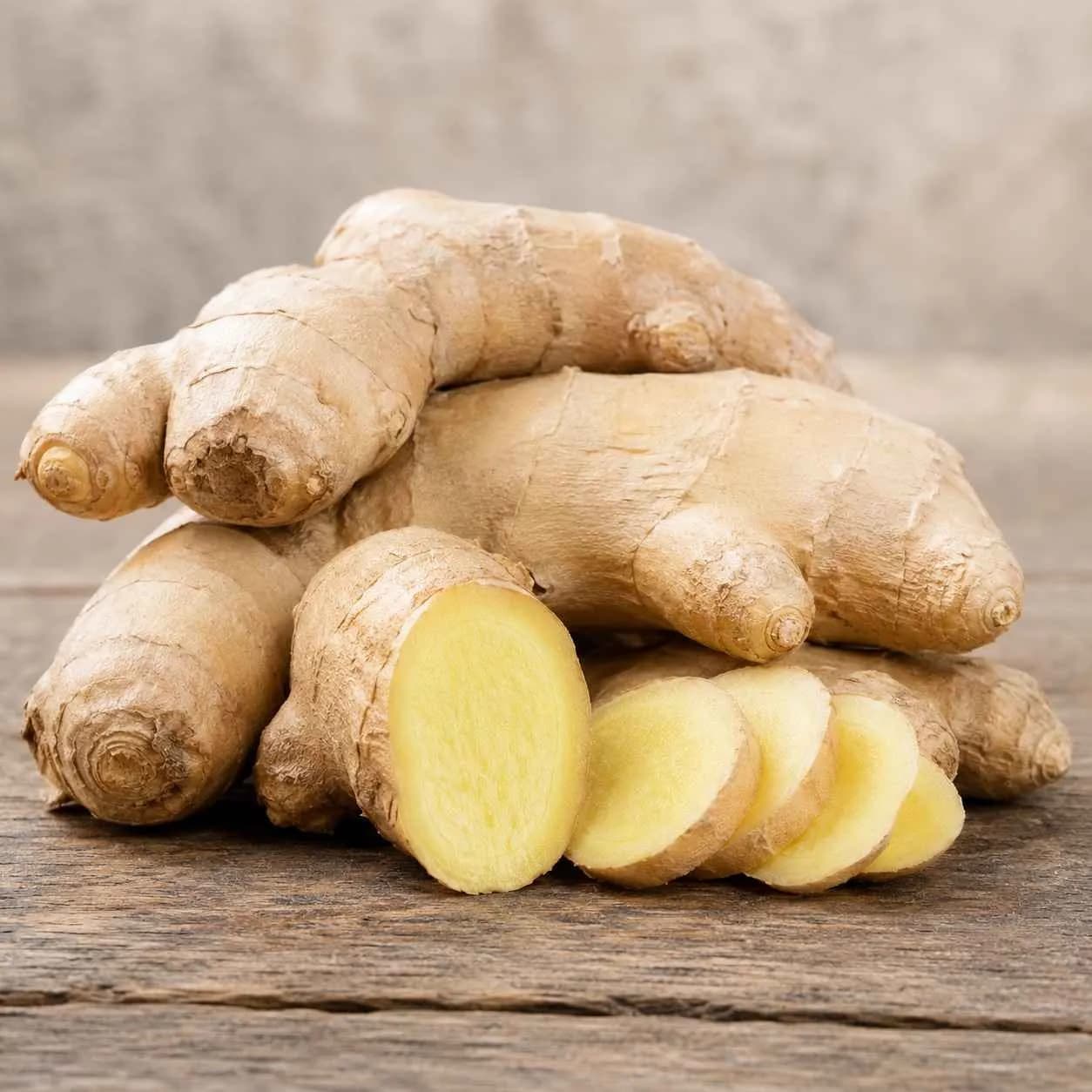
Zingiber officinale Roscoe
Ginger is the aromatic underground rhizome of Zingiber officinale Roscoe, a tropical flowering plant in the Zingiberaceae family. Although commonly called ginger root, the edible portion is botanically a rhizome, which is a modified underground stem that grows horizontally and produces both roots and leafy shoots. Fresh ginger has pale yellow to golden flesh beneath a thin tan skin and delivers a distinctive combination of citrusy fragrance, warming heat, peppery sharpness, and subtle sweetness. Its characteristic pungency comes largely from phenolic compounds known as gingerols, especially 6-gingerol. Drying and heating alter these compounds, increasing substances such as shogaols and zingerone and creating different flavor profiles. Ginger is essential in Indian, Chinese, Japanese, Southeast Asian, Middle Eastern, Caribbean, African, and Western cuisines. It can be grated into curries, sliced into stir-fries, simmered in soups, pickled, candied, baked into desserts, or infused into teas and other beverages. Nutritionally, fresh ginger is relatively low in calories and provides potassium, magnesium, manganese, copper, vitamin B6, vitamin C, and smaller quantities of several other vitamins and minerals. Its concentrated aroma means that typical culinary servings are much smaller than 100 grams, but ginger remains valued worldwide for both flavor and its extensively studied bioactive compounds.
Explore Ginger in stunning detail
Ginger - Main View
Per 100g
Per 100g
Nutrition breakdown for one serving
Maritime Southeast Asia, where ginger is believed to have been domesticated before spreading through trade and human migration.
Ginger is one of the oldest known cultivated spices and vegetables and has no clearly documented wild form identical to modern cultivated Zingiber officinale. Botanical and historical evidence associates its domestication with Maritime Southeast Asia. Austronesian peoples transported ginger across island Southeast Asia and into the Pacific, while ancient trade routes carried it westward to India, the Middle East, the Mediterranean, and eventually Europe. Ginger was well known in ancient Indian, Chinese, Greek, and Roman traditions and became an important commodity in the medieval spice trade. European colonization later introduced large-scale cultivation to the Caribbean, Africa, and the Americas.
Fresh ginger is commercially available year-round in tropical and subtropical markets. Mature rhizomes are usually harvested several months after planting, while younger ginger is harvested earlier for a milder flavor and tender skin.
Each variety offers unique flavors, textures, and culinary applications
Keep your fruit fresh and delicious for longer
Choose ginger rhizomes that feel firm, heavy, and dense with smooth or relatively taut skin.
Look for a fresh spicy aroma and avoid pieces that are excessively shriveled, moldy, wet, or unusually soft.
Young ginger should have especially thin, tender skin and juicy flesh.
Break or select smaller pieces when possible if only a little ginger is needed, reducing household food waste.
Store fresh unpeeled ginger in the refrigerator in a dry, loosely wrapped or ventilated container.
Keep cut surfaces covered to reduce moisture loss and odor transfer.
Avoid prolonged exposure to standing moisture because damp conditions encourage mold and soft rot.
For short-term use, ginger may remain at cool room temperature for several days if conditions are dry.
Freeze whole or portioned ginger for longer storage when fresh texture is not essential.
Rinse the rhizome under cool running water and scrub away visible soil before cutting.
Tender young ginger usually does not need peeling; mature ginger can be peeled thinly with a spoon, vegetable peeler, or small knife.
Slice across the fibers for thin pieces, julienne for stir-fries, or grate finely when a recipe needs evenly distributed ginger flavor.
Remove any moldy, excessively soft, or dried-out sections before use.
For a milder flavor, use larger slices and remove them after cooking; for stronger flavor, finely grate or crush the ginger.
Add fresh ginger early in cooking for a mellow integrated flavor or near the end for brighter, sharper aromatic notes.
Preserve freshness for months
Freeze whole unpeeled ginger and grate it directly from frozen as needed.
Slice, mince, or grate ginger before freezing if recipe-sized portions are more convenient.
Freeze grated ginger in small portions or ice-cube trays, then transfer the frozen portions to an airtight container.
Keep frozen ginger tightly sealed to reduce freezer burn and aroma transfer.
Frozen ginger works particularly well in curries, soups, stir-fries, marinades, and beverages even though its texture may soften after thawing.
Label frozen items with the date to track freshness. Most fruits maintain quality for 2-3 months when properly frozen. For best results, use airtight containers or freezer bags to prevent freezer burn.
Discover delicious possibilities
True ginger allergy is uncommon but possible. Allergic reactions may include oral itching, skin symptoms, respiratory symptoms, or gastrointestinal discomfort. Some people experience non-allergic irritation from ginger's pungent compounds, particularly when consuming concentrated preparations.
Ginger grows underground and can carry soil on its surface, while pesticide residues vary according to production practices and region. Wash the rhizome thoroughly under clean running water and scrub away visible soil before cutting. Peeling may reduce some surface residues but cannot remove compounds that have entered plant tissues. Purchasing ginger from reputable suppliers operating under regulated agricultural standards remains important.
Surprising trivia you'll love!
Ginger is botanically an underground stem called a rhizome, not a true root.
A piece of fresh ginger can produce a new plant if it contains a healthy growth bud or node.
Fresh ginger is dominated by gingerols, while drying converts some of these compounds into more pungent shogaols.
Ginger was traded between Asia, the Middle East, and Europe thousands of years before modern global shipping.
The scientific name Zingiber officinale reflects ginger's long history as a valued cultivated and traditional medicinal plant.
Young ginger has thin skin, tender flesh, and a milder flavor than fully mature ginger.
Pickled young ginger, known as gari in Japanese cuisine, is traditionally served with sushi as a palate cleanser.
Ginger is commonly called ginger root, but botanically that description is not correct. The edible part of Zingiber officinale is a rhizome, which is a specialized underground stem. A rhizome grows horizontally beneath the soil and contains nodes from which new shoots and true roots can develop. This is why a fresh piece of ginger with viable buds can sprout when planted. The distinction matters botanically because roots and stems have different structures and functions. In everyday cooking, however, the term ginger root is so widely established that both names are commonly understood.
Peeling is optional and depends largely on the ginger's maturity and how it will be used. Young ginger has very thin, tender skin that can usually be eaten without peeling after thorough washing. Mature ginger develops a thicker, drier skin that some people prefer to remove for smoother sauces, beverages, and finely grated preparations. A teaspoon is often useful for scraping away the skin while preserving more flesh than aggressive peeling with a knife. If ginger will be strained from a broth or tea after simmering, simply washing and slicing it without peeling is often sufficient.
Fresh ginger's pungency comes mainly from phenolic compounds called gingerols, particularly 6-gingerol. These molecules activate sensory receptors involved in detecting heat and chemical irritation, producing the warming or spicy sensation associated with ginger even though it contains no capsaicin, the compound responsible for chili-pepper heat. Processing changes this chemistry. When ginger is dried or strongly heated, some gingerols are converted into shogaols, which can be even more pungent. Cooking also produces compounds such as zingerone, which contributes a sweeter and less sharply spicy aroma. This chemistry explains why fresh, dried, and cooked ginger taste noticeably different.
Ginger is one of the most extensively studied culinary plants for nausea. Clinical studies suggest that ginger preparations may provide modest relief for certain types of nausea, particularly nausea associated with pregnancy, although results vary with dose, formulation, individual response, and the underlying cause. Gingerols and related compounds may influence gastrointestinal motility and signaling pathways involved in the nausea response. However, ginger should not be used to delay medical evaluation of persistent vomiting, dehydration, severe abdominal pain, or unexplained nausea. Pregnant individuals or people taking medications should discuss concentrated supplements with an appropriate healthcare professional.
Fresh and dried ginger have different compositions rather than one being universally healthier. Fresh ginger contains more water and has a brighter flavor dominated by gingerols. Drying concentrates many non-water components and promotes conversion of some gingerols into shogaols, changing both pungency and phytochemical composition. Dried ginger is also typically consumed in smaller quantities because its flavor is concentrated. Fresh ginger may retain more heat-sensitive nutrients such as vitamin C, while dried ginger provides a different profile of bioactive compounds. Including either form in a varied diet can be useful, and the best choice depends on the recipe and individual preference.
Ginger contains gingerols, shogaols, and related compounds that have demonstrated effects on inflammatory signaling pathways in laboratory studies. Human research has also investigated ginger preparations for conditions involving pain or inflammation, including osteoarthritis and exercise-related soreness, with some studies reporting modest benefits. However, study formulations, doses, and results vary, and culinary portions of ginger cannot be assumed to produce the same effects as standardized research extracts. Ginger is best regarded as a flavorful component of an overall plant-rich diet rather than a replacement for prescribed anti-inflammatory treatment or medical evaluation.
Whole fresh ginger stores best when kept cool, relatively dry, and protected from excessive moisture. For regular household use, place unpeeled ginger in the refrigerator in a loosely wrapped or ventilated container, where good-quality rhizomes can often remain usable for two to four weeks. Cut surfaces should be covered to reduce dehydration. For longer storage, ginger freezes exceptionally well. Whole frozen ginger can be grated directly from the freezer without thawing, while grated or minced ginger can be frozen in small recipe-sized portions. Discard ginger that develops extensive mold, unpleasant odors, or soft wet decay.
Ginger has a long history of culinary use after meals and has been studied for several digestive effects. Research suggests that certain ginger compounds may influence gastric motility and the rate at which stomach contents move into the intestine, which may help explain some of its effects on nausea and digestive comfort. However, responses differ between individuals. Small culinary amounts are generally well tolerated, while larger quantities may cause heartburn, stomach irritation, or diarrhea in some people. Persistent digestive symptoms should be medically assessed rather than managed exclusively with ginger or other traditional food remedies.
Sustainability insights
Ginger is a high-value tropical crop whose environmental impact depends on yield, fertilizer use, soil management, irrigation, pest control, processing, transport, and post-harvest losses. Because the harvested rhizome stores reasonably well and only small quantities are often needed for flavoring, household waste can be relatively low when ginger is properly refrigerated or frozen. Crop rotation, erosion control, organic-matter management, integrated pest management, and efficient irrigation can improve production sustainability.
There is no single reliable carbon-footprint figure for all ginger. Emissions vary with fertilizer use, irrigation energy, farm machinery, refrigeration, drying or processing, packaging, transportation distance, and food waste. Fresh ginger transported long distances by sea or efficient road freight generally has a different footprint from air-freighted produce or heavily processed ginger products.
Ginger requires consistent moisture during its long growing period but performs poorly in waterlogged soil. Water demand varies substantially with rainfall, climate, soil type, mulch, yield, and irrigation technology. Drip irrigation, mulching, soil-moisture monitoring, good drainage, and maintaining organic matter can improve water-use efficiency and reduce unnecessary irrigation.
Locally grown ginger can reduce transport distances where climate permits suitable production, while imported ginger often comes from highly productive tropical regions. Distance alone does not determine sustainability. Yield, irrigation, fertilizer use, storage, processing, transport mode, packaging, and food losses all influence total environmental impact. Buying appropriate quantities and freezing unused ginger can reduce household waste regardless of origin.
We aim to keep this Ginger profile accurate and easy to understand. Nutrition values and % Daily Value figures are based on established reference databases and standard daily value guidance.
Last updated: September 3, 2026
Medical disclaimer
This page is for general educational purposes and does not replace professional medical advice.
Found an issue? Contact us.