Loading Fruit Details...
Please wait while we fetch nutritional information and health benefits
Please wait while we fetch nutritional information and health benefits
Recommended Products
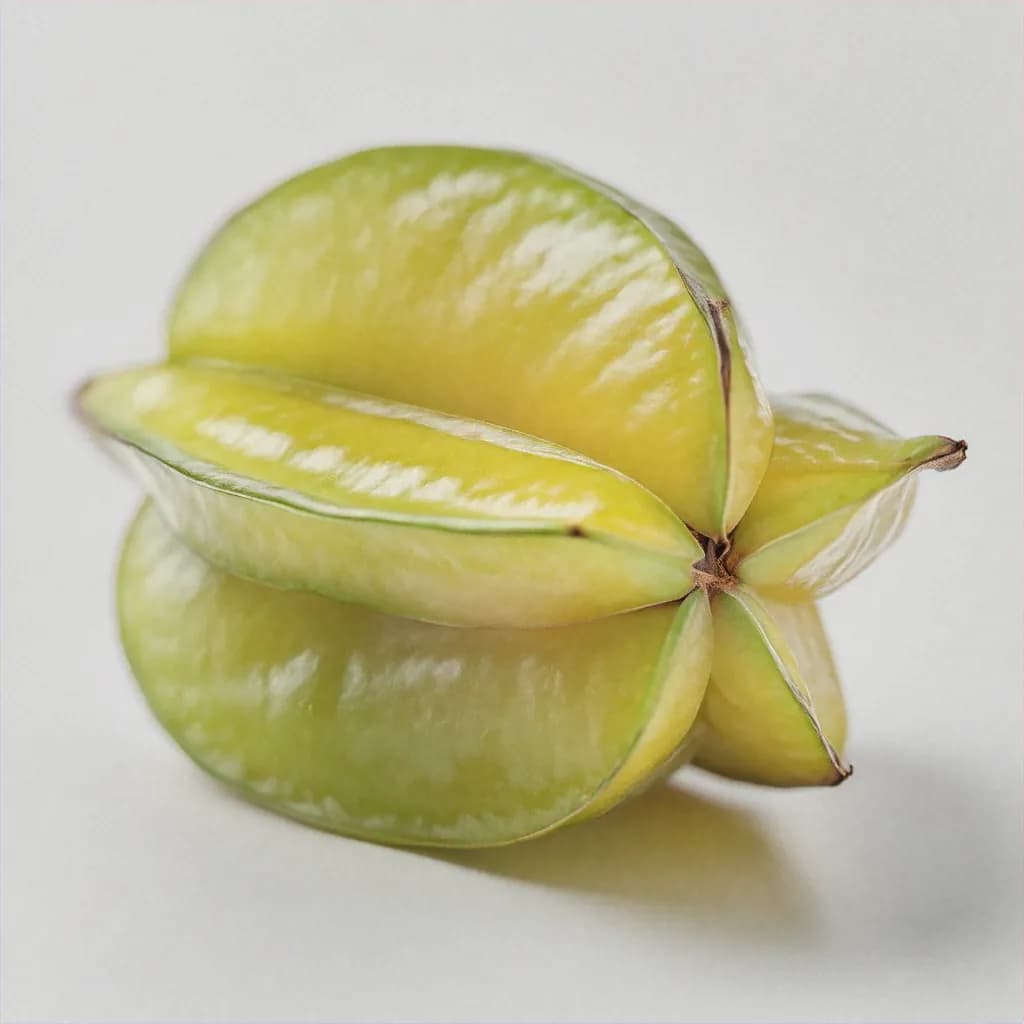
Averrhoa carambola
Star fruit are distinctive tropical fruits with five prominent ridges creating iconic star shape when sliced - offering exotic appearance, refreshing crisp texture, and balanced sweet-tart flavor. These Southeast Asian natives thrive in tropical climates delivering year-round harvests. Each fruit features waxy skin transitioning from green to golden-yellow indicating ripeness, with crisp juicy flesh containing minimal fiber and edible thin seeds. Star fruit delivers notable nutritional profile - exceptional vitamin C (37% DV per 100g) supporting immune health, significant copper (6% DV) supporting collagen formation, moderate fiber (2.8g), and valuable antioxidants including quercetin and gallic acid. The distinctive star shape provides elegant presentation making star fruit premium garnish for beverages and desserts. Star fruit's refreshing crisp texture and mild flavor profile make it exceptional palate cleanser and light snack. Traditional Southeast Asian cultivation spans centuries with increasing global availability reflecting growing culinary appreciation. Star fruit represents tropical luxury combining distinctive appearance, refreshing flavor profile, and notable nutritional benefits in single elegant package.
Explore Star Fruit in stunning detail
Star Fruit - Main View
Per 100g
Per 100g
Nutrition breakdown for one serving
Southeast Asia, particularly Malaysia and Indonesia
Star fruit originates from Southeast Asia with cultivation documented for centuries in Malaysia and Indonesia. Ancient Sanskrit texts reference star fruit cultivation. Portuguese traders distributed star fruit globally during colonial expansion. Indian cultivation established centuries ago. Brazilian cultivation developed post-colonial expansion. Modern cultivation spans tropical regions worldwide. Contemporary appreciation reflects increasing global culinary interest in exotic fruits and tropical cuisine.
Year-round availability in tropical regions; varies by hemisphere
Each variety offers unique flavors, textures, and culinary applications
Keep your fruit fresh and delicious for longer
Select star fruit with golden-yellow color indicating ripeness and sweetness
Choose firm fruits without soft spots or bruises
Avoid green star fruit - underripe with excessive tartness
Sniff for sweet fruity aroma - indicator of ripeness and quality
Look for symmetrical star shape without blemishes
Select heavier fruits indicating good juice content
Avoid wrinkled skin - indicates age and moisture loss
Check for brown spots - may indicate overripeness
Fruits with thin translucent appearance indicate optimal ripeness
Ripe star fruit keeps refrigerated 5-7 days in crisper drawer
Store at room temperature 2-3 days if not immediately ripe
Do not wash before storage - moisture accelerates spoilage
Keep separate from ethylene-producing fruits (apples, bananas)
Wrap individually in paper towels preventing cross-contamination
Frozen star fruit keeps 4-6 months in freezer bag
Freeze whole or sliced on baking sheet before bagging
Thaw in refrigerator before using in recipes
Juice keeps refrigerated 2-3 days or frozen 3-4 months
Preserve freshness for months
Slice star fruit into star shapes or chunks
Freeze on baking sheet for 3-4 hours
Transfer to freezer bags or containers
Label with date for tracking
Frozen star fruit keeps 4-6 months
Use for smoothies, cocktails, and cooking
Texture softens with freezing - less ideal for fresh eating
Label frozen items with the date to track freshness. Most fruits maintain quality for 2-3 months when properly frozen. For best results, use airtight containers or freezer bags to prevent freezer burn.
Discover delicious possibilities
Star fruit allergies are uncommon but documented. Allergic reactions typically mild - oral itching or mild digestive upset. Severe reactions rare. Those with fruit allergies should consult allergist about cross-reactivity risk.
Conventionally grown star fruit may contain pesticide residues. Proper washing: Rinse gently under cool running water for 10-15 seconds. Pat dry with paper towel. Organic star fruit eliminates synthetic pesticide concerns. Careful washing removes surface residues.
Surprising trivia you'll love!
Star fruit's distinctive 5-pointed star shape results from five ridged lines running length of fruit - cutting perpendicular to ridges creates iconic star appearance
Star fruit scientific name Averrhoa carambola derives from Arabic name 'karambal' reflecting Southeast Asian origins with Arabic trade influence
Star fruit trees produce flowers year-round in tropical climates enabling continuous harvesting - some trees produce multiple crops annually
Starfruit is sometimes called 'the star of Asia' reflecting cultural importance in Southeast Asian cuisine and traditional medicine applications
Ancient Sanskrit texts reference star fruit cultivation suggesting use spans over 1,000 years in Southeast Asian region
Star fruit contains very low calories (31 per 100g) making it exceptional among tropical fruits for weight-conscious consumers
Some varieties of star fruit are naturally acidic enough to be used as traditional souring agent replacing lemon/vinegar in Southeast Asian cooking
Star fruit's high water content (91.38%) makes it exceptionally refreshing - among highest water content of cultivated fruits
Portuguese traders distributed star fruit globally during colonial expansion in 16th-17th centuries enabling worldwide cultivation
Star fruit is sometimes called 'carambola apple' in some regions reflecting early European confusion about fruit classification and identity
Star fruit consumption is straightforward - wash thoroughly, slice into iconic star shapes, and eat skin and edible seeds. FLAVOR PROFILE: Sweet varieties taste sweet with mild tartness - balanced fruit flavor. Acidic varieties are distinctly tart and acidic - mouth-puckering tartness. Flavor intensity varies with ripeness. Golden-yellow fruit is sweeter than green. PREPARATION: Wash exterior gently under cool running water. Pat dry with paper towel. Place fruit on cutting board. Slice perpendicular to ridges creating star shapes. Each star contains edible thin skin, crisp flesh, and edible seeds. No need to peel. CONSUMPTION: Eat fresh sliced star fruit raw immediately after cutting. Seeds are edible - no need for removal. Skin is edible and thin - no need for peeling. Some prefer removing tips where ridge points meet (optional). RIPENESS INDICATORS: Green star fruit - very tart, acidic, firm texture. Yellow-green - transitional, increasingly sweet. Golden-yellow - peak sweetness, crisp texture. Slightly wrinkled - very ripe, maximum sweetness. TEXTURE: Crisp juicy flesh with minimal fiber. Light refreshing bite. Water content creates juicy experience. Thin seeds add slight texture. Pleasant crunch when fresh. USES: Fresh eating out of hand. Sliced in salads for elegant presentation. Squeezed for juice. Blended in smoothies. Frozen for cocktails. FLAVOR NOTES: Sweet varieties - mild tropical fruit flavor with subtle sweetness. Acidic varieties - pronounced tartness, strong sour profile, minimal sweetness. Combination offers tropical refreshment. BEST CONSUMPTION: Eat immediately after slicing (oxidation affects color). Choose golden-yellow ripe fruit for best flavor. Enjoy as refreshing snack or elegant garnish. BOTTOM LINE: Star fruit consumption is simple - wash, slice into stars, and eat fresh. Golden-yellow sweet varieties taste mild sweet-tropical. Acidic varieties offer pronounced tartness. Entire fruit including skin and seeds is edible.
Sweet and acidic star fruit varieties represent distinct cultivars with different flavor profiles, cultivation methods, and best applications - selection depends on intended use. SWEET VARIETIES (Fwang Tung, Arkin, Kinnow, Malay): Cultivated specifically for fresh eating market. Developed through selective breeding for sweetness. Sugar content higher (approximately 4-6% sugar). Minimal tartness and acidity. Pleasant delicate flavor profile. Premium pricing reflecting breeding and cultivation. Better shelf stability. Ideal for fresh consumption. ACIDIC VARIETIES (Kary, traditional cultivars): Traditional Southeast Asian varieties. Developed historically for juice and cooking. Lower sugar content (approximately 2-3% sugar). High acidity and tartness creating mouth-puckering effect. Pronounced sharp flavor. Lower price reflecting utilitarian use. Suitable for processing. Excellent juice quality. FLAVOR EXPERIENCE: Sweet varieties - mild tropical fruit flavor, pleasant sweetness, minimal tartness, eating experience smooth and enjoyable. Acidic varieties - pronounced tartness, sour mouth-puckering sensation, strong acid profile, challenging fresh eating but excellent cooking ingredient. CULTIVATION DIFFERENCES: Sweet varieties - require more careful cultivation and harvesting. Extended ripening on tree improving sweetness. Premium market pricing justifying intensive cultivation. Commercial greenhouse cultivation possible. Acidic varieties - easier cultivation with less specific requirements. Harvest timing less critical. Orchard cultivation standard. CULINARY APPLICATIONS: Sweet varieties best for fresh eating, premium presentation, desserts, elegant garnish. Acidic varieties best for juice production, beverage applications, cooking, chutney, preserves, and flavor enhancement. SELECTION GUIDELINES: Fresh eating preference - choose sweet varieties (Fwang Tung, Kinnow, Malay). Juice preference - choose acidic varieties (Kary). Cooking preference - select acidic varieties for flavor intensity. Premium presentation - select sweet varieties for appearance and flavor. MARKET AVAILABILITY: Sweet varieties - specialty stores and premium markets, higher price ($3-5 per pound). Acidic varieties - Asian markets and specialty stores, lower price ($1-2 per pound). Selection varies geographically. RIPENESS MATTERS: Green sweet variety - very tart despite breeding. Golden-yellow sweet variety - optimal sweetness. Green acidic variety - extremely tart. Yellow acidic variety - moderate tartness. Ripeness affects perceived acidity. TESTING FRESHNESS: Purchase from reputable suppliers. Request tasting when possible. Ask sellers about variety sweetness. Consider intended use before selecting. BOTTOM LINE: Sweet varieties are cultivated for fresh eating with delicate flavor and higher sugar. Acidic varieties are traditional for juice and cooking with pronounced tartness and lower sugar. Selection depends entirely on intended use and flavor preference.
Dogs should NOT eat star fruit due to oxalates and potential toxicity - star fruit represents unsafe fruit option for canine consumption. OXALATE CONTENT: Star fruit contains significant oxalate concentration - water-soluble compounds forming crystals in urinary system. Oxalates can cause kidney damage with repeated consumption. Calcium oxalate crystal formation possible in susceptible individuals. Dogs with kidney disease particularly vulnerable. Healthy dogs may tolerate small amounts but risk exists. TOXICITY CONCERNS: Consumed star fruit in dogs documented causing kidney failure in case reports. Toxicity particularly severe in individuals with pre-existing kidney disease. Exact mechanism unclear but oxalates implicated. Severity varies with dog health status. SAFETY RECOMMENDATION: Veterinary consensus strongly recommends avoiding star fruit entirely. Risk-benefit analysis favors avoidance. Safer fruit alternatives exist with no toxicity risk. No compelling reason to offer star fruit. SYMPTOMS OF TOXICITY: Vomiting and diarrhea - GI upset. Lethargy and weakness - systemic illness. Anuria (no urination) - kidney dysfunction. Increased thirst and urination (early stage). Tremors and seizures (severe toxicity). Difficulty walking - neuromuscular effects. WHEN TO SEEK VETERINARY CARE: Any consumption of star fruit warrants veterinary evaluation. Monitor carefully for 24-48 hours post-consumption. Report all symptoms to veterinarian. Bloodwork may be necessary to assess kidney function. Early intervention improves outcomes. DO NOT WAIT - contact veterinarian immediately if consumed. SAFER ALTERNATIVES: Blueberries - low toxicity, antioxidant benefits. Watermelon - hydrating, safe fruit. Apple slices - familiar safe option. Carrots - crunchy, safe vegetable. Pumpkin - beneficial digestive support. NEVER OFFER: Star fruit to any dog - risk too high. Products containing star fruit. Juice or processed star fruit. BOTTOM LINE: Star fruit should NEVER be offered to dogs. Oxalate content and documented kidney toxicity make this fruit unsafe. Safer fruit alternatives available. If dog consumes star fruit, seek immediate veterinary evaluation.
Star fruit creates beautiful visually stunning cocktails and beverages combining elegant appearance with refreshing tropical flavor. STAR FRUIT MARGARITA: 2 oz tequila, 1 oz triple sec, 1 oz fresh star fruit juice, 0.5 oz lime juice, 0.5 oz simple syrup, rim with tajín or salt. Shake with ice. Strain into salt-rimmed glass. Garnish with star fruit slice. Tropical margarita variation. STAR FRUIT MOJITO: 1.5 oz rum, 6 fresh mint leaves, 0.5 oz lime juice, 0.5 oz simple syrup, 2-3 star fruit slices, club soda. Muddle mint and star fruit. Add ice, rum, lime, syrup. Top with soda. Stir gently. Refresh with star shape. STAR FRUIT COCKTAIL: 2 oz vodka, 1 oz blue curaçao, 2 oz star fruit juice, 1 oz lime juice, ice. Shake vigorously. Strain into martini glass. Garnish with star fruit star. Beautiful blue-tropical cocktail. STAR FRUIT PUNCH: 1 cup star fruit juice, 1/2 cup lime juice, 1/2 cup orange juice, 1/4 cup ginger syrup, sparkling water, fresh mint. Combine juices and ginger syrup. Add sparkling water. Serve over ice. Garnish with star fruit and mint. Tropical party punch. STAR FRUIT DAIQUIRI: 2 oz white rum, 1 oz fresh star fruit juice, 0.75 oz lime juice, 0.5 oz simple syrup. Shake with crushed ice. Strain into coupe glass. Garnish with star fruit slice. Tropical daiquiri variation. STAR FRUIT SMOOTHIE: 1 cup fresh star fruit, 1 banana, 1/2 cup coconut milk, 1/2 cup yogurt, 1 tbsp honey, ice. Blend until smooth. Serve immediately. Garnish with star fruit slice. Nutritious breakfast smoothie. STAR FRUIT WATER INFUSION: 2-3 star fruit slices, fresh mint, ice, water. Combine in pitcher. Refrigerate 2-4 hours for flavor infusion. Serve chilled. Elegant hydrating beverage. STAR FRUIT TEA: Brew green or white tea. Cool. Add fresh star fruit juice (1/4 cup per serving). Chill. Serve with star fruit garnish. Sophisticated cold tea variation. STAR FRUIT LEMONADE: 2 cups lemon juice, 1 cup star fruit juice, 1 cup simple syrup, 6 cups water. Combine all ingredients. Serve over ice. Garnish with star fruit slice and lemon wheel. Classic lemonade upgrade. STAR FRUIT COSMOPOLITAN: 1.5 oz vodka, 1 oz cranberry juice, 0.5 oz star fruit juice, 0.5 oz lime juice. Shake with ice. Strain into cocktail glass. Garnish with star fruit slice. Red-tropical cosmopolitan variation. PRESENTATION TIPS: Slice star fruit creating iconic 5-pointed stars. Chill slices before garnishing. Float star fruit in punch bowls. Rim glasses with complementary sugars. Use star fruit as edible decoration. TROPICAL AESTHETIC: Star fruit creates stunning visual presentation. Colors range from golden to pink tones. Elegant appearance elevates simple cocktails. Premium garnish reflecting careful consideration. SERVING IDEAS: Serve at tropical theme parties. Perfect for summer entertaining. Ideal for poolside beverages. Beautiful presentation for celebrations. BOTTOM LINE: Star fruit creates visually stunning cocktails and beverages combining elegant presentation with tropical refreshing flavor. Margaritas, mojitos, daiquiris, and tropical punches showcase star fruit beautifully.
Home star fruit cultivation is achievable in tropical and subtropical climates with proper care providing productive trees with minimal maintenance. CLIMATE REQUIREMENTS: Tropical climate essential - grows best 20-30°C (68-86°F). Frost-sensitive - cannot tolerate freezing temperatures. Year-round warmth optimal for production. Some varieties tolerate subtropical climates. Protect from cold winds and frosts. LOCATION SELECTION: Full sun essential - minimum 6-8 hours daily direct sunlight. Well-draining soil preventing root rot - add sand/compost. Slightly acidic soil optimal (pH 6-6.5). Good air circulation preventing fungal disease. Sheltered from strong winds. PLANTING: Bare-root or container plants available. Plant during warm season after last frost. Dig hole twice width of root ball. Space trees 25-30 feet apart (or 15-20 feet for compact varieties). Plant at same depth as container. Water thoroughly after planting. Mulch with 3-4 inches organic matter. WATERING: Water deeply 2-3 times weekly during growing season. Less frequent watering during dormancy. Consistent moisture important - avoid drought stress. Avoid waterlogging causing root rot. Increase watering during fruiting season. FERTILIZING: Apply balanced fertilizer (10-10-10) monthly during growing season. Use fruit tree fertilizer following package directions. Organic compost improves soil annually. Reduce fertilizer during dormancy. Excessive nitrogen promotes foliage over fruit. PRUNING: Minimal pruning required - remove crossing/diseased branches. Shape for attractive form if desired. Remove lower branches for airflow. Prune after harvest. Remove suckers from base. PEST MANAGEMENT: Watch for scale insects - spray with horticultural oil. Mealybugs manageable with organic insecticidal soap. Fruit flies during harvest season - use traps. Spider mites in dry conditions - increase humidity. DISEASE PREVENTION: Good drainage prevents root rot. Air circulation prevents fungal disease. Remove diseased branches immediately. Avoid overhead watering causing fungal issues. Monitor regularly for problems. FLOWERING AND FRUITING: Trees produce small flowers on stems and branches. Flowers small, inconspicuous, fragrant. Self-fertile - single tree produces fruit. Year-round flowering in tropical climates. Fruiting follows flowering. HARVESTING: Pick fruits when golden-yellow color develops. Harvest when slightly soft to touch. Ripe fruit falls easily from tree. Store at room temperature 2-3 days. Refrigerate for extended storage (5-7 days). PRODUCTION TIMELINE: Trees begin fruiting 2-3 years after planting. Production increases with tree maturity. Mature trees produce 50-100+ fruits annually. Year-round production possible in tropical climates. CONTAINER CULTIVATION: Dwarf varieties suitable for large containers. Pot minimum 20-25 gallons. Use well-draining potting soil. Water regularly. Bring indoors in cold climates during winter. Reduce but maintain growth. VARIETY SELECTION: Choose sweet varieties for fresh eating. Consider size - standard or dwarf. Check cold tolerance for subtropical regions. Consult local nursery for best varieties. TROUBLESHOOTING: Poor fruiting - insufficient sun. Pest problems - improve monitoring. Disease issues - improve drainage/airflow. Yellowing leaves - nutrient deficiency or poor drainage. BOTTOM LINE: Home star fruit cultivation succeeds in tropical and subtropical climates with full sun, well-draining soil, consistent watering, and minimal pest management producing productive trees for years.
Star fruit contains significant oxalate concentration - important health consideration particularly for individuals with kidney disease or predisposition to kidney stones. OXALATE CONTENT: Star fruit contains approximately 1.9-5.5g oxalate per 100g depending on source. Among fruits with higher oxalate concentration. Oxalates are water-soluble compounds naturally present in plant foods. Oxalate concentration varies with fruit ripeness. Acidic varieties may contain higher oxalates. HEALTH MECHANISM: Oxalates absorbed in small intestine. Combine with calcium in urinary system forming calcium oxalate crystals. Crystal accumulation can damage kidney tissue. Repeated consumption increases kidney stone risk. Pre-existing kidney disease significantly elevates risk. POPULATIONS AT RISK: Individuals with kidney disease - highest risk. History of kidney stones - increased vulnerability. Genetic predisposition to kidney stones - caution warranted. Dehydration increases crystal formation risk. High dietary sodium increases oxalate reabsorption. SAFE CONSUMPTION GUIDELINES: Healthy individuals - moderate occasional consumption acceptable. Pre-existing kidney issues - AVOID entirely. History of kidney stones - AVOID or strictly limit. Family history of kidney disease - consult healthcare provider. Stay well-hydrated supporting kidney function. RECOMMENDED ALTERNATIVES: Apples - low oxalate, safe for kidney health. Berries - generally low oxalate, antioxidant benefits. Citrus fruits - low oxalate, vitamin C benefits. Melons - low oxalate, hydrating. Pears - low oxalate, fiber-rich. SYMPTOM AWARENESS: Kidney stone symptoms include flank pain, hematuria, dysuria, nausea. Seek immediate medical care for severe symptoms. Do not self-treat suspected kidney issues. Medical evaluation necessary for diagnosis. TESTING CONSIDERATIONS: Healthcare providers recommend kidney function testing for at-risk individuals. Serum creatinine assessment. Urine analysis. Estimated glomerular filtration rate (eGFR). Results guide dietary recommendations. DIETARY MODIFICATION: Reduce oxalate-rich foods if advised. Increase water intake supporting kidney function. Limit sodium intake reducing crystal formation. Adequate calcium intake (not restricted - supports binding). Monitor potassium per healthcare recommendations. MYTHS VS FACTS: MYTH: All high-oxalate fruits must be avoided. FACT: Healthy individuals tolerate most high-oxalate foods with hydration. MYTH: Oxalates always cause kidney stones. FACT: Multiple factors contribute to stone formation including genetics, hydration, and diet. MYTH: Cooking eliminates oxalates. FACT: Boiling reduces oxalates but not completely. HEALTHCARE CONSULTATION: Consult healthcare provider if kidney disease concerns. Request personalized dietary recommendations. Discuss specific fruit restrictions. Ask about safe alternatives. Follow professional guidance. BOTTOM LINE: Star fruit contains significant oxalates requiring caution for at-risk populations. Healthy individuals with good hydration tolerate occasional consumption. Pre-existing kidney disease warrants strict avoidance. Consult healthcare provider for personalized guidance.
Sustainability insights
Star fruit cultivation represents tropical agriculture with specific sustainability considerations. Benefits include perennial trees producing for 30+ years, minimal processing for fresh consumption, and tropical climate suitability reducing climate control needs. Challenges include tropical deforestation concerns if cultivation replaces native forest, pest management inputs, and specific climate requirements limiting cultivation regions. Sustainable practices include agroforestry integration, organic cultivation reducing chemical inputs, intercropping supporting biodiversity, and fair trade certification supporting farmer welfare.
Star fruit carbon footprint is low-moderate due to tropical cultivation and minimal processing. Fresh whole star fruit requires no processing. Carbon footprint primarily from cultivation and transportation. Tropical cultivation near equator may involve longer transportation distances. Per-serving carbon impact low considering nutrient density. Minimize footprint by purchasing locally grown tropical star fruit when available, choosing fresh over processed, and supporting regional producers.
Star fruit cultivation requires low-moderate water reflecting tropical climate with regular rainfall. Water footprint approximately 300-500 liters per kilogram. Tropical climate naturally supports cultivation reducing supplemental irrigation. Modern sustainable practices include rainwater harvesting, mulching reducing evaporation, and efficient irrigation systems where supplemental water needed.
Supporting local tropical star fruit maximizes sustainability. Star fruit cultivation concentrated in tropical regions. For residents in tropical/subtropical regions with local cultivation, fresh local fruit provides minimal transportation carbon. Year-round tropical availability enables consistent local supply. For non-tropical regions, imported star fruit represents higher transportation carbon. Frozen star fruit enables year-round availability with lower carbon than importing fresh. BEST PRACTICES: Purchase fresh local star fruit when available in tropical regions, choose imported fresh during season when feasible, consider frozen for off-season with lower carbon impact, support regional tropical producers.
We aim to keep this Star Fruit profile accurate and easy to understand. Nutrition values and % Daily Value figures are based on established reference databases and standard daily value guidance.
Last updated: September 11, 2026
Medical disclaimer
This page is for general educational purposes and does not replace professional medical advice.
Found an issue? Contact us.