Loading Fruit Details...
Please wait while we fetch nutritional information and health benefits
Please wait while we fetch nutritional information and health benefits
Recommended Products
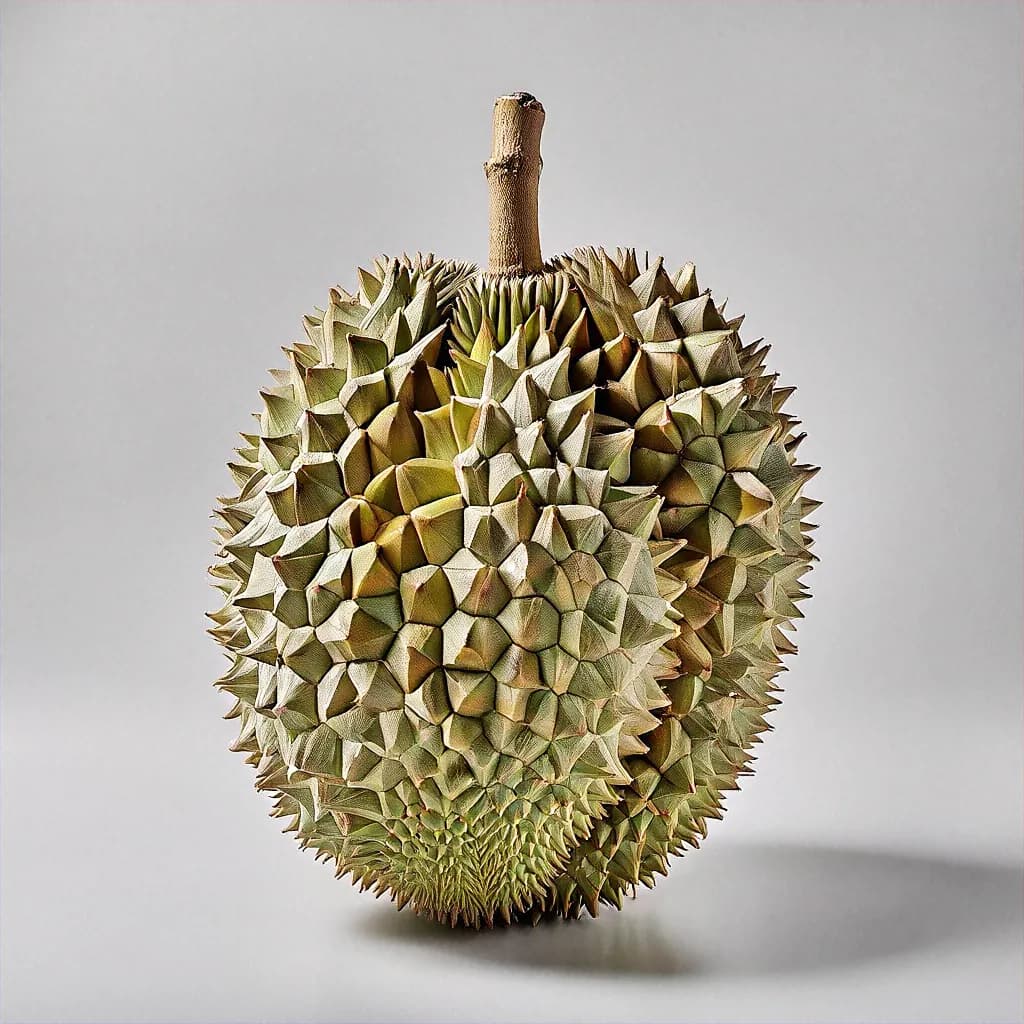
Durio zibethinus
Durian, crowned "King of Fruits" in Southeast Asia, is large, spiky tropical fruit famous for paradoxical combination of notoriously pungent odor and extraordinarily rich, creamy flavor that inspires devoted following despite polarizing smell. This formidable fruit, encased in thick, thorn-covered husk, reveals pale yellow to golden custard-like flesh with complex sweet taste combining notes of sweet cream, caramel, almond, garlic, and chives - flavor profile unlike any other fruit. Despite infamous smell described as everything from rotten onions to gym socks, durian offers exceptional nutritional value providing impressive amounts of vitamin C (33% DV per cup), thiamin (39% DV), vitamin B6 (25% DV), potassium (16% DV), and dietary fiber (15% DV). The creamy, rich texture and high natural fat content (5g per 100g) distinguish durian from typical low-fat fruits, contributing to satiety and unique mouthfeel. Revered throughout Malaysia, Thailand, Indonesia, and Singapore where durian season triggers passionate fruit hunts and premium varieties command extraordinary prices, this controversial delicacy divides opinion sharply - people either love durian intensely or find it utterly repulsive with little middle ground. Beyond polarizing aroma, durian provides substantial energy (147 calories per 100g), powerful antioxidants, and traditional medicine applications for fever and ailments.
Explore Durian in stunning detail
Durian - Main View
Per 100g
Per 100g
Nutrition breakdown for one serving
Borneo and Sumatra, Southeast Asia
Durian's history spans centuries in Southeast Asian rainforests where it grew wild long before cultivation. The name derives from Malay word 'duri' meaning thorn or spike, referring to formidable spiky husk. Indigenous peoples of Borneo and Sumatra gathered wild durian for generations, with archaeological evidence suggesting consumption dating back over 1,000 years. Early written records appear in 15th-16th century accounts by Chinese and Arab traders describing peculiar fruit with terrible smell but delicious taste. Durian cultivation intensified in Malaysia, Thailand, and Indonesia during 18th-19th centuries as farmers recognized commercial potential and began selective breeding. Malaysian sultanates particularly prized durian, with royal courts developing sophisticated appreciation for different varieties and establishing durian orchards. Thai cultivation expanded significantly in 20th century, making Thailand world's largest producer. Colonial European encounters with durian produced famously divided reactions. British naturalist Alfred Russel Wallace wrote in 1856 that durian was "worth a voyage to the East to experience" despite indescribable smell, capturing enduring durian paradox. The fruit became deeply embedded in Southeast Asian culture - durian festivals, markets, cultural references, and social customs revolve around durian season. In Singapore and Malaysia, durian hunting (visiting orchards during peak season) is cherished tradition. Premium varieties like Musang King command extraordinary prices - single premium durian can cost $50-200+ based on quality and rarity. Modern cultivation emphasizes specific varieties for commercial success. Grafting techniques ensure consistency. Today, Thailand exports fresh and frozen durian globally (particularly to China where demand surged dramatically), making durian increasingly available worldwide despite transportation challenges with perishability and airline bans due to smell.
Varies by region - generally May to August (main season) and December to February (minor season)
Each variety offers unique flavors, textures, and culinary applications
Keep your fruit fresh and delicious for longer
Look for durian with intact, undamaged spiky shell - avoid cracked or split husks
Check stem for freshness - should be firm, green or brown (not black or moldy)
Smell the stem end - ripe durian emits strong characteristic odor even through shell
Gently shake durian - hear subtle movement of flesh inside indicates ripeness (underripe durian is silent)
Press spikes gently - slight give indicates ripeness, rock-hard spikes suggest underripeness
Choose durian that feels heavy for size - indicates thick, substantial flesh
Look for naturally opened seams (dehisced durian) - indicates perfect ripeness, though rare in stores
Ask seller about variety - Musang King, D24, Monthong have different characteristics and prices
Buy from reputable durian sellers or Asian markets with high turnover for freshness
If buying frozen durian (common outside Southeast Asia), check for ice crystals indicating proper storage
Whole unopened durian can be stored at room temperature 2-5 days depending on ripeness at purchase
Once opened, durian is highly perishable - wrap flesh tightly in plastic wrap or store in airtight container
Refrigerate opened durian flesh and consume within 3-5 days maximum
Freeze durian flesh for long-term storage (2-3 months) - freezes excellently with minimal texture change
Store durian in sealed container to prevent smell from permeating refrigerator and other foods
Separate durian from other foods - strong odor transfers easily
If durian is underripe at purchase, leave at room temperature 1-3 days to ripen
Check daily for ripening - durian can go from underripe to overripe quickly
Overripe durian develops fermented, alcoholic smell and watery texture - should be discarded
Remove seeds before storage - easier when fresh and saves storage space
Preserve freshness for months
Durian freezes excellently - frozen durian is common in Asian markets and popular in Southeast Asia
Remove durian flesh from husk and seeds
Wrap individual flesh sections tightly in plastic wrap or place in freezer bags
Remove excess air from bags to prevent freezer burn
Label with variety and date
Freeze at 0°F (-18°C) or below for optimal preservation
Frozen durian maintains quality 2-3 months, remains safe longer but quality degrades
Thaw frozen durian in refrigerator overnight for best texture
Frozen durian can be eaten partially thawed for ice cream-like consistency (popular method)
Use thawed durian in smoothies, desserts, or fresh eating (texture very similar to fresh)
Frozen durian exports from Thailand make durian accessible worldwide year-round
Label frozen items with the date to track freshness. Most fruits maintain quality for 2-3 months when properly frozen. For best results, use airtight containers or freezer bags to prevent freezer burn.
Discover delicious possibilities
Durian allergies are relatively uncommon but documented, with reactions ranging from mild oral symptoms to severe responses. Allergic individuals may experience symptoms including oral allergy syndrome (OAS) - itching, tingling, or swelling of mouth, lips, tongue, and throat; hives or skin rashes (contact dermatitis from handling durian shell or flesh); digestive upset (nausea, vomiting, diarrhea, abdominal cramps); respiratory symptoms (wheezing, nasal congestion, difficulty breathing); or rarely, anaphylaxis. Cross-reactivity may occur with latex (latex-fruit syndrome) due to protein similarities - individuals with latex allergies show increased risk of durian allergy. Potential cross-reactivity with other tropical fruits including banana, avocado, kiwi, chestnut, and papaya. Some individuals sensitive to sulfur compounds may react to durian's organosulfur content with headaches or digestive distress even without true allergy. Durian pollen allergies exist in Southeast Asian regions where durian trees grow, potentially causing seasonal allergies. Most durian allergies are mild and localized to oral symptoms. However, individuals with known latex allergies or previous adverse reactions to tropical fruits should approach durian cautiously or avoid entirely. First-time consumers should start with small amounts to assess tolerance.
Conventionally grown durian may contain pesticide residues, though the thick, spiky shell provides substantial protection to the edible flesh. Durian trees are susceptible to various pests and diseases potentially requiring chemical management in commercial orchards. Common pests include fruit borers, stem borers, and various insects affecting leaves and fruit. Diseases include Phytophthora fruit rot and other fungal infections. Proper handling protocol: Wash hands thoroughly after handling durian shell before touching flesh or face. The thick husk protects internal flesh from most pesticide penetration. However, wash shell exterior under running water before opening if concerned about transfer during cutting. Once opened, the flesh itself requires minimal washing since it's protected inside shell. Organic durian is increasingly available, particularly from small farms and specialty producers. Organic certification ensures no synthetic pesticides or fertilizers were used. Supporting organic production promotes sustainable farming and protects farm workers from pesticide exposure. Thailand, Malaysia, and Indonesia (major producers) have varying pesticide regulations and enforcement. Imported durian may have different chemical treatments than locally grown. When possible, choose organic durian or from known sustainable producers to minimize pesticide exposure and support environmentally responsible agriculture.
Surprising trivia you'll love!
Durian is called 'King of Fruits' in Southeast Asia where it holds almost sacred status and inspires passionate devotion
The name 'durian' derives from Malay word 'duri' meaning thorn or spike, perfectly describing the formidable spiky exterior
A single premium Musang King durian can sell for $50-200+ in Malaysia and Singapore, with record prices exceeding $1,000 for exceptional specimens
Durian is banned from airlines, hotels, public transportation, and many public spaces throughout Southeast Asia due to overwhelming smell
British naturalist Alfred Russel Wallace wrote in 1856 that eating durian was 'worth a voyage to the East' despite indescribable odor
Thailand is the world's largest durian producer and exporter, with China becoming the largest importer (demand surged dramatically in recent years)
Durian trees can grow 80-130 feet tall and live for 80+ years, producing fruit for decades
Over 50 distinct aromatic compounds create durian's notorious smell, including sulfur compounds similar to rotten onions and rotten eggs
Traditional Southeast Asian belief warns against consuming durian with alcohol, claiming the combination causes serious health problems or death
The spiky shell serves as natural defense - falling durian can cause serious injury or death, earning nickname 'the fruit that could kill you before you eat it'
Durian's notorious smell results from complex mixture of volatile organic compounds, primarily sulfur-containing molecules that create pungent, penetrating odor many find overwhelming or repulsive. CHEMICAL COMPOSITION: Scientific analysis identified over 50 distinct aromatic compounds in durian, with key offenders including ethanethiol (rotten onions, garlic), hydrogen sulfide (rotten eggs), methanethiol (rotten cabbage), and various esters, ketones, and sulfides. The combination creates smell variously described as rotten onions, turpentine, sewage, gym socks, or decaying flesh mixed with sweet caramel. No single compound causes durian smell - it's the unique cocktail creating unforgettable olfactory experience. EVOLUTIONARY PURPOSE: Scientists theorize the powerful smell evolved to attract large animals (elephants, tigers, orangutans) that ate durian and dispersed seeds throughout Southeast Asian rainforests. The smell signals ripeness to animals from considerable distance. Humans, with different olfactory preferences, find same smell offensive. INDIVIDUAL VARIATION: Genetic differences in smell receptors mean people perceive durian odor differently. Some detect primarily sweet, pleasant notes while others experience overwhelming sulfurous assault. This explains polarized reactions - it's not just preference but actual different sensory experience. Cultural exposure also plays role - people raised eating durian often enjoy or tolerate smell that newcomers find intolerable. SMELL VS. TASTE PARADOX: The enduring mystery is how fruit smelling so terrible tastes so delicious to devotees. Fresh durian flesh tastes sweet, creamy, rich with complex caramel-almond-custard notes bearing little resemblance to smell. Once you overcome olfactory barrier, the flavor rewards are substantial. Many durian lovers claim they barely notice smell anymore, focusing on luxurious taste and texture. SMELL INTENSITY: Smell varies by variety - some like Monthong are milder while others like Musang King are intensely pungent. Ripeness dramatically affects smell intensity - perfectly ripe durian smells strongest. The smell penetrates and lingers, which is why durian is banned from hotels, airlines, public transport, and enclosed spaces throughout Southeast Asia. Public signage warning 'No Durian' is common sight. WHY IT PERSISTS: Despite thousands of years of cultivation, selective breeding hasn't eliminated smell because smell and flavor compounds are linked - reducing smell would likely diminish the complex flavor durian enthusiasts prize. For devotees, the smell is acceptable price for unparalleled taste.
Durian tastes completely unlike any other fruit, with rich, complex flavor profile that devotees describe as heavenly despite challenging smell. The experience defies simple description, but here's comprehensive explanation. PRIMARY TASTE: Intensely sweet and creamy with custard-like, almost savory quality. The texture is smooth, thick, and rich - similar to very soft, ripe avocado or rich custard. High fat content (5.3g per 100g, unusual for fruit) creates luxurious mouthfeel and satiety. FLAVOR NOTES: Different people detect different notes, but common descriptions include sweet cream, caramelized sugar, roasted almonds, vanilla custard, brown butter, hints of garlic or onion (not unpleasant in context), subtle cheese-like umami, tropical fruit undertones, and toffee or butterscotch. The flavor is complex and layered - not one-dimensional sweetness but symphony of sweet, savory, rich, and subtle bitter notes. TEXTURE EXPERIENCE: Soft, smooth, almost melting texture coating mouth. Creamy without being liquid. Some varieties are slightly fibrous. The flesh separates easily from large seeds. Swallowing reveals lingering sweet-rich aftertaste that persists pleasantly. VARIETY DIFFERENCES: Musang King offers most intense, rich, bittersweet flavor with creamy texture - considered pinnacle by connoisseurs. D24 provides balanced sweetness with less bitterness, good introduction variety. Monthong is milder, sweeter, less complex - often recommended for beginners. Red Prawn offers unique sweetness with distinctive orange color. Each variety creates different tasting experience. ACQUIRED TASTE: First-time durian eaters often experience confusion - smell promises disaster but taste delivers unexpected pleasure. The cognitive dissonance takes adjustment. Many people need 2-3 attempts to appreciate durian fully as brain reconciles conflicting smell and taste signals. Once acquired, durian love often becomes intense devotion. TEMPERATURE: Durian tastes best at room temperature or slightly cool (not ice cold). Frozen durian eaten partially thawed offers ice cream-like consistency - popular consumption method. COMPARISON ATTEMPTS: People struggle to compare durian to other foods because nothing truly resembles it. Some attempt "sweet cream cheese with garlic" or "caramelized onion custard" but these fall short. Durian must be experienced firsthand to understand. For many Southeast Asians and devoted fans worldwide, durian represents peak fruit experience - worth any smell to enjoy.
Traditional Southeast Asian belief strongly warns against consuming durian with alcohol, claiming combination causes serious health problems including death. However, scientific evidence supporting danger remains limited and controversial. TRADITIONAL WARNING: Throughout Malaysia, Thailand, Indonesia, and Singapore, cultural wisdom holds that eating durian while drinking alcohol (or shortly before/after) causes adverse reactions including severe indigestion, nausea, vomiting, rapid heartbeat, breathing difficulties, excessive heat in body, and in extreme claims, death. This belief is deeply embedded - public health warnings appear at durian stalls, and locals take prohibition seriously. Specific timeframe varies - some say avoid alcohol 8 hours before/after durian, others say 24 hours. SCIENTIFIC INVESTIGATION: Limited scientific research examined this claim with mixed results. One hypothesis suggests durian's sulfur compounds (especially disulfiram-like molecules) might inhibit aldehyde dehydrogenase (ALDH), enzyme that metabolizes alcohol. ALDH inhibition causes acetaldehyde buildup, creating symptoms like flushing, nausea, rapid heartbeat, and headache - similar to disulfiram drug used treating alcoholism. However, studies haven't conclusively proven durian contains sufficient concentrations to significantly affect alcohol metabolism. REPORTED CASES: Anecdotal reports exist of people experiencing unpleasant symptoms after consuming durian and alcohol together, including severe nausea, vomiting, chest discomfort, and feeling unwell. However, clear causation is difficult to establish - overconsumption of rich, fatty durian alone can cause digestive upset, and alcohol independently causes similar symptoms. No well-documented deaths directly attributed to durian-alcohol combination appear in medical literature, though urban legends persist. ALTERNATIVE EXPLANATIONS: Durian is very rich, fatty, and heavy. Combined with alcohol (also taxing on digestive system and liver), the combination may simply overwhelm digestive capacity causing discomfort without specific chemical interaction. High sugar content in durian plus alcohol dehydration might contribute to feeling unwell. Eating excessive amounts of either causes problems independently. SCIENTIFIC CONSENSUS: Most food scientists and toxicologists consider durian-alcohol danger largely myth or exaggeration, though some caution is reasonable. The severe reactions described in traditional warnings lack strong scientific support. However, absence of proof isn't proof of absence - limited research exists. PRACTICAL ADVICE: Given deep cultural belief, limited research, and anecdotal reports of discomfort, prudent approach is avoiding or minimizing alcohol consumption when eating durian, especially in large quantities. If you choose to drink, do so moderately and separately from durian consumption. Respect local customs and warnings. Most importantly, don't overconsume either durian or alcohol independently - both can cause digestive distress alone. The combination may not be deadly, but it's unlikely to be pleasant.
Durian is famously banned from airlines, hotels, public transportation, and enclosed public spaces throughout Southeast Asia and internationally due to extraordinarily pungent, penetrating odor that lingers and spreads, causing discomfort to others and potential property damage. These bans are practical necessities, not arbitrary rules. AIRLINE BANS: Most airlines (particularly Asian carriers like Singapore Airlines, Thai Airways, Malaysia Airlines, and others) strictly prohibit durian in both checked baggage and carry-on due to smell intensity in pressurized cabin environment. Even properly sealed durian releases odor molecules that permeate enclosed aircraft space, causing passenger complaints, nausea, and potential safety concerns if smell creates panic. The smell lingers long after durian is removed, affecting subsequent flights. Airlines impose significant fines for attempting to bring durian aboard. Frozen durian must be specially packaged and shipped as cargo, never with passengers. HOTEL BANS: Hotels throughout Southeast Asia and worldwide display prominent 'No Durian' signs prohibiting durian in rooms. The powerful smell absorbs into fabrics (carpets, bedding, curtains, upholstery), walls, and ventilation systems, persisting for days or weeks despite cleaning. One guest eating durian in room can render room unusable for subsequent guests who complain about lingering odor. Hotels incur substantial cleaning costs and lost revenue. Some hotels charge hefty cleaning fees if durian policy is violated. The smell also spreads through corridors and ventilation affecting other guests. PUBLIC TRANSPORT BANS: Singapore's MRT (Mass Rapid Transit), buses in Malaysia and Thailand, and other public transportation systems ban durian to prevent passenger discomfort in crowded, enclosed spaces. Signage shows durian with prohibition symbol. Violations can result in fines. The smell affects fellow passengers who can't escape in enclosed vehicles. PRACTICAL REASONS: Durian smell isn't just unpleasant to some - it's physically overwhelming, causing nausea, headaches, and breathing difficulties in sensitive individuals or those unaccustomed to it. In enclosed spaces, there's no escape. The smell is also extremely difficult to eliminate once it permeates materials. Standard cleaning can't remove durian odor from fabrics and surfaces - specialized treatments are necessary. CULTURAL ACCEPTANCE: Despite widespread bans, these aren't attacks on durian culture. Southeast Asians who love durian understand and respect bans in shared spaces. Durian is consumed in appropriate settings - homes, outdoor durian stalls, designated areas. The bans balance durian lovers' enjoyment with others' comfort and property protection. HOW TO TRANSPORT: If you must transport durian, use multiple layers of heavy-duty plastic wrap, sealed containers, and plastic bags. Even this may not completely contain smell. Freeze durian before transport to reduce odor intensity. Check regulations for any transport method or accommodation. When traveling, enjoy durian locally and leave it behind rather than attempting to transport - respect for rules and others.
Yes, durian offers impressive nutritional benefits despite higher calorie and fat content compared to typical fruits. The "King of Fruits" provides exceptional vitamins, minerals, fiber, and beneficial compounds making it nutritious choice when consumed in moderation. EXCEPTIONAL NUTRIENTS: Durian stands out nutritionally with outstanding thiamin/vitamin B1 (76% DV per cup) - among highest of all fruits, supporting energy metabolism and nervous system function; rich vitamin C (53% DV per cup) providing immune support and antioxidant protection; excellent vitamin B6 (45% DV per cup) supporting brain health and neurotransmitter synthesis; high copper (56% DV per cup) supporting iron metabolism and collagen formation; substantial potassium (23% DV per cup) supporting heart health and blood pressure regulation; high fiber (33% DV per cup) promoting digestive health and satiety; and good amounts of riboflavin (38% DV), manganese (34% DV), folate, and magnesium. This nutrient density is remarkable. UNIQUE PROFILE: Unlike most fruits which are virtually fat-free, durian contains 5.3g fat per 100g (mostly healthy unsaturated fats) contributing to creamy texture, satiety, and absorption of fat-soluble vitamins. This makes durian more filling and substantial than typical fruits. The moderate calories (147 per 100g, 357 per cup) reflect this richness - durian provides more energy than low-calorie fruits but less than nuts or desserts. POWERFUL ANTIOXIDANTS: Durian contains diverse antioxidants including vitamin C, anthocyanins, carotenoids, flavonoids (quercetin, kaempferol), and polyphenols protecting cells from oxidative damage, reducing inflammation, and potentially lowering chronic disease risk. ADDITIONAL BENEFITS: Tryptophan content may support serotonin production and mood regulation. Traditional medicine uses durian for fever, infections, and digestive issues. The fiber supports gut health and regularity. B vitamins support energy and metabolism. CONSIDERATIONS: Durian's higher calorie density means portion control matters for weight management. One cup (357 calories) equals 3-4 typical fruit servings calorically. The richness can cause digestive upset if overeaten. High carbohydrate content (27g per 100g) requires monitoring for diabetics, though moderate glycemic index (49) and fiber help moderate blood sugar impact. COMPARISON: Compared to banana (89 cal/100g), apple (52 cal/100g), or orange (47 cal/100g), durian is more calorie-dense but provides more protein, healthy fats, and exceptional B vitamins particularly thiamin. Different nutritional role - more substantial energy food than light fruit snack. VERDICT: Durian is highly nutritious providing vitamins, minerals, fiber, and antioxidants that support overall health. The higher calories and fat are features, not bugs - providing sustained energy and satiety. Like all foods, consume in appropriate portions. A small to moderate serving (1/2 to 1 cup) offers tremendous nutrition without excessive calories. For those who enjoy durian, it's absolutely good for you as part of balanced diet.
Yes, pregnant women can safely eat durian in moderation as part of healthy pregnancy diet. Durian offers valuable nutrition beneficial during pregnancy, though certain precautions apply. NUTRITIONAL BENEFITS FOR PREGNANCY: Durian provides important pregnancy nutrients including exceptional folate (9% DV per 100g) crucial for fetal neural tube development and preventing birth defects; high vitamin C (22% DV per 100g) supporting immune function and iron absorption; rich thiamin (31% DV per 100g) supporting energy metabolism increased during pregnancy; vitamin B6 (19% DV per 100g) potentially helping with morning sickness and supporting fetal brain development; substantial fiber (3.8g per 100g) preventing pregnancy constipation - common complaint; potassium supporting fluid balance and blood pressure regulation; and iron supporting increased blood volume. These nutrients support healthy pregnancy outcomes. MODERATION IS KEY: While nutritious, durian should be consumed in moderate portions during pregnancy due to high calorie and sugar content (can contribute to excessive pregnancy weight gain if overeaten); rich, heavy nature may trigger or worsen pregnancy nausea, especially in first trimester; potential for digestive upset if consumed excessively. Recommended serving: 1/2 to 1 cup maximum at a time, occasional consumption rather than daily. SAFETY CONSIDERATIONS: Durian is safe food - no toxins, harmful compounds, or pregnancy contraindications exist. However, pregnant women should ensure durian is fresh and properly stored (avoid overripe or fermented durian that may harbor bacteria); wash hands after handling; consume from reputable sources; and avoid durian if it triggers nausea or digestive discomfort. GESTATIONAL DIABETES CONCERN: Pregnant women with gestational diabetes should exercise caution with durian due to carbohydrate content (27g per 100g) and moderate glycemic index (49). Not forbidden, but requires blood sugar monitoring and portion control. Consult healthcare provider about appropriate amounts. TRADITIONAL BELIEFS: Traditional Southeast Asian beliefs about durian during pregnancy vary. Some cultures consider it "heaty" food that may cause complications, while others view it as nutritious. Some warn it may cause excessive fetal heat or large babies, though no scientific evidence supports these claims. Modern medical consensus: durian is safe during pregnancy in moderation. ALCOHOL WARNING: The traditional prohibition against mixing durian with alcohol is particularly important during pregnancy since alcohol should be avoided entirely anyway. Never consume alcohol during pregnancy, with or without durian. VERDICT: Pregnant women can enjoy durian safely in moderate portions for nutritional benefits. Listen to your body - if durian causes discomfort or nausea, avoid it. If you have gestational diabetes, high blood sugar, or excessive weight gain, limit or avoid due to calorie and carbohydrate content. Consult healthcare provider with specific concerns. For most pregnant women, occasional durian consumption is perfectly safe and nutritious.
Opening durian requires specific technique to safely navigate formidable spiky shell and extract creamy flesh without injury. Here's comprehensive guide for first-time durian openers and experienced enthusiasts. SAFETY FIRST: Durian's thick husk is covered in extremely sharp thorns that easily puncture skin. Wear thick gloves (gardening gloves or thick kitchen towels) when handling whole durian. Never attempt to catch falling durian - serious head injuries have occurred from falling fruits. TOOLS NEEDED: Large chef's knife or cleaver (sturdy blade essential), thick gloves or kitchen towels, cutting board (stable surface), and optionally, newspaper or plastic sheet to contain mess. VISUAL INSPECTION: Examine durian to identify natural seams running from stem to bottom (usually 5 seams creating star pattern visible at bottom). These seams are where husk naturally splits when overripe. You'll cut along these seams. Find the stem end (top of fruit). BASIC OPENING METHOD: 1) Place durian stem-side up on stable surface. 2) Wearing gloves, hold durian firmly. 3) Locate one of the natural seams (lines running top to bottom). 4) Insert knife tip into seam near stem, being careful with thorns. 5) Cut along seam from top toward bottom (away from yourself), applying steady pressure. The husk will split open more easily along natural seam. 6) Pry husk apart with hands (gloves!) or knife. 7) Repeat with adjacent seams until husk sections separate. 8) Reach inside and pull out flesh sections (lobes) from chambers. Flesh surrounds large seeds. ALTERNATIVE METHOD (for naturally dehisced durian): If durian has naturally split open (shows cracks at stem), simply pry sections apart with minimal cutting. This indicates perfect ripeness. EXTRACTING FLESH: Inside opened durian, you'll find chambers containing creamy flesh lobes surrounding large seeds (like avocado). Use hands (or spoon if too soft) to extract flesh. Each lobe contains one large seed. Eat flesh around seed, discard seed. SEED REMOVAL: The large seeds are edible when cooked (roasted or boiled) but not eaten raw. Many people discard them, though they're nutritious. AVOIDING MESS: Durian is messy - sticky flesh, seeds, and bits of husk create debris. Work over newspaper, plastic sheet, or outside. The smell will permeate workspace. TIPS: If durian is underripe and difficult to open, let it ripen another 1-2 days at room temperature. Perfectly ripe durian opens more easily. Ask durian seller to open it for you - many will demonstrate proper technique. Watch online videos to visualize process before attempting. With practice, opening durian becomes easier and faster.
Dogs CAN technically eat small amounts of durian flesh safely - it's not toxic like grapes, chocolate, or onions. However, durian is NOT recommended for dogs due to several significant concerns making it poor choice for canine consumption. SAFETY STATUS: Durian contains no compounds known to be toxic to dogs. The flesh itself won't poison dogs in the way grapes or chocolate would. In this technical sense, durian is "safe." However, safe doesn't mean appropriate or advisable. MAJOR CONCERNS: HIGH FAT CONTENT (5.3g per 100g): Durian's unusual fat content for fruit can cause digestive upset, diarrhea, and potentially pancreatitis in dogs, especially those prone to pancreatic issues or not accustomed to fatty foods. Pancreatitis is serious, painful condition requiring veterinary care. HIGH CALORIE DENSITY (147 cal/100g): Can contribute to obesity if fed regularly. Dogs don't need calorie-dense treats. DIGESTIVE UPSET: Rich, heavy durian causes stomach upset, vomiting, diarrhea, and gas in many dogs. Dogs' digestive systems aren't designed for such rich foods. HIGH SUGAR CONTENT (6.8g per 100g): While moderate compared to some fruits, still problematic for diabetic dogs or those prone to weight gain. CHOKING HAZARD: Large durian seeds pose serious choking and intestinal blockage risk if swallowed. Seeds must be completely removed before any durian flesh is given to dogs. SMELL AVERSION: Many dogs are extremely put off by durian smell and refuse to eat it. Those that do eat it may experience olfactory confusion or stress. POTENTIAL GASTRIC DISTRESS: The rich, fatty nature can cause bloating and discomfort. PORTION GUIDANCE (if feeding despite warnings): If you decide to give dog tiny taste of durian: Remove ALL seeds completely, offer only 1-2 small bites maximum (1-2 teaspoons for large dog, less for smaller dogs), never as regular treat, monitor carefully for digestive upset in following 24 hours, and avoid entirely for dogs with history of pancreatitis, sensitive stomachs, or obesity. MUCH BETTER ALTERNATIVES: Many safer, more appropriate fruits for dogs include apple slices (no seeds/core), blueberries, strawberries, watermelon (no seeds/rind), bananas (small amounts), and carrots. These provide nutrition without durian's risks. TRADITIONAL WARNING: The traditional Southeast Asian prohibition against mixing durian with alcohol applies to human concerns, but adds another reason to avoid feeding durian to dogs - complexity of compounds may interact unpredictably with canine metabolism. VERDICT: While not technically toxic, durian is inappropriate treat for dogs. The risks (digestive upset, pancreatitis potential, high calories, choking hazard from seeds) outweigh any benefits. Choose dog-appropriate fruits instead. If dog accidentally consumes small amount, monitor for digestive issues and contact veterinarian if concerning symptoms develop.
Sustainability insights
Durian cultivation has moderate environmental impact with both sustainable advantages and significant challenges. Benefits include perennial trees with 80+ year lifespan eliminating annual replanting and reducing soil disturbance, deep root systems preventing soil erosion in tropical environments, canopy providing habitat for wildlife and supporting biodiversity, carbon sequestration as mature trees store significant carbon over decades, and traditional agroforestry systems where durian grows alongside other crops maximizing land use efficiency. Wild durian trees support endangered species including orangutans, elephants, and tigers who consume fruit and disperse seeds. Challenges include deforestation for durian orchard expansion, particularly in Malaysia and Thailand where prime rainforest land is cleared for profitable durian cultivation driven by surging Chinese demand. This destroys critical habitat and biodiversity. Monoculture durian plantations reduce ecosystem diversity compared to natural forests or mixed agriculture. Conventional durian farming often uses synthetic fertilizers and pesticides impacting soil and water quality. The water requirements are moderate but consistent throughout growing season. Positive modern practices: Some producers practice sustainable agroforestry maintaining biodiversity, organic durian production is growing (avoiding synthetic chemicals), and forest garden approaches preserve native trees while cultivating durian. The extremely high value of premium durian creates economic incentive for sustainable cultivation rather than destructive practices. Supporting certified sustainable or organic durian producers promotes better environmental practices. The challenge is balancing economic benefits (durian provides substantial income for tropical farmers) with environmental protection.
Durian carbon footprint varies dramatically based on production location, transportation method, and whether consumed fresh or frozen. Local consumption in Southeast Asia (Thailand, Malaysia, Indonesia) has relatively low carbon footprint with minimal transportation. However, international durian trade creates significant carbon emissions. Fresh durian export relies heavily on air freight due to short shelf life (3-7 days) and premium prices justifying expensive shipping. Air freight from Thailand to China, Middle East, or Western countries generates extremely high carbon emissions per kilogram - among highest of any fruit. The rapid growth in Chinese durian demand led to massive increase in air freight exports from Thailand. Frozen durian offers more sustainable export option using ocean freight with lower emissions, though freezing process adds energy costs. The carbon difference between air-freighted fresh durian and ocean-shipped frozen durian is substantial - frozen can have 20-30 times lower transport carbon footprint. Durian trees provide carbon offset through decades of growth, storing carbon in large trunks and extensive root systems. Perennial nature means no annual planting fuel costs. Processing (freezing, packaging) adds moderate carbon. To minimize carbon footprint: Consume durian locally if in Southeast Asia, choose frozen durian over air-freighted fresh durian when consuming outside growing regions, buy during peak season when supply is abundant and demand-driven air freight reduced, support local/regional producers over distant sources, and appreciate durian as special occasional treat rather than everyday commodity. For Southeast Asian consumers, fresh local durian during season offers minimal carbon impact and best sustainability.
Durian cultivation requires moderate to high water throughout growing season, with water footprint approximately 1,000-1,500 liters per kilogram of fruit - moderate compared to extremely water-intensive crops like almonds (4,000+ liters/kg) or beef (15,000+ liters/kg), but higher than many tropical fruits. Durian trees need consistent moisture for optimal fruit production, particularly during flowering and fruit development periods. Young trees require regular irrigation for establishment. Mature trees (10+ years) develop deep root systems improving drought tolerance, but commercial production still requires supplemental irrigation in most regions. Southeast Asian durian growing regions (Thailand, Malaysia, Indonesia) generally receive adequate rainfall from tropical monsoons, reducing irrigation dependency compared to arid-climate crops. However, climate change impacts including altered monsoon patterns and increased drought frequency create water challenges. Intensive commercial orchards use irrigation systems to maximize yields and fruit quality, increasing water consumption. Traditional rain-fed durian cultivation in mixed forest gardens uses minimal supplemental water, representing sustainable approach. Modern efficient practices reduce water waste: Drip irrigation delivers water directly to root zones, mulching conserves soil moisture and reduces evaporation, monitoring soil moisture prevents overwatering, rainwater harvesting captures monsoon rains for dry season use, and selecting appropriate sites with adequate natural rainfall reduces irrigation needs. The water footprint is acceptable in tropical regions with abundant rainfall but becomes concerning in areas experiencing water stress or where irrigation depletes local water sources. Supporting sustainable producers who employ efficient water management promotes responsible durian cultivation.
Buying local durian when in Southeast Asia maximizes sustainability, freshness, quality, and flavor while minimizing environmental impact. For Southeast Asian consumers, local is obvious choice. For consumers outside growing regions, decision becomes complex. SOUTHEAST ASIAN CONSUMERS: Prioritize local durian during peak season (May-August) from nearby regions, supporting local farmers and economy. Local durian offers maximum freshness (harvested ripe and sold within days), superior flavor and texture (no transport degradation), minimal carbon footprint from short transportation, lower prices than imported premium varieties, and cultural connection to regional traditions. Visit local markets, durian stalls, and orchards during season for best experience. IMPORTED DURIAN (for consumers outside Southeast Asia): Durian reaching Western countries, Middle East, East Asia (including China - largest importer), and other distant markets faces sustainability challenges. Fresh durian requires expensive, carbon-intensive air freight due to short shelf life. The environmental cost is substantial - air freight generates 20-50 times more carbon per kilogram than ocean shipping. However, frozen durian offers alternative - ocean shipped with significantly lower carbon footprint, though quality and texture are slightly compromised. Frozen durian is widely available in Asian markets in Western countries. TRADE-OFFS: Imported durian supports Southeast Asian farmers and economies (particularly Thailand where durian exports generate billions in revenue), provides access to unique fruit unavailable locally, and allows cultural diaspora communities to maintain food traditions. However, environmental costs include massive carbon emissions from air freight, higher prices reflecting transportation expenses, and reduced freshness/flavor from frozen processing or long transport. BEST PRACTICES: For Southeast Asian residents, prioritize local seasonal durian from nearby regions. For international consumers, choose frozen durian over air-freighted fresh durian to reduce carbon impact, buy from retailers supporting sustainable producers, appreciate durian as special occasional treat rather than regular purchase, and consider travel to Southeast Asia during durian season for authentic experience while supporting local economies directly. The explosion in global durian demand (particularly Chinese market) creates tension between economic benefits for farmers and environmental costs of transport. Supporting sustainable practices regardless of location promotes responsible durian industry.
We aim to keep this Durian profile accurate and easy to understand. Nutrition values and % Daily Value figures are based on established reference databases and standard daily value guidance.
Last updated: September 8, 2026
Medical disclaimer
This page is for general educational purposes and does not replace professional medical advice.
Found an issue? Contact us.