Loading Fruit Details...
Please wait while we fetch nutritional information and health benefits
Please wait while we fetch nutritional information and health benefits
Recommended Products
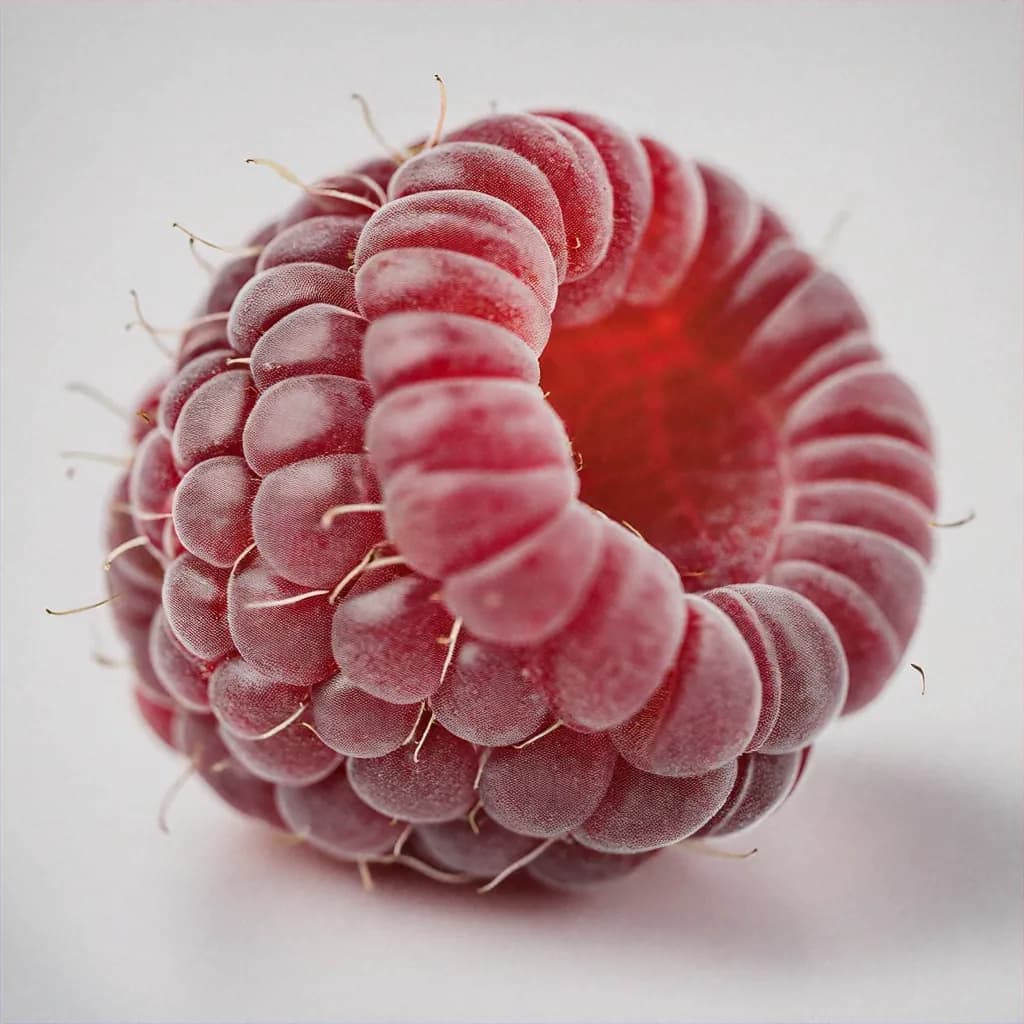
Rubus idaeus (red), Rubus occidentalis (black)
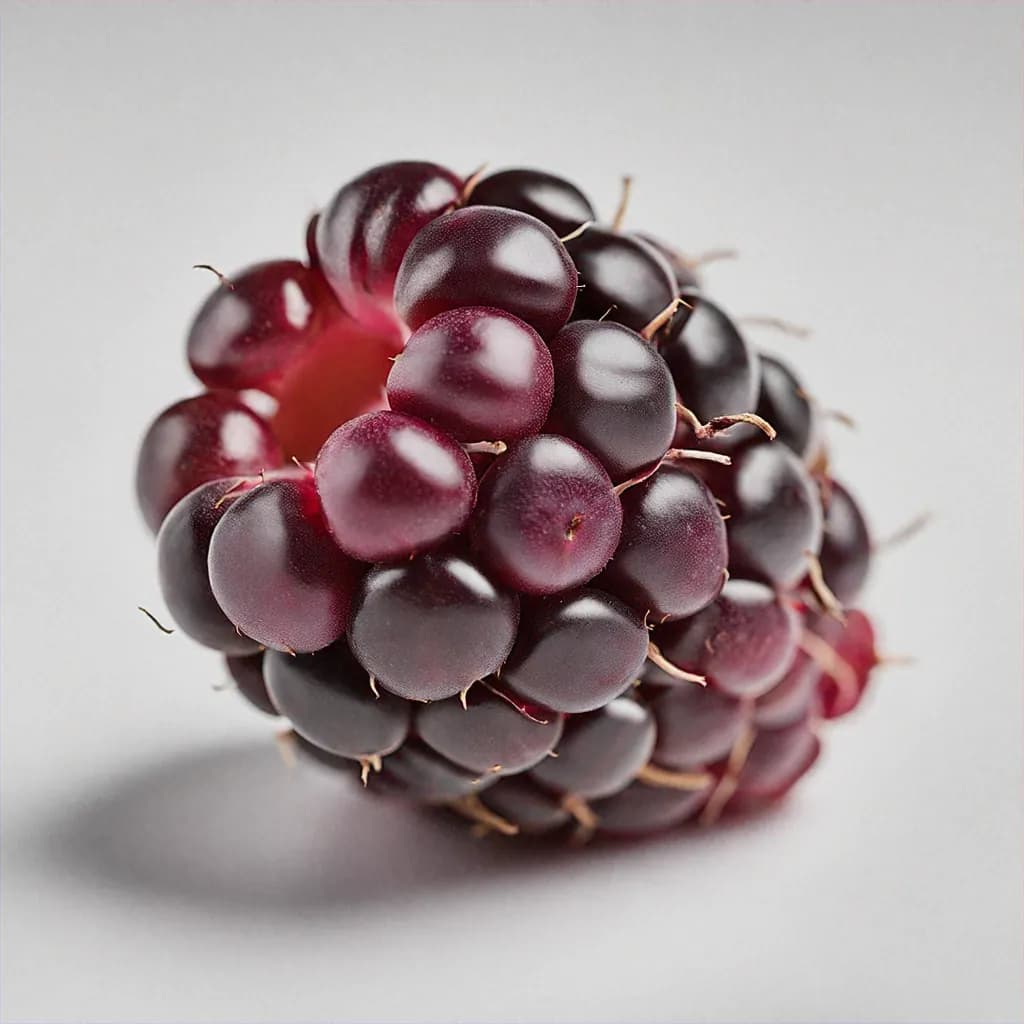
Raspberries are delicate aggregate berries with distinctive hollow centers, jewel-like appearance, and balanced sweet-tart flavor - offering exceptional nutritional density and antioxidant power. These delicate berries, native to Europe and Asia with wild cultivation for centuries, thrive in temperate climates worldwide. Each raspberry comprises 100+ drupelets (tiny spheres) clustered around central core creating distinctive texture and structure. Raspberries deliver outstanding nutritional profile - exceptional fiber (8g per 100g, 21% DV per cup), significant vitamin C (30% DV), manganese (41% DV), and powerful polyphenolic antioxidants including ellagic acid, anthocyanins, and flavonoids. The delicate structure requires careful handling limiting commercial availability and commanding premium pricing reflecting cultivation difficulty. Raspberries offer versatile applications from fresh eating to preserves, desserts, and beverages. Traditional cultures across Europe and Asia recognized raspberries as health-supporting berry. Modern research increasingly validates raspberry's exceptional antioxidant and anti-inflammatory properties supporting cellular health, cardiovascular function, and disease prevention through multiple pharmacologically active mechanisms.
Explore Raspberry in stunning detail
Raspberry - Main View
Per 100g
Per 100g
Nutrition breakdown for one serving
Europe and Western Asia temperate regions
Raspberries originate from temperate regions of Europe and Asia with wild cultivation dating centuries back. Ancient Greeks and Romans harvested wild raspberries. Medieval European monasteries cultivated raspberries. Modern commercial cultivation developed in 19th century Europe. North American cultivation expanded 20th century. Today global production spans multiple continents with Poland and China as major producers. Refrigeration technology enabled global distribution. Modern breeding developed improved varieties and extended seasons.
Peak June-August in Northern Hemisphere; December-February in Southern Hemisphere
Each variety offers unique flavors, textures, and culinary applications
Keep your fruit fresh and delicious for longer
Select raspberries with deep color appropriate to variety (indicates ripeness)
Choose firm raspberries without mushy berries or visible mold
Avoid berries with white discoloration (fungal growth)
Sniff for sweet berry aroma - fresh aroma indicates quality
Look for dry berries without excess moisture
Avoid leaking containers - indicates spoilage
Choose containers with raspberry leaves intact (indicates careful handling)
Select berries with no crushed or damaged fruit in container
Avoid berries that have been long refrigerated (shorter shelf life)
Fresh raspberries keep refrigerated 2-3 days maximum (delicate structure)
Do not wash before storage - moisture accelerates spoilage
Store in single layer on paper towels in airtight container
Keep coldest part of refrigerator (just above freezing ideal)
Remove any moldy berries immediately to prevent spread
Do not stack raspberries - crushing damages delicate structure
Frozen raspberries preserve well for 6-12 months in freezer bag
Spread on baking sheet to freeze before bagging prevents clumping
Dried raspberries keep several months in airtight container
Raspberry jam keeps refrigerated 3-4 weeks or frozen indefinitely
Preserve freshness for months
Freeze fresh raspberries on baking sheet (2-3 hours)
Transfer frozen raspberries to freezer bags or containers
Label with date for tracking
Frozen raspberries preserve nutrition well for 6-12 months
Use for smoothies, baking, and jam applications
Texture changes with freezing - soft when thawed, ideal for processing
Label frozen items with the date to track freshness. Most fruits maintain quality for 2-3 months when properly frozen. For best results, use airtight containers or freezer bags to prevent freezer burn.
Discover delicious possibilities
Raspberry allergies are uncommon but documented. Allergic reactions typically present as oral allergy syndrome - itching, tingling, or swelling of mouth, lips, and throat. Heat processing (cooking, jam-making) may reduce allergenic potential. Severe reactions are rare but possible in sensitive individuals.
Conventionally grown raspberries may contain pesticide residues. Proper washing: Rinse raspberries gently under cool running water for 10-15 seconds. Pat dry with clean paper towels. Organic raspberries eliminate synthetic pesticide concerns. Careful washing removes surface residues.
Surprising trivia you'll love!
Raspberries are technically aggregate fruits composed of 100+ individual drupelets clustered around central core - each drupe contains one seed making berry technically a collection of fruits
Raspberry hollow center forms because fruit separates from central core (receptacle) during picking leaving distinctive hole visible on bottom
Raspberries achieve ripe stage uniquely - color change indicates ripeness but sweetness continues developing for 2-3 days after turning red
Black raspberries are not immature red raspberries - they are completely different species (Rubus occidentalis vs Rubus idaeus) with distinct characteristics
Wild raspberries appear in forests following disturbance (logging, fires) - among first plants colonizing disturbed areas returning forests to productivity
Raspberry plants produce thorns/prickles covering canes making wild harvesting challenging - cultivars bred to be thornless for easier commercial harvesting
Ellagic acid concentration in raspberries is among highest of any fruit - powerful polyphenol studied extensively for cancer prevention potential
Raspberries require hand-picking because berries too delicate for mechanical harvesting - unlike most fruits, this labor intensity directly reflects premium pricing
Raspberry cultivation is recent innovation - extensive commercial cultivation only developed in 19th century Europe despite wild raspberries used for thousands of years
Fresh raspberries have exceptionally brief shelf life (2-3 days) making them among most perishable cultivated fruits - shelf life shorter than berries with firmer structure
Raspberries command premium pricing reflecting significant cultivation and handling challenges. DELICATE STRUCTURE: Raspberries' aggregate structure (100+ drupelets) creates exceptional fragility - each berry bruises easily during handling. Individual drupelets separate with minimal pressure. Unlike firmer berries, raspberries cannot tolerate rough handling. LABOR-INTENSIVE HARVESTING: Raspberries require hand-picking - mechanical harvesting causes damage. Hand-picking significantly increases labor costs. Pickers must work carefully to avoid bruising. Peak season requires large workforce increasing costs. BRIEF SHELF LIFE: Fresh raspberries keep 2-3 days maximum - among shortest of berries. Short shelf life limits distribution distance and market. Spoilage losses significant during transportation. Retailers must stock frequently preventing economy of scale. DIFFICULT TRANSPORTATION: Delicate structure makes long-distance shipping challenging. Specialized cool-chain transportation required. Packaging must protect from crushing. Spoilage during transport significant increasing costs. LOCAL AVAILABILITY: Raspberries primarily available during peak season (July-August) - limited to 2-3 months. Off-season supply minimal unless frozen/preserved. Seasonal supply limitations increase peak season pricing. SPECIALIZED CULTIVATION: Raspberry cultivation requires expertise and careful management. Disease prevention important - specific pest/disease management needed. Specialized equipment and infrastructure required. Smaller operations than some berries reducing efficiency. MARKET DEMAND: Raspberries highly valued for flavor and nutrition. Premium market positioning supports higher pricing. Consistent strong demand year-round. Low supply/high demand creates premium pricing. PRESERVATION CHALLENGES: Processing raspberries (jam, freezing) requires specialized techniques. Quality loss significant with processing limiting preservation options. Fresh consumption preferred increasing value. PROFIT MARGINS: Farmers accept lower yields than other crops because premium pricing provides acceptable returns. Labor costs justified by premium pricing. Cultivation economics favor lower volume/higher price model. BOTTOM LINE: Raspberries' combination of delicate structure, labor-intensive harvesting, brief shelf life, difficult transportation, and high market demand create exceptional supply challenges justifying premium pricing compared to other berries.
Red and black raspberries represent distinct species with different flavor, nutritional profiles, and antioxidant content - both nutritious with complementary benefits. RED RASPBERRIES (Rubus idaeus): Species most commonly cultivated globally. Bright red color from anthocyanins and other pigments. Balanced sweet-tart flavor profile. Delicate structure requiring careful handling. More common commercial availability. Excellent fresh eating quality. Popular for jam and preserves. Nutritional profile: Exceptional fiber, vitamin C, manganese, good antioxidant content. BLACK RASPBERRIES (Rubus occidentalis): Species native to North America. Deep purple-black color from anthocyanins. Richer more complex flavor, more tart than red. Smaller berries with more pronounced flavor. Less common commercial cultivation. Better suited for preservation/processing. More concentrated flavor. Nutritional profile: Similar fiber and vitamin profiles to red but SIGNIFICANTLY HIGHER anthocyanin content. BLACK RASPBERRY ANTIOXIDANT ADVANTAGE: Black raspberries contain approximately 3-4 times higher anthocyanin content than red raspberries. Anthocyanins provide powerful antioxidant and anti-inflammatory benefits. Black raspberries contain higher total polyphenolic content. Ellagic acid present in both but more concentrated in black. Black raspberries deliver superior antioxidant capacity per serving. HEALTH COMPARISON: Both extremely nutritious with exceptional fiber (8g per 100g). Both excellent vitamin C sources (44% DV). Both significant manganese sources (41% DV). Both low glycemic index (25). RED RASPBERRIES: Better fresh eating experience. Better fresh availability and selection. Lower cost reflecting higher cultivation volume. Excellent for all applications. BETTER FOR: Fresh eating, delicate presentations, premium markets. BLACK RASPBERRIES: Superior antioxidant concentration. More intense flavor. Better for processing and preservation. More concentrated nutrition per serving. BETTER FOR: Maximum antioxidant benefit, intense flavor preferences, jam/preserve applications. IDEAL CONSUMPTION: Combine both in diet to achieve complementary antioxidant profiles. Red for fresh eating and daily consumption. Black for maximum antioxidant benefit and intensive applications. BOTTOM LINE: Both red and black raspberries are nutritional powerhouses. Black raspberries offer superior antioxidant content particularly anthocyanins making them optimal for maximum health benefit. Red raspberries offer excellent nutrition with better fresh eating experience and broader availability. Combining both varieties ensures comprehensive nutritional benefit.
Raspberry jam without commercial pectin is achievable using traditional methods relying on natural pectin in raspberries and high sugar concentration. NATURAL PECTIN SOURCE: Raspberries contain natural pectin - water-soluble fiber gelling when concentrated with sugar. Underripe raspberries contain more natural pectin than ripe. Combination of ripe and underripe fruit provides optimal pectin balance. Traditional recipe relies on raspberry pectin. BASIC RECIPE: 4 pounds fresh raspberries, 3-4 pounds sugar (equal to berry weight), juice of 1-2 lemons. Prepare berries by removing stems/leaves; do not wash if possible (removes natural pectin). Place in large heavy-bottomed pot. Heat to boil, stirring gently to avoid crushing. Add sugar gradually stirring until dissolved. Bring to rolling boil. Maintain boil 20-30 minutes stirring occasionally. Sheet test: Drop spoonful on cold plate. Cool briefly; should wrinkle when pushed with spoon. SETTING TESTS: Cold plate test - standard setting indicator. Temperature test - jam reaches 220°F at sea level (gel stage). Visual test - mixture thickens visibly and darkens. Timing test - most recipes 20-40 minutes depending on fruit and heat. VARIABLES AFFECTING SET: Pectin content - underripe fruit increases pectin. Sugar ratio - higher sugar improves set. Cooking time - longer cooking concentrates gel properties. Acid content - lemon juice aids gelling and preservation. Berry type - pure raspberry sets better than mixed berries. CONSISTENCY RESULTS: Without commercial pectin, jam may be thinner than store-bought (where pectin added). Natural result is spreadable but not always firm. Longer cooking increases firmness. Extra lemon juice aids gelling. STORAGE: Jam keeps refrigerated 3-4 weeks or frozen indefinitely. Can be water-bath canned for extended shelf stability. Traditional preservation method predates commercial pectin. FLAVOR: Without commercial pectin, pure raspberry flavor concentrated. No pectin taste. Deep complex flavor develops with cooking. HIGH-ALTITUDE ADJUSTMENTS: At higher elevations, increase cooking temperature (higher boiling point affects gel). Test doneness carefully - may require extra cooking. TROUBLESHOOTING: Too thin - recook with additional lemon juice. Too thick - thin with water during cooking. Crystallization - excess sugar crystallizes over time (prevents with corn syrup addition). BOTTOM LINE: Traditional pectin-free raspberry jam is achievable using natural pectin in raspberries, high sugar concentration, and proper cooking techniques - producing authentic old-fashioned jam with pure intense raspberry flavor.
Dogs can safely eat raspberries in moderation - non-toxic fruit offering some nutritional benefit though precautions apply. SAFETY: Raspberries are non-toxic to dogs - no compounds inherently poisonous. Fresh raspberries safe for canine consumption. No toxic seeds or parts. BENEFITS: Vitamins support immune function. Fiber supports digestive health in moderation. Antioxidants provide cellular protection. Low calorie content suitable for weight management. CONCERNS: SUGAR CONTENT: Raspberries contain 4.42g sugar per 100g - moderate sugar. While lower than many fruits, still significant for dogs. Excess sugar contributes to obesity and diabetes. FIBER CONTENT: High fiber (8g per 100g) benefits digestion but excess causes diarrhea. Dogs not adapted to high fiber diet may experience GI upset. Start with small portions. XYLITOL WARNING: Some commercial raspberry products contain xylitol (artificial sweetener) - EXTREMELY TOXIC to dogs. Always check ingredients. Never offer raspberry products with xylitol. Fresh raspberries only for safety. TANNINS: Raspberries contain tannins that may cause digestive upset in sensitive dogs. Individual tolerance varies. Portion guidelines: Small dogs (under 20 lbs): 2-3 raspberries maximum. Medium dogs (20-50 lbs): 3-5 raspberries maximum. Large dogs (over 50 lbs): 5-10 raspberries maximum. Frequency: No more than 2-3 times per week as occasional treat. PREPARATION: Offer fresh raspberries only - no added sugar, sweetener, or processing. Rinse gently to remove dirt. Serve at room temperature. Never offer jam, preserves, or processed products. WHEN TO AVOID: Dogs with diabetes should avoid (sugar content). Overweight dogs should limit (calories and sugar). Dogs with sensitive digestive systems should avoid (fiber and tannins). Dogs taking certain medications should consult veterinarian. Puppies should avoid until mature. HEALTH BENEFITS FOR DOGS: Antioxidants support healthy aging. Fiber supports digestive regularity. Vitamins support immune function. Low calorie option for weight management. SAFER ALTERNATIVES: Blueberries offer similar benefits with lower fiber. Strawberries offer comparable nutrition. Watermelon provides hydration with fewer calories. Carrots offer fiber without sugar. BOTTOM LINE: Dogs can safely consume small amounts of fresh raspberries as very occasional treat with strict portions and precautions. Extremely important to avoid raspberry products containing xylitol. Better fruit alternatives exist with lower fiber for sensitive digestive systems.
Fresh and frozen raspberries retain comparable nutritional value with minimal losses during freezing making frozen excellent option for year-round availability and cost savings. FRESH RASPBERRIES: Peak nutrition within 1-2 days of harvest. Vitamin C gradually decreases with time. Polyphenolic antioxidants stable during storage. Fiber fully preserved. Peak flavor and texture immediately after harvest. Most delicate structure limiting shelf life. FREEZING PROCESS: Flash-freezing preserves nutrients effectively. Freezing occurs within hours of harvest (often fresher than retail fresh). Ice crystal formation may rupture cell walls affecting texture only. Nutritional content remains intact. FROZEN RASPBERRIES: Nutrient content well-preserved through freezing. Vitamin C losses minimal during freezing (about 10-15% maximum). Polyphenolic antioxidants well-preserved through freezing. Fiber content unchanged by freezing. Texture changes after thawing (softer, mushier) but nutrition preserved. Shelf stability extended to 6-12 months. SPECIFIC NUTRIENT COMPARISON: Fiber: Essentially identical fresh vs frozen. Vitamin C: 90-95% retained in frozen (minimal loss). Manganese: Fully preserved during freezing. Copper: No losses during freezing. Polyphenols: 85-100% retained depending on storage conditions. Anthocyanins: Well-preserved during freezing. Ellagic acid: Stable through freezing process. ADVANTAGES OF FROZEN: Cost savings (typically 30-50% less expensive). Year-round availability (peak season or off-season). Extended shelf life (6-12 months vs 2-3 days). Reduced waste (longer storage allows gradual consumption). Convenient pre-portioned packages. Prevents ripening limiting use window. Better for smoothies and cooking (texture already soft). DISADVANTAGES OF FROZEN: Texture changes after thawing (soft, mushy) - not ideal for fresh eating. Quality loss may affect presentation. Slight nutrient loss during freezing (minimal). ADVANTAGES OF FRESH: Superior texture for fresh eating. Peak flavor immediately after harvest. Aesthetic appeal and presentation. Greater satisfaction from fresh experience. Visual cues indicating ripeness. DISADVANTAGES OF FRESH: Brief shelf life (2-3 days maximum). Higher cost reflecting short shelf life. Limited seasonal availability (July-August peak). Frequent purchasing required. Higher waste due to spoilage. BEST PRACTICES: Use fresh raspberries for fresh eating applications during season. Use frozen for smoothies, cooking, baking, and out-of-season consumption. Buy frozen during season to extend availability (freeze your own or purchase pre-frozen). Combine both for year-round consumption maximizing cost-effectiveness. NUTRITIONAL CONCLUSION: Frozen raspberries retain 85-100% of fresh nutritional value making them excellent alternative for year-round raspberry consumption. Minimal nutritional loss during freezing. Frozen superior for budget-conscious consumers and year-round nutrition goals. BOTTOM LINE: Fresh and frozen raspberries are nutritionally comparable with frozen retaining 85-100% of fresh nutrient content. Frozen raspberries offer cost savings, year-round availability, and extended shelf life making them excellent option for nutritional benefit when fresh unavailable.
Home raspberry cultivation is achievable with proper site selection, planting, and maintenance providing years of productive harvest. SITE SELECTION: Full sun essential - minimum 6-8 hours daily direct sunlight. Well-draining soil preventing root rot - add compost before planting. Slightly acidic soil (pH 5.5-6.8) optimal. Protection from strong winds reducing damage. Good air circulation preventing disease. PLANTING: Spring planting (after last frost) or fall planting (6 weeks before first frost). Bare-root canes best - plant immediately. Container plants can plant spring through early fall. Space plants 2-3 feet apart, rows 6-8 feet apart. Plant 2 inches deeper than nursery depth. Water immediately after planting. Apply mulch (2-3 inches) preserving moisture and suppressing weeds. TYPES OF RASPBERRIES: Summer-bearing - single main crop July-August. Fall-bearing - extended harvest July through frost. Different pruning requirements based on type. WATERING: Water deeply 1-2 inches per week during growing season. More frequent watering during fruit development. Consistent moisture important - drought stress reduces yield. Drought tolerance develops with established root systems. FERTILIZING: Apply balanced fertilizer (10-10-10) in early spring. Side-dress with compost annually. Avoid excessive nitrogen (reduces fruiting). Organic matter improves soil year after year. TEST SOIL periodically adjusting nutrients as needed. PRUNING SUMMER-BEARING: Remove old (2+ year) canes after harvest - identify by brown/gray color. Thin remaining canes to 4-5 per foot of row. Remove weak/diseased canes completely. Prune to 4-5 feet height if desired. PRUNING FALL-BEARING: Cut all canes to ground in late fall/early spring. New shoots grow producing fall crop. Extreme simplicity approach. Alternative: Prune upper half in fall, remaining canes produce summer crop. PEST MANAGEMENT: Watch for Japanese beetles - pick by hand or use traps. Aphids manageable with spray or ladybugs. Cane borers - remove affected canes. Mites - use miticides if severe. DISEASE PREVENTION: Good air circulation prevents mildew. Avoid overhead watering preventing fungal disease. Remove diseased canes immediately. Raspberry mosaic virus - select virus-free plants. Plant resistant varieties when available. HARVESTING: Pick when berries easily separate from cane (fully ripe). Harvest every 2-3 days during season peak. Early morning picking optimal (cooler berries). Eat fresh or preserve immediately (short shelf life). Peak production years 2-5 after planting. REPLACEMENT: Raspberry patches productive 10-15 years maximum. Plan succession with new plantings. Move new plantings to different location preventing disease. VARIETY SELECTION: 'Tulameen' - excellent summer-bearing commercial variety. 'Autumn Bliss' - popular fall-bearing. 'Heritage' - reliable heritage variety. 'Black Bristol' - premium black raspberry. Select based on season preference and climate. TROUBLESHOOTING: Poor yield - insufficient sun or over-pruning. Diseases - improve air circulation, remove affected canes. Weak growth - fertilize, improve drainage, water consistently. BOTTOM LINE: Home raspberry cultivation is achievable with proper site selection (full sun, well-draining soil), appropriate planting depth, consistent watering, and variety-specific pruning producing reliable harvests for 10-15 years.
Sustainability insights
Raspberry cultivation represents temperate climate agriculture with specific environmental considerations. Benefits include perennial plants producing for 10-15 years, minimal processing for fresh consumption, and cooling requirement suitable for northern regions. Challenges include hand-harvesting labor intensity, potential pesticide use, plant disease management, and water usage during fruiting. Sustainable practices include organic raspberry production, integrated pest management, responsible water management, and support for regional producers.
Raspberry carbon footprint is low due to temperate climate cultivation, minimal processing, and seasonal availability. Fresh whole raspberries require no processing - carbon footprint primarily from cultivation and transportation. Peak season raspberries have lowest carbon impact. Off-season frozen raspberries have moderate impact reflecting freezing energy and storage. Per-serving carbon impact is low considering nutrient density. Minimize footprint by purchasing fresh raspberries during peak season (July-August), choosing frozen for off-season with pre-calculated carbon, and supporting regional producers.
Raspberry cultivation requires moderate water with water footprint approximately 550-750 liters per kilogram. Temperate climate reduces supplemental irrigation. Modern sustainable practices include drip irrigation, mulching reducing evaporation, and soil moisture monitoring. Rainwater harvesting maximizes efficiency.
Supporting local raspberries maximizes sustainability. Raspberries cultivated in temperate regions globally including North America, Europe, and Asia. Fresh local raspberries during season provide minimal transportation carbon. Frozen raspberries enable year-round availability with lower transportation carbon than importing fresh. BEST PRACTICES: Buy fresh local raspberries during July-August season, choose frozen for off-season availability with lower carbon impact, support regional farmers, and appreciate raspberries' seasonal nature.
We aim to keep this Raspberry profile accurate and easy to understand. Nutrition values and % Daily Value figures are based on established reference databases and standard daily value guidance.
Last updated: September 18, 2026
Medical disclaimer
This page is for general educational purposes and does not replace professional medical advice.
Found an issue? Contact us.