Loading Fruit Details...
Please wait while we fetch nutritional information and health benefits
Please wait while we fetch nutritional information and health benefits
Recommended Products
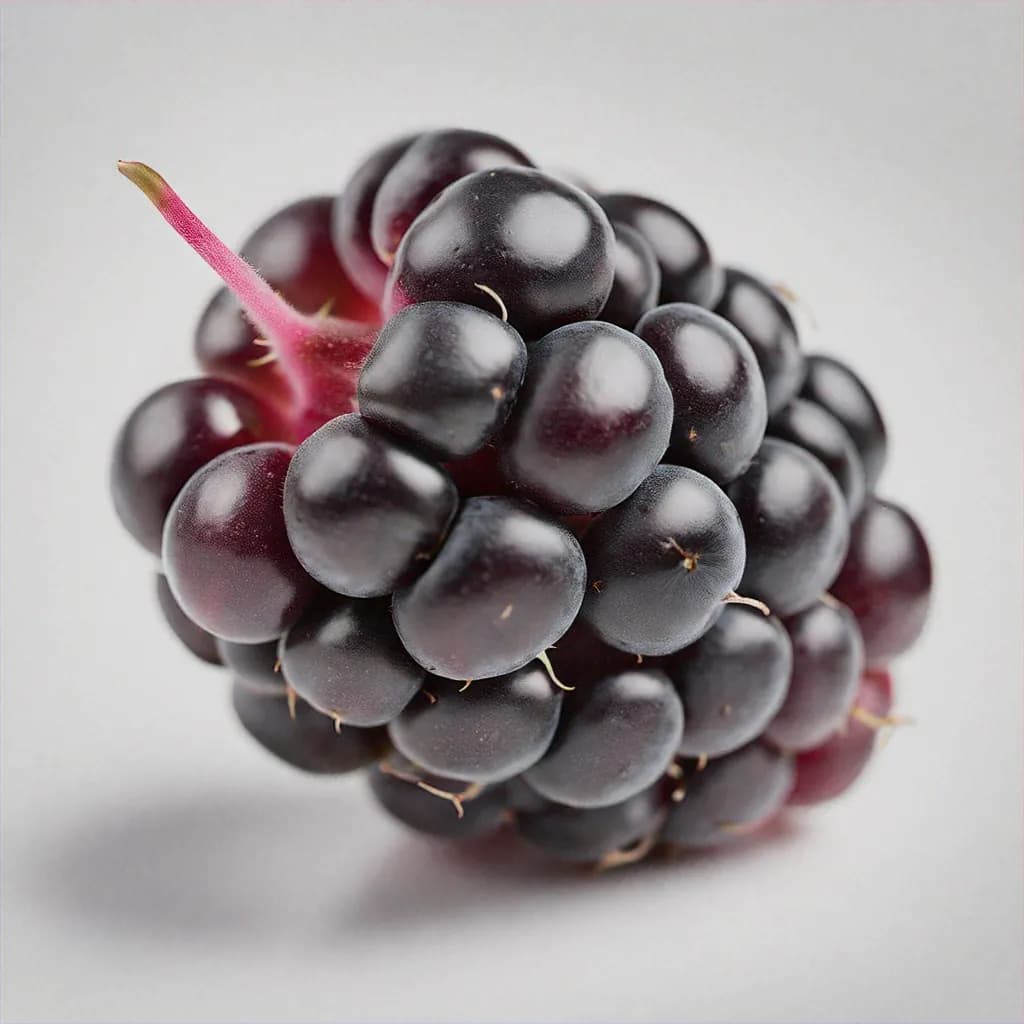
Rubus × loganobaccus
Loganberry is a nutrient-rich hybrid berry combining the characteristics of blackberry and raspberry, prized for its deep red-purple color, tangy-sweet flavor, and exceptional antioxidant profile. Naturally rich in vitamin C (35% DV per 100g), dietary fiber (18% DV), and powerful polyphenols, loganberries support immune health, digestion, cardiovascular wellness, and skin vitality. At approximately 55 calories per 100g with low glycemic load, loganberries are valued in nutrition science, functional diets, and gourmet culinary applications. Their bold flavor and high phytonutrient density make loganberries ideal for antioxidant-focused diets and seasonal wellness.
Explore Loganberry in stunning detail
Loganberry - Main View
Per 100g
Per 100g
Nutrition breakdown for one serving
United States (California)
Loganberry was developed in the late 19th century in California by horticulturist James Harvey Logan. It is a natural hybrid between a blackberry and a raspberry. Loganberries gained popularity for their intense flavor and versatility, especially in British and European preserves, beverages, and desserts.
June–August
Each variety offers unique flavors, textures, and culinary applications
Keep your fruit fresh and delicious for longer
Choose deep red to purple berries with glossy skin
Avoid mushy or leaking berries
Look for plump, intact fruits
Select berries with fresh aroma
Refrigerate immediately after purchase
Store unwashed in breathable container
Wash gently just before use
Consume within a few days for best quality
Preserve freshness for months
Freeze berries in a single layer before storing
Frozen loganberries last up to 8 months
Ideal for smoothies, sauces, and baking
No thawing required for cooking applications
Label frozen items with the date to track freshness. Most fruits maintain quality for 2-3 months when properly frozen. For best results, use airtight containers or freezer bags to prevent freezer burn.
Discover delicious possibilities
Loganberry allergies are rare but possible in berry-sensitive individuals.
Wash thoroughly before consumption or choose organic when possible.
Surprising trivia you'll love!
Loganberry was created accidentally in California
Named after horticulturist James Harvey Logan
More tart than raspberries
Popular in British desserts and drinks
Naturally rich in ellagic acid
Loganberry is a hybrid fruit created from a raspberry and a blackberry, combining traits of both berries.
Yes, loganberries are rich in fiber, vitamin C, and antioxidants, supporting digestion, immunity, and overall wellness.
Loganberries have a tart-sweet flavor, less sweet than raspberries but more aromatic than blackberries.
Yes, loganberries were naturally developed through cross-pollination, not genetic modification.
Yes, their high fiber content supports healthy digestion and gut health.
Yes, loganberries can be eaten raw, though they are often preferred cooked or sweetened due to their tartness.
Loganberries are used in jams, jellies, syrups, desserts, and baked goods.
Loganberries are typically harvested in early to mid-summer.
Yes, loganberries contain small edible seeds, similar to raspberries and blackberries.
Yes, their vitamin C and antioxidants help support immune function.
Yes, they are excellent for pies, tarts, muffins, and cakes.
Fresh loganberries should be refrigerated and consumed within a few days due to their delicate nature.
Yes, loganberries are low in calories while being nutrient-dense.
Loganberries were first developed in California, United States, in the late 19th century.
Sustainability insights
Loganberry cultivation supports small-scale and specialty berry farming.
Lower when consumed locally during peak season.
Moderate water requirements.
Local sourcing reduces environmental impact.
We aim to keep this Loganberry profile accurate and easy to understand. Nutrition values and % Daily Value figures are based on established reference databases and standard daily value guidance.
Last updated: August 31, 2026
Medical disclaimer
This page is for general educational purposes and does not replace professional medical advice.
Found an issue? Contact us.