Loading Fruit Details...
Please wait while we fetch nutritional information and health benefits
Please wait while we fetch nutritional information and health benefits
Recommended Products
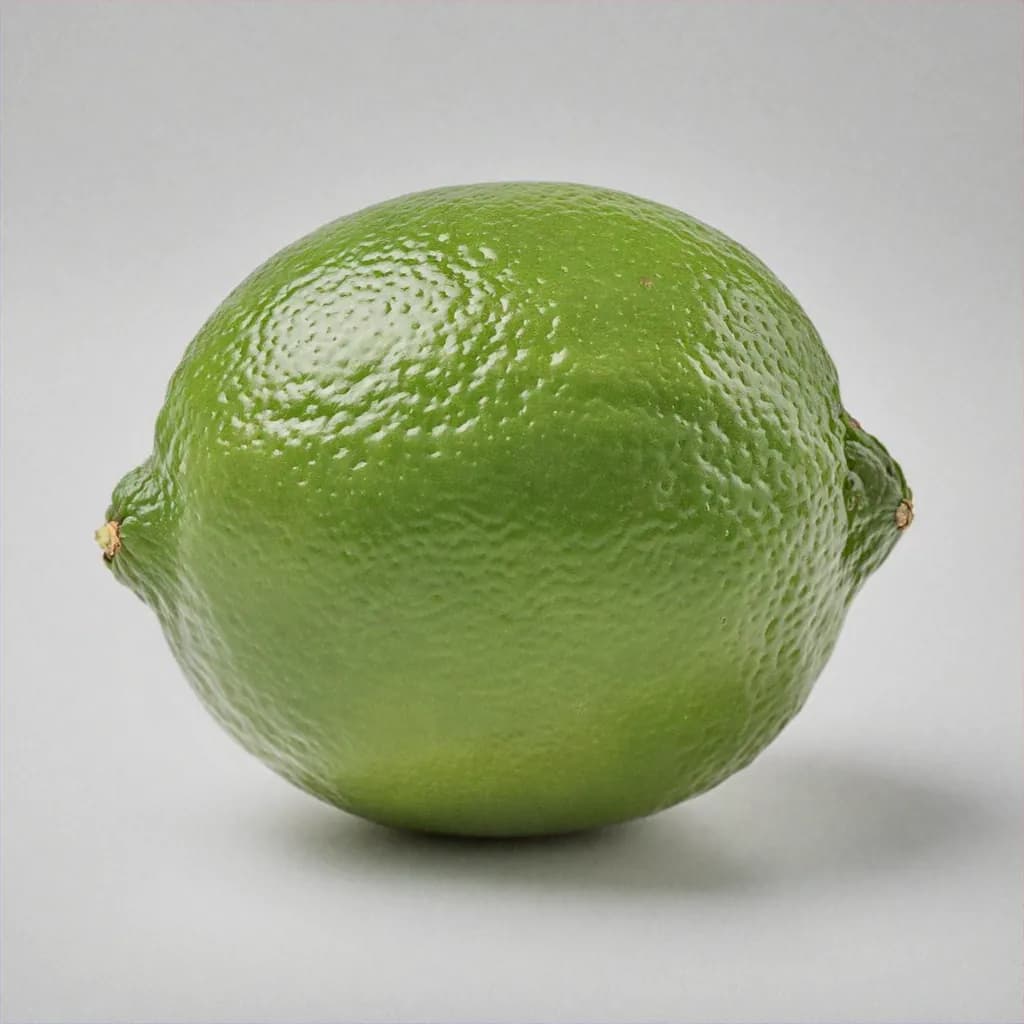
Citrus aurantifolia (Persian/Tahitian), Citrus latifolia, and other Citrus species
Limes are small, vibrant green citrus fruits celebrated for distinctive tart-acidic flavor, aromatic fragrance, and essential role in tropical and international cuisines spanning cocktails, marinades, condiments, and fresh applications. These compact green spheres (2-4 inches diameter) with thin bright-green peel and intensely fragrant juice represent tropical counterpart to lemon with slightly floral, less harsh acidity profile. Limes originated in Southeast Asia and tropical regions, becoming essential ingredient in Caribbean, Latin American, Southeast Asian, and Middle Eastern cuisines where they define countless traditional dishes. The distinctive acidic brightness of lime juice transforms beverages, seafood dishes, curries, and marinades providing sophisticated flavor complexity unavailable from lemon alone. Limes offer impressive nutritional profile despite small size - exceptional vitamin C content (similar to lemon, 29.3 mg per 100g providing 49% DV), fiber, copper, and diverse phytonutrients including limonoids with health-promoting potential. The entire fruit provides culinary value - juice, peel, leaves, and even flowers contribute distinctive applications to global cuisines. Limes support immune health, digestive function, and provide essential flavor component across countless dishes making them indispensable tropical fruit. The combination of exceptional tart-tropical flavor, essential culinary role, health benefits, compact size, and cultural significance makes limes absolutely vital ingredient in professional and home cooking deserving universal appreciation and regular consumption.
Explore Lime in stunning detail
Lime - Main View
Per 100g
Per 100g
Nutrition breakdown for one serving
Southeast Asia, particularly Malaysia and Indonesia
Limes originated in Southeast Asia, particularly Malaysia and Indonesia, where wild citrus species still grow. Ancient Sanskrit and Chinese texts reference limes in traditional medicine and cuisine. Arab traders brought limes to Mediterranean and Middle East through ancient trade routes. Spanish and Portuguese explorers brought limes to Americas in 16th century, establishing cultivation in Caribbean and tropical regions. British naval officers discovered limes prevented scurvy (vitamin C deficiency), leading to sailors being called 'limeys' - limes became essential shipboard provisions. Caribbean lime cultivation flourished in 18th-19th centuries with West Indies becoming major production center. Key lime (smaller native variety) became iconic in Florida cuisine and culture. Modern lime cultivation expanded globally with Mexico becoming largest producer supplying international markets. Lime juice became essential ingredient in classic cocktails (daiquiri, margarita, mojito) emerging in 19th-20th centuries. Today limes remain essential tropical fruit with established cultivation across suitable regions globally.
Year-round in tropical regions; peak June-August in Northern Hemisphere
Each variety offers unique flavors, textures, and culinary applications
Keep your fruit fresh and delicious for longer
Select firm limes with bright, vibrant green color (avoid yellowing indicating overripeness)
Limes should feel heavy for their size - indicates juice content
Skin should be smooth, unblemished, and free from soft spots or mold
Fragrant aroma indicates quality and ripeness
Avoid wrinkled, dull, or dried-out limes
Choose uniform size for consistent juice yield
Thin-skinned limes typically contain more juice
Avoid limes with brown spots or significant bruising
Key limes (smaller variety) should be yellow-green when ripe
Fresh limes keep refrigerated 2-3 weeks in breathable container or paper bag
Room temperature storage acceptable 1 week in cool location
Do not wash limes until ready to use - moisture accelerates spoilage
Separate limes to improve air circulation and prevent mold transmission
Frozen limes preserve quality excellently for 3-4 months (thaw before juicing)
Flash freeze whole on baking sheet before bagging
Lime juice keeps refrigerated 2-3 days (bottled commercial lasts longer)
Can zest limes before storage for convenient use
Dried lime slices keep several months in airtight container
Lime leaves can be dried for long-term storage
Preserve freshness for months
Fresh limes freeze excellently for 3-4 months
Flash freeze whole on baking sheet before bagging
Thaw before juicing to extract maximum juice
Frozen limes work well for juice, marinades, and cooking
Consider juicing before freezing for convenient ready-to-use lime juice
Zest before freezing for long-term zest storage
Label frozen items with the date to track freshness. Most fruits maintain quality for 2-3 months when properly frozen. For best results, use airtight containers or freezer bags to prevent freezer burn.
Discover delicious possibilities
Lime allergies are uncommon but documented, particularly in individuals with existing citrus allergies. Allergic reactions typically present as oral allergy syndrome - itching, tingling, or swelling of mouth, lips, tongue, and throat, particularly with fresh limes. Some individuals experience generalized allergic reactions including hives, urticaria, or skin rashes. Severe reactions including respiratory symptoms are rare but documented. LATEX-FRUIT SYNDROME: Individuals with latex allergies may theoretically show cross-reactivity (though connection is weaker for lime than for other fruits). SALICYLATE SENSITIVITY: Those with salicylate sensitivity may react to limes (salicylate-containing food). LIMONENE SENSITIVITY: Some sensitive individuals react to limonene (compound in lime peel).
Conventionally grown limes in commercial orchards may contain pesticide residues. Lime peel may be consumed (zest for flavoring), making surface pesticide concerns relevant. Proper washing: Rinse limes under cool running water for 15-20 seconds, gently rubbing surface. The firm skin resists damage. Pat dry. This removes surface pesticides and contaminants. Organic limes eliminate synthetic pesticide concerns. Supporting organic citrus production promotes sustainable farming.
Surprising trivia you'll love!
The word 'lime' derives from Arabic 'limah' - reflecting the fruit's Asian origin and international trade dissemination
British sailors were called 'limeys' due to consuming lime juice to prevent scurvy during long ocean voyages - vitamin C deficiency was prevented through lime juice supply
Key lime pie is iconic American dessert originating in Florida Keys - the unique tart Key lime variety is essential ingredient that defines the traditional preparation
Mexico produces approximately 50% of world's limes - making Mexico dominant producer with significant cultural integration of limes in Mexican cuisine
Kaffir lime leaves are essential in Thai green curry preparation - the aromatic properties are irreplaceable and define authentic Thai cuisine
Lime trees produce fruit year-round in tropical regions - unlike many fruits with seasonal limitations
Fresh lime juice was used as natural preservative in Caribbean and Latin American cooking long before refrigeration - the acidic properties prevent spoilage
Margarita cocktail (lime-based) is most popular cocktail globally - making limes essential ingredient in global beverage culture
Finger limes from Australia have unique caviar-like juice sacs inside - creating distinctive textural and visual appearance unlike other lime varieties
Limes contain compounds (limonoids and polyphenols) with demonstrated anti-cancer potential in research - making them scientifically interesting beyond culinary value
Limes and lemons are distinct citrus fruits differing significantly in taste, acidity, culinary use, origin, and cultural significance. TASTE PROFILE: Limes are less acidic than lemons with distinctive tropical, slightly floral character. Lemons are more harshly tart with pure acidic punch. Limes provide subtle complexity; lemons deliver aggressive tartness. ACIDITY LEVEL: Lemons have pH 2-3 (extremely acidic). Limes have pH 2-4 (slightly less acidic than lemons, though still very acidic). The acidity difference affects flavor perception and culinary application. COLOR: Limes are bright green (when ripe); lemons are bright yellow. This visual distinction reflects different ripeness profiles and suggests different flavor development. ORIGIN: Lemons originate from Asia, became cultivated in Mediterranean region establishing European association. Limes originate from Southeast Asia, became cultivated in tropical regions establishing Caribbean and Latin American association. CULINARY ROLES: Lemons dominate European, Mediterranean, and Middle Eastern cooking. Limes dominate Caribbean, Latin American, and Southeast Asian cooking. They rarely substitute for each other in traditional cuisines. JUICE CHARACTERISTICS: Lemon juice is pure tart acidity with less nuance. Lime juice provides acidic brightness with floral, tropical undertones. COCKTAIL USE: Margaritas use lime (distinctive requirement). Whiskey sours traditionally use lemon. Mojitos use lime. Different cocktails have evolved with specific fruit. PRESERVATION: Lemons preserve longer (2-4 weeks refrigerated). Limes have shorter shelf life (2-3 weeks refrigerated). SIZE: Limes are typically smaller (golf ball-sized). Lemons are slightly larger (tennis ball-sized). VARIETIES: Lemon varieties are limited (Eureka, Lisbon, Meyer). Lime varieties are diverse (Persian, Key, Kaffir, Finger). NUTRITIONAL DIFFERENCES: Both provide significant vitamin C (lime 49% DV, lemon 88% DV per 100g). Limes provide exceptional copper (12% DV); lemons provide moderate copper. BOTTOM LINE: Limes and lemons are distinct fruits optimized for different cuisines and flavor profiles. Each has essential role in appropriate culinary contexts. They're not interchangeable despite citrus family relationship.
Yes, lime juice is genuinely healthy with legitimate nutritional benefits and potential health-supporting properties - though modest compared to whole limes. NUTRITIONAL BENEFITS: Vitamin C (49% DV per 100ml juice) supports immune function and antioxidant protection. Citric acid supports mineral absorption and digestive function. Polyphenolic antioxidants provide cellular protection. Fiber (2.8g per 100g whole lime) supports digestive health. Low calorie density (30 calories per 100g) supports weight management. HEALTH-SUPPORTING PROPERTIES: Limonoid compounds demonstrate research-supported anti-cancer potential. Flavonoids provide antioxidant and anti-inflammatory benefits. Traditional use across tropical cultures validates basic health support. JUICE-SPECIFIC CONSIDERATIONS: Juice contains vitamin C but reduces fiber content compared to whole fruit. Juice is more convenient than whole fruit consumption. Juice concentrates flavor making liquid more acidic. DIGESTIVE EFFECTS: Lime juice supports digestive function through citric acid and traditional use. Some traditional preparations use lime water (lime juice with water) for digestive support. Effects vary individually. ACIDITY CONCERNS: Lime juice is acidic (pH around 2-4) and can damage tooth enamel with excessive or undiluted consumption. Use straw, dilute, and rinse mouth after consumption. WEIGHT MANAGEMENT: Low-calorie lime juice with no added sugar supports weight management when used appropriately in beverages. Avoid adding significant sugar (sugary limeade defeats benefit). OPTIMAL USE: Lime juice in water provides hydration and vitamin C benefit. Lime juice in cooking provides flavor without significant calorie addition. Lime juice as component of balanced diet supports overall health. REALITY: Lime juice is genuinely healthy addition to diet. It's not superfood cure but legitimate nutritious component of comprehensive healthy eating.
Lime water (lime juice in water) is popular tropical and traditional beverage with legitimate hydration and modest nutritional benefits - though some claims are exaggerated. LEGITIMATE BENEFITS: Hydration support - lime water encourages fluid consumption, supporting overall hydration (primary benefit). Vitamin C contribution - lime juice provides vitamin C supporting immune function. Flavor enhancement - lime makes water palatable for those struggling with plain water consumption. Digestive support - traditional use across tropical cultures recognizes lime water as digestive support. Mineral supplementation - lime water made with mineral water provides mineral intake. MODEST BENEFITS: Weight management support - lime water with no added sugar is low-calorie, supporting hydration without excess calories. Liver support - some traditional medicine recognizes lime as liver-supporting; modern evidence is limited. OVERSTATED CLAIMS: Lime water is NOT detox or cleanse - the body manages detoxification through organs, not special beverages. Lime water does NOT cause weight loss directly - hydration and calories determine weight change. Lime water does NOT alkalize blood significantly - body maintains pH through robust systems unaffected by dietary acids. Lime water does NOT cure serious health conditions - modesty about claims is essential. ACIDITY CONCERNS: Lime juice is acidic and can damage tooth enamel with excessive consumption. Use straw, dilute heavily (1 lime per 8-16 oz water), and rinse mouth after consumption. OPTIMAL USE: Cold lime water as refreshing beverage supporting hydration. Warm lime water as traditional preparation supporting digestion. Consistent moderate consumption provides genuine benefits without expecting cure-like effects. PREPARATION: 1 fresh lime (or 2-3 tablespoons juice) in 8-16 oz water. Drink through straw to minimize tooth contact. Rinse mouth with plain water after consuming. REALITY: Lime water is genuinely beneficial hydration strategy. It's healthy, traditional, and supportive but not medical intervention. Use as component of balanced lifestyle rather than expecting miraculous effects.
Limes are exceptionally versatile cooking ingredient with applications spanning beverages, marinades, sauces, and authentic cuisines across tropical regions. FRESH JUICE APPLICATIONS: Marinades - lime juice is essential component of marinades for fish, poultry, and meat. The acidity tenderizes and flavors simultaneously. Ceviche - raw seafood curing using lime juice's acidic cooking action (without heat). Dressings - lime juice in vinaigrettes and salad dressings provides brightness and acidity. Sauces - lime-based sauces complement fish, seafood, and tropical dishes. Guacamole - lime juice is essential guacamole ingredient preventing browning and adding flavor. AUTHENTIC CUISINES: Caribbean cooking - lime juice essential in Caribbean dishes, drinks, and condiments. Latin American - lime integral to Mexican, Peruvian, and Central American cooking. Southeast Asian - lime leaves and juice essential in Thai, Vietnamese, and other Asian cuisines. Middle Eastern - lime used in traditional dishes and beverages. ZEST APPLICATIONS: Baking - lime zest adds fragrance and flavor to desserts, cakes, and cookies. Cooking - lime zest garnish adds visual appeal and fresh flavor to dishes. Seasoning - dried or fresh zest provides concentrated lime flavor. LEAVES: Kaffir lime leaves - essential in Thai cuisine, providing intense citrus fragrance. Aromatic component in curries and soups. Can be dried for long-term storage. BEVERAGES: Cocktails - margarita, daiquiri, mojito use fresh lime juice. Limeade - traditional refreshment in tropical regions. Lime water - hydration beverage with potential health support. CONDIMENTS: Preserved limes - salt-cured preparation providing intense flavor. Lime pickling - preservation method for vegetables and fruits. MINIMAL PREPARATION: Fresh lime juice requires only squeezing. Zest requires microplane or zester. Leaves require drying or fresh use. FLAVOR PAIRING: Lime pairs with: coconut, cilantro, chili peppers, ginger, garlic, mint, fish, shrimp, avocado, black beans, rice. COOKING TECHNIQUE: Add lime juice late in cooking to preserve fresh flavor (acid degrades with heating). Use in marinades for extended contact. Both fresh juice and zest provide different benefits. QUANTITY CONSIDERATIONS: Moderation with lime juice prevents overpowering acidity. Start with modest amount and adjust based on taste preference. Different recipes require different lime juice quantities.
Key limes are distinctive small lime variety iconic to Florida Keys cuisine - famous for traditional Key lime pie and unique culinary significance. IDENTIFICATION: Much smaller than Persian limes (golf ball vs tennis ball sized). Yellowish-green color (rather than bright green) when ripe. Higher acidity than Persian limes. Very distinctive flavor profile. ORIGIN: Native to Caribbean, particularly flourishing in Florida Keys. Key lime trees became iconic in Keys culture and landscape. Historical use in Caribbean sailing vessels for vitamin C. FLAVOR PROFILE: Very tart, intensely acidic (higher than Persian limes). Distinctive flavor that experienced cooks prefer. Complexity that compensates for extreme tartness. Essential in authentic Key lime pie - the special tartness defines iconic dessert. CULINARY SIGNIFICANCE: Key lime pie is iconic Florida and American dessert - traditionally made with condensed milk and Key lime juice. Key limes are essential ingredient - Persian limes produce inferior pie. Caribbean cocktails often specifically use Key limes. Ceviche applications sometimes preference Key limes for intensity. JUICE CHARACTERISTICS: Key lime juice is more intensely acidic than Persian lime juice. Higher juice yield for volume relative to size. Distinctive flavor that doesn't substitute with Persian limes in authentic applications. AGRICULTURAL CHALLENGES: Key lime trees are less hardy than Persian limes. Vulnerable to disease (citrus canker particularly affected Key lime groves). Florida frosts devastate Key lime production. More labor-intensive to harvest and use (small fruit requires more squeezing). AVAILABILITY: Historically more available in Keys region and Caribbean. Modern availability is limited - increasingly seasonal or regional. Bottled Key lime juice allows off-season use. Persian limes widely available year-round as substitutes. PRICE: Key limes typically more expensive than Persian limes. Limited availability and agricultural challenges increase cost. Specialty markets and season determine availability. CULTURAL IMPORTANCE: Key lime pie is iconic American dessert representing Florida Keys culture. Key limes represent cultural heritage and history of sailing era. Culinary tradition maintains preference despite availability challenges. SUBSTITUTION: Persian limes can substitute when Key limes unavailable but produce different results. Experienced cooks notice difference. Key lime pie made with Persian limes is acceptable but not authentic. BOTTOM LINE: Key limes are special variety with distinctive characteristics, iconic culinary role, limited availability, and passionate defender following. They're not just small limes - they're distinct fruit with unique flavor and historical significance.
Limes can support weight management goals through several mechanisms - though they're not weight-loss miracle food and individual results vary. WEIGHT MANAGEMENT SUPPORT: Low calorie density - 30 calories per 100g makes limes low-calorie food supporting weight management. High nutrient density - significant vitamins and minerals in modest calories. Hydration support - lime water encourages fluid consumption supporting satiety and reducing overeating. Digestive support - fiber and traditional use may support digestive function. METABOLIC CONSIDERATIONS: Vitamin content - vitamin C and B vitamins support energy metabolism. Copper content (12% DV) supports metabolic function. Polyphenolic compounds - may support modest metabolic enhancement though evidence is limited. NO DIRECT METABOLISM BOOST: Limes don't significantly increase metabolic rate. They're not thermogenic food. They don't trigger fat burning. Claims of metabolism boost are exaggerated. DIGESTIVE HEALTH CONNECTION: Fiber (2.8g per 100g) supports digestive function and regular bowel movements. Healthy digestion supports weight management indirectly. Functional digestive system is prerequisite for healthy weight. SATIETY SUPPORT: Acidic juice may provide flavor enhancement without calories. Fresh flavor can increase eating satisfaction. Lime juice in water encourages hydration supporting satiety. PRACTICAL APPLICATIONS: Lime water as replacement for high-calorie beverages supports weight management. Lime juice in marinades adds flavor without significant calories. Lime zest in cooking provides flavor interest without calorie addition. Guacamole with lime juice provides healthy fats without significant additional calories (compared to high-calorie dressings). DIETARY APPROACHES: Lime-based cooking supports traditional Mediterranean and Caribbean approaches associated with healthy weight. Lime encourages fresh produce consumption supporting overall dietary quality. REALISTIC EXPECTATIONS: Limes are supportive component of comprehensive weight management approach - not standalone solution. Weight management requires calorie balance, exercise, sleep, and stress management. Limes contribute through calorie reduction and satisfaction but don't substitute for comprehensive approach. BOTTOM LINE: Limes can support weight management goals as low-calorie, nutrient-dense food integrated into healthy eating patterns. They're genuinely helpful but not weight-loss miracle. Use as component of balanced approach rather than expecting significant individual impact.
Dogs should avoid limes and lime juice - they are non-toxic but contain compounds potentially causing digestive upset in most dogs. TOXICITY: Limes are not toxic to dogs - no compounds are inherently poisonous. The entire fruit is non-toxic. CONCERNS: CITRIC ACID: Lime juice contains citric acid which can cause digestive upset, stomach irritation, and potentially vomiting or diarrhea in dogs. ACIDIC pH: Limes are acidic (pH 2-4) potentially irritating sensitive dog digestive systems. GASTROINTESTINAL IRRITATION: The acidic nature can irritate sensitive systems and cause discomfort. COMPOUNDS: Limonene and other compounds can cause mouth discomfort, drooling, or aversion in some dogs. ESSENTIAL OIL SENSITIVITY: Essential oils in lime peel can cause additional sensitivity in some dogs. SYMPTOMS OF UPSET: Vomiting, diarrhea, stomach pain, drooling, mouth sensitivity, reduced appetite, or lethargy may indicate lime-caused upset. PORTION GUIDELINES: Small dogs: Avoid completely. If exposure occurs, minimal. Medium dogs: Small lick unlikely to cause serious problems but unwise. Large dogs: Small exposure less problematic but unnecessary. Frequency: Lime exposure should be avoided rather than treated as acceptable treat. BETTER ALTERNATIVES: Dog-safe fruits include watermelon (seedless), blueberries, apple slices (no seeds), bananas (moderation), and pumpkin - all safer, less acidic choices. WHEN TO AVOID: Dogs with sensitive digestive systems should definitely avoid. Overweight dogs should avoid (sugar, calories). Diabetic dogs should avoid (sugar). Puppies should avoid until mature. ACCIDENTAL EXPOSURE: Small accidental exposure typically causes no serious problems - monitor for digestive upset. Contact veterinarian if significant vomiting, diarrhea, or distress develops. BOTTOM LINE: Dogs can technically tolerate small lime exposure without toxicity, but acidic content makes it inappropriate for regular feeding. Many better fruit alternatives exist. Avoid offering limes to dogs; use safer fruity treats instead.
Kaffir limes (also called Makrut limes) are distinctive Southeast Asian citrus variety with unique bumpy appearance and exceptional aromatic properties - essential in Thai cuisine. APPEARANCE: Distinctive knobby, bumpy exterior (unlike smooth Persian limes). Smaller, rounder shape. Thin-skinned. Yellow-green color. Unusual appearance makes them visually distinctive. ORIGIN: Native to Southeast Asia, particularly Thailand and surrounding regions. Deeply integrated into Thai, Laotian, Vietnamese, and other Southeast Asian cuisines. DISTINCTIVE CHARACTERISTIC: INTENSE FRAGRANCE: The defining characteristic is exceptional fragrance - far more aromatic than Persian or Key limes. The aromatic properties are the primary culinary value. The fragrance is complex, floral, and distinctive. JUICE vs PEEL/LEAVES: Juice is highly acidic but less commonly used. PEEL is intensely fragrant and commonly used. LEAVES are extremely fragrant and essential to Thai cuisine. The peel and leaves are valued more than juice. CULINARY USES: Leaves - essential in Thai green curry, soups, and traditional dishes. Leaves are dried, fresh, or frozen for use. The aroma is irreplaceable in authentic Thai cuisine. Peel - zested or sliced for flavor and fragrance. Provides intense citrus aroma. Juice - used sparingly in Thai cooking due to high acidity. THAI CUISINE SIGNIFICANCE: Kaffir limes are ESSENTIAL ingredient in Thai cooking. Thai green curry requires Kaffir lime leaves for authentic flavor. Tom yum soup traditionally includes Kaffir lime leaf and juice. Without Kaffir limes, Thai cooking loses distinctive aromatic profile. FRAGRANCE PROFILE: The aroma is sophisticated, floral, citrus with hints of tropical notes. The fragrance is immediately recognizable to those familiar with Thai cuisine. The complexity is difficult to describe but unmistakable once experienced. GROWING: Trees are ornamental as well as productive. The foliage is attractive and fragrant. Trees can be grown in suitable climates or containers. Leaf harvest doesn't harm tree productivity. AVAILABILITY: Specialized markets, Asian markets, and specialty suppliers carry fresh Kaffir limes. Fresh Kaffir lime leaves available frozen or fresh. Dried leaves available for convenient storage. Commercial Thai curry pastes incorporate Kaffir lime flavoring. COOKING TECHNIQUE: Tear leaves slightly before adding to dishes to release fragrance. Leaves are removed before eating (not chewed). Peel requires gentle zesting to avoid bitter white pith. SUBSTITUTION: No perfect substitute exists. Persian limes are completely inadequate substitutes. Some recipes use lime zest with additional herbs attempting to approximate flavor. NUTRITIONAL NOTES: Similar nutritional profile to other limes. Additional value comes from essential oils and aromatic compounds. CULTURAL SIGNIFICANCE: Kaffir limes represent Southeast Asian culinary tradition and aromatic sophistication. Their use connects dishes to traditional cuisine and cultural heritage. BOTTOM LINE: Kaffir limes are specialized Southeast Asian citrus variety valuable for exceptional fragrance and aromatic properties. They're essential for authentic Thai and Southeast Asian cooking. The peel and leaves are culinary gold; juice is secondary. Their distinctive aroma makes them irreplaceable in appropriate culinary contexts.



Sustainability insights
Lime cultivation represents established agricultural practice with well-understood environmental considerations. Benefits include perennial trees with 20-30 year productive lifespan eliminating annual replanting, moderate water requirements once established, diverse cultivar development supporting different production regions, and traditional cultivation in tropical regions using established sustainable practices. Modern challenges include conventional agriculture's pesticide use requiring sustainable alternatives, water usage in marginal regions requiring management, and transportation carbon for global distribution. Sustainable practices include organic lime production, integrated pest management, water-efficient irrigation, regional production promoting local supply, and home cultivation encouraging personal food production.
Lime carbon footprint is moderate due to perennial cultivation, minimal processing for fresh consumption, and efficient tropical distribution. Fresh whole limes require minimal processing - carbon footprint primarily from cultivation and transportation. The perennial nature means no annual planting fuel costs. Commercial production and transportation generate moderate carbon. Per-serving carbon impact is moderate - limes provide concentrated flavor and nutrition enhancing many dishes. Tropical regions have natural climate advantages reducing heating/cooling requirements. To minimize carbon footprint: Purchase locally during season when possible, choose fresh limes over processed products (bottled juice higher carbon), support local growers, and consider home cultivation if climate permits.
Lime cultivation requires moderate water with water footprint approximately 600-1,000 liters per kilogram - moderate for citrus and reasonable for established tree crops. Mature lime trees develop root systems allowing good drought tolerance once established, though young trees require consistent irrigation. Traditional and commercial cultivation in tropical regions with adequate rainfall minimizes supplemental irrigation. Modern sustainable practices include drip irrigation systems, mulching reducing evaporation, soil moisture monitoring optimizing water use, and rainwater harvesting. Limes represent moderate water-use fruit for most regions, more efficient than water-intensive crops.
Supporting local limes maximizes sustainability and freshness. Limes are cultivated in Mexico, India, tropical regions globally, and specialized producers in non-tropical regions. For residents in lime-growing regions, local fruit provides minimal transportation carbon and superior freshness. For non-producing regions, imported fresh limes represent seasonal-appropriate supply. Frozen juice or processed lime products provide off-season options. BEST PRACTICES: Buy fresh local limes during season when available, purchase imported limes off-season with acceptance of transportation carbon, choose organic when available supporting sustainable farming, and appreciate limes' comprehensive utility reducing food waste through multiple applications.
We aim to keep this Lime profile accurate and easy to understand. Nutrition values and % Daily Value figures are based on established reference databases and standard daily value guidance.
Last updated: September 17, 2026
Medical disclaimer
This page is for general educational purposes and does not replace professional medical advice.
Found an issue? Contact us.