Loading Fruit Details...
Please wait while we fetch nutritional information and health benefits
Please wait while we fetch nutritional information and health benefits
Recommended Products
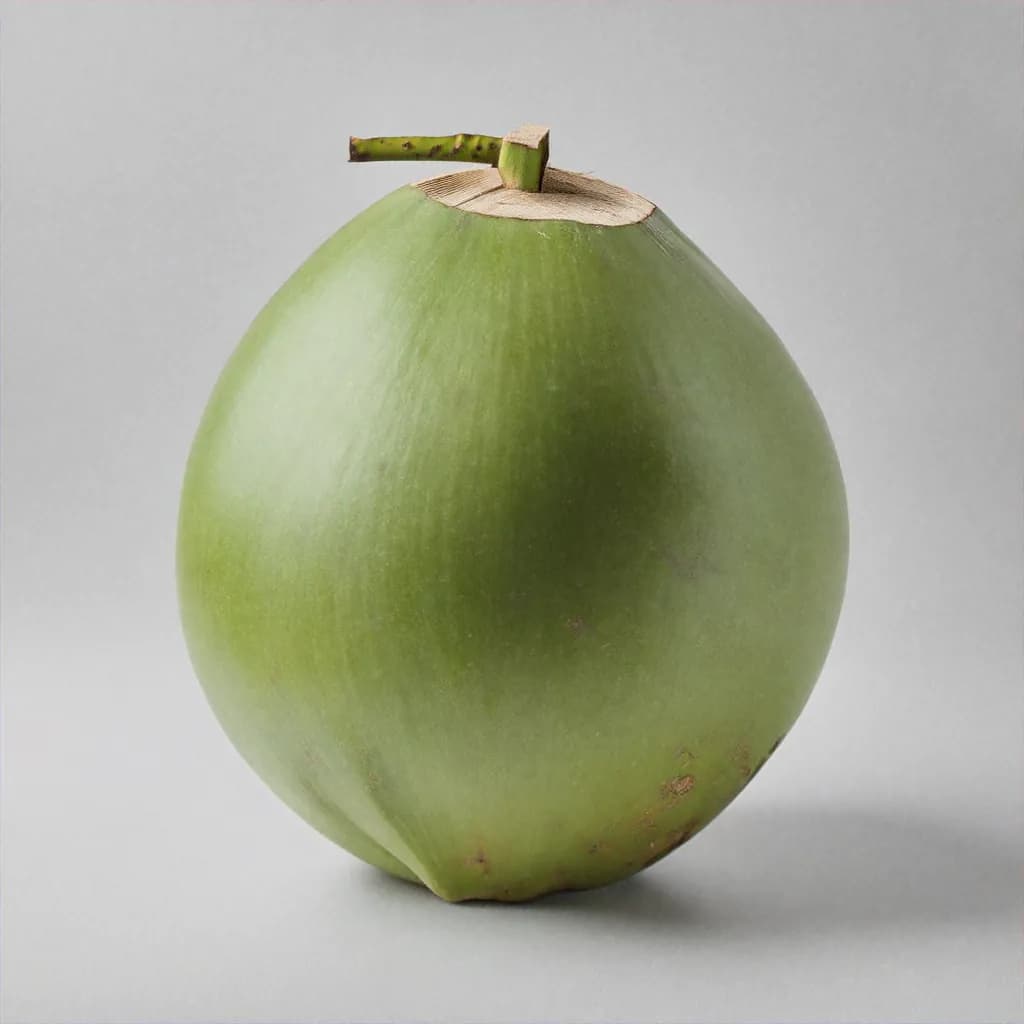
Cocos nucifera (immature)
Green coconuts are immature coconuts harvested 6-9 months after flowering featuring tender green husks, gelatinous white flesh, and exceptionally refreshing nutrient-rich coconut water. These tropical stage fruits represent ultimate hydration source with electrolyte-rich water naturally sterile and perfectly balanced for rehydration. Harvested young for tender meat and abundant water content, green coconuts deliver nutritional profile distinct from mature coconuts - superior hydration properties, bioavailable electrolytes (potassium, sodium, magnesium), and pure coconut water containing cytokinins with anti-aging properties. The tender coconut meat offers delicate creamy texture ideal for fresh consumption or blending into desserts. Green coconuts dominate tropical regions where they represent primary hydration source predating modern beverage technology. Traditional use spans millennia across Southeast Asia, India, and Pacific regions with modern science validating exceptional health properties. Green coconuts combine exotic tropical appeal with exceptional nutritional hydration making them sought-after wellness fruit. Perfect post-exercise rehydration, natural sports drink alternative, and premium wellness beverage. Green coconuts represent ultimate fusion of hydration, nutrition, and tropical refreshment in single nutrient-dense package.
Explore Green Coconut in stunning detail
Green Coconut - Main View
Per 100g
Per 100g
Nutrition breakdown for one serving
South Pacific, Southeast Asia, particularly Malaysia and Indonesia
Green coconuts represent young harvested coconuts reflecting ancient tropical cultivation spanning 4,000+ years. Coconut palms originated in South Pacific and Southeast Asian regions becoming fundamental to island cultures. Archaeological evidence shows coconut cultivation in ancient India dating to Vedic period (1500 BCE). Arab and Portuguese traders distributed coconuts globally during medieval and colonial expansion enabling worldwide tropical cultivation. Green coconuts represent harvesting practice optimized for fresh water and tender meat consumption - distinct from mature coconuts dried for copra. Traditional Southeast Asian harvesting techniques refined over centuries remain largely unchanged. Modern recognition of coconut water's hydration properties renewed interest in green coconut consumption. Coconut water gained premium status as natural sports drink alternative in recent decades.
Year-round availability in tropical regions with seasonal variations
Each variety offers unique flavors, textures, and culinary applications
Keep your fruit fresh and delicious for longer
Select green coconuts with bright green husk - indicates youth and quality
Avoid brown or heavily dried husks - signs of age and reduced quality
Choose heavy coconuts for size - indicates abundant water content
Shake gently - should hear water sloshing inside
Look for unblemished husk without cracks or damage
Select medium-large specimens - better water-to-meat ratio
Avoid soft spots or mold signs on husk
Check stem end for freshness - should not be dried or darkened
Purchase from reputable sources with fresh inventory
Store at room temperature 2-4 weeks if not opened
Refrigerate to extend storage up to 4-6 weeks
Keep in cool dark place away from direct sunlight
Do not store with ethylene-producing fruits
Once opened, drink coconut water immediately for optimal freshness
Refrigerate opened coconut water maximum 3-5 days in sealed container
Freeze coconut water in ice cube trays for later smoothies
Frozen water keeps 3-4 months in freezer
Store unopened canned/packaged water per product instructions
Preserve freshness for months
Pour fresh coconut water into ice cube trays
Freeze completely (3-4 hours)
Transfer cubes to freezer bags removing excess air
Label with date for tracking
Use frozen cubes for smoothies and blended beverages
Perfect for slushies and frozen drinks
Keeps frozen 3-4 months maximum
Thaw at room temperature before consuming whole
Label frozen items with the date to track freshness. Most fruits maintain quality for 2-3 months when properly frozen. For best results, use airtight containers or freezer bags to prevent freezer burn.
Discover delicious possibilities
Coconut allergies are uncommon but documented particularly in individuals with tree nut allergies. Some cross-reactivity with other tree nuts possible. Allergic reactions typically mild - itching mouth or throat irritation. Severe reactions rare. Those with tree nut allergies should consult allergist about coconut safety and cross-reactivity risk.
Coconut palms require minimal pesticide use - thick husk provides natural protection. Fresh whole coconuts have minimal residue exposure. Proper preparation: Remove husk completely protecting against any external residues. Rinse white shell under cool water. Discard shell before consuming water or meat. Organic coconuts eliminate pesticide concerns entirely.
Surprising trivia you'll love!
Green coconuts are actually young immature coconuts harvested at 6-9 months of age before the coconut fully matures - if left on tree 10-12 months more they transform into brown hardened mature coconuts
Coconut water represents one of nature's few naturally sterile beverages - its purity and composition enabled use as emergency intravenous plasma substitute during wars when blood plasma unavailable
A single mature coconut palm produces year-round flowers enabling continuous green coconut harvesting - tropical regions maintain steady supply throughout all seasons unlike temperate fruits
Coconut water's electrolyte composition almost perfectly mirrors human blood plasma - potassium, sodium, magnesium ratios match optimal cellular absorption requirements
Cytokinins in fresh coconut water actively promote cell division and delay cellular aging - highest concentration in youngest coconuts making green coconuts superior for anti-aging benefits
Traditional Southeast Asian and Pacific cultures used coconut water as primary hydration and nutritional foundation for millennia before modern science validated exceptional health properties
Coconut palms tolerate salt spray and grow in poorest soils unsuitable for other crops - remarkable sustainability enabling food production in marginal environments
A mature coconut palm produces 50-200 coconuts annually for 60-80+ years lifespan - single palm delivers massive sustained productivity making it among most valuable tropical crops
Green coconuts contain tender gelatinous meat spoon-consistency that hardens with maturation - immature harvesting captures optimal texture before meat solidifies into brown coconut
Coconut water naturally contains all essential amino acids in complete profile - rare among plant beverages making it exceptional for muscle recovery and protein synthesis
Opening green coconuts requires proper technique balancing water preservation with safe meat extraction. SELECTING OPENING METHOD: Machete method (traditional) - requires skill and safety precautions. Drill/chisel method - precise but requires tools. Saw cutting - clean but time-consuming. Thai opening method - specialized technique. MACHETE TECHNIQUE (Traditional): Place coconut on cutting surface horizontally. Hold firmly with one hand. Using sharp machete, carefully cut around husk exposing white shell underneath. Strike firmly at angle creating wedge-shaped access point. Gradually widen opening using rocking motion with blade. Remove husk pieces revealing smooth white shell interior. Strike white shell at 'eye' spot creating opening. Pour water into glass preserving all liquid. Scoop tender meat using spoon or knife. DRILL/CHISEL METHOD (Safe): Identify three 'eyes' on coconut top. Using drill or fine chisel, carefully pierce one eye creating small hole. Pour water through hole into container. Wrap coconut in towel for safety. Strike around center line using hammer and chisel. Carefully split in half. Scoop meat from shell halves. WATER EXTRACTION: Pour through clean cloth filtering out any husk particles. Drink immediately for optimal freshness. Water keeps refrigerated 3-5 days maximum. MEAT EXTRACTION: Use small sharp knife or specialized coconut scraper. Insert between meat and shell creating separation. Scoop meat into container. Separate any remaining husk material. Rinse meat gently under cool water removing shell fragments. TENDER MEAT CONSISTENCY: Green coconut meat is soft and gelatinous - spoon-consistency. Easily separates from shell. No need for scraping like mature coconut. Fresh consumption ideal within 1 hour of opening. WATER PRESERVATION: Collect all water avoiding waste. Filter if debris visible. Drink immediately for optimal taste and nutrition. Refrigerate if not consumed immediately. SAFETY PRECAUTIONS: Use sharp tools preventing slipping. Work on stable surface. Wear cut-resistant gloves if using machete. Keep hands clear of blade path. Wrap coconut in towel preventing rolling. Never rush the process. TOOLS NEEDED: Sharp machete or large knife, hammer, chisel (optional), fine strainer, spoon, clean containers. BOTTOM LINE: Green coconut opening requires careful technique combining safety, water preservation, and meat extraction - various methods available from traditional machete to safer drill technique.
Coconut water is clear liquid inside green coconuts representing nature's most perfectly balanced electrolyte beverage matching human plasma composition. COMPOSITION: Coconut water contains exceptional electrolyte profile - potassium (7% DV), magnesium (6% DV), sodium (5% DV) in naturally balanced ratios. Water content 86.39% provides fluid base. Minimal sugar (2.61g per 100g) compared to commercial sports drinks. Complete amino acid profile including all essential amino acids. Natural cytokinins - plant hormones with anti-aging potential. Lauric acid - antimicrobial medium-chain fatty acid. ISOTONIC PROPERTIES: Coconut water naturally isotonic - matches human blood osmotic pressure enabling rapid cellular hydration. This osmotic balance distinguishes coconut water from plain water or diluted electrolyte drinks. Rapid absorption due to perfect mineral-to-water ratio. SPORTS PERFORMANCE BENEFITS: Superior rehydration - restores hydration and electrolytes post-exercise. Potassium replacement - restores potassium depleted through sweat. Magnesium support - supports muscle relaxation and recovery. Sodium balance - maintains electrolyte equilibrium. Carbohydrates - provides minimal energy (9.3g per 100g) without excessive sugar load. COMPARISON TO COMMERCIAL SPORTS DRINKS: Coconut water naturally balanced vs artificially formulated drinks. Minimal additives and preservatives - pure natural composition. Lower sugar content - typically 2-3g per 100ml vs 6-8g in commercial drinks. Superior mineral content naturally occurring vs added. No artificial colors or flavors. Complete amino acid profile providing muscle recovery support. HYDRATION EFFICIENCY: Studies show coconut water rehydrates as effectively as commercial sports drinks. Superior to plain water due to electrolytes aiding cellular absorption. Perfect post-exercise when fluid and electrolyte replacement critical. HISTORICAL USE: Coconut water used as emergency plasma substitute during wars when blood plasma unavailable. Sterile nature and perfect composition enabled medical use. Traditional Southeast Asian use spanning millennia as primary hydration source. ELECTROLYTE BALANCE: Potassium 600mg per cup - supports heart health and muscle function. Magnesium 60mg per cup - supports muscle relaxation. Sodium 252mg per cup - maintains fluid balance and nerve function. Calcium 58mg per cup - supports bone health. Natural balance prevents over-supplementation. IDEAL CONSUMPTION: Post-workout within 30-60 minutes of exercise. Heat stress situations requiring rapid rehydration. Daily hydration alternative to plain water. Exercise sessions lasting 1+ hours requiring fluid replacement. Recovery beverage combining hydration and nutrients. NOT IDEAL FOR: Intense endurance events requiring high carbohydrate sports drink. Individuals on sodium-restricted diets - sodium content significant. Those requiring maximum electrolyte supplementation - more concentrated drinks may be needed. SUSTAINABILITY: Coconut water represents sustainable hydration source - abundant in tropical regions with minimal processing. Natural packaging (coconut shell) completely compostable. Growing alternative to plastic-packaged commercial sports drinks. BOTTOM LINE: Coconut water represents nature's perfectly balanced electrolyte beverage with isotonic composition, complete amino acid profile, and natural cytokinins - making it ideal natural sports drink matching or exceeding commercial alternatives in rehydration effectiveness.
Green coconut water is SAFE for dogs in moderation with important precautions - can be occasional hydration treat. SAFETY SUMMARY: Plain unsweetened coconut water is non-toxic and safe for canine consumption. Low calorie (33 per 100g) makes excellent hydration supplement. Electrolyte composition supports optimal hydration. Natural composition appeals to dogs. PREPARATION REQUIREMENTS: Use only PLAIN unsweetened coconut water - no added sugar, additives, or preservatives. Fresh extracted coconut water ideal - canned acceptable if no additives. Never use packaged drinks with sweeteners or artificial ingredients. Discard any coconut meat pieces - choking hazard. Offer small amounts as supplemental hydration. PORTION CONTROL: Coconut water should not exceed 10% of daily fluid intake. Small dogs - 1-2 tablespoons occasionally. Medium dogs - 3-4 tablespoons occasionally. Large dogs - 0.25 cup occasionally. Not daily beverage - occasional supplement. Moderation prevents electrolyte imbalance. HEALTH CONSIDERATIONS: Sodium content requires moderation - 252mg per cup not insignificant. Dogs with heart disease - consult veterinarian before offering. Dogs on sodium-restricted diets - avoid or minimal amounts. Generally healthy dogs tolerate well in small quantities. HYDRATION BENEFITS: Excellent electrolyte replacement after exercise. Superior to plain water for rehydration due to minerals. Natural hydration supporting kidney function. Summer heat stress management - cooling and hydrating. PREPARATION METHODS: Serve fresh unsweetened coconut water chilled. Small ice cubes for summer cooling treats. Plain only - no added ingredients. Mix with regular water if concerned about concentration. CONTRAINDICATIONS: Dogs with kidney disease - consult veterinarian. Dogs with heart conditions - sodium content concerning. Diabetic dogs - monitor sugar content (2.61g per 100g minimal but present). Dogs with GI sensitivity - introduce gradually. DO NOT OFFER: Sweetened coconut water - toxic ingredients possible. Coconut meat - choking and digestive hazard. Processed coconut products - additives problematic. Coconut water mixed with other substances. Canned coconut milk (not water) - fat content too high. BENEFITS WHEN SAFE: Exceptional electrolyte supplementation. Natural hydration support post-exercise. Cooling properties beneficial in hot weather. Alternative to plain water promoting hydration. VETERINARY CONSULTATION: Consult veterinarian if dogs have pre-existing conditions. Ask about appropriate portions for individual dog. Discuss if coconut water appropriate for specific health situation. Monitor for adverse reactions after first introduction. BOTTOM LINE: Plain unsweetened fresh coconut water in appropriate small portions is safe and healthy occasional hydration supplement for most dogs - always use unsweetened versions and consult veterinarian for health-compromised individuals.
Coconut water creates refreshingly tropical and health-conscious cocktails and beverages perfect for warm weather entertaining. COCONUT WATER MARGARITA: 2 oz tequila, 1 oz triple sec, 3 oz coconut water, 0.5 oz lime juice, salt rim. Shake with ice. Strain into salt-rimmed glass. Garnish with lime wheel and coconut slice. Tropical tequila variation. COCONUT WATER MOJITO: 1.5 oz white rum, 8 fresh mint leaves, 0.5 oz lime juice, 0.5 oz simple syrup, 2 oz coconut water, club soda. Muddle mint gently. Add ice, rum, lime, syrup, coconut water. Top with soda. Stir gently. Refresh with mint. COCONUT WATER PIÑA COLADA: 2 oz white rum, 1.5 oz coconut cream, 3 oz coconut water, 1 oz pineapple juice, ice. Blend until smooth. Serve in chilled glass. Garnish with pineapple and cherry. Classic tropical cocktail. COCONUT WATER DAIQUIRI: 2 oz white rum, 1 oz fresh coconut water, 1 oz lime juice, 0.5 oz simple syrup. Shake with crushed ice. Strain into coupe glass. Garnish with lime wheel. Sophisticated rum variation. COCONUT WATER SMOOTHIE: 2 cups coconut water, 1 banana, 1 cup yogurt, 0.5 cup pineapple chunks, 1 tbsp honey, ice. Blend until smooth. Serve immediately. Garnish with coconut and fruit. Nutritious beverage. COCONUT WATER-INFUSED WATER: 1 cup coconut water, 3 cups plain water, fresh mint, lime slices, ice. Combine in pitcher. Chill 1-2 hours. Serve cold. Light refreshing beverage. COCONUT WATER TURMERIC LATTE: 1 cup warm coconut water, 0.5 tsp turmeric powder, 0.25 tsp ginger powder, honey to taste, dash black pepper. Whisk ingredients. Serve warm. Anti-inflammatory wellness drink. COCONUT WATER POPSICLES: 2 cups coconut water, 0.5 cup pineapple juice, 1 tbsp honey. Mix ingredients. Pour into popsicle molds. Freeze 4+ hours. Serve frozen. Refreshing summer treat. COCONUT WATER SPRITZER: 1 part coconut water, 2 parts sparkling water, fresh lime juice, mint. Combine in glass. Serve chilled. Light refreshing beverage. COCONUT WATER PUNCH: 4 cups coconut water, 2 cups orange juice, 1 cup lime juice, 0.5 cup honey, fresh mint, fruit. Combine all ingredients. Chill. Serve over ice. Party beverage. GOLDEN COCONUT WATER: 1 cup warm coconut water, 0.25 tsp turmeric, 0.25 tsp cinnamon, 0.5 oz fresh ginger juice, honey. Whisk ingredients. Serve warm or chilled. Wellness beverage. COCONUT WATER MOJITO MOCKTAIL: 8 fresh mint leaves, 0.5 oz lime juice, 0.5 oz simple syrup, 4 oz coconut water, club soda. Muddle mint. Add ice and ingredients. Top with soda. Stir. Non-alcoholic option. PRESENTATION TIPS: Serve in fresh coconut shell for authentic presentation. Use fresh coconut meat as garnish. Float pineapple or tropical fruit. Chill glasses before serving. Rim with complementary sugars or spices. SERVING IDEAS: Perfect for tropical theme parties. Ideal for poolside entertaining. Beautiful presentation at weddings. Health-conscious cocktail alternative. BOTTOM LINE: Coconut water creates visually stunning and refreshingly tropical cocktails and beverages - margaritas, mojitos, piña coladas, daiquiris, smoothies, and wellness drinks showcase coconut water's versatility.
Coconut palm cultivation requires tropical climate with specific care producing abundant fruit year-round. CLIMATE REQUIREMENTS: Tropical climate essential - grows best 20-30°C (68-86°F). Frost-sensitive - cannot tolerate freezing temperatures. Year-round warmth optimal for continuous production. Coastal regions ideal due to salt tolerance. Sea-level to 500m elevation optimal. LOCATION SELECTION: Full sun exposure essential - minimum 8 hours daily direct sunlight. Sandy or well-draining soil - tolerates poor soil better than most palms. Slightly acidic to neutral pH (6.0-7.0). Tolerant of salt spray - thrives in coastal locations. Adequate spacing - mature palms require 25-30 feet spacing. SOIL PREPARATION: Coconut palms adaptable to poor soils - tolerate nutrient-deficient conditions. Well-draining soil prevents root rot. Sandy loam ideal but not essential. Mix in organic matter improving structure. Add aged manure for nutrients. PLANTING METHOD: Obtain seedlings or sprouted nuts from reputable sources. Plant seedlings after sprouting visible roots and leaves. Space 25-30 feet apart allowing mature spread. Plant at same depth as container. Water thoroughly after planting. Mulch around base protecting roots. WATERING REQUIREMENTS: Water regularly first 2-3 years establishing deep roots. Mature palms require minimal supplemental water in tropical regions. Regular rainfall sufficient in most tropical areas. Increase water during dry seasons. Drip irrigation ideal for consistent moisture. FERTILIZING SCHEDULE: Apply balanced fertilizer (10-10-10) during growing season. Include micronutrients - zinc, manganese, boron, copper. Mature palms require less frequent fertilizing. Organic fertilizer sustainable option. Remove dead fronds and debris supporting nutrient cycling. PEST MANAGEMENT: Monitor for rhinoceros beetles - major pest damaging palms. Coconut scale insects manageable with organic oils. Mites occasionally problematic - spray with neem oil. Inspect regularly for pest damage. DISEASE PREVENTION: Bud rot - remove infected palms, improve drainage. Leaf spot - ensure air circulation. Coconut wilt - no cure, prevention through sanitation. Root rot - excellent drainage preventing fungal disease. Remove diseased material immediately. FLOWERING AND FRUITING: Coconut palms produce flowers year-round in tropical climates. Yellow flowers appear on inflorescence branches. Self-pollinating - single palm produces fruit. First fruit production 6-10 years from planting. Production increases with age reaching peak 20-40 years. COCONUT MATURATION: Young coconuts ready 6-9 months after flowering - green stage harvesting. Mature brown coconuts 10-12 months after flowering - copra production. Green coconuts harvested throughout year. Harvesting interrupts ripening - green coconuts never mature on tree once cut. HARVESTING GREEN COCONUTS: Use specialized knife or pole with cutting blade reaching high coconuts. Cut stem cleanly below coconut. Careful descent preventing injury. Husk removal using machete or specialized tools. Timing critical - harvest when water abundant but meat tender. YIELD EXPECTATIONS: Mature palm produces 50-200 coconuts annually depending on conditions. Good climate and care enabling higher yields. Young palms gradual production increase. Peak production 20-40 years old. LONGEVITY: Coconut palms remain productive 60-80+ years. Some palms productive 100+ years. Long-term investment crop. Gradually declining production after peak years. ENVIRONMENTAL BENEFITS: Coconut palms sustainable tropical crop. Minimal chemical inputs required. Tolerant of marginal soils unsuitable for other crops. Carbon sequestration through long cultivation period. Biodiversity support for wildlife. CONTAINER CULTIVATION: Dwarf varieties suitable for large containers (50+ gallons). Limited commercial production possible. Requires consistent watering. Temperature maintenance critical if grown in temperate regions. PROPAGATION: Propagate from viable coconuts showing sprouting roots. Germination takes 1-3 months. Seedlings grow slowly first 2-3 years. Sexual propagation standard (seedlings). Tissue culture possible but limited use. TROUBLESHOOTING: Poor fruiting - insufficient maturity or poor conditions. Pest infestations - improve monitoring. Disease - focus on prevention and sanitation. Nutrient deficiency - yellowing fronds indicate problems. BOTTOM LINE: Coconut palm cultivation succeeds in tropical climates with minimal inputs producing fruit 6-10 years after planting - year-round flowering enables continuous green coconut harvesting for 60+ years.
Cytokinins are plant hormones present in coconut water with potential anti-aging and cellular regeneration benefits representing unique coconut water phytonutrient. CYTOKININ DEFINITION: Plant hormones naturally occurring in plant tissues controlling growth and development. Cytokinins regulate cell division and differentiation. Present in highest concentration in young plant tissues. Coconut water contains unusually high cytokinin concentration among plant beverages. MOLECULAR MECHANISM: Cytokinins promote cell division - mitosis stimulation. Delay cellular senescence - aging postponement at cellular level. Regulate gene expression affecting aging processes. Cross species barrier - plant cytokinins affect mammalian cells. Research suggests multiple pathways of anti-aging action. IDENTIFIED CYTOKININS: Zeatin - primary cytokinin in coconut water. Isopentenyl adenine - secondary cytokinin type. Dihydrozeatin - isomeric form. Cytokindin - synthetic compound. Natural cytokinins superior to synthetic variants. ANTI-AGING POTENTIAL: Cellular regeneration - stimulates new cell production. Skin health support - promotes collagen production and cell turnover. Reduced appearance of wrinkles - improved cellular density. Enhanced hydration - supports skin moisture retention. Antioxidant synergy - cytokinins enhance other antioxidant activity. RESEARCH FINDINGS: Multiple studies demonstrate anti-aging properties. Skin improvement documented with topical and internal use. Cell culture studies show senescence delay. Animal studies show lifespan extension in some models. Human studies limited but preliminary results promising. TOPICAL APPLICATION: Coconut water applied to skin shows anti-aging benefits. Enhanced skin firmness and hydration documented. Wrinkle reduction visible after consistent use. Improved skin elasticity reported. Better complexion and glow noted. INTERNAL CONSUMPTION: Drinking coconut water provides systemic cytokinin delivery. Systemic anti-aging benefits including energy and vitality. Cellular regeneration supporting overall aging process. Enhanced recovery post-exercise due to cellular renewal. Improved skin health from inside out. OPTIMAL CONSUMPTION: Fresh coconut water most bioavailable - highest cytokinin concentration. Consume within 1 hour of opening - cytokinins degrade with exposure. Room temperature or cool - heat reduces cytokinin stability. Refrigerated storage preserves cytokinins 3-5 days. Frozen storage maintains cytokinins 3-4 months. COMPLEMENTARY NUTRIENTS: Coconut water's electrolytes support cellular hydration optimizing cytokinin action. Amino acids support collagen synthesis. Low sugar enables optimal cellular function. Complete mineral profile supports cellular processes. SYNERGISTIC BENEFITS: Combined with antioxidant foods - enhanced anti-aging. Combined with collagen sources - improved skin benefits. Combined with hydration practices - maximized cellular renewal. Combined with sun protection - complete anti-aging approach. COMPARISON TO OTHER SOURCES: Coconut water contains higher cytokinins than most beverages. Young plant tissues have higher concentration. Fermented beverages contain cytokinins but lower than fresh coconut water. Supplements available but fresh superior. AGE-RELATED BENEFITS: Premature aging prevention - daily consumption supporting longevity. Visible aging reversal - consistent use showing improvements. Energy and vitality enhancement - cellular renewal manifesting as increased vigor. Recovery optimization - improved tissue repair. LONGEVITY POTENTIAL: Research suggests cytokinin consumption may support lifespan extension. Cellular regeneration slowing aging processes. Antioxidant support reducing age-related disease risk. Prevention-focused anti-aging approach. PRACTICAL APPLICATION: Daily fresh coconut water consumption optimal. 1 cup per day as maintenance dose. Topical application complementing internal use. Consistent long-term consumption recommended for optimal benefits. BOTTOM LINE: Cytokinins in fresh coconut water are plant hormones delaying cellular senescence and promoting regeneration - supporting anti-aging through cellular renewal, improved skin health, enhanced recovery, and potential lifespan extension benefits.
Sustainability insights
Green coconut cultivation represents sustainable tropical agriculture with significant environmental benefits. Coconut palms restore degraded soils, support tropical biodiversity, and require minimal chemical inputs. Benefits include carbon sequestration through long palm lifespan (60-80+ years), biodiversity support for wildlife, soil restoration in marginal environments, and minimal processing for fresh consumption. Challenges include potential monoculture concerns in large-scale operations and habitat conversion from native forests. Sustainable practices include agroforestry integration, organic cultivation, intercropping supporting biodiversity, and fair trade certification supporting farmer welfare. Coconut cultivation represents one of most sustainable tropical crops.
Green coconut carbon footprint is exceptionally low due to perennial cultivation spanning 60-80+ years and minimal processing. Fresh whole coconuts require no processing. Carbon sequestration through long cultivation period offsets production carbon. Primary carbon from harvesting and transportation. Coastal cultivation near equator may involve longer transportation in some regions. Per-serving carbon impact extremely low considering 60+ year palm productivity. Minimize footprint by purchasing locally grown green coconuts when available in tropical regions, choosing fresh over packaged, and supporting regional producers.
Coconut palm water usage is moderate-low reflecting tropical climate rainfall. Mature palms in tropical regions require minimal supplemental water - rainfall typically sufficient. Water footprint approximately 1,000-1,200 liters per kilogram less than many crops. Young palms may require supplemental irrigation first 2-3 years. Semi-arid tropical regions may require more irrigation. Sustainable practices include rainwater harvesting, mulching reducing evaporation, and drip irrigation efficiency.
Supporting local tropical coconut cultivation maximizes sustainability and economic benefit. Year-round tropical availability enables consistent local supply. Fresh green coconut consumption ideal in tropical regions with local cultivation. Imported green coconuts represent transportation carbon offsetting minimal processing advantage. Packaged coconut water has higher carbon than fresh local. BEST PRACTICES: Purchase fresh local green coconuts in tropical regions supporting local farmers, choose packaged only when fresh unavailable, support farmers markets and local retailers, consider imported only during off-season necessity.
We aim to keep this Green Coconut profile accurate and easy to understand. Nutrition values and % Daily Value figures are based on established reference databases and standard daily value guidance.
Last updated: September 19, 2026
Medical disclaimer
This page is for general educational purposes and does not replace professional medical advice.
Found an issue? Contact us.