Loading Vegetable Details...
Please wait while we fetch nutritional information and health benefits
Please wait while we fetch nutritional information and health benefits
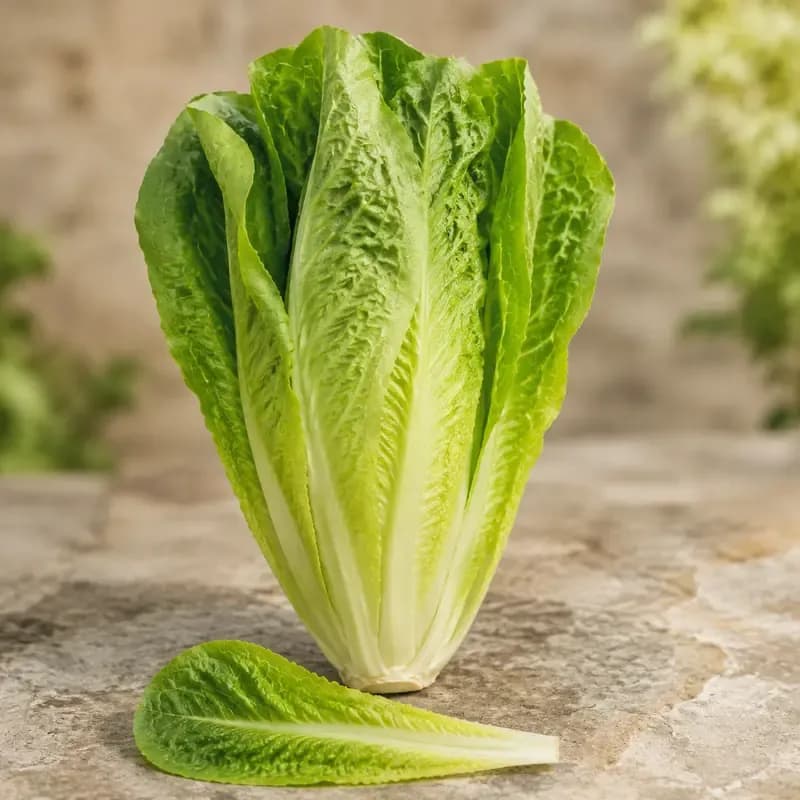
Lactuca sativa var. longifolia
Romaine lettuce, scientifically known as Lactuca sativa var. longifolia, is an upright leafy vegetable in the daisy family, Asteraceae. Also called cos lettuce, it forms a tall, elongated head rather than the round, tightly packed head associated with iceberg lettuce. Its dark green outer leaves surround a pale, compact heart, while prominent central ribs provide a juicy, satisfying crunch. Romaine has a fresh, mildly sweet flavor with a gentle bitterness that becomes more pronounced in mature outer leaves. It is best known as the foundation of Caesar salad, but its sturdy structure also makes it suitable for sandwiches, lettuce wraps, chopped salads, grilling, braising, sautéing, and brief roasting. Raw romaine provides vitamin K, folate, provitamin A carotenoids, fiber, potassium, manganese, and vitamin C while containing approximately 95 percent water and very few calories. Its darker leaves contain beta-carotene, lutein, zeaxanthin, chlorophyll, and phenolic compounds. Romaine belongs to the same cultivated species as iceberg, butterhead, loose-leaf lettuce, and celtuce. Its history is closely connected with the Mediterranean and Near East, where upright lettuces were cultivated for centuries before spreading throughout Europe and the wider world.
Explore Romaine Lettuce in stunning detail
Romaine Lettuce - Main View
Per 100g
Per 100g
Nutrition breakdown for one serving
The Mediterranean region and western Asia, with cultivated lettuce historically associated with ancient Egypt and the Near East
Cultivated lettuce developed from wild Lactuca populations native to the Mediterranean and western Asia. Ancient Egyptians grew early lettuce thousands of years ago, initially valuing its seeds and later selecting plants for larger, less bitter leaves. Upright lettuces resembling modern romaine became closely associated with the eastern Mediterranean. The alternative name cos is traditionally connected with the Greek island of Kos, although the precise route by which the name entered European languages remains uncertain. Romaine spread through Europe and later reached the Americas and other regions through trade, migration, and horticultural exchange. Modern breeding has produced compact, heat-tolerant, disease-resistant, green, red, miniature, and full-sized romaine cultivars.
Romaine is naturally a cool-season vegetable, although regional field production, greenhouses, and hydroponic systems make it available throughout the year.
Each variety offers unique flavors, textures, and culinary applications
Keep your fruit fresh and delicious for longer
Choose romaine heads with crisp, upright leaves and a firm, compact heart.
Look for fresh green coloration without extensive yellowing, browning, slime, mold, or water-soaked tissue.
Select heads that feel substantial for their size and have ribs that appear juicy rather than dry or cracked.
Avoid packages containing excessive condensation or badly damaged leaves.
Check packaged romaine for a suitable use-by date and an intact, properly sealed container.
Refrigerate romaine promptly at 4°C or below and keep it separate from raw meat, poultry, seafood, and their juices.
Store an intact, unwashed head loosely wrapped or inside a ventilated container in the refrigerator crisper drawer.
If romaine has been washed, dry it thoroughly and store it with a clean paper towel to absorb excess moisture.
Keep romaine away from ethylene-producing fruits such as apples, bananas, pears, and ripe tomatoes because ethylene accelerates deterioration.
Remove slimy or decaying leaves promptly to limit the spread of spoilage.
Remove damaged outer leaves, separate the remaining leaves, and rinse them thoroughly under cool running water.
Do not wash romaine with soap, detergent, bleach, or household disinfectants because these products are not intended for ingestion.
Dry washed leaves thoroughly with a clean salad spinner or towels so dressing adheres instead of becoming diluted.
Trim the browned stem end while retaining sound, crisp ribs, which are edible and provide much of romaine's crunch.
Slice or tear romaine shortly before serving to limit moisture loss, browning, and wilting.
For grilled romaine, leave the core attached while halving the head so the leaves remain together during cooking.
Wash organically grown, hydroponic, and home-grown romaine as well because these production methods do not eliminate microbial contamination.
Preserve freshness for months
Do not freeze romaine intended for salads because ice crystals rupture the leaf cells and destroy its crisp texture.
For cooked dishes, blanch clean leaves briefly, cool them rapidly in ice water, drain thoroughly, and freeze in airtight portions.
Use frozen and thawed romaine in soups, sauces, purées, or braised dishes rather than raw preparations.
Label frozen portions with the date and minimize air exposure to reduce freezer burn.
Label frozen items with the date to track freshness. Most fruits maintain quality for 2-3 months when properly frozen. For best results, use airtight containers or freezer bags to prevent freezer burn.
Discover delicious possibilities
Romaine lettuce allergy is uncommon but possible. Reactions may include oral itching, hives, swelling, digestive symptoms, breathing difficulty, or, rarely, anaphylaxis. Cross-reactivity can occur in some people with allergies to lipid-transfer proteins or sensitivity to related plants. Anyone experiencing throat swelling, breathing difficulty, faintness, or another severe reaction after eating romaine requires urgent medical care.
Pesticide use and measured residues vary with country, farm, season, and production system. Remove damaged outer leaves and rinse unpackaged romaine thoroughly under running water. Washing may reduce soil and some surface residues, but it does not eliminate every residue or replace regulatory controls. Organic and hydroponic romaine should also be handled safely because those production methods do not eliminate microbial contamination.
Surprising trivia you'll love!
Romaine lettuce is also widely known as cos lettuce.
The name cos is traditionally associated with the Greek island of Kos, although its linguistic history is not completely certain.
Romaine belongs to the daisy family, Asteraceae, rather than the cabbage family.
The white sap released by a cut lettuce stem is a natural latex called lactucarium.
Romaine and iceberg lettuce are cultivar groups of the same species, Lactuca sativa.
Little Gem is a compact romaine-type lettuce with small, dense hearts.
The darker outer leaves usually contain more carotenoids than the pale inner heart.
Leaving the core attached helps a halved romaine head remain intact during grilling.
Romaine is a distinct cultivar group within the cultivated lettuce species Lactuca sativa. It develops a tall, upright head with elongated leaves, strong central ribs, and a compact heart. Iceberg forms a round, tightly packed head, butterhead has soft and tender leaves, and loose-leaf lettuce grows as an open rosette. Romaine usually has a firmer texture and a slightly more pronounced flavor than iceberg. Its sturdy leaves tolerate heavy dressings, grilling, and wrapping particularly well, which is why romaine is traditionally used for Caesar salad and lettuce cups.
Romaine can make a valuable contribution to a balanced diet. Raw romaine provides approximately 17 calories per 100 g and contains vitamin K, folate, provitamin A carotenoids, fiber, potassium, manganese, and smaller amounts of vitamin C and iron. Its high water content and crisp texture add volume without many calories. Healthfulness still depends on the entire dish. Large quantities of creamy dressing, cheese, fried chicken, bacon, or croutons can add substantial calories, sodium, and saturated fat, while beans, eggs, fish, tofu, nuts, and vegetables can create a more balanced meal.
Wash your hands and clean the preparation area before handling romaine. Remove damaged outer leaves, separate the usable leaves, and rinse each one under cool running water while gently rubbing away soil. Dry them with a clean salad spinner or clean towels. Do not use soap, detergent, bleach, or household disinfectant. Packaged romaine labeled ready-to-eat, washed, or triple-washed generally does not require rewashing unless the manufacturer says otherwise. Washing can reduce soil and some microorganisms, but it cannot sterilize contaminated leaves, so refrigeration and recall awareness remain important.
Romaine is commonly eaten raw, so there is no cooking step to kill pathogens that may be present. Contamination can occur through irrigation water, soil amendments, animals, equipment, processing facilities, transport, or handling. Its folded leaves and growing environment can also make complete removal of microorganisms difficult. Consumers should refrigerate romaine, prevent contact with raw animal foods, wash unpackaged heads properly, and follow official recall notices. A recalled product should be discarded even if it looks and smells normal because dangerous bacteria cannot reliably be detected by appearance, taste, or odor.
Yes. Romaine's thick ribs and tightly structured hearts tolerate heat better than many delicate lettuces. For grilling, halve a compact head lengthwise while leaving the core attached, dry the surfaces, brush lightly with oil, and cook quickly over high heat. The outside should char while the center stays crisp. Romaine can also be sautéed, stir-fried, roasted, steamed, or braised. Short cooking times preserve more texture and color. When adding romaine to soup, place it in near the end so it wilts without becoming excessively soft.
The vitamin A value assigned to romaine largely reflects provitamin A carotenoids, especially beta-carotene. The body can convert beta-carotene into retinal and retinoic acid according to physiological need. Retinal participates in the visual cycle, while retinoic acid helps regulate gene expression, cell differentiation, and epithelial maintenance. The conversion is not identical to consuming preformed retinol, so nutrition databases express activity as retinol activity equivalents. Eating romaine with a modest source of dietary fat can improve carotenoid absorption because these plant pigments are fat-soluble.
Romaine supplies approximately 85% of the Daily Value for vitamin K per 100 g, so it can influence treatment with warfarin and other vitamin K antagonist medicines. People using these medications generally should not eliminate nutritious vitamin K foods automatically. Instead, they are commonly advised to maintain a reasonably consistent intake so the medication dose can be managed appropriately. Sudden large increases or decreases may alter anticoagulation. Anyone taking an anticoagulant should follow instructions from the prescribing clinician or registered dietitian and should not change medication or diet based only on general nutrition information.
A fresh, intact romaine head commonly remains usable for approximately five to ten days when refrigerated at 4°C or below and protected from excess moisture. Cut leaves and opened packages usually have a shorter useful life of about three to seven days. Keep unwashed heads loosely wrapped or in a ventilated container. Washed leaves should be dried thoroughly and stored with a clean paper towel. Discard romaine that becomes slimy, moldy, foul-smelling, or extensively decayed. A printed date does not make visibly spoiled or temperature-abused lettuce safe.
Sustainability insights
Romaine can have a relatively modest farm-level climate impact, but its overall environmental performance depends on irrigation, fertilizer, pest control, greenhouse energy, cooling, packaging, transportation, and waste. Drip irrigation, soil-moisture monitoring, integrated pest management, renewable energy, recyclable packaging, and efficient cold-chain management can reduce impacts. Preventing spoilage is particularly important because lettuce is highly perishable.
No single carbon-footprint value represents all romaine production. Seasonal field-grown romaine may require comparatively little production energy, while heated greenhouses, refrigerated processing, air freight, extensive packaging, and pre-cut salad manufacture can increase emissions. Efficient production, low-carbon transport, appropriate refrigeration, and reduced retail and household waste generally improve its overall footprint.
Romaine has shallow roots and requires reliable moisture, but water demand and local impact vary with climate, soil, yield, and irrigation method. Drip systems, soil-moisture sensors, mulching, rainwater capture, and carefully managed hydroponic recirculation can improve efficiency. Irrigated production in water-stressed regions may create a greater environmental burden than production in areas with adequate rainfall.
Locally grown seasonal romaine may reduce transportation and storage time while reaching consumers in fresher condition. Distance alone does not determine sustainability, however; greenhouse heating, irrigation source, farm yield, refrigeration, packaging, transport mode, and food waste can be equally important. Purchasing only the quantity that can be eaten before spoilage is a practical way to reduce environmental impact.
We aim to keep this Romaine Lettuce profile accurate and easy to understand. Nutrition values and % Daily Value figures are based on established reference databases and standard daily value guidance.
Last updated: August 26, 2026
Medical disclaimer
This page is for general educational purposes and does not replace professional medical advice.
Found an issue? Contact us.