Loading Vegetable Details...
Please wait while we fetch nutritional information and health benefits
Please wait while we fetch nutritional information and health benefits
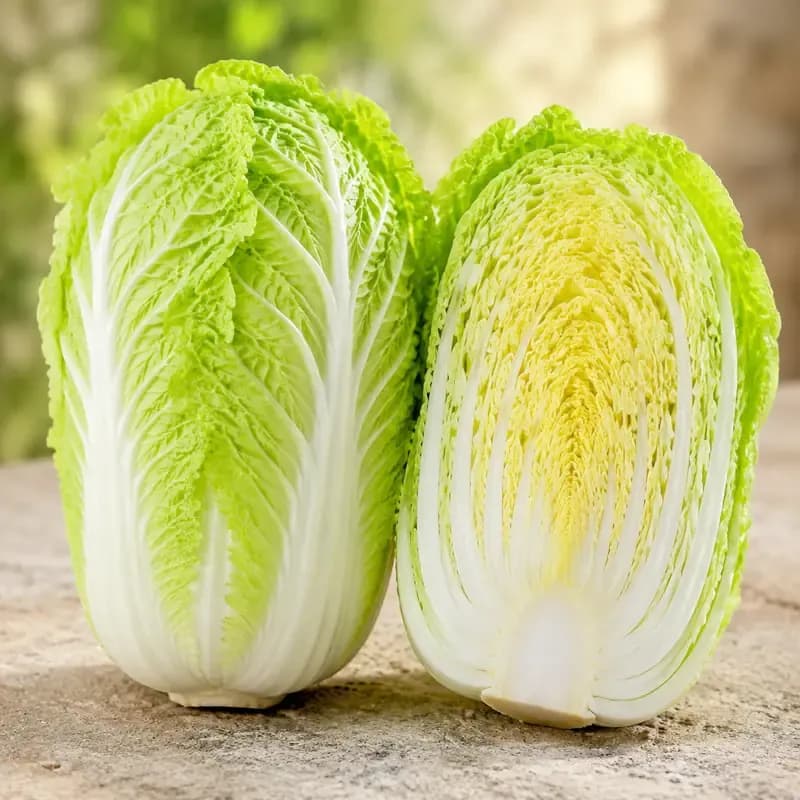
Brassica rapa subsp. pekinensis
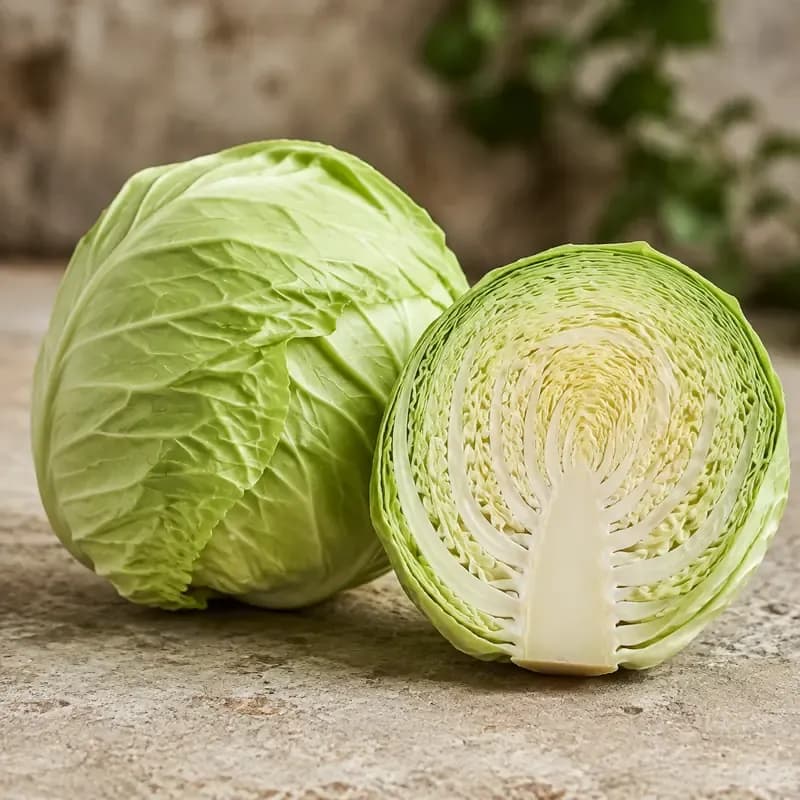
Napa cabbage, scientifically known as Brassica rapa subsp. pekinensis, is an elongated leafy vegetable belonging to the mustard family, Brassicaceae. It is also called Chinese cabbage, pe-tsai, celery cabbage, and wombok. Unlike the dense round heads of European cabbage, Napa cabbage forms a tall, barrel-shaped head of pale green, delicately crinkled leaves supported by broad, crisp white ribs. The leafy portions are tender and mildly vegetal, while the juicy ribs provide a refreshing crunch and subtle sweetness. Its gentle flavor is less peppery than many other cabbages, making it suitable for raw salads, slaws, wraps, dumpling fillings, soups, hot pots, stir-fries, braises, pickles, and fermentation. Napa cabbage is the principal vegetable used in many forms of baechu kimchi. The leaves, ribs, and tender core are edible, allowing most of the head to be used. Raw Napa cabbage provides vitamin K, vitamin C, folate, vitamin B6, calcium, manganese, potassium, fiber, and several other micronutrients with very few calories. The crop developed in China from Brassica rapa vegetables and was refined through centuries of East Asian cultivation. It later became established in Korea, Japan, Southeast Asia, Europe, and the Americas, where its tenderness, rapid cooking, and ability to absorb seasonings made it internationally popular.
Explore Napa Cabbage in stunning detail
Napa Cabbage - Main View
Per 100g
Per 100g
Nutrition breakdown for one serving
China, where heading forms of Brassica rapa were developed through centuries of cultivation
Napa cabbage developed in China from leafy and root-forming members of Brassica rapa. Historical evidence indicates that recognizable heading Chinese cabbages were established by the early medieval period, although their precise breeding pathway remains uncertain. Cultivation expanded across northern and eastern China, where farmers selected elongated heads with tender leaves and thick, juicy ribs. The vegetable later spread to Korea, becoming central to baechu kimchi, and to Japan, where it is known as hakusai and widely used in hot pots and pickles. Migration and international seed trade introduced Napa cabbage to Southeast Asia, Europe, the Americas, Australia, and New Zealand. Production data commonly combine it with other Chinese cabbages or Brassica vegetables, so a dependable global ranking specifically for Napa cabbage is not supplied here.
Napa cabbage is a cool-season crop generally harvested during spring or autumn. In mild climates it may also be grown during winter, while protected cultivation and regional trade extend its availability throughout the year.
Each variety offers unique flavors, textures, and culinary applications
Keep your fruit fresh and delicious for longer
Choose heads that feel firm and heavy for their size, with crisp leaves and juicy white ribs.
Look for fresh pale green to medium green outer leaves and a creamy yellow-green interior.
Avoid heads with widespread yellowing, slime, mold, watery decay, blackened ribs, or strong off-odors.
Check the cut base for firmness and freshness rather than severe browning, cracking, or mushiness.
Select compact heads for kimchi and storage or smaller tender heads for salads and quick cooking.
Store whole, unwashed Napa cabbage in a perforated or loosely closed bag in the refrigerator crisper.
Avoid washing before storage because moisture trapped between the leaves can encourage decay.
Wrap cut surfaces tightly or place cut cabbage in an airtight container and refrigerate promptly.
Store shredded cabbage cold and use it sooner than a whole head because cutting accelerates moisture loss and spoilage.
Inspect stored cabbage regularly and remove leaves that become slimy, moldy, or rotten.
Remove wilted or damaged outer leaves, separate the remaining leaves, and rinse thoroughly under cool running water.
Pay particular attention to the base and spaces between leaves, where soil or insects can collect.
Slice the leafy green portions and thick white ribs according to cooking time; add the ribs first when stir-frying because they require longer cooking.
Trim the base and dense core, but slice and cook tender core portions rather than discarding them.
For kimchi, salt the leaves according to a tested recipe, rinse as directed, drain thoroughly, and use clean fermentation equipment.
Avoid prolonged cooking because the tender leaves become overly soft and can develop stronger sulfurous aromas.
Preserve freshness for months
Remove damaged outer leaves, separate or chop the cabbage, and rinse it thoroughly.
Blanch shredded leaves for about 1 to 2 minutes or larger sections for approximately 2 to 3 minutes.
Cool the blanched cabbage promptly in ice water, then drain and dry it thoroughly.
Freeze portions in a single layer before transferring them to airtight freezer bags or containers.
Use frozen Napa cabbage in soups, stews, dumpling fillings, braises, or stir-fries because thawing softens its crisp texture.
Label frozen items with the date to track freshness. Most fruits maintain quality for 2-3 months when properly frozen. For best results, use airtight containers or freezer bags to prevent freezer burn.
Discover delicious possibilities
Napa cabbage allergy is uncommon but possible. Reactions may include oral itching, hives, swelling, digestive symptoms, wheezing, or, rarely, anaphylaxis. Some people allergic to mustard-family vegetables may react to Napa cabbage, although cross-reactivity is not universal. Anyone experiencing breathing difficulty, faintness, or rapidly progressing swelling should seek emergency medical care, while suspected cabbage allergy should be evaluated by a qualified allergy specialist.
Agricultural practices and measured residues vary by farm, country, and season. Remove damaged outer leaves and rinse separated Napa cabbage leaves thoroughly under running water, paying attention to the base and inner layers where soil or insects can collect. Washing removes debris, microorganisms, and some surface residues but does not replace agricultural safety controls. Do not wash produce with soap, bleach, or household detergent. Consumers seeking current residue information should consult their national food-safety authority.
Surprising trivia you'll love!
Napa cabbage is also called Chinese cabbage, pe-tsai, celery cabbage, wombok, baechu, and hakusai.
It belongs to Brassica rapa, the same species complex as turnip, bok choy, and several Asian greens.
The thick white structures in a Napa cabbage head are enlarged leaf ribs rather than separate stems.
Napa cabbage is the principal vegetable used in many varieties of Korean baechu kimchi.
Its elongated head is generally looser and more tender than a round European cabbage head.
The green leaves and white ribs cook at different rates, so the ribs are often added to stir-fries first.
Napa cabbage contains more than 94% water when raw.
Tokyo Bekana is a loose, bright-green Chinese cabbage valued for tender salad leaves.
Yes. The edible head of Napa cabbage consists primarily of overlapping leaves with broad, fleshy ribs arranged around a short central stem, so leaf is the best botanical category. It is not a root, bulb, flower, or botanical fruit. Napa cabbage belongs to Brassica rapa rather than Brassica oleracea, the species that includes European green cabbage, red cabbage, broccoli, and cauliflower. Farmers selected Napa cabbage for its elongated heading form, tender green leaves, thick white ribs, mild flavor, cold tolerance, and suitability for fresh cooking, pickling, and fermentation.
No. Napa cabbage and common green cabbage are related members of the mustard family but belong to different species and have distinct textures. Napa cabbage is Brassica rapa subsp. pekinensis and forms an elongated head with tender, crinkled leaves and broad white ribs. Green cabbage is Brassica oleracea var. capitata and usually forms a dense round head of firmer, waxier leaves. Napa cabbage cooks faster and has a milder, sweeter flavor. Green cabbage remains crunchier during long cooking and generally stores longer, although both work in salads, soups, stir-fries, pickles, and fermented dishes.
Napa cabbage can be eaten raw after thorough washing. Its tender leafy sections and crisp white ribs work well in salads, slaws, wraps, sandwiches, and vegetable platters. Separate the leaves and rinse around their bases because soil or insects can become trapped inside the head. Slice the ribs thinly if a more delicate texture is desired. Raw Napa cabbage retains more heat-sensitive vitamin C and active myrosinase than extensively cooked cabbage. People who experience gas or bloating from raw cruciferous vegetables may tolerate smaller portions or lightly cooked cabbage more comfortably.
Each preparation offers different qualities. Raw Napa cabbage retains its crisp texture, active myrosinase, and more heat-sensitive vitamin C and folate. Cooking softens the leaves, reduces volume and pungency, and can improve tolerance for people sensitive to raw cruciferous vegetables. Fermentation creates organic acids and complex flavors, and unpasteurized kimchi may contain live microorganisms. Fermented products can also be high in sodium. No single preparation is universally superior, so using raw, briefly cooked, and properly fermented Napa cabbage can provide useful culinary and dietary variety.
Not all kimchi contains meaningful numbers of live microorganisms when eaten. Traditionally fermented, unpasteurized kimchi can contain lactic-acid bacteria, but their species and concentrations change during fermentation and refrigerated storage. Products that have been pasteurized or thoroughly cooked may contain few or no living microbes, even though fermentation acids and flavors remain. Sodium and added ingredients also vary considerably. Check the label for terms such as unpasteurized or live cultures, keep refrigerated products at the recommended temperature, and remember that kimchi can be part of a varied diet without being treated as a medical therapy.
Napa cabbage contains vitamin K, providing about 36% of the Daily Value per 100 g. Vitamin K participates in blood-clotting pathways and can influence the effect of warfarin and similar vitamin K-sensitive anticoagulants. People taking these medicines generally do not need to eliminate Napa cabbage, but they should keep their intake reasonably consistent instead of suddenly eating much larger or smaller quantities. Medication monitoring and individual targets differ, so patients should follow guidance from their prescribing clinician or anticoagulation service rather than changing medication or diet independently.
Napa cabbage contains glucosinolates that can form compounds capable of influencing iodine use under certain experimental or high-intake conditions. For most people with adequate iodine intake, ordinary food portions are not considered a thyroid concern. Potential relevance is greater when extremely large quantities of raw cruciferous vegetables are consumed regularly alongside iodine deficiency. Cooking modifies some glucosinolate-related compounds. People with diagnosed thyroid disease usually do not need to avoid Napa cabbage automatically, but they should maintain adequate iodine intake and follow personalized advice from their clinician or registered dietitian.
Use a firm, fresh head without slime, mold, or decay. Remove damaged outer leaves, split or cut the cabbage as directed by a tested recipe, and rinse away soil. Salt the leaves using the specified quantity and time so they soften and release moisture, then rinse and drain them according to the recipe. Apply the prepared seasoning mixture with clean hands or utensils, pack the cabbage into a clean food-safe container, and minimize unnecessary air pockets. Follow tested fermentation temperatures and times, refrigerate appropriately, and discard kimchi showing fuzzy mold or putrid odors.
Keep a whole, unwashed head in a perforated or loosely closed bag in the refrigerator crisper. Napa cabbage generally retains good quality for about one to two weeks, although freshness at purchase and refrigerator conditions influence its life. Once cut, wrap the exposed surface tightly or place the cabbage in an airtight container and use it within approximately three to five days. Shredded cabbage deteriorates faster. Discard cabbage that develops widespread slime, mold, watery decay, blackened ribs, or a strongly unpleasant odor rather than merely removing the visibly affected surface.
Sustainability insights
Napa cabbage grows relatively quickly and produces a large edible head whose leaves, ribs, and tender core can all be used. Its environmental performance depends on fertilizer, irrigation, pest management, soil preparation, refrigeration, packaging, and food waste. Crop rotation, cover crops, integrated pest management, efficient nutrient application, minimal packaging, and whole-head culinary use can improve resource efficiency.
Fresh, minimally processed Napa cabbage generally has a relatively low greenhouse-gas footprint compared with most animal-derived foods, although no universal value represents every production system. Heated greenhouse cultivation, extended refrigeration, air freight, plastic packaging, fermentation processing, and prolonged cooking can increase emissions. Seasonal field production, regional distribution, efficient storage, and quick cooking can reduce energy requirements.
Water requirements vary with climate, soil, cultivar, growing period, yield, and irrigation efficiency. Consistent moisture supports tender leaves and proper head development, while overwatering can waste freshwater and encourage disease. Mulching, healthy soil structure, soil-moisture monitoring, suitable planting dates, and accurately scheduled irrigation can improve water-use efficiency.
Local, seasonal Napa cabbage may require less transport and prolonged refrigeration, but distance alone does not determine total environmental impact. Efficiently produced imports transported by ship or truck can sometimes compare favorably with heated or low-yield local crops. Choosing fresh heads, storing them correctly, using the ribs and tender core, and preventing household waste can reduce the impact of each serving.
We aim to keep this Napa Cabbage profile accurate and easy to understand. Nutrition values and % Daily Value figures are based on established reference databases and standard daily value guidance.
Last updated: August 25, 2026
Medical disclaimer
This page is for general educational purposes and does not replace professional medical advice.
Found an issue? Contact us.