Loading Vegetable Details...
Please wait while we fetch nutritional information and health benefits
Please wait while we fetch nutritional information and health benefits
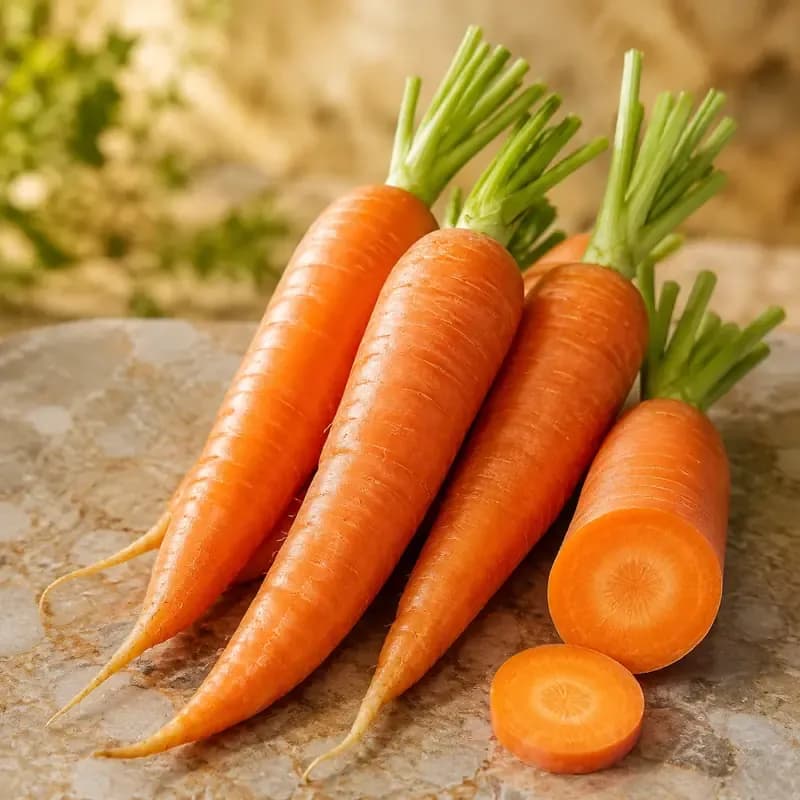
Daucus carota subsp. sativus
The carrot, scientifically known as Daucus carota subsp. sativus, is a cultivated biennial in the parsley family, Apiaceae. Its familiar edible portion is a thickened storage taproot rather than a stem or tuber. Although orange carrots dominate many markets, cultivated roots may also be purple, red, yellow, white, or nearly black, reflecting different mixtures of carotenoids, anthocyanins, and other pigments. Fresh carrots are crisp, juicy, mildly earthy, and naturally sweet; cooking softens their cell walls, intensifies sweetness, and can make their carotenoids easier to access during digestion. The root is eaten raw, roasted, steamed, boiled, braised, pickled, fermented, juiced, or baked into savory and sweet dishes. Tender carrot greens are also edible when correctly identified, thoroughly washed, and used like an herb, though the root remains the principal food crop. Carrots provide beta-carotene-derived vitamin A, vitamin K, fiber, potassium, vitamin B6, vitamin C, and diverse phytonutrients while remaining low in calories. Genetic and historical evidence places carrot domestication in western to Central Asia during the Early Middle Ages; later breeding produced sweeter, smoother roots, and high-carotenoid orange forms were selected in western Europe during the Renaissance.
Explore Carrot in stunning detail
Carrot - Main View
Per 100g
Per 100g
Nutrition breakdown for one serving
Western to Central Asia; cultivated carrot was likely domesticated across the region that includes present-day Afghanistan, Iran, and neighboring areas
Genomic research and historical records indicate that cultivated carrot arose in western to Central Asia during the Early Middle Ages. Early domesticated carrots were commonly purple or yellow and were selected for fleshy, minimally branched storage roots. The crop moved west through Asia Minor and the Mediterranean and east toward China and Japan. High-carotenoid orange carrots were later selected in western Europe during the Renaissance. Continued breeding produced roots with smoother skins, smaller cores, greater sweetness, uniform shapes, and colors ranging from white and yellow to orange, red, purple, and nearly black. Carrots are now grown globally; international production statistics commonly aggregate carrots with turnips, so country rankings refer to that combined reporting category.
Carrots are cool-season crops. Regional planting, protected cultivation, and cold storage make them available year-round, with young spring carrots and mature autumn storage carrots offering different textures and sweetness.
Each variety offers unique flavors, textures, and culinary applications
Keep your fruit fresh and delicious for longer
Choose carrots that are firm, crisp, smooth, and brightly colored for their cultivar, without sliminess, mold, deep cracks, or extensive dark decay.
For bunched carrots, look for fresh green tops without severe wilting, but remove the tops soon after purchase because they draw moisture from the roots.
Select slender, evenly shaped carrots for raw eating and quick cooking; larger mature roots often suit roasting, soups, stocks, and grating.
A pale white surface film on cut baby carrots is often dehydration rather than mold, but discard carrots that are slimy, sour-smelling, mushy, or visibly moldy.
Remove leafy tops, place unwashed roots in a perforated bag or moisture-retaining container, and refrigerate them in the crisper drawer.
Keep carrots away from ethylene-producing fruits such as apples and ripe pears because ethylene can accelerate quality loss and create bitter flavors.
Maintain refrigeration at 4 degrees Celsius or below and avoid standing water unless cut carrots are intentionally submerged in clean water that is changed regularly.
Store cooked carrots in a shallow airtight container and refrigerate promptly; discard them if they develop mold, slime, or an off odor.
Rinse carrots under cool running water and scrub them with a clean vegetable brush; do not use soap or household detergent.
Trim the root tip and leafy crown. Peeling is optional for young, sound carrots, but older or rough-skinned roots may benefit from a thin peel.
Cut pieces to a similar thickness so they cook evenly; diagonal slices increase surface area for browning and seasoning.
For salads or crudites, slice or grate shortly before serving and keep cut carrots chilled to preserve crispness.
For freezing, blanch pieces for the recommended time, cool them rapidly in ice water, drain well, and package with minimal air.
A small amount of oil, nuts, seeds, yogurt, or another fat-containing food can help the body absorb fat-soluble carotenoids from carrots.
Preserve freshness for months
Remove tops, wash, peel if desired, and cut carrots into uniform slices, dice, strips, or small whole pieces.
Water-blanch small whole carrots for 5 minutes and diced, sliced, or lengthwise strips for 2 minutes.
Cool blanched carrots promptly in ice water for about the same time as blanching, then drain and dry thoroughly.
Freeze pieces in a single layer before packing airtight if you want them to remain separate, label the package, and use within 10 to 12 months for best quality.
Label frozen items with the date to track freshness. Most fruits maintain quality for 2-3 months when properly frozen. For best results, use airtight containers or freezer bags to prevent freezer burn.
Discover delicious possibilities
Carrot allergy is uncommon but can occur. Raw carrot may trigger pollen-food allergy syndrome, especially in people sensitized to birch or mugwort pollen, causing itching or swelling of the lips, mouth, tongue, or throat. Cooking may reduce reactions to some heat-sensitive proteins but does not make carrot safe for everyone with an allergy. Systemic reactions are possible, and breathing difficulty, faintness, or rapidly progressing swelling requires emergency care and specialist evaluation.
Pesticide use and measured residues vary by farm, country, and season. Wash carrots thoroughly under running water and scrub off adhering soil before cutting or eating. Peeling can reduce some surface residues but also removes edible tissue and does not replace agricultural safety controls. Do not use soap, bleach, or household detergent on produce. Consumers seeking current residue information should consult their national food-safety authority.
Surprising trivia you'll love!
Carrot belongs to the Apiaceae family alongside parsley, celery, fennel, dill, and parsnip.
The cultivated carrot is usually biennial: it stores energy in its taproot during the first season and flowers during the second.
Early domesticated carrots were often purple or yellow; genomic evidence indicates that high-carotenoid orange carrots were selected later in western Europe.
Most supermarket baby carrots are larger carrots cut and polished into small pieces rather than a separate baby variety.
The orange color comes mainly from carotenoids, while purple carrots owe much of their color to anthocyanins.
The claim that carrots let people see exceptionally well in darkness was amplified by British wartime propaganda; carrots support normal vision but do not create superhuman night sight.
Carrot flowers form umbrella-shaped clusters called umbels, a hallmark of the parsley family.
International agricultural statistics often report carrots and turnips together, so global production rankings may represent the combined category.
A cultivated carrot is botanically a root vegetable. The main edible orange, purple, red, yellow, or white structure is a swollen storage taproot, not a stem or tuber. It develops from root tissue and stores carbohydrates that help the biennial plant survive and flower in its second year. The leafy crown above the root is stem and leaf tissue. If a carrot is left to complete its life cycle, it produces an upright flowering stalk, white compound umbels, and dry fruits containing seeds. This anatomy distinguishes carrots from stem tubers such as potatoes.
Neither form is universally healthier. Raw carrots retain crisp texture and avoid heat-related losses of some vitamin C and other water-soluble compounds. Cooking softens cell walls and can make beta-carotene and alpha-carotene more accessible to digestive enzymes, particularly when carrots are chopped or pureed and eaten with a small amount of fat. Boiling may transfer water-soluble nutrients into cooking liquid, while steaming or roasting reduces that loss. A practical approach is to enjoy both raw and cooked carrots, choose gentle methods, and use cooking liquid in soups or sauces when possible.
Peeling is optional for fresh, sound carrots. The outer surface is edible, and thorough rinsing plus scrubbing usually removes soil while preserving more of the root and reducing food waste. A thin peel can improve texture when carrots are older, rough, bitter, deeply marked, or destined for an especially smooth puree. Always trim the crown and damaged areas, and discard roots that are moldy, slimy, rotten, or sour-smelling. Wash before peeling so the peeler does not drag surface dirt across freshly exposed tissue, and never wash produce with soap or detergent.
Yes, color often reflects differences in dominant pigments, although amounts vary by cultivar and growing conditions. Orange carrots are especially rich in beta-carotene and alpha-carotene, which contribute vitamin A activity. Purple and nearly black carrots contain anthocyanins, red carrots may be relatively rich in lycopene, and yellow cultivars contain xanthophyll carotenoids. White carrots contain fewer colored pigments but still provide water, fiber, and other nutrients. No color is a complete nutritional winner, and pigment content alone does not prove disease prevention. Eating several colors can broaden the range of phytonutrients in the diet.
Carrots can generally fit into a diabetes eating plan. Raw carrot contains 9.58 g of carbohydrate and 2.8 g of fiber per 100 g, but the glucose response depends on portion size, cultivar, cooking, processing, and the rest of the meal. Whole, chopped, or lightly cooked carrots retain fiber and are usually easier to portion than strained juice, which can deliver the carbohydrate from several carrots quickly with less fiber. Pairing carrots with protein, healthy fat, and other fiber-rich foods may moderate the overall meal response. Individual medication and glucose targets should guide advice from a clinician or dietitian.
Carrots support normal vision because their carotenoids provide vitamin A activity. Vitamin A is needed to make retinal, part of the light-sensitive pigment rhodopsin used by rod cells in dim conditions. If someone is vitamin A deficient, correcting the deficiency can improve impaired night vision. Eating extra carrots does not give a well-nourished person superhuman sight or eliminate the need for glasses. Eye health also depends on genetics, age, disease, and a broader dietary pattern. Persistent night-vision changes or other visual symptoms require assessment by a qualified eye-care professional rather than dietary self-treatment.
Remove green tops because they continue to draw moisture from the root, then place whole, unwashed carrots in a perforated bag or moisture-retaining container in the refrigerator crisper. Keep them away from ethylene-producing fruits such as apples and ripe pears, which can shorten storage life and encourage bitterness. Under standard home refrigeration, carrots generally keep about two to three weeks from purchase, although freshness and storage conditions matter. Limp but otherwise sound carrots may regain some crispness in ice water; discard roots that are slimy, moldy, mushy, or sour-smelling.
Most packaged baby-cut carrots are not a distinct miniature variety. Producers typically shape larger carrots into short, smooth pieces, then wash and package them. True baby carrots also exist; these are ordinary carrots harvested while still young and may retain their tapered shape and tops. Baby-cut carrots are nutritionally similar to other raw carrots, although trimming removes some outer tissue and their larger exposed surface can lead to a harmless white dehydration film. Keep them refrigerated and sealed, rinse before eating, and discard them if they develop slime, mold, a sour odor, or extensive soft decay.
Heat changes both texture and flavor perception. As roasting removes water, naturally occurring sugars and flavor compounds become more concentrated. High, dry heat also promotes surface browning through caramelization and Maillard reactions involving sugars and amino compounds, producing toasted and savory aromas that make sweetness seem more pronounced. Cooking softens cell walls, so the root releases flavor more readily during chewing. Uniform pieces, adequate spacing, and a light coating of oil encourage browning. Added honey or sugar is optional rather than necessary, and very dark or burned surfaces can taste bitter instead of sweet.
Sustainability insights
Carrots can deliver edible food efficiently and typically require far fewer resources than animal-derived foods, but their footprint varies with yield, fertilizer, irrigation, pesticide use, field machinery, refrigeration, packaging, and waste. Crop rotation, integrated pest management, precise nutrient application, soil-cover practices, and efficient cold storage can reduce impacts. Misshapen carrots are nutritionally usable, so accepting cosmetic variation and using tops where appropriate can reduce avoidable waste.
Fresh, minimally processed carrots generally have a comparatively low greenhouse-gas footprint, although no single value applies globally. Heated greenhouses, long refrigerated storage, air freight, processing, freezing, and small single-use packages can raise emissions. Transport by efficient ship or truck may contribute less than production and storage conditions, while household waste can erase part of the crop's environmental advantage.
Water demand depends on climate, soil, root depth, rainfall, yield, and irrigation method. Carrots need consistent moisture for uniform roots, but excess irrigation can waste water and promote disease. Soil-moisture monitoring, drip or well-scheduled irrigation, organic matter, and choosing cultivars suited to local conditions can improve water efficiency and reduce splitting or poor root development.
Local, seasonal carrots may require less transport and prolonged refrigeration, but distance alone does not determine total impact. Efficiently grown imported carrots moved by ship or truck can sometimes outperform low-yield local production. Favor fresh roots that will be eaten, choose minimal packaging when practical, and store them correctly because preventing food waste is often more consequential than small differences in transport distance.
We aim to keep this Carrot profile accurate and easy to understand. Nutrition values and % Daily Value figures are based on established reference databases and standard daily value guidance.
Last updated: August 24, 2026
Medical disclaimer
This page is for general educational purposes and does not replace professional medical advice.
Found an issue? Contact us.