Loading Fruit Details...
Please wait while we fetch nutritional information and health benefits
Please wait while we fetch nutritional information and health benefits
Recommended Products
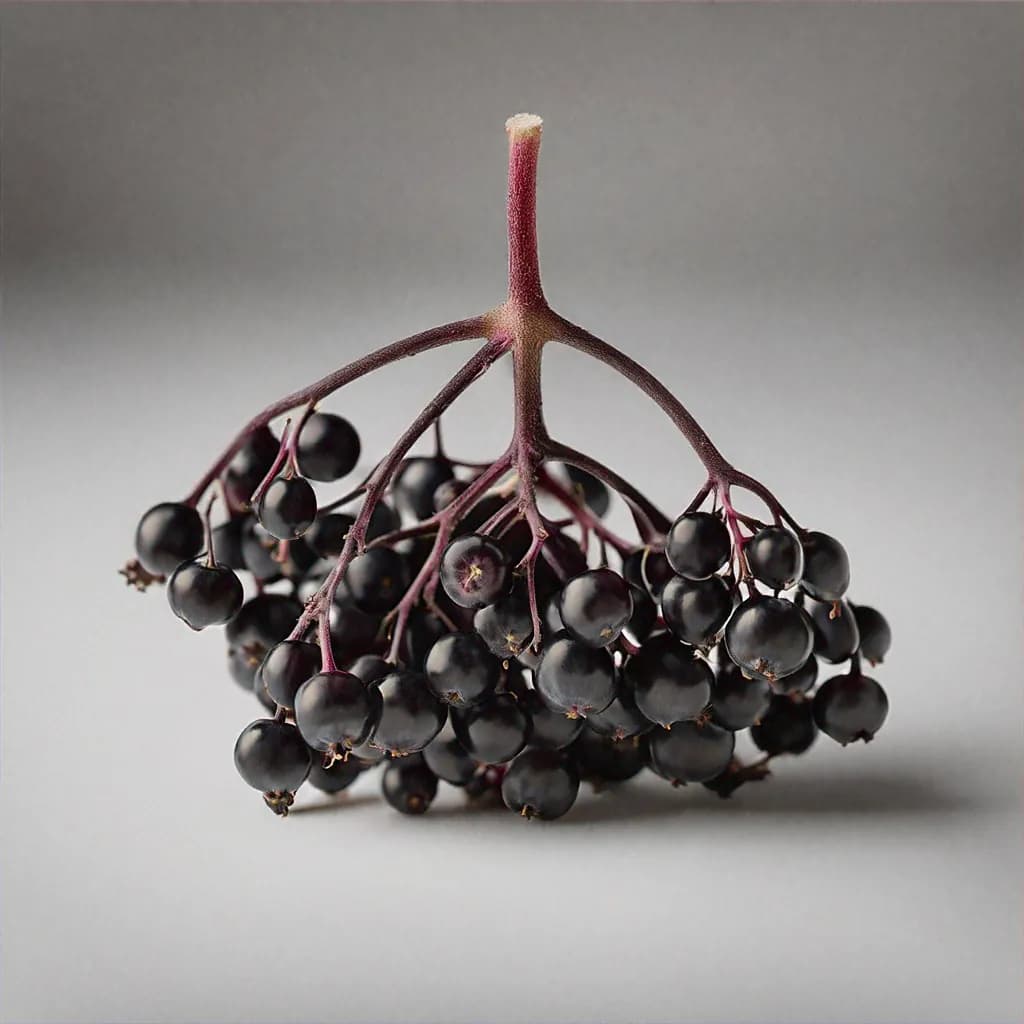
Sambucus nigra
Elderberries are small, dark purple berries prized for their powerful antioxidants and traditional immune-supporting properties. Rich in anthocyanins (more than blueberries), vitamin C (35% DV), and vitamin A (6% DV), elderberries deliver exceptional anti-inflammatory benefits. With only 73 calories per 100g and virtually no fat, elderberries are ideal for syrups, jams, teas, and supplements. Traditionally used in folk medicine for centuries, they're perfect for supporting wellness during cold and flu seasons.
Explore Elderberry in stunning detail
Elderberry - Main View
Per 100g
Per 100g
Nutrition breakdown for one serving
Europe, Western Asia, and North Africa
Elderberries have been used in traditional European folk medicine for centuries. Hippocrates called the elder tree 'nature's medicine chest' due to its powerful healing properties.
Peak season August-September
Each variety offers unique flavors, textures, and culinary applications
Keep your fruit fresh and delicious for longer
Select fresh elderberries that are dark purple to black in color
Look for firm berries without soft spots or mold
Avoid shriveled or overly ripe fruit
Refrigerate fresh elderberries for up to 3 days
Freeze fresh berries in airtight containers for up to 1 year
Dried elderberries last 1-2 years in cool, dark storage
Elderberry syrup and supplements store according to product instructions
Preserve freshness for months
Freeze whole berries in single layer, then transfer to containers
Frozen elderberries last up to 1 year
Use frozen berries for syrups, jams, and beverages
Label frozen items with the date to track freshness. Most fruits maintain quality for 2-3 months when properly frozen. For best results, use airtight containers or freezer bags to prevent freezer burn.
Discover delicious possibilities
Elderberry allergies are rare. Some people may have sensitivity to nightshade-related compounds.
Elderberries may have pesticide residues. Wash thoroughly or choose organic varieties.
Surprising trivia you'll love!
Elderberries contain more anthocyanins than blueberries
Hippocrates called the elder tree 'nature's medicine chest'
Elderberries must be cooked; raw berries contain compounds that can cause stomach upset
The flowers and berries are both edible and medicinal
Elderberry syrup has been used for centuries in European folk medicine
Raw elderberries are not recommended due to potential toxins. Always cook or process elderberries for syrups, jams, teas, and supplements.
Elderberries contain powerful anthocyanins and have been traditionally used for immune support. Research shows promise for reducing cold duration and severity.
Simmer dried elderberries with water and spices (ginger, cinnamon) for 45 minutes, strain, then mix with honey. Store refrigerated for up to 3 weeks.
Fresh elderberries are available August-September at farmers markets. Dried berries, syrups, and supplements are available year-round at health stores and online.
Sustainability insights
Elderberry cultivation is sustainable with minimal environmental impact. Support organic growers.
Local elderberries have lower carbon footprint than imported varieties.
Elderberry bushes are hardy and require minimal water once established.
Buying local elderberries supports sustainable farming and reduces environmental impact.
We aim to keep this Elderberry profile accurate and easy to understand. Nutrition values and % Daily Value figures are based on established reference databases and standard daily value guidance.
Last updated: September 6, 2026
Medical disclaimer
This page is for general educational purposes and does not replace professional medical advice.
Found an issue? Contact us.