Loading Vegetable Details...
Please wait while we fetch nutritional information and health benefits
Please wait while we fetch nutritional information and health benefits
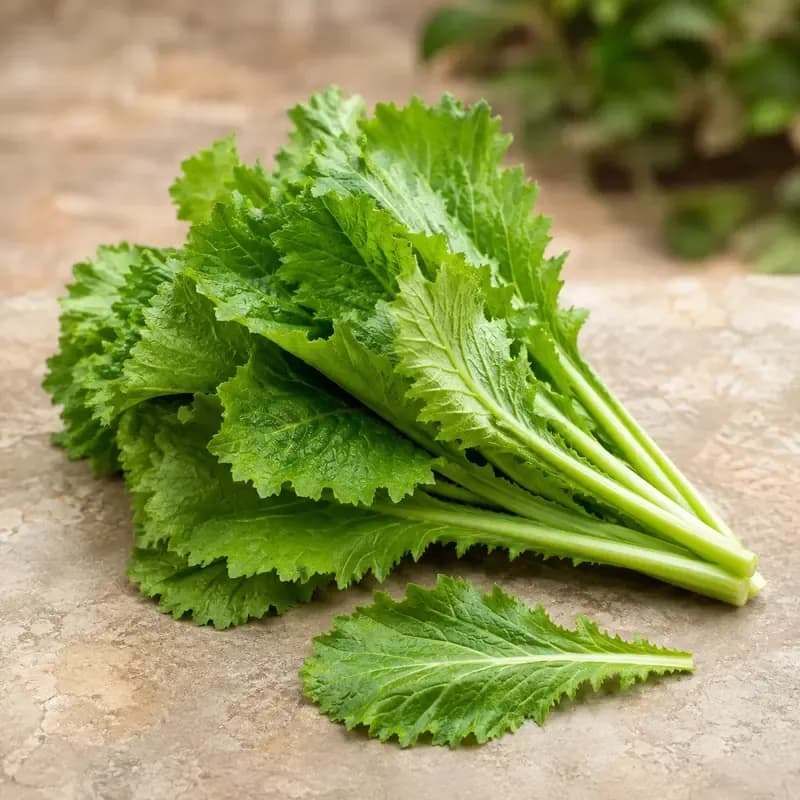
Brassica juncea
Mustard greens, commonly represented by the species Brassica juncea, are pungent leafy vegetables in the mustard family, Brassicaceae. Their leaves may be broad, flat, crinkled, deeply frilled, or divided, with colors ranging from bright green to purple-red. Raw mustard greens have a distinctive peppery heat created when damaged plant tissues allow the enzyme myrosinase to transform glucosinolates into pungent breakdown products. Cooking softens this sharpness and develops a milder, earthy, slightly bitter flavor. The leaves, tender stalks, young stems, and flowering shoots are edible and can be sautéed, steamed, boiled, braised, stir-fried, pickled, or added to soups, curries, dals, noodles, and fermented foods. Mustard greens are important in Indian, Chinese, Japanese, Korean, African, Mediterranean, and Southern American cuisines. Raw leaves provide vitamin K, vitamin C, provitamin A carotenoids, vitamin E, vitamin B6, manganese, copper, calcium, potassium, iron, fiber, and plant compounds such as glucosinolates, lutein, zeaxanthin, and flavonoids. Brassica juncea likely developed through natural hybridization between Brassica rapa and Brassica nigra, followed by extensive cultivation and selection across Asia. Its seeds are also used to produce mustard spice and oil.
Explore Mustard Greens in stunning detail
Mustard Greens - Main View
Per 100g
Per 100g
Nutrition breakdown for one serving
Central and eastern Asia, with important early centers of cultivation and diversification in China and the Indian subcontinent
Brassica juncea is an amphidiploid species that likely originated through natural hybridization between Brassica rapa and Brassica nigra. It was subsequently selected across Asia for edible leaves, stems, oil-rich seeds, and pungent mustard condiments. Mustard greens became especially important in northern Indian agriculture and cuisine, where the leaves are known as sarson and are used in dishes such as sarson ka saag. Numerous leafy forms were also developed in China and Japan, ranging from broad and tender to deeply frilled and intensely pungent. Migration and trade carried mustard greens to Africa, Europe, and the Americas. In the southern United States, they became part of a wider tradition of simmered leafy greens. Modern cultivars vary in color, leaf shape, heat tolerance, pungency, growth rate, and resistance to bolting.
Mustard greens are cool-season vegetables that grow best during autumn, winter, and spring, although heat-tolerant cultivars extend production in some regions.
Each variety offers unique flavors, textures, and culinary applications
Keep your fruit fresh and delicious for longer
Choose mustard greens with crisp, vibrant leaves and firm, moist-looking stalks.
Look for fresh green, red, or purple coloration appropriate to the variety without extensive yellowing or browning.
Select small, tender leaves for raw dishes and larger mature leaves for cooking.
Avoid bunches with slime, mold, sour odors, extensive insect damage, or dry and split stems.
Inspect packaged greens for excessive condensation and an intact seal.
Refrigerate unwashed mustard greens promptly at 4°C or below in a perforated bag or ventilated container.
Wrap the bunch loosely in a clean, slightly damp towel if necessary to prevent excessive wilting.
If the greens have been washed, dry them thoroughly before storage because excess surface moisture encourages decay.
Keep mustard greens separate from raw meat, poultry, seafood, and their juices.
Remove slimy, moldy, or badly damaged leaves promptly so spoilage does not spread.
Separate the leaves and rinse both sides thoroughly under cool running water to remove soil and insects.
Trim dry stem ends and remove thick central ribs when a tender finished texture is desired.
Slice retained tender stalks and begin cooking them before adding the leaves.
Blanch mature leaves briefly to reduce pungency and bitterness before sautéing or braising.
Use young leaves raw or lightly wilted when a peppery flavor is desired.
Add lemon juice, vinegar, tomatoes, or another acidic ingredient near the end of cooking to brighten the flavor.
Do not wash mustard greens with soap, detergent, bleach, or household disinfectants.
Preserve freshness for months
Wash the leaves thoroughly and remove very tough or fibrous stems.
Blanch prepared mustard greens in boiling water for approximately 2 minutes.
Cool the greens immediately in ice water to stop cooking and help preserve color.
Drain thoroughly, press out excess moisture, and freeze in airtight portions.
Label packages with the date and use frozen greens in soups, stews, curries, braises, and other cooked dishes.
Label frozen items with the date to track freshness. Most fruits maintain quality for 2-3 months when properly frozen. For best results, use airtight containers or freezer bags to prevent freezer burn.
Discover delicious possibilities
Mustard is a recognized food allergen in some jurisdictions, and reactions can occasionally be severe. People allergic to mustard seed may also react to mustard leaves, although individual patterns vary. Symptoms can include oral itching, hives, swelling, vomiting, breathing difficulty, or anaphylaxis. Anyone with a diagnosed mustard allergy should obtain advice from an allergy specialist before consuming mustard greens. Breathing difficulty, throat swelling, faintness, or widespread hives require urgent medical care.
Pesticide use and measured residues vary by country, farm, season, and production method. Separate the leaves and rinse them thoroughly under running water, paying attention to folds, undersides, and central ribs where soil can collect. Washing may reduce soil, microorganisms, and some surface residues but cannot remove every residue. Organic mustard greens should also be washed because organic production does not eliminate microbial contamination.
Surprising trivia you'll love!
Brassica juncea likely originated through hybridization between Brassica rapa and Brassica nigra.
The leaves, tender stems, flowering shoots, and seeds of mustard plants can all have culinary uses.
The peppery sensation develops when damaged plant cells allow glucosinolates and myrosinase to interact.
Mustard greens are called sarson in several languages of the Indian subcontinent.
Sarson ka saag traditionally combines mustard greens with other leafy vegetables and is commonly served with maize flatbread.
Red and purple mustard cultivars contain anthocyanin pigments in addition to green chlorophyll.
Cool weather can improve leaf tenderness and moderate excessive bitterness.
Pickled and fermented mustard greens are traditional foods in several East and Southeast Asian cuisines.
Mustard greens are the edible leaves and tender stalks of mustard-family plants, especially Brassica juncea. The same species can also be cultivated for seeds used in mustard condiments, spices, and oil. Different cultivars emphasize leaf size, stem texture, seed yield, oil content, or pungency. Brassica juncea belongs to the Brassicaceae family alongside cabbage, kale, broccoli, radish, and turnip. Other Brassica species may also be sold as mustard greens, so leaf shape, flavor, and botanical classification can vary among regional markets and traditional cuisines.
Plain mustard greens are nutrient-dense and relatively low in calories. Raw leaves provide vitamin K, vitamin C, provitamin A carotenoids, vitamin E, vitamin B6, manganese, copper, calcium, iron, magnesium, potassium, fiber, and glucosinolates. Cooking method and added ingredients influence the finished dish. Prolonged boiling can reduce vitamin C, while large quantities of salt, cured meat, or salty sauces can increase sodium. Preparing mustard greens with beans, lentils, vegetables, aromatics, and an appropriate amount of healthy fat can create a balanced meal.
Choose young leaves, which are usually more tender and less intense than mature ones. Brief blanching followed by draining can remove some bitter and pungent compounds before sautéing or braising. Longer cooking also mellows the leaves as their tissues soften and volatile mustard compounds disperse. Acidic ingredients such as lemon, vinegar, or tomatoes brighten the flavor, while onions, garlic, legumes, potatoes, or a small amount of sweetness create balance. Removing thick stems can improve texture, but tender stalks remain edible when sliced and cooked first.
Mustard greens store glucosinolates separately from an enzyme called myrosinase. Cutting, crushing, or chewing damages plant cells and allows these components to interact. Myrosinase then transforms glucosinolates into compounds that may include pungent isothiocyanates, producing the peppery sensation associated with mustard. Heat can reduce enzyme activity and drive off some volatile compounds, which is why cooked leaves generally taste milder. Cultivar, plant age, temperature, water availability, storage, chopping, and cooking method all influence the strength and character of the final flavor.
Separate the leaves and inspect them for soil, insects, and damaged tissue. Rinse both sides under cool running water while gently rubbing the surfaces and ribs. Do not use soap, detergent, bleach, or household disinfectant. Trim dry stem ends and remove very thick central ribs if a tender texture is desired. Tender stalks can be sliced and cooked before the leaves. Dry greens intended for sautéing to limit splattering and encourage proper cooking. Use clean knives, boards, bowls, and towels to prevent cross-contamination.
Mustard greens provide approximately 215% of the Daily Value for vitamin K per 100 g. Vitamin K can influence the action of warfarin and other vitamin K antagonist medicines. People taking these medications generally should not eliminate nutritious leafy vegetables automatically. Instead, healthcare professionals commonly recommend maintaining a reasonably consistent vitamin K intake so medication can be adjusted appropriately. Sudden major increases or decreases may alter anticoagulation. Anyone using an anticoagulant should follow individualized instructions from the prescribing clinician or registered dietitian and should not change medication independently.
Mustard greens contain glucosinolates that can produce compounds capable of interfering with iodine utilization under certain experimental conditions. For most people who consume adequate iodine, ordinary portions of cooked mustard greens as part of a varied diet are unlikely to impair thyroid function. Risk is more relevant with extremely large amounts of raw cruciferous vegetables combined with iodine deficiency or existing thyroid disease. Cooking reduces myrosinase activity and some related compounds. Anyone with a thyroid disorder who regularly consumes unusually large amounts should seek personalized clinical guidance.
Fresh mustard greens are usually at their best for approximately three to five days, although an exceptionally fresh unwashed bunch may remain usable for up to seven days under good refrigeration. Store the greens at 4°C or below in a perforated bag or ventilated container. If they have been washed, dry them thoroughly before storage because trapped moisture encourages decay. Discard leaves that become slimy, moldy, foul-smelling, or extensively yellowed. Blanching and freezing are more suitable than keeping excess greens refrigerated beyond their safe useful life.
Sustainability insights
Mustard greens grow rapidly and can provide repeated leaf harvests, potentially improving yield per planting. Some Brassica juncea cultivars also serve as cover crops or sources of seed and oil. Environmental impact depends on fertilizer, irrigation, pest management, soil practices, refrigeration, packaging, transport, and food waste. Crop rotation, integrated pest management, compost use, efficient nutrient application, and seasonal cultivation can improve sustainability.
No single carbon-footprint value represents all mustard-green production. Seasonal field-grown greens generally require less production energy than leaves grown in heated structures or transported by air. Fertilizer manufacture, farm machinery, refrigeration, packaging, transport, cooking, and discarded food contribute to overall emissions. Using tender stems and preserving surplus greens through freezing or fermentation can reduce waste.
Mustard greens require adequate moisture for tender leaf development, but their water footprint varies with climate, soil, yield, rainfall, and irrigation method. Drip irrigation, mulching, soil-moisture monitoring, rainfall-based scheduling, and healthy soil organic matter can reduce unnecessary water consumption.
Locally grown seasonal mustard greens may reduce transport and refrigeration time while reaching consumers in fresher condition. Distance alone does not determine sustainability because farming efficiency, irrigation source, greenhouse energy, packaging, storage, transport mode, and food waste also matter. Buying suitable quantities and using both leaves and tender stalks can improve resource efficiency.
We aim to keep this Mustard Greens profile accurate and easy to understand. Nutrition values and % Daily Value figures are based on established reference databases and standard daily value guidance.
Last updated: August 26, 2026
Medical disclaimer
This page is for general educational purposes and does not replace professional medical advice.
Found an issue? Contact us.