Loading Vegetable Details...
Please wait while we fetch nutritional information and health benefits
Please wait while we fetch nutritional information and health benefits
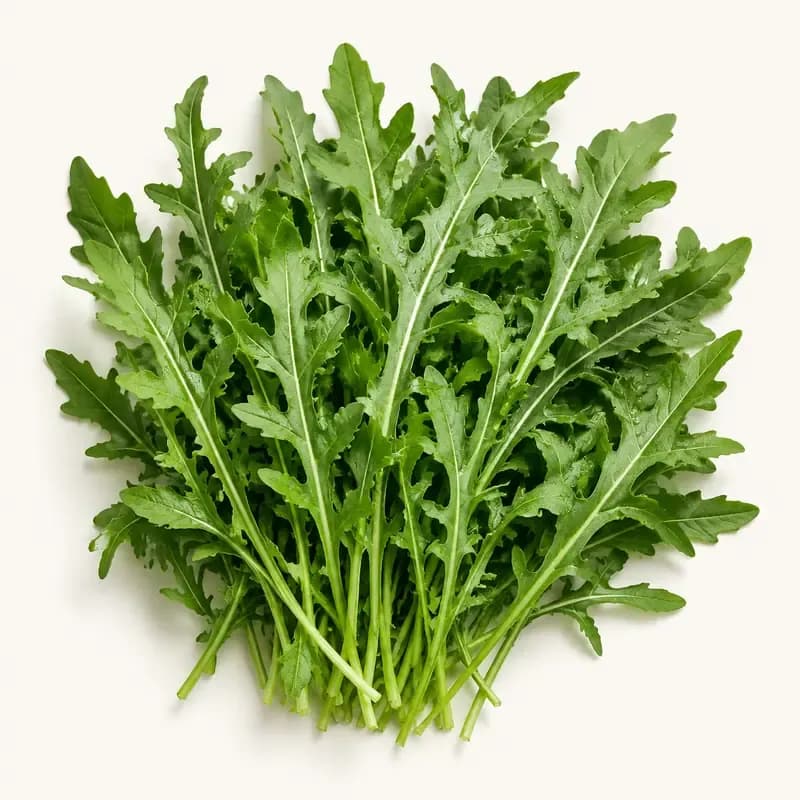
Eruca vesicaria subsp. sativa (syn. Eruca sativa)
Arugula, scientifically known as Eruca vesicaria subsp. sativa and also widely classified as Eruca sativa, is a peppery leafy vegetable in the mustard family, Brassicaceae. It is called rocket, salad rocket, garden rocket, roquette, rucola, and rugula in different regions. The plant produces elongated, deeply lobed green leaves with a distinctive flavor that ranges from mildly nutty and peppery in young leaves to sharply pungent and slightly bitter in mature or heat-stressed plants. Its tender leaves and stems are commonly eaten raw, while its flowers, flower buds, immature pods, and seeds are also edible. Arugula is especially associated with Mediterranean and Italian cuisine, where it appears in salads, pasta, pizza, sandwiches, risotto, sauces, and vegetable dishes. Brief cooking wilts the leaves and moderates their pungency without completely removing their mustard-like character. Raw arugula provides vitamin K, folate, vitamin C, provitamin A carotenoids, calcium, magnesium, manganese, potassium, iron, fiber, and sulfur-containing glucosinolates for relatively few calories. It grows rapidly in cool weather and is cultivated worldwide in fields, gardens, greenhouses, and hydroponic systems.
Explore Arugula in stunning detail
Arugula - Main View
Per 100g
Per 100g
Nutrition breakdown for one serving
The Mediterranean region and adjoining areas of southern Europe, North Africa, and western Asia
Arugula is native to the Mediterranean basin and neighboring parts of western Asia, where wild and cultivated forms have been gathered and grown for centuries. Ancient Greek and Roman writers referred to rocket as a culinary and medicinal plant, and the Romans valued both its pungent leaves and oil-bearing seeds. It remained part of Mediterranean food traditions through the Middle Ages and was grown in European gardens as a salad and seasoning herb. Its reputation as an aphrodisiac became part of historical folklore, although that reputation is not modern clinical evidence. The vegetable retained particular importance in Italian cuisine, where it is known as rucola. During the twentieth century, Mediterranean migration, restaurant cuisine, and packaged salad production helped popularize arugula internationally. Modern breeding focuses on leaf shape, flavor, uniformity, yield, slow bolting, shelf life, disease resistance, and suitability for repeated baby-leaf harvests.
Arugula is primarily a cool-season leafy crop grown during spring and autumn. It can be produced during winter in mild climates and throughout the year under protected cultivation.
Each variety offers unique flavors, textures, and culinary applications
Keep your fruit fresh and delicious for longer
Choose arugula with crisp, vibrant green leaves and fresh-looking tender stems.
Select smaller leaves for a milder flavor and mature leaves when a stronger peppery taste is preferred.
Look for leaves free from extensive yellowing, browning, bruising, or insect damage.
Avoid arugula that is slimy, excessively wilted, moldy, or sour-smelling.
Inspect packaged arugula for an intact seal and minimal excessive condensation.
Refrigerate arugula promptly at 4°C or below in a ventilated container or perforated bag.
Keep unwashed leaves dry until use because excess moisture accelerates decay.
If the arugula has been washed, dry it thoroughly in a salad spinner or with clean towels before storage.
Place a clean, dry absorbent towel in the container to collect excess moisture and replace it if it becomes saturated.
Keep arugula separate from raw meat, poultry, seafood, eggs, and their juices.
Remove slimy or badly damaged leaves promptly to prevent deterioration from spreading.
Inspect the leaves and remove wilted, yellowed, slimy, or damaged portions.
Rinse arugula gently under cool running water, separating leaves so soil and insects can be removed.
Dry the leaves thoroughly with a salad spinner or clean towel so dressings adhere properly and sautéing does not splatter.
Trim only tough, discolored, or dry stem ends because tender young stems are edible.
Taste a leaf before use; mature or heat-stressed arugula may require balancing with sweet, creamy, fatty, or acidic ingredients.
Add arugula near the end of cooking because its delicate leaves wilt rapidly.
Do not wash arugula with soap, detergent, bleach, or household disinfectants.
Preserve freshness for months
Freezing whole raw leaves is not ideal because thawed arugula becomes soft and is unsuitable for crisp salads.
Wash and dry the leaves thoroughly before freezing.
Blanch arugula for approximately 30 seconds when freezing it as a cooked green, then cool immediately in ice water.
Drain and press out excess moisture before packing the leaves into airtight portions.
Alternatively, blend clean arugula with a small amount of water or oil and freeze it in cubes for soups, sauces, pesto, and cooked dishes.
Label containers with the date and use frozen arugula only in preparations where a soft texture is acceptable.
Label frozen items with the date to track freshness. Most fruits maintain quality for 2-3 months when properly frozen. For best results, use airtight containers or freezer bags to prevent freezer burn.
Discover delicious possibilities
Allergy to arugula is uncommon but possible. Reactions may include oral itching, hives, swelling, digestive symptoms, respiratory symptoms, or, rarely, anaphylaxis. People allergic to mustard or other Brassicaceae vegetables may require professional evaluation because cross-reactivity can occur. Breathing difficulty, throat swelling, faintness, or widespread hives requires urgent medical attention.
Pesticide use and measured residues vary by country, farm, season, and production method. Rinse arugula thoroughly under running water while separating the leaves. Washing can reduce soil, microorganisms, and some surface residues but cannot remove every residue. Organic arugula should also be washed because organic production does not eliminate microbial contamination.
Surprising trivia you'll love!
Arugula belongs to the same plant family as cabbage, broccoli, mustard, radish, and turnip.
The name arugula entered American English through an Italian dialect, while rocket developed through the French word roquette.
Cultivated arugula and wild rocket are usually different species despite being sold under similar names.
Ancient Greek and Roman writers described rocket as both a food and a traditional medicinal plant.
Arugula flowers are typically creamy white with distinctive purple or violet veins.
The plant produces elongated seed pods botanically known as siliques.
Arugula becomes more pungent and may bolt rapidly during hot weather.
Young leaves are commonly harvested as baby greens only a few weeks after sowing.
Arugula seeds contain oil and are used as a condiment or oilseed in some regional traditions.
The peppery flavor intensifies when chewing breaks plant cells and activates glucosinolate breakdown.
Arugula, salad rocket, garden rocket, rucola, roquette, and rugula commonly refer to the cultivated leafy vegetable Eruca vesicaria subsp. sativa, also classified as Eruca sativa. Regional naming causes much of the confusion: arugula is common in North American English, rocket in British English, and rucola in Italian. Wild rocket is related but is usually Diplotaxis tenuifolia, a different species with narrower leaves, a perennial growth habit, and a more intense flavor. Markets sometimes label both plants simply as arugula or rocket, so appearance and taste may vary.
Arugula stores glucosinolates separately from an enzyme called myrosinase. Cutting, crushing, or chewing damages plant cells and allows the enzyme to transform glucosinolates into isothiocyanates and other breakdown products. These volatile sulfur compounds produce arugula's mustard-like aroma and peppery sensation. Flavor intensity depends on species, cultivar, leaf age, temperature, sunlight, water availability, storage, and harvest timing. Young, cool-season leaves are generally milder, while older plants exposed to heat or drought may taste sharper and more bitter. Cooking reduces enzyme activity and softens the pungency.
Inspect the arugula and discard leaves that are slimy, moldy, badly bruised, or extensively yellowed. Rinse the remaining leaves gently under cool running water, moving them apart so grit and insects can be removed. Do not use soap, detergent, bleach, or household disinfectants. Dry the leaves thoroughly in a clean salad spinner or with clean towels, especially when serving them raw or adding dressing. Tender stems are edible, but tough or discolored ends may be trimmed. Wash hands and use clean knives, bowls, boards, and towels to prevent cross-contamination.
Choose small, young leaves and arugula grown during cool weather, as these are often milder than mature or heat-stressed leaves. Briefly wilting or sautéing arugula reduces its sharpness by softening tissues and dispersing some volatile mustard compounds. Sweet fruit, roasted vegetables, balsamic vinegar, honey, or another modest sweet element can balance bitterness. Creamy cheese, avocado, eggs, olive oil, nuts, beans, or yogurt mellow pungency through fat or soft texture. Lemon and other acids do not remove bitterness, but they brighten the overall flavor and create a more balanced dish.
Plain raw arugula is nutrient-dense and relatively low in calories. It provides vitamin K, folate, vitamin C, provitamin A carotenoids, manganese, calcium, magnesium, iron, potassium, copper, fiber, glucosinolates, flavonoids, and natural dietary nitrate. Its practical nutritional contribution depends on portion size because loosely packed arugula is very light. A typical salad serving weighs considerably less than 100 g. The finished dish also matters: olive oil, nuts, beans, eggs, or fish can add useful nutrients, while excessive salty cheese, cured meat, dressing, or sauce can increase sodium and calories.
Raw arugula contains approximately 108.6 mcg of vitamin K per 100 g, equivalent to about 91% of the Daily Value. Vitamin K can influence the action of warfarin and other vitamin K antagonist medicines. People taking these drugs generally should not eliminate leafy vegetables automatically. Clinicians commonly recommend maintaining a reasonably consistent vitamin K intake so medication can be adjusted appropriately. Sudden large increases or decreases may alter anticoagulation. Anyone taking an anticoagulant should follow individualized instructions from the prescribing clinician or registered dietitian and should not change medication independently.
Arugula can contain substantial natural nitrate, but concentrations vary considerably with cultivar, fertilizer, growing light, season, harvest time, and storage. In adults, dietary nitrate from vegetables participates in a pathway that can produce nitric oxide, a normal signaling molecule involved in vascular function. Vegetables also provide vitamin C and other compounds that distinguish them nutritionally from processed meats containing added nitrate or nitrite. People with specific medical restrictions should follow professional advice. Proper refrigeration remains important because poor handling can alter food quality and increase microbial risk regardless of nitrate content.
Fresh arugula usually maintains its best quality for approximately three to five days when refrigerated at 4°C or below. Store it dry in a ventilated container with a clean absorbent towel to control excess moisture. Leaves that become slimy, moldy, foul-smelling, or extensively decayed should be discarded. Arugula can be frozen, but thawed leaves lose their crisp salad texture. For cooked uses, briefly blanch and cool the leaves before freezing, or blend clean arugula with oil or water and freeze it in cubes for pesto, sauces, soups, and pasta.
Sustainability insights
Arugula grows rapidly and can support repeated baby-leaf harvests, potentially providing substantial yield within a short season. Its environmental impact depends on fertilizer, irrigation, pest management, soil practices, greenhouse energy, refrigeration, packaging, transportation, and food waste. Crop rotation, integrated pest management, efficient nutrient application, renewable-energy-powered protected cultivation, and careful harvest planning can improve sustainability.
No single carbon-footprint value represents all arugula production. Seasonal field-grown arugula generally requires less production energy than leaves grown in heated structures or transported by air. Refrigeration, protective packaging, and rapid transportation help preserve this highly perishable crop but contribute to emissions. Purchasing appropriate quantities and using leaves before they spoil can reduce waste-related impact.
Arugula requires consistent moisture for tender leaf production, but its water footprint varies with climate, rainfall, soil, yield, production system, and irrigation method. Drip irrigation, mulching, soil-moisture monitoring, rainfall-based scheduling, and healthy soil organic matter can reduce unnecessary water consumption.
Locally grown seasonal arugula may require less transportation and long-term refrigeration while reaching consumers in fresher condition. Distance alone does not determine sustainability because greenhouse energy, fertilizer use, irrigation source, packaging, storage, transportation mode, and food waste also matter. Locally produced leaves grown in a heated structure may have a greater impact than efficiently field-grown arugula transported by road.
We aim to keep this Arugula profile accurate and easy to understand. Nutrition values and % Daily Value figures are based on established reference databases and standard daily value guidance.
Last updated: September 1, 2026
Medical disclaimer
This page is for general educational purposes and does not replace professional medical advice.
Found an issue? Contact us.