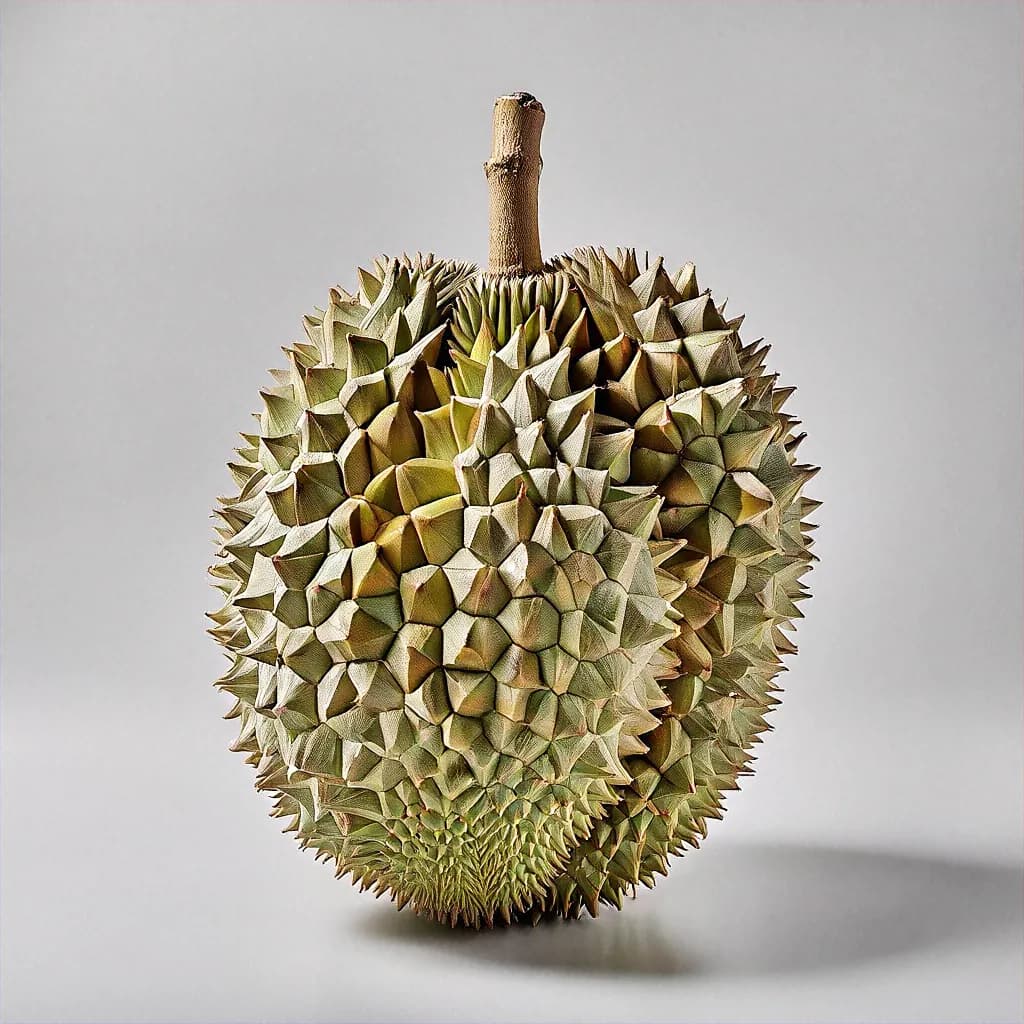
ड्यूरियन
Durio zibethinus
ड्यूरियन, जिसे दक्षिण पूर्व एशिया में 'फलों का राजा' कहा जाता है, एक बड़ा, कांटेदार उष्णकटिबंधीय फल है जो अपनी बदबूदार गंध और असाधारण रूप से समृद्ध, मलाईदार स्वाद के लिए प्रसिद्ध है। इस फल की मोटी, कांटों से भरी छाल के अंदर पीले से सुनहरे रंग का कस्टर्ड जैसा गूदा होता है, जिसका स्वाद मीठी क्रीम, कारमेल, बादाम, लहसुन और हरी प्याज का मिश्रण होता है - ऐसा स्वाद किसी अन्य फल में नहीं मिलता। बदबूदार गंध के बावजूद, ड्यूरियन पोषण का एक उत्कृष्ट स्रोत है, जिसमें विटामिन सी (प्रति कप 33% दैनिक मूल्य), थायमिन (39% दैनिक मूल्य), विटामिन बी6 (25% दैनिक मूल्य), पोटैशियम (16% दैनिक मूल्य) और आहार फाइबर (15% दैनिक मूल्य) भरपूर मात्रा में होता है। इसकी मलाईदार बनावट और उच्च प्राकृतिक वसा (प्रति 100 ग्राम में 5 ग्राम) इसे सामान्य फलों से अलग बनाती है, जिससे पेट भरा हुआ महसूस होता है। मलेशिया, थाईलैंड, इंडोनेशिया और सिंगापुर में ड्यूरियन के मौसम के दौरान लोग इसे खोजने के लिए उत्साहित रहते हैं और इसके प्रीमियम किस्में बहुत ऊंचे दामों पर बिकती हैं। यह फल लोगों को दो ध्रुवों में बांट देता है - कुछ इसे बहुत पसंद करते हैं तो कुछ इसे बिल्कुल नापसंद करते हैं। गंध के अलावा, ड्यूरियन ऊर्जा का अच्छा स्रोत (प्रति 100 ग्राम में 147 कैलोरी), शक्तिशाली एंटीऑक्सीडेंट्स और पारंपरिक चिकित्सा में बुखार और अन्य बीमारियों के इलाज के लिए उपयोग किया जाता है।
ड्यूरियन फोटो गैलरी
ड्यूरियन को शानदार विवरण में देखें
ड्यूरियन - मुख्य दृश्य
ड्यूरियन पोषण तथ्य
💊विटामिन
प्रति 100 ग्राम
⚡खनिज
प्रति 100 ग्राम
प्रति सर्विंग
एक सर्विंग का पोषण विवरण
ड्यूरियन के स्वास्थ्य लाभ
ड्यूरियन उत्पत्ति और वितरण
बोर्नियो और सुमात्रा, दक्षिण पूर्व एशिया
ड्यूरियन का इतिहास दक्षिण पूर्व एशिया के वर्षावनों में सदियों पुराना है, जहां यह खेती से पहले जंगली रूप में उगता था। इसका नाम मलय शब्द 'दुरी' से आया है, जिसका अर्थ कांटा या स्पाइक है, जो इसकी कांटेदार छाल को दर्शाता है। बोर्नियो और सुमात्रा के आदिवासी पीढ़ियों से जंगली ड्यूरियन इकट्ठा करते रहे हैं, और पुरातात्विक साक्ष्य बताते हैं कि इसका सेवन 1,000 से अधिक वर्षों से हो रहा है। 15वीं-16वीं शताब्दी के चीनी और अरब व्यापारियों के लेखों में इस अजीब फल का उल्लेख मिलता है, जिसकी गंध भयानक लेकिन स्वाद लाजवाब होता था। 18वीं-19वीं शताब्दी में मलेशिया, थाईलैंड और इंडोनेशिया में किसानों ने ड्यूरियन की व्यावसायिक क्षमता को पहचाना और चयनात्मक प्रजनन शुरू किया। मलेशियाई सल्तनतों में ड्यूरियन को विशेष महत्व दिया जाता था, और शाही दरबारों में विभिन्न किस्मों की सराहना की जाती थी तथा ड्यूरियन के बाग लगाए जाते थे। 20वीं शताब्दी में थाईलैंड में खेती का विस्तार हुआ और यह दुनिया का सबसे बड़ा उत्पादक बन गया। यूरोपीय उपनिवेशवादियों की ड्यूरियन से मुलाकात ने मिश्रित प्रतिक्रियाएं दीं। ब्रिटिश प्रकृतिवादी अल्फ्रेड रसेल वालेस ने 1856 में लिखा कि ड्यूरियन का स्वाद 'पूर्व की यात्रा के लायक' है, भले ही इसकी गंध का वर्णन नहीं किया जा सकता। यह फल दक्षिण पूर्व एशियाई संस्कृति में गहराई से समाया हुआ है - ड्यूरियन त्योहार, बाजार, सांस्कृतिक संदर्भ और सामाजिक रीति-रिवाज ड्यूरियन के मौसम के इर्द-गिर्द घूमते हैं। सिंगापुर और मलेशिया में ड्यूरियन की खोज (मौसम के दौरान बागों में जाना) एक प्रिय परंपरा है। मुसंग किंग जैसी प्रीमियम किस्में बहुत ऊंचे दामों पर बिकती हैं - एक उच्च गुणवत्ता वाला ड्यूरियन 50-200 डॉलर या उससे अधिक का हो सकता है। आधुनिक खेती में विशेष किस्मों पर जोर दिया जाता है। ग्राफ्टिंग तकनीक से गुणवत्ता सुनिश्चित की जाती है। आज थाईलैंड ताजा और जमे हुए ड्यूरियन का वैश्विक निर्यात करता है (विशेषकर चीन में जहां मांग तेजी से बढ़ी है), जिससे ड्यूरियन दुनिया भर में उपलब्ध हो रहा है, भले ही इसकी गंध और खराब होने की समस्या के कारण परिवहन चुनौतीपूर्ण है।
ड्यूरियन पीक सीज़न
क्षेत्र के अनुसार भिन्न - आमतौर पर मई से अगस्त (मुख्य मौसम) और दिसंबर से फरवरी (छोटा मौसम)
ड्यूरियन किस्में
हर किस्म का स्वाद, बनावट और उपयोग अलग होता है
Musang King (Mao Shan Wang)
D24 (Sultan)
Monthong (Golden Pillow)
Red Prawn (Udang Merah)
Black Thorn (Duri Hitam)
XO
ड्यूरियन स्टोरेज और चयन गाइड
फलों को अधिक समय तक ताज़ा रखें
सही फल कैसे चुनें
ड्यूरियन चुनते समय उसकी कांटेदार छाल को ध्यान से देखें - टूटी या फटी छाल वाले फल न लें
तने की ताजगी जांचें - यह मजबूत, हरा या भूरा होना चाहिए (काला या फफूंदी वाला नहीं)
तने के सिरे को सूंघें - पका हुआ ड्यूरियन अपनी विशेष गंध छोड़ता है, भले ही छाल के अंदर से हो
ड्यूरियन को हल्के से हिलाएं - अंदर गूदा हिलने की हल्की आवाज आए तो यह पका हुआ है (कच्चा ड्यूरियन चुप रहता है)
कांटों को हल्के से दबाएं - थोड़ा दबाव महसूस हो तो पका हुआ है, बहुत कठोर कांटे कच्चे फल का संकेत हैं
ड्यूरियन को आकार के हिसाब से भारी महसूस होना चाहिए - यह गूदा अधिक होने का संकेत है
प्राकृतिक रूप से खुले सीम वाले ड्यूरियन (डिहिस्ड) चुनें - यह पूरी तरह पके होने का संकेत है, हालांकि दुकानों में यह दुर्लभ होता है
विक्रेता से किस्म के बारे में पूछें - मुसंग किंग, डी24, मंथोंग की विशेषताएं और कीमतें अलग-अलग होती हैं
ताजगी के लिए प्रतिष्ठित ड्यूरियन विक्रेताओं या एशियाई बाजारों से खरीदें जहां तेजी से बिक्री होती है
यदि जमे हुए ड्यूरियन खरीद रहे हैं (दक्षिण पूर्व एशिया के बाहर आम), तो उचित भंडारण का संकेत देने वाले बर्फ के क्रिस्टल की जांच करें
सही स्टोरेज तरीके
पूरा और बिना खोला हुआ ड्यूरियन कमरे के तापमान पर 2-5 दिन तक रखा जा सकता है, यह खरीदते समय उसकी पकी अवस्था पर निर्भर करता है
खोलने के बाद ड्यूरियन जल्दी खराब हो जाता है - गूदा को प्लास्टिक रैप से कसकर लपेटें या एयरटाइट कंटेनर में रखें
खोले हुए ड्यूरियन के गूदे को फ्रिज में रखें और अधिकतम 3-5 दिन के अंदर खा लें
ड्यूरियन के गूदे को लंबे समय के लिए फ्रीज करें (2-3 महीने) - यह बहुत अच्छी तरह जम जाता है और बनावट में न्यूनतम बदलाव आता है
ड्यूरियन को सीलबंद कंटेनर में रखें ताकि इसकी गंध फ्रिज और अन्य खाद्य पदार्थों में न फैले
ड्यूरियन को अन्य खाद्य पदार्थों से अलग रखें - इसकी तेज गंध आसानी से फैलती है
यदि खरीदते समय ड्यूरियन कच्चा है, तो इसे कमरे के तापमान पर 1-3 दिन तक पकने के लिए छोड़ दें
रोजाना पकने की जांच करें - ड्यूरियन जल्दी कच्चे से अधिक पके में बदल सकता है
अधिक पका हुआ ड्यूरियन खमीरी हुई गंध और पानी जैसी बनावट वाला हो जाता है - इसे फेंक देना चाहिए
भंडारण से पहले बीज निकाल दें - ताजा होने पर यह आसान होता है और भंडारण स्थान बचाता है
शेल्फ लाइफ गाइड
फ्रीज़ करने के निर्देश
कई महीनों तक ताज़गी बनाए रखें
ड्यूरियन बहुत अच्छी तरह जम जाता है - जमे हुए ड्यूरियन एशियाई बाजारों में आम हैं और दक्षिण पूर्व एशिया में लोकप्रिय हैं
ड्यूरियन के गूदे को छाल और बीजों से अलग करें
गूदे के टुकड़ों को प्लास्टिक रैप से कसकर लपेटें या फ्रीजर बैग में रखें
बैग से अतिरिक्त हवा निकाल दें ताकि फ्रीजर बर्न न हो
किस्म और तारीख के साथ लेबल करें
गुणवत्ता बनाए रखने के लिए 0°F (-18°C) या उससे कम तापमान पर फ्रीज करें
जमे हुए ड्यूरियन की गुणवत्ता 2-3 महीने तक बनी रहती है, सुरक्षित रहने पर अधिक समय तक भी रहता है लेकिन गुणवत्ता कम हो जाती है
जमे हुए ड्यूरियन को रात भर फ्रिज में पिघलाएं ताकि बनावट अच्छी रहे
जमे हुए ड्यूरियन को आइसक्रीम जैसी बनावट के लिए आंशिक रूप से पिघलाकर खाया जा सकता है (लोकप्रिय तरीका)
पिघले हुए ड्यूरियन का उपयोग स्मूदी, मिठाइयों या ताजा खाने में करें (बनावट ताजे जैसी होती है)
थाईलैंड से जमे हुए ड्यूरियन का निर्यात पूरे साल ड्यूरियन को उपलब्ध कराता है
प्रो टिप
ताज़गी ट्रैक करने के लिए जमे हुए आइटम पर तारीख लिखें। सही तरीके से फ्रीज़ करने पर अधिकांश फल 2-3 महीनों तक गुणवत्ता बनाए रखते हैं। फ्रीज़र बर्न से बचने के लिए एयरटाइट कंटेनर या फ्रीज़र बैग का उपयोग करें।
पाक यात्रा
स्वादिष्ट विकल्प खोजें
सामान्य उपयोग
परफेक्ट पेयरिंग
लोकप्रिय रेसिपी
ताज़ा पेय
सुरक्षा जानकारी
Durian allergies are relatively uncommon but documented, with reactions ranging from mild oral symptoms to severe responses. Allergic individuals may experience symptoms including oral allergy syndrome (OAS) - itching, tingling, or swelling of mouth, lips, tongue, and throat; hives or skin rashes (contact dermatitis from handling durian shell or flesh); digestive upset (nausea, vomiting, diarrhea, abdominal cramps); respiratory symptoms (wheezing, nasal congestion, difficulty breathing); or rarely, anaphylaxis. Cross-reactivity may occur with latex (latex-fruit syndrome) due to protein similarities - individuals with latex allergies show increased risk of durian allergy. Potential cross-reactivity with other tropical fruits including banana, avocado, kiwi, chestnut, and papaya. Some individuals sensitive to sulfur compounds may react to durian's organosulfur content with headaches or digestive distress even without true allergy. Durian pollen allergies exist in Southeast Asian regions where durian trees grow, potentially causing seasonal allergies. Most durian allergies are mild and localized to oral symptoms. However, individuals with known latex allergies or previous adverse reactions to tropical fruits should approach durian cautiously or avoid entirely. First-time consumers should start with small amounts to assess tolerance.
Conventionally grown durian may contain pesticide residues, though the thick, spiky shell provides substantial protection to the edible flesh. Durian trees are susceptible to various pests and diseases potentially requiring chemical management in commercial orchards. Common pests include fruit borers, stem borers, and various insects affecting leaves and fruit. Diseases include Phytophthora fruit rot and other fungal infections. Proper handling protocol: Wash hands thoroughly after handling durian shell before touching flesh or face. The thick husk protects internal flesh from most pesticide penetration. However, wash shell exterior under running water before opening if concerned about transfer during cutting. Once opened, the flesh itself requires minimal washing since it's protected inside shell. Organic durian is increasingly available, particularly from small farms and specialty producers. Organic certification ensures no synthetic pesticides or fertilizers were used. Supporting organic production promotes sustainable farming and protects farm workers from pesticide exposure. Thailand, Malaysia, and Indonesia (major producers) have varying pesticide regulations and enforcement. Imported durian may have different chemical treatments than locally grown. When possible, choose organic durian or from known sustainable producers to minimize pesticide exposure and support environmentally responsible agriculture.
- • Individuals with documented durian or latex allergies
- • People with severe sulfite sensitivity or sulfur compound intolerance
- • Those with latex-fruit syndrome (cross-reactivity risk)
- • Individuals with pancreatitis or history of pancreatic problems (high fat content)
- • People on very low-fat diets (durian contains 5.3g fat per 100g)
- • Those with severe obesity should limit consumption due to calorie density
- • Individuals with IBS or sensitive digestive systems may experience discomfort
- • People taking certain medications that interact with tyramine (durian contains tyramine)
- • Those following traditional beliefs should avoid mixing durian with alcohol
- •Digestive upset, bloating, gas, or diarrhea from overconsumption (rich, fatty nature)
- •Oral allergy syndrome (mouth, throat itching and swelling) in sensitive individuals
- •Potential allergic reactions ranging from mild itching to severe responses
- •Weight gain from regular overconsumption due to calorie density (147 cal/100g)
- •Possible blood sugar fluctuations in diabetics despite moderate GI (monitor portions)
- •Nausea or vomiting from overwhelming smell or overconsumption
- •Headaches in sulfur-sensitive individuals from organosulfur compounds
- •Body heat or flushing (traditional Chinese medicine considers durian 'heaty' food)
- •Potential interaction with alcohol causing digestive distress (traditional warning)
- •Possible pancreatitis risk in susceptible individuals if consumed in large quantities (high fat)
- • Wear thick gloves when handling whole durian - sharp thorns easily puncture skin causing painful injuries
- • Use stable cutting surface and sharp knife - dull knives slip on tough shell creating injury risk
- • Cut away from yourself when opening durian, using proper knife technique
- • Never attempt to catch falling durian from trees - serious head and body injuries can occur
- • Remove all seeds before eating - seeds pose choking hazard and are inedible raw (can be cooked)
- • Check durian for mold, off-odors, or signs of overripeness before consuming
- • Discard durian with fermented alcoholic smell, excessive wateriness, or visible mold
- • Refrigerate opened durian in airtight container and consume within 3-5 days maximum
- • Store durian away from other foods to prevent smell transfer
- • Wash hands thoroughly after handling durian (smell lingers)
- • Pregnant women should ensure durian is fresh and from reputable source
- • Diabetics should monitor blood sugar after consumption and control portions
- • Respect traditional warnings about avoiding alcohol when consuming durian
- • Keep durian away from pets - while not highly toxic, inappropriate for animal consumption
रोचक तथ्य ड्यूरियन के बारे में
ऐसी बातें जो आपको पसंद आएंगी!
Durian is called 'King of Fruits' in Southeast Asia where it holds almost sacred status and inspires passionate devotion
The name 'durian' derives from Malay word 'duri' meaning thorn or spike, perfectly describing the formidable spiky exterior
A single premium Musang King durian can sell for $50-200+ in Malaysia and Singapore, with record prices exceeding $1,000 for exceptional specimens
Durian is banned from airlines, hotels, public transportation, and many public spaces throughout Southeast Asia due to overwhelming smell
British naturalist Alfred Russel Wallace wrote in 1856 that eating durian was 'worth a voyage to the East' despite indescribable odor
Thailand is the world's largest durian producer and exporter, with China becoming the largest importer (demand surged dramatically in recent years)
Durian trees can grow 80-130 feet tall and live for 80+ years, producing fruit for decades
Over 50 distinct aromatic compounds create durian's notorious smell, including sulfur compounds similar to rotten onions and rotten eggs
Traditional Southeast Asian belief warns against consuming durian with alcohol, claiming the combination causes serious health problems or death
The spiky shell serves as natural defense - falling durian can cause serious injury or death, earning nickname 'the fruit that could kill you before you eat it'
अक्सर पूछे जाने वाले प्रश्न
ड्यूरियन की गंध इतनी खराब क्यों होती है?
Generalड्यूरियन की बदनाम गंध वाष्पशील कार्बनिक यौगिकों के जटिल मिश्रण से आती है, मुख्य रूप से सल्फर युक्त अणु जो तेज, भेदने वाली गंध पैदा करते हैं जिसे कई लोग असहनीय या घृणित पाते हैं। रासायनिक संरचना: वैज्ञानिक विश्लेषण में ड्यूरियन में 50 से अधिक अलग-अलग सुगंधित यौगिकों की पहचान की गई है, जिनमें प्रमुख अपराधी इथेनिथियोल (सड़ी हुई प्याज, लहसुन), हाइड्रोजन सल्फाइड (सड़े हुए अंडे), मेथेनिथियोल (सड़ी हुई गोभी), और विभिन्न एस्टर, कीटोन और सल्फाइड शामिल हैं। इस संयोजन से गंध पैदा होती है जिसे सड़ी हुई प्याज, तारपीन, सीवेज, जिम के मोजे या सड़े हुए मांस के साथ मीठे कारमेल के रूप में वर्णित किया जाता है। कोई एक यौगिक ड्यूरियन की गंध का कारण नहीं है - यह अद्वितीय कॉकटेल है जो अविस्मरणीय घ्राण अनुभव बनाता है। विकासवादी उद्देश्य: वैज्ञानिकों का मानना है कि शक्तिशाली गंध हाथियों, बाघों, ओरंगुटानों जैसे बड़े जानवरों को आकर्षित करने के लिए विकसित हुई जो ड्यूरियन खाते थे और दक्षिण पूर्व एशियाई वर्षावनों में बीज फैलाते थे। गंध जानवरों को काफी दूरी से पकने का संकेत देती है। मनुष्यों, जिनकी घ्राण प्राथमिकताएं अलग होती हैं, को वही गंध अप्रिय लगती है। व्यक्तिगत भिन्नता: गंध रिसेप्टर्स में आनुवंशिक अंतर के कारण लोग ड्यूरियन की गंध को अलग-अलग तरीके से महसूस करते हैं। कुछ को मुख्य रूप से मीठी, सुखद गंध आती है जबकि अन्य को सल्फर की तेज गंध का अनुभव होता है। इससे ध्रुवीकृत प्रतिक्रियाएं समझाई जा सकती हैं - यह केवल पसंद का मामला नहीं है बल्कि वास्तविक अलग घ्राण अनुभव है। सांस्कृतिक प्रदर्शन भी भूमिका निभाता है - जो लोग ड्यूरियन खाते हुए बड़े हुए हैं वे अक्सर उस गंध को पसंद करते हैं या सहन करते हैं जिसे नए लोग असहनीय पाते हैं। गंध बनाम स्वाद विरोधाभास: स्थायी रहस्य यह है कि इतनी भयानक गंध वाला फल भक्तों को इतना स्वादिष्ट क्यों लगता है। ताजा ड्यूरियन का गूदा मीठा, मलाईदार, समृद्ध होता है जिसमें मीठी क्रीम, कारमेल-बादाम-कस्टर्ड के जटिल नोट्स होते हैं जो गंध से बिल्कुल अलग होते हैं। एक बार जब आप घ्राण बाधा को पार कर लेते हैं, तो स्वाद का इनाम काफी होता है। कई ड्यूरियन प्रेमी दावा करते हैं कि उन्हें गंध अब ज्यादा महसूस नहीं होती, वे स्वादिष्ट स्वाद और बनावट पर ध्यान केंद्रित करते हैं। गंध की तीव्रता: गंध किस्म के अनुसार भिन्न होती है - कुछ जैसे मंथोंग हल्की होती है जबकि अन्य जैसे मुसंग किंग बहुत तेज होती है। पकने की अवस्था गंध की तीव्रता को बहुत प्रभावित करती है - पूरी तरह पका हुआ ड्यूरियन सबसे तेज गंध देता है। गंध प्रवेश करती है और लंबे समय तक रहती है, यही कारण है कि ड्यूरियन को होटलों, एयरलाइनों, सार्वजनिक परिवहन और बंद जगहों से दक्षिण पूर्व एशिया में प्रतिबंधित किया गया है। 'नो ड्यूरियन' चेतावनी वाले सार्वजनिक संकेत आम हैं। यह क्यों बना रहता है: हजारों वर्षों की खेती के बावजूद, चयनात्मक प्रजनन ने गंध को समाप्त नहीं किया है क्योंकि गंध और स्वाद यौगिक जुड़े हुए हैं - गंध को कम करने से जटिल स्वाद कम हो सकता है जिसे ड्यूरियन प्रेमी पसंद करते हैं। भक्तों के लिए, अद्वितीय स्वाद के लिए गंध स्वीकार्य कीमत है।
ड्यूरियन का स्वाद कैसा होता है?
Generalड्यूरियन का स्वाद किसी अन्य फल से बिल्कुल अलग होता है, जिसमें समृद्ध, जटिल स्वाद प्रोफ़ाइल होती है जिसे भक्त स्वर्गीय बताते हैं, भले ही इसकी गंध चुनौतीपूर्ण हो। इसका अनुभव सरल वर्णन से परे है, लेकिन यहां व्यापक व्याख्या दी गई है। प्राथमिक स्वाद: तीव्र मीठा और मलाईदार, कस्टर्ड जैसा, लगभग नमकीन गुण वाला। बनावट चिकनी, मोटी और समृद्ध होती है - बहुत नरम, पके हुए एवोकैडो या समृद्ध कस्टर्ड की तरह। अधिकांश फलों की तुलना में उच्च वसा सामग्री (प्रति 100 ग्राम में 5.3 ग्राम) शानदार मुंह का एहसास और तृप्ति पैदा करती है। स्वाद नोट्स: अलग-अलग लोग अलग-अलग नोट्स महसूस करते हैं, लेकिन आम वर्णन में मीठी क्रीम, कारमेलाइज्ड चीनी, भुने हुए बादाम, वेनिला कस्टर्ड, ब्राउन बटर, लहसुन या प्याज के हल्के संकेत (संदर्भ में अप्रिय नहीं), सूक्ष्म चीज़ जैसा उमामी, उष्णकटिबंधीय फल के संकेत और टॉफी या बटरस्कॉच शामिल हैं। स्वाद जटिल और परतदार होता है - एक आयामी मिठास नहीं बल्कि मीठे, नमकीन, समृद्ध और सूक्ष्म कड़वे नोट्स का संगीत। बनावट अनुभव: मुंह में कोमल, चिकनी, लगभग पिघलने वाली बनावट। मलाईदार बिना तरल हुए। कुछ किस्में थोड़ी रेशेदार होती हैं। गूदा बड़े बीजों से आसानी से अलग हो जाता है। निगलने के बाद मीठा-समृद्ध आफ्टरटेस्ट रहता है जो सुखद रूप से लंबे समय तक रहता है। किस्मों के अंतर: मुसंग किंग सबसे तीव्र, समृद्ध, कड़वा-मीठा स्वाद और मलाईदार बनावट प्रदान करता है - इसे पारखी सर्वश्रेष्ठ मानते हैं। डी24 संतुलित मिठास के साथ कम कड़वाहट प्रदान करता है, शुरुआती लोगों के लिए अच्छी किस्म है। मंथोंग हल्का, मीठा और कम जटिल होता है - अक्सर शुरुआती लोगों के लिए सिफारिश की जाती है। रेड प्रॉन अद्वितीय मिठास और विशिष्ट नारंगी रंग प्रदान करता है। हर किस्म अलग स्वाद अनुभव देती है। अधिग्रहित स्वाद: पहली बार ड्यूरियन खाने वाले अक्सर भ्रमित होते हैं - गंध आपदा का वादा करती है लेकिन स्वाद अप्रत्याशित आनंद देता है। संज्ञानात्मक असंगति को समायोजित करने में समय लगता है। कई लोगों को ड्यूरियन की पूरी तरह सराहना करने के लिए 2-3 प्रयासों की आवश्यकता होती है क्योंकि मस्तिष्क गंध और स्वाद के विरोधाभासी संकेतों को समेटता है। एक बार अधिग्रहित होने के बाद, ड्यूरियन के प्रति प्रेम अक्सर तीव्र भक्ति में बदल जाता है। तापमान: ड्यूरियन कमरे के तापमान या थोड़ा ठंडा होने पर सबसे अच्छा स्वाद देता है (बहुत ठंडा नहीं)। आंशिक रूप से पिघला हुआ जमे हुए ड्यूरियन आइसक्रीम जैसी बनावट देता है - लोकप्रिय खाने का तरीका। तुलना के प्रयास: लोग ड्यूरियन की तुलना अन्य खाद्य पदार्थों से करने में संघर्ष करते हैं क्योंकि कुछ भी वास्तव में इसके समान नहीं होता। कुछ लोग 'मीठी क्रीम चीज़ के साथ लहसुन' या 'कारमेलाइज्ड प्याज कस्टर्ड' की कोशिश करते हैं लेकिन ये कम पड़ जाते हैं। ड्यूरियन को पहली बार अनुभव करना होगा। दक्षिण पूर्व एशिया और दुनिया भर के समर्पित प्रशंसकों के लिए, ड्यूरियन फल का चरम अनुभव है - आनंद के लिए किसी भी गंध को सहने लायक।