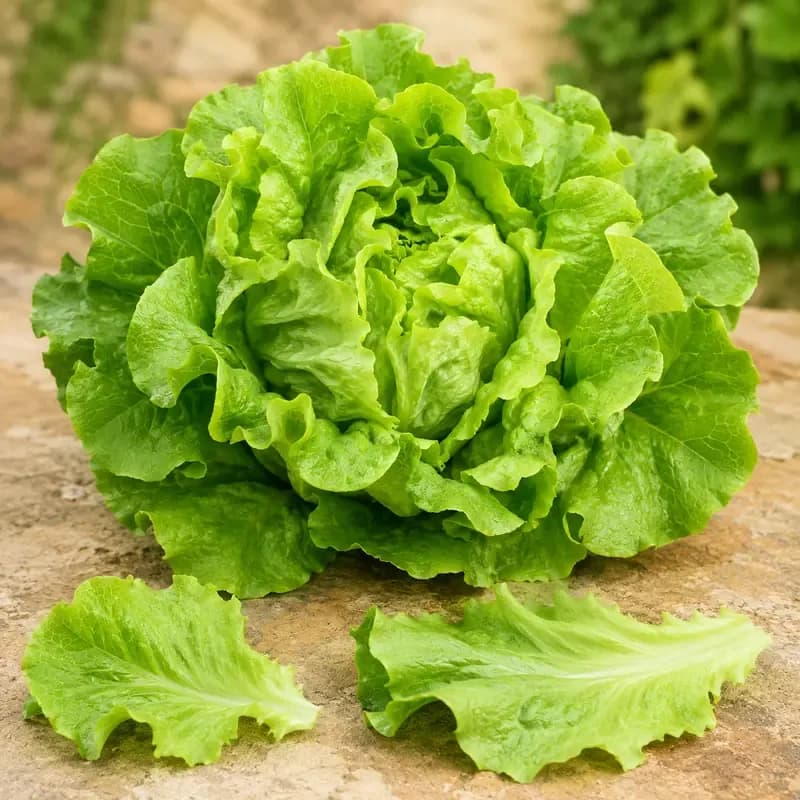
Lettuce
Lactuca sativa
Lettuce, scientifically known as Lactuca sativa, is a leafy vegetable in the daisy family, Asteraceae. Cultivated lettuce appears in many forms, from the crisp, tightly packed heads of iceberg lettuce to the elongated leaves of romaine, the soft folds of butterhead, and the colorful rosettes of loose-leaf cultivars. Its flavor ranges from delicate and mildly sweet to pleasantly bitter, while its texture may be tender, buttery, juicy, or distinctly crisp. Most lettuce is eaten raw in salads, sandwiches, wraps, and garnishes, but sturdy varieties can also be grilled, braised, sautéed, or added briefly to soups. Green leaf lettuce provides vitamin K, provitamin A carotenoids, folate, vitamin C, manganese, potassium, fiber, and substantial water with very few calories. Darker leaves generally contain higher concentrations of carotenoids and several vitamins than pale inner leaves. Lettuce was cultivated in the ancient Mediterranean and Near East, initially for its seeds and later for its edible foliage. Today, Lactuca sativa is grown worldwide in fields, greenhouses, hydroponic systems, and home gardens, making it one of the most familiar and versatile salad vegetables.
Lettuce Galería de fotos
Explora Lettuce con todo detalle
Lettuce - Vista principal
Lettuce Información nutricional
💊Vitaminas
Por 100 g
⚡Minerales
Por 100 g
Por porción
Desglose nutricional por porción
Beneficios para la salud de Lettuce
Lettuce Origen y distribución
The Mediterranean region and western Asia, with early domestication associated with ancient Egypt and the Near East
Wild relatives of cultivated lettuce occur around the Mediterranean and western Asia. Ancient Egyptians depicted lettuce thousands of years ago and probably cultivated early forms for both seeds and foliage. Greek and Roman societies later grew several lettuces as foods and medicinal plants. Centuries of selection produced plants with reduced bitterness, delayed flowering, broader leaves, and distinct head shapes. European trade carried cultivated lettuce into Asia and the Americas, where additional varieties developed. Modern lettuce includes crisphead, romaine, butterhead, loose-leaf, and stem forms adapted to field, greenhouse, and hydroponic production.
Lettuce Temporada alta
Lettuce is naturally a cool-season crop, but regional production, protected cultivation, and hydroponic systems make it available throughout the year.
Lettuce Variedades
Cada variedad ofrece sabores, texturas y usos culinarios únicos
Romaine
Iceberg
Butterhead
Green Leaf
Red Leaf
Little Gem
Oakleaf
Celtuce
Lettuce Guía de selección y conservación
Mantén tu fruta fresca y deliciosa por más tiempo
Cómo elegir la fruta perfecta
Choose lettuce with crisp, well-hydrated leaves and a fresh color appropriate to the variety.
Avoid heads with slimy areas, extensive browning, sour odors, mold, or badly wilted leaves.
For head lettuce, select specimens that feel compact or substantial for their size without appearing waterlogged.
Inspect packaged lettuce for excess condensation, damaged leaves, and a use-by date that allows sufficient time for consumption.
Choose darker green or red-leaf varieties when seeking greater concentrations of carotenoids and certain vitamins.
Métodos de conservación
Refrigerate lettuce promptly at 4°C or below and keep it separate from raw meat, poultry, seafood, and their juices.
Store unwashed lettuce loosely wrapped or in a ventilated container with a clean paper towel to absorb excess moisture.
If lettuce has been washed, dry it thoroughly in a salad spinner or with clean towels before refrigeration.
Keep lettuce away from ethylene-producing fruits such as apples, bananas, pears, and ripe tomatoes because ethylene can accelerate deterioration.
Remove damaged or slimy leaves promptly so they do not hasten spoilage of the remaining lettuce.
Guía de vida útil
Preparation Tips
Remove damaged outer leaves, separate the remaining leaves, and rinse them thoroughly under cool running water.
Do not wash lettuce with soap, detergent, or household bleach because these substances are not intended for ingestion.
Dry washed lettuce with a salad spinner or clean towels so dressings adhere properly and excess water does not dilute the dish.
Trim discolored stem ends and remove thick ribs when a recipe requires a tender texture; tender ribs remain edible.
Cut lettuce with a clean knife shortly before serving to reduce wilting and browning.
For extra-crisp leaves, soak sound lettuce briefly in ice water, drain it well, and dry it thoroughly.
Wash even organically grown or home-grown lettuce because soil, animals, irrigation water, and handling can introduce contamination.
Instrucciones de congelación
Conserva la frescura por meses
Freezing is not recommended for lettuce intended for salads because ice crystals rupture its cells and destroy its crisp texture.
If lettuce will be used in cooked soup, sauce, or purée, blanch it briefly, cool it rapidly, drain thoroughly, and freeze in an airtight container.
Portion blanched lettuce before freezing so only the required amount must be thawed.
Use thawed lettuce only in cooked preparations rather than raw salads or sandwiches.
Consejo
Etiqueta los alimentos congelados con la fecha para controlar la frescura. La mayoría de las frutas mantienen su calidad durante 2-3 meses si se congelan correctamente. Para mejores resultados, usa recipientes herméticos o bolsas para congelador para evitar quemaduras por congelación.
Viaje culinario
Descubre posibilidades deliciosas
Usos comunes
Maridajes perfectos
Recetas populares
Cooking Methods
Bebidas refrescantes
Información de seguridad
Lettuce allergy is uncommon but possible. Reported reactions include oral itching, hives, digestive symptoms, respiratory symptoms, and, rarely, anaphylaxis. Cross-reactivity has been described in some people with allergies to lipid-transfer proteins or sensitivity to related plants. Anyone who develops breathing difficulty, throat swelling, faintness, or another severe reaction after eating lettuce requires urgent medical care.
Pesticide use and measured residues vary by country, farm, season, and production system. Remove damaged outer leaves and rinse lettuce thoroughly under running water before eating. Washing can reduce soil, microorganisms, and some surface residues, but it does not remove every residue or substitute for regulatory controls. Organic lettuce should also be washed because organic production does not eliminate microbial contamination.
- • People with a diagnosed lettuce allergy should avoid lettuce and follow advice from an allergy specialist.
- • People taking warfarin or another vitamin K antagonist should maintain a consistent lettuce intake and discuss major dietary changes with their clinician.
- • People with severely weakened immune systems should follow medical advice regarding raw produce and foodborne-illness precautions.
- • Anyone should avoid lettuce that is slimy, moldy, foul-smelling, extensively decayed, recalled, or kept at unsafe temperatures.
- •Large amounts of raw lettuce may cause temporary gas, bloating, or abdominal discomfort in people unaccustomed to fiber-rich foods.
- •Contaminated raw lettuce can transmit foodborne pathogens because it is often eaten without cooking.
- •Dressings and toppings may add substantial sodium, sugar, saturated fat, or calories even though plain lettuce is low in all four.
- •Sudden, inconsistent changes in high-vitamin-K lettuce intake can interfere with stable anticoagulation in people taking warfarin.
- • Wash hands with soap before and after handling lettuce, and use clean knives, boards, bowls, and salad spinners.
- • Keep lettuce separate from raw meat, poultry, seafood, eggs, and their juices during shopping, storage, and preparation.
- • Refrigerate lettuce and prepared salads at 4°C or below, and discard perishable dishes left at room temperature for more than two hours.
- • Do not use soap, detergent, bleach, or household disinfectant to wash lettuce.
- • Follow official recall instructions and discard recalled lettuce even if it looks and smells normal.
- • Discard lettuce with slime, mold, foul odor, or extensive decay rather than attempting to salvage affected leaves.
Datos curiosos sobre Lettuce
¡Trivias sorprendentes que te encantarán!
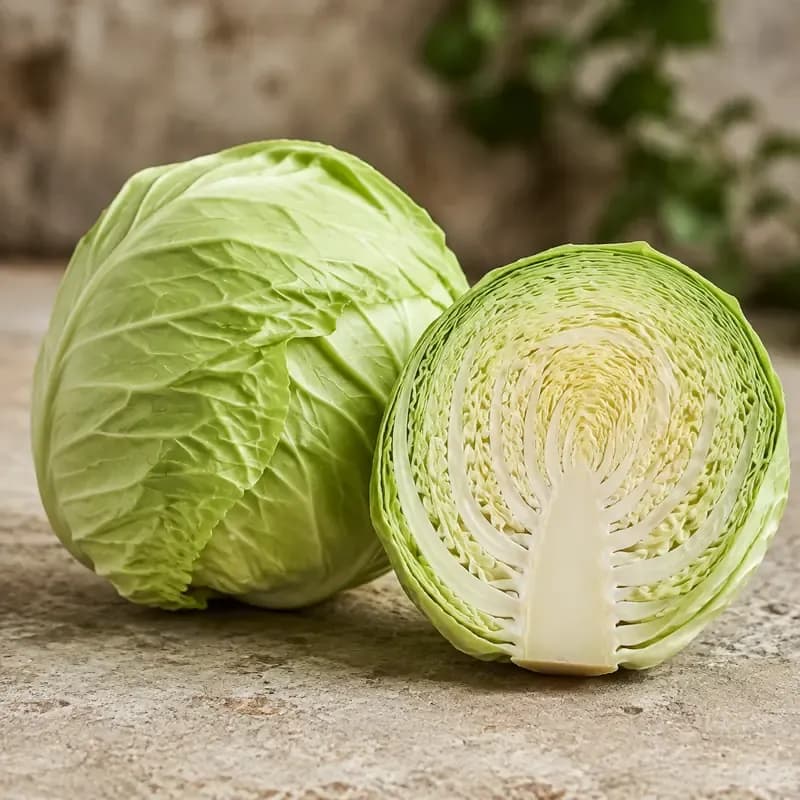
Lettuce belongs to the daisy family rather than the cabbage family.
The white sap released from a cut lettuce stem is a natural latex called lactucarium.
The scientific name Lactuca is related to the Latin word for milk, referring to the plant's milky sap.
Ancient Egyptians cultivated lettuce thousands of years ago.
Romaine, iceberg, butterhead, and loose-leaf lettuces are cultivar groups of the same species.
Celtuce is a lettuce variety cultivated primarily for its thick, edible stem.
Red-leaf lettuces contain anthocyanin pigments that contribute burgundy and purple coloration.
Lettuce leaves become more bitter when the plant bolts and prepares to flower.
Preguntas frecuentes
What type of vegetable is lettuce botanically?
ScienceLettuce is a leafy vegetable produced by Lactuca sativa, a species in the Asteraceae family, which also includes chicory, endive, sunflower, and dandelion. The principal edible portion consists of leaves arranged as a loose rosette or a compact head, depending on the cultivar group. Unlike cabbage, lettuce does not belong to the mustard family. If allowed to mature, the plant sends up a flowering stalk in a process called bolting and produces small composite flower heads followed by dry, seed-like fruits. The tender leaves become more bitter after bolting.
Which lettuce variety is the most nutritious?
HealthNo single variety is best in every nutritional respect, but darker green and red lettuces generally contain more carotenoids, vitamin K, folate, and phenolic compounds than very pale leaves. Romaine, green leaf, red leaf, and deeply colored loose-leaf cultivars are often more micronutrient-dense than iceberg lettuce. Iceberg still supplies water, fiber, vitamin K, folate, and a crisp texture that may help people enjoy more vegetables. Variety matters less than an overall pattern that includes several differently colored vegetables, appropriate portions, and dressings or toppings that do not overwhelm the meal.
How should lettuce be washed safely?
PreparationBegin with clean hands, utensils, and work surfaces. Remove damaged outer leaves, separate the usable leaves, and rinse them carefully under cool running water while gently rubbing away visible soil. A clean salad spinner can then remove excess moisture. Do not use soap, dish detergent, bleach, or household disinfectants on lettuce. Products labeled ready-to-eat, washed, or triple-washed generally do not require additional washing unless the package directs otherwise. Washing reduces soil and some microorganisms but cannot sterilize lettuce, so refrigeration and prevention of cross-contamination remain essential.
Is lettuce healthy even though it contains mostly water?
HealthYes. Water is not a nutritional weakness: it helps lettuce provide volume and hydration with very few calories. Green leaf lettuce also supplies vitamin K, provitamin A carotenoids, folate, vitamin C, manganese, potassium, and fiber. Nutrient levels differ among varieties, with darker leaves generally containing more carotenoids and certain vitamins. Lettuce works best as part of a balanced meal rather than as the sole ingredient. Adding beans, eggs, fish, poultry, tofu, nuts, seeds, whole grains, or dairy can provide protein, energy, and additional nutrients.
Can lettuce be cooked?
PreparationLettuce can be cooked, although it is most familiar as a raw salad vegetable. Romaine hearts and compact Little Gem heads can be halved and grilled, allowing their cut surfaces to char while their centers remain juicy. Sturdy leaves can be sautéed or stir-fried with garlic, braised with stock and peas, wilted into soup, or briefly steamed. Cooking softens the leaves and can reduce some heat-sensitive vitamin C and folate, but the vegetable still contributes nutrients. Short cooking times help preserve color, texture, and fresh flavor.
Why does lettuce become bitter or grow a tall stalk?
ScienceLettuce is a cool-season plant. Long days, high temperatures, water stress, or simply plant maturity can trigger bolting, the transition from leaf production to flowering. The stem elongates rapidly, leaves become tougher, and concentrations of bitter sesquiterpene lactones may increase. Bitterness is a natural defense characteristic rather than proof that the plant is poisonous. Gardeners can reduce premature bolting by choosing heat-tolerant cultivars, maintaining even soil moisture, providing afternoon shade in hot climates, and harvesting promptly. Once strong bolting begins, quality rarely returns to its earlier state.
How long does lettuce stay fresh in the refrigerator?
GeneralStorage life depends on variety, initial freshness, packaging, moisture, and refrigerator temperature. Many intact heads remain usable for approximately five to ten days when kept at 4°C or below, while loose leaves and opened salad packages may be at their best for only three to seven days. Store lettuce dry in a ventilated container with a clean paper towel to absorb excess moisture. Discard leaves that become slimy, moldy, foul-smelling, or extensively decayed. A use-by date does not override visible spoilage or temperature-abuse concerns.
Does lettuce interact with blood-thinning medication?
HealthGreen leaf lettuce can contain more than 100% of the Daily Value for vitamin K per 100 g. Vitamin K is necessary for activating several clotting proteins and can affect the action of warfarin and other vitamin K antagonist medicines. People taking these drugs usually do not need to eliminate lettuce completely. Instead, clinicians commonly emphasize maintaining a reasonably consistent vitamin K intake so medication can be adjusted appropriately. Anyone using anticoagulants should follow individualized instructions from the prescribing clinician or registered dietitian and should not make a sudden major dietary change independently.