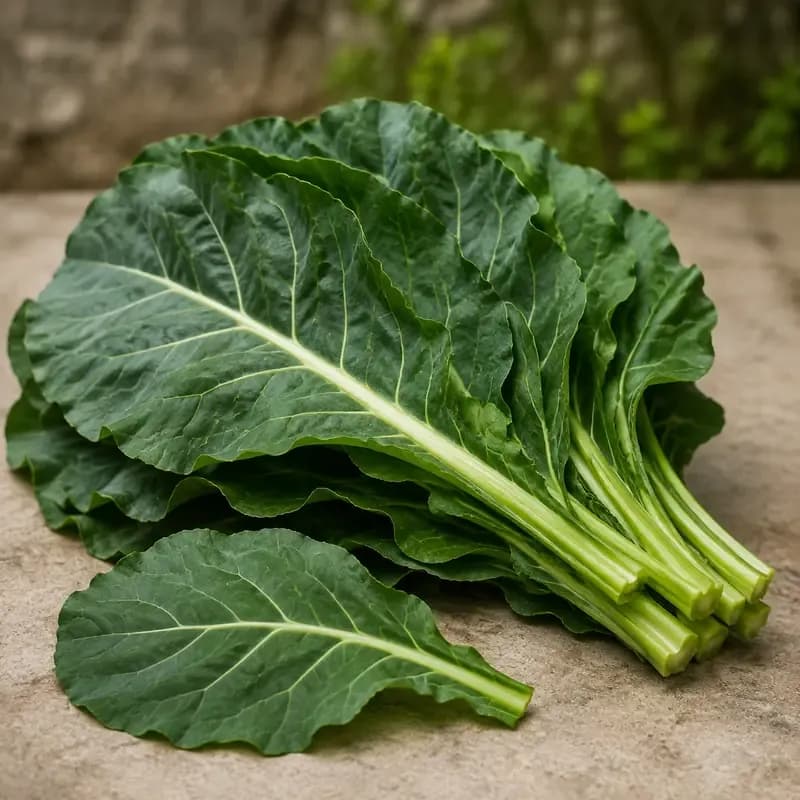
Collard Greens
Brassica oleracea var. viridis
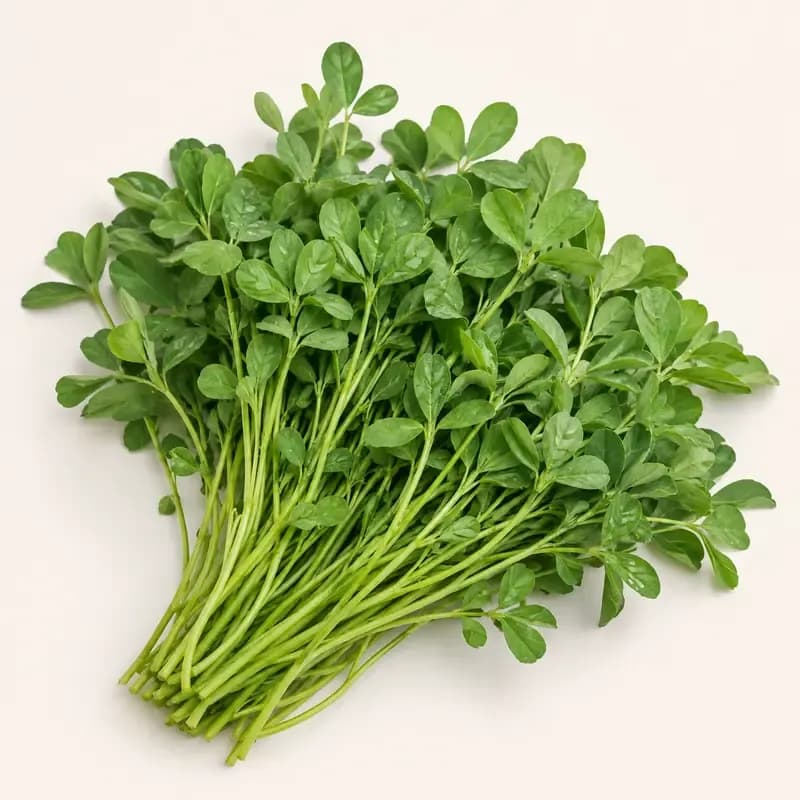
Collard greens, botanically classified as Brassica oleracea var. viridis, are broad-leaved vegetables belonging to the mustard family, Brassicaceae. They are members of the same species as cabbage, kale, broccoli, cauliflower, and Brussels sprouts, but collards grow as an open rosette rather than forming a compact head. Their large, sturdy leaves are usually blue-green or deep green, with prominent pale ribs and a slightly waxy surface. Raw collards taste earthy, vegetal, and mildly bitter, while slow cooking softens their fibers and develops a sweeter, richer flavor. Both the leaves and tender stalks are edible, although thick stems often need additional cooking time. Collard greens are deeply associated with the cuisines of the southern United States, where they are traditionally simmered with aromatics and smoked meat, but they also appear in Brazilian, Portuguese, East African, Indian, and Mediterranean cooking. Nutritionally, raw collards provide abundant vitamin K, vitamin C, folate, provitamin A carotenoids, calcium, manganese, fiber, and vitamin E. They also contain glucosinolates, carotenoids, flavonoids, and other phytonutrients. Their cold tolerance, productive leaves, and ability to withstand repeated harvesting make collards a valuable garden and agricultural crop.
Collard Greens फोटो गैलरी
Collard Greens को शानदार विवरण में देखें
Collard Greens - मुख्य दृश्य
Collard Greens पोषण तथ्य
💊विटामिन
प्रति 100 ग्राम
⚡खनिज
प्रति 100 ग्राम
प्रति सर्विंग
एक सर्विंग का पोषण विवरण
Collard Greens के स्वास्थ्य लाभ
Collard Greens उत्पत्ति और वितरण
The eastern Mediterranean and parts of western Europe, where non-heading forms of Brassica oleracea developed
Collard greens descend from ancient non-heading forms of wild cabbage cultivated around the Mediterranean for thousands of years. Greeks and Romans grew leafy brassicas that resembled modern kale and collards. These hardy vegetables spread throughout Europe and later traveled to Africa and the Americas through migration, colonization, agriculture, and trade. In the southern United States, collards became deeply connected with African American food traditions, drawing upon African knowledge of cooking leafy greens as well as available European brassica crops. Collards also became important in Brazilian and Portuguese dishes and in several East and southern African cuisines. Modern cultivars have been selected for cold tolerance, heat tolerance, leaf size, texture, flavor, and resistance to bolting and disease.
Collard Greens पीक सीज़न
Collard greens are cool-season vegetables that can be grown through autumn, winter, and spring in mild climates. Regional cultivation makes them available throughout much of the year.
Collard Greens किस्में
हर किस्म का स्वाद, बनावट और उपयोग अलग होता है
Georgia Southern
Vates
Champion
Morris Heading
Green Glaze
Yellow Cabbage Collard
Top Bunch
Collard Greens स्टोरेज और चयन गाइड
फलों को अधिक समय तक ताज़ा रखें
सही फल कैसे चुनें
Choose collard greens with firm, crisp leaves and an even green or blue-green color appropriate to the variety.
Look for leaves without extensive yellowing, brown edges, holes, slime, mold, or signs of decay.
Select smaller leaves for quicker cooking and a more tender texture; larger mature leaves are well suited to braising.
Check that the stems are firm and moist rather than dry, split, or rubbery.
Avoid bunches with sour odors or excessive moisture trapped inside the packaging.
सही स्टोरेज तरीके
Refrigerate unwashed collard greens at 4°C or below in a perforated bag or ventilated container.
Wrap the bunch loosely in a clean, slightly damp towel if necessary to reduce moisture loss and wilting.
If the leaves have been washed, dry them thoroughly before refrigeration to limit deterioration.
Keep collards separate from raw meat, poultry, seafood, and their juices.
Remove slimy, moldy, or decaying leaves promptly so spoilage does not spread.
शेल्फ लाइफ गाइड
Preparation Tips
Separate the leaves and rinse them thoroughly under cool running water, rubbing away soil from both sides.
Remove the thick central rib by folding each leaf and cutting or tearing along the stem.
Slice stacked leaves into ribbons for sautéing, soups, braises, or stir-fries.
Begin cooking chopped stems before the leaves if retaining tender portions of the ribs.
Massage finely sliced young collards with a little dressing when serving them raw to soften their texture.
For less bitterness, blanch the leaves briefly or cook them with acidic, sweet, or aromatic ingredients.
Do not use soap, detergent, bleach, or household disinfectants to wash collard greens.
फ्रीज़ करने के निर्देश
कई महीनों तक ताज़गी बनाए रखें
Wash collard leaves thoroughly and remove very thick, fibrous stems before freezing.
Blanch prepared leaves in boiling water for approximately 3 minutes, using slightly less time for very tender young leaves.
Cool the blanched greens immediately in ice water to stop cooking and preserve color.
Drain thoroughly, press out excess moisture, portion into airtight containers or freezer bags, and label with the date.
Use frozen collards in soups, stews, braises, curries, and other cooked dishes.
प्रो टिप
ताज़गी ट्रैक करने के लिए जमे हुए आइटम पर तारीख लिखें। सही तरीके से फ्रीज़ करने पर अधिकांश फल 2-3 महीनों तक गुणवत्ता बनाए रखते हैं। फ्रीज़र बर्न से बचने के लिए एयरटाइट कंटेनर या फ्रीज़र बैग का उपयोग करें।
पाक यात्रा
स्वादिष्ट विकल्प खोजें
सामान्य उपयोग
परफेक्ट पेयरिंग
लोकप्रिय रेसिपी
Cooking Methods
ताज़ा पेय
सुरक्षा जानकारी
Allergy to collard greens is uncommon but possible. Reactions may involve oral itching, hives, swelling, digestive symptoms, respiratory symptoms, or, rarely, anaphylaxis. People allergic to mustard-family vegetables may require professional evaluation because cross-reactivity is possible. Severe symptoms such as throat swelling, breathing difficulty, faintness, or widespread hives require urgent medical attention.
Pesticide use and measured residues vary by country, farm, season, and growing system. Separate the leaves and rinse them thoroughly under running water, paying attention to the undersides and central ribs where soil can collect. Washing may reduce dirt, microorganisms, and some surface residues but cannot remove every residue. Organic collards should also be washed because organic production does not eliminate microbial contamination.
- • People with a diagnosed collard or mustard-family vegetable allergy should avoid collards unless cleared by an allergy specialist.
- • People taking warfarin or another vitamin K antagonist should maintain a consistent intake and consult their clinician before making major dietary changes.
- • People with kidney disease who have been instructed to restrict potassium should ask their renal clinician or dietitian about suitable portions.
- • Individuals advised to limit cruciferous vegetables for a specific medical reason should follow personalized professional guidance.
- • Anyone should avoid collards that are slimy, moldy, foul-smelling, extensively decayed, recalled, or stored at unsafe temperatures.
- •Large servings may cause gas, bloating, or digestive discomfort because collards contain fiber and fermentable carbohydrates.
- •Sudden changes in collard intake can affect anticoagulation in people taking warfarin because the leaves are very rich in vitamin K.
- •Traditional preparations containing cured meat, salty stock, or substantial added salt may be high in sodium.
- •Extremely large amounts of raw cruciferous vegetables may be inappropriate for people with inadequate iodine intake and existing thyroid dysfunction, although ordinary cooked portions are unlikely to cause problems.
- •Improperly handled raw collards can transmit foodborne microorganisms.
- • Wash hands, knives, cutting boards, sinks, and other equipment before preparing collard greens.
- • Keep collards separate from raw meat, poultry, seafood, eggs, and their juices.
- • Rinse leaves under cool running water without using soap, detergent, bleach, or household disinfectants.
- • Refrigerate cooked collards within two hours, or within one hour in very hot conditions.
- • Reheat leftovers thoroughly and use refrigerated cooked greens within 3 to 4 days.
- • Discard collards with slime, mold, foul odors, or extensive decay.
रोचक तथ्य Collard Greens के बारे में
ऐसी बातें जो आपको पसंद आएंगी!
Collard greens belong to the same species as cabbage, broccoli, cauliflower, kale, and Brussels sprouts.
Unlike cabbage, collards grow as an open cluster of leaves rather than forming a tight head.
Cool weather and light frost can make collard leaves taste sweeter.
The cooking broth from traditional collard greens is commonly called pot liquor or potlikker.
Collards can be harvested repeatedly by removing the mature outer leaves while leaving the center to continue growing.
Collard greens are important in Southern American, Brazilian, Portuguese, and several African culinary traditions.
Brazilian couve à mineira is typically prepared by slicing collards into very thin ribbons and quickly sautéing them.
Some collard cultivars develop blue-green leaves because of a natural waxy coating.
अक्सर पूछे जाने वाले प्रश्न
Are collard greens the same as kale?
ScienceCollards and kale are closely related but are not identical culinary groups. Both belong to Brassica oleracea and generally remain open-leaved rather than forming tight heads. Collards typically produce broad, smooth, sturdy leaves with prominent ribs, while many kale cultivars have curled, frilled, or deeply textured foliage. Collards often retain their structure during long cooking and have a robust, earthy flavor. Kale varies from tender and mild to peppery or strongly vegetal. They can substitute for one another in many soups, sautés, braises, and stews, although cooking time may differ.
Are collard greens healthy?
HealthPlain collard greens are nutrient-dense and relatively low in calories. Raw collards provide vitamin K, vitamin C, folate, provitamin A carotenoids, calcium, manganese, vitamin E, fiber, and smaller amounts of several other nutrients. Their final nutritional profile depends on preparation. Long cooking can reduce vitamin C and some B vitamins, while smoked meats, salty broth, and added salt can greatly increase sodium. Preparing collards with beans, tomatoes, aromatics, olive oil, herbs, and moderate seasoning can produce a balanced dish without relying on large quantities of processed meat.
How do you clean and prepare fresh collard greens?
PreparationSeparate the leaves and inspect them for damaged areas, insects, and soil. Rinse each leaf thoroughly under cool running water while gently rubbing both surfaces. Do not use soap, detergent, or household disinfectant. To remove a thick central rib, fold the leaf lengthwise and cut or tear along both sides of the stem. Stack the leaf halves, roll them loosely, and slice them into ribbons. Tender portions of the stalk can be chopped and cooked first. Dry leaves intended for sautéing so excess water does not interfere with browning.
Why do collard greens taste less bitter after frost?
ScienceExposure to cool conditions can alter carbohydrate metabolism in collard plants. The leaves may accumulate more soluble sugars and related compounds that help protect plant cells from cold stress. This increased sweetness can make their natural bitterness seem less pronounced. Genetics, maturity, weather, growing conditions, and storage also influence flavor, so frost does not produce exactly the same result in every crop. Cooking further softens bitterness by breaking down tissues and dispersing some flavor compounds, especially when the greens are paired with vinegar, lemon, onions, garlic, or a small amount of sweetness.
How long should collard greens be cooked?
PreparationCooking time depends on leaf age, cutting size, method, and the desired texture. Thinly sliced young collards may become tender after 5 to 10 minutes of sautéing or steaming. Mature leaves intended for a traditional braise may need 30 to 60 minutes or longer at a gentle simmer. Pressure cooking can shorten the process considerably. The greens are ready when the leaves and retained stems reach the preferred tenderness without developing an unpleasantly mushy texture. Shorter cooking generally preserves more vitamin C, while longer cooking creates a softer, deeper-flavored dish.
Can people taking warfarin eat collard greens?
HealthCollard greens contain approximately 364% of the Daily Value for vitamin K per 100 g. Vitamin K can influence the action of warfarin and other vitamin K antagonist medicines. People taking these drugs generally should not eliminate nutritious leafy vegetables automatically. Instead, clinicians commonly recommend keeping vitamin K intake reasonably consistent so the medication dose can be managed appropriately. Sudden large increases or decreases may alter anticoagulation. Anyone taking an anticoagulant should follow individualized advice from the prescribing clinician or registered dietitian and should not independently change medication.
Is the calcium in collard greens well absorbed?
HealthCollards are a useful plant source of calcium and are relatively low in oxalate compared with spinach. Oxalate binds calcium in the digestive tract, so lower-oxalate greens generally provide more absorbable calcium than high-oxalate vegetables containing a similar measured amount. Absorption still varies with the meal and the individual's nutritional status. Collards can contribute to calcium intake, but a small serving may not satisfy daily requirements by itself. A balanced diet may also include fortified foods, dairy products, calcium-set tofu, beans, or other appropriate sources.
What is pot liquor from collard greens?
GeneralPot liquor, also written potlikker, is the flavorful cooking liquid remaining after collard greens or similar leafy vegetables have been simmered. It contains water, seasonings, dissolved plant compounds, and some nutrients that leach from the leaves during cooking. In Southern food traditions, it may be served with cornbread or used as a broth. Its nutritional composition depends heavily on the recipe. Pot liquor made with smoked or cured meat, salty stock, and added salt can contain substantial sodium, so portion size and seasoning should be considered.