Red Onion
Allium cepa L.
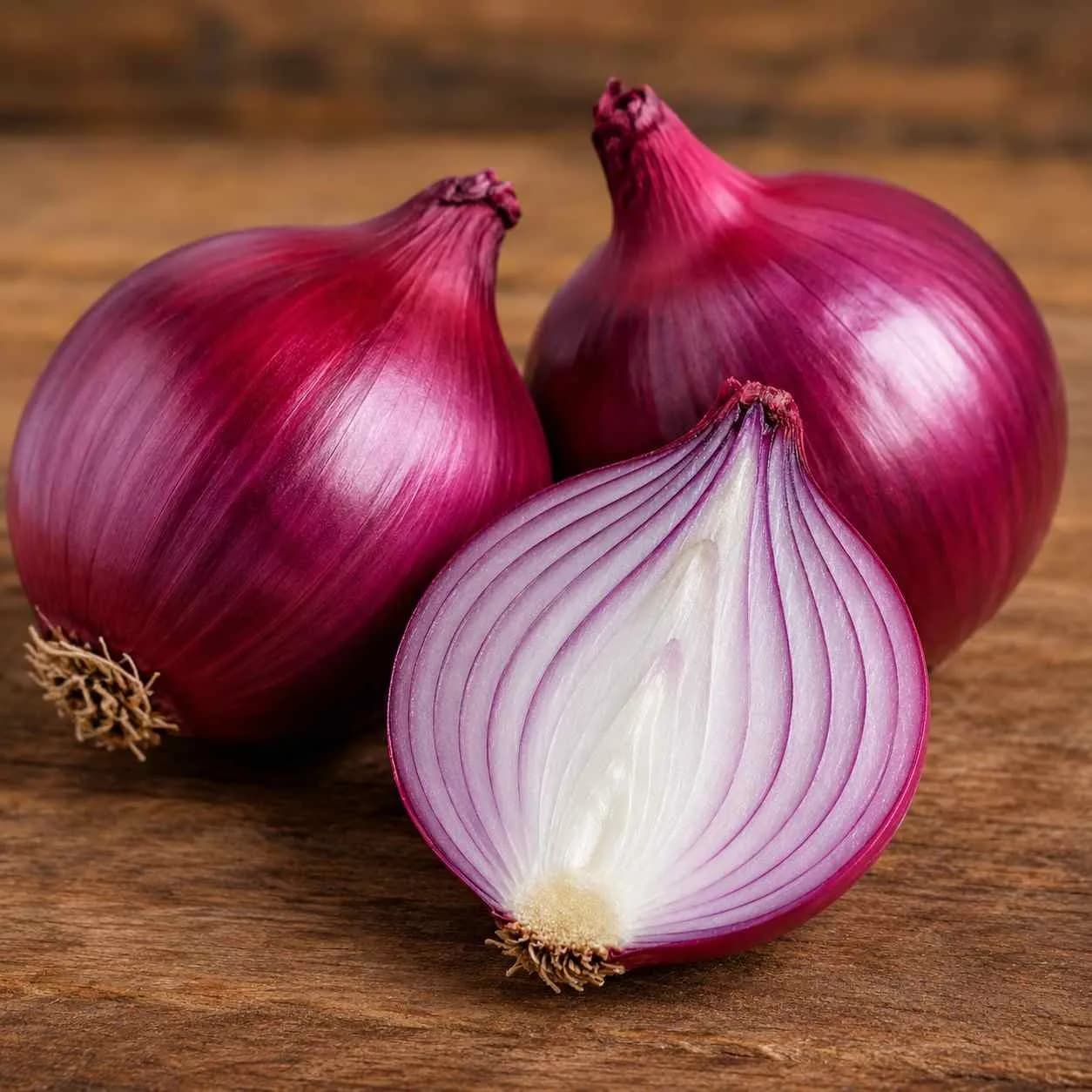
Red onion is the colorful, pungent bulb of Allium cepa L., a cultivated member of the amaryllis family, Amaryllidaceae. Its papery outer skin ranges from burgundy and purple-red to deep violet, while the crisp inner layers are white to pale pink with red-purple margins. Compared with many yellow storage onions, red onions are often perceived as mildly sweet when raw, although their sharpness varies widely by cultivar, growing conditions, storage, and age. Their characteristic aroma and bite come from sulfur-containing compounds that are released when the cells are cut or crushed. The red-purple color is supplied by anthocyanin pigments, while flavonoids such as quercetin contribute additional antioxidant activity. Red onions are eaten raw in salads, sandwiches, salsas, relishes, and pickles, and they also perform well when grilled, roasted, sautéed, braised, or caramelized. Cooking softens their texture, reduces pungency, and develops sweeter, savory flavors through moisture loss and browning reactions. Nutritionally, raw onion is low in calories and fat, contains useful amounts of vitamin C, vitamin B6, folate, manganese, potassium, and fiber, and supplies prebiotic fructans that can support beneficial gut microbes in people who tolerate them. Because onions store well and complement acidic, fatty, spicy, and herbaceous ingredients, red onion is one of the most versatile everyday vegetables in cuisines around the world.
Red Onion Galería de fotos
Explora Red Onion con todo detalle
Red Onion - Vista principal
Red Onion Información nutricional
💊Vitaminas
Por 100 g
⚡Minerales
Por 100 g
Por porción
Desglose nutricional por porción
Beneficios para la salud de Red Onion
Red Onion Origen y distribución
The wild ancestry of cultivated onion is not fully resolved; domestication is generally associated with Central and Western Asia.
Onions are among the world's oldest cultivated vegetables, with archaeological and historical evidence showing their use across ancient Asian, Middle Eastern, Mediterranean, and Egyptian societies. Over centuries, farmers selected Allium cepa for bulb size, storage quality, sweetness, pungency, shape, and color. Red onions emerged from selections rich in anthocyanin pigments and are now grown globally for fresh eating, pickling, grilling, and storage.
Red Onion Temporada alta
Available year-round through global production and storage; field harvests are commonly concentrated from late summer into autumn in temperate regions.
Red Onion Variedades
Cada variedad ofrece sabores, texturas y usos culinarios únicos
Red Baron
Redwing
Red Creole
Tropea Red Onion
Red Onion Guía de selección y conservación
Mantén tu fruta fresca y deliciosa por más tiempo
Cómo elegir la fruta perfecta
Choose bulbs that feel firm, heavy for their size, and dry, with tight papery skins.
Avoid onions with soft spots, wet patches, mold, extensive sprouting, or a sour or fermented odor.
For raw eating, select fresher bulbs with crisp layers and minimal bruising; for storage, prioritize dry necks and intact outer skins.
Métodos de conservación
Store whole red onions in a cool, dry, dark, well-ventilated place with good airflow.
Do not keep whole onions in sealed plastic bags, because trapped moisture encourages softening and decay.
Keep whole onions away from potatoes when possible because the shared humidity and gases can shorten storage quality for both.
Refrigerate cut or peeled onion in a clean airtight container and use promptly.
Guía de vida útil
Preparation Tips
Remove loose or damaged outer skins, trim the root and stem ends as needed, and rinse the intact or cut onion under cool running water if surface soil is present.
Use a sharp knife to reduce cell crushing and help limit the release of irritating sulfur compounds that cause tearing.
For a milder raw flavor, soak thinly sliced red onion in cold water for 10 to 15 minutes, then drain well before serving.
For quick pickling, slice evenly so vinegar, salt, and seasonings penetrate at a similar rate.
When caramelizing, cook slowly over moderate heat and avoid overcrowding the pan so moisture can evaporate and browning can develop evenly.
Instrucciones de congelación
Conserva la frescura por meses
Peel and chop or slice before freezing; freezing whole raw onions is usually impractical.
Spread chopped onion on a tray to freeze separately, then transfer to an airtight freezer-safe container or bag.
Use frozen onion mainly in cooked dishes because thawed onion becomes softer and loses raw crispness.
Label with the freezing date and use within several months for best flavor quality.
Consejo
Etiqueta los alimentos congelados con la fecha para controlar la frescura. La mayoría de las frutas mantienen su calidad durante 2-3 meses si se congelan correctamente. Para mejores resultados, usa recipientes herméticos o bolsas para congelador para evitar quemaduras por congelación.
Viaje culinario
Descubre posibilidades deliciosas
Usos comunes
Maridajes perfectos
Recetas populares
Cooking Methods
Información de seguridad
True onion allergy is uncommon but can occur, including reactions to Allium proteins. Some people also experience non-allergic intolerance or gastrointestinal symptoms from onion fructans.
Onions may carry agricultural residues depending on production practices, but the papery outer layers are usually removed before eating. Buy from reputable suppliers, discard damaged outer layers, and rinse exposed surfaces under running water as appropriate. Washing cannot remove every systemic residue, so food safety depends on regulated agricultural practices as well as kitchen hygiene.
- • People with a diagnosed onion or Allium allergy should avoid red onion unless a qualified clinician advises otherwise.
- • People following a medically supervised low-FODMAP diet may need to limit or avoid onion because it is rich in fructans.
- • People with severe reflux or gastrointestinal sensitivity may need smaller portions if raw onion worsens symptoms.
- •Raw onion can cause temporary eye irritation during cutting.
- •Large portions may cause gas, bloating, abdominal discomfort, or diarrhea in fructan-sensitive individuals.
- •Raw onion may worsen heartburn or reflux symptoms in some people.
- •Contact with onion can rarely trigger skin irritation or occupational dermatitis in sensitive individuals.
- • Use a stable cutting board and a sharp knife to reduce slipping and accidental cuts.
- • Refrigerate peeled or cut onion promptly at 4°C/40°F or below in a clean, covered container.
- • Avoid cross-contamination by keeping onion and other ready-to-eat vegetables away from surfaces or utensils contaminated by raw meat, poultry, seafood, or eggs.
- • Discard onion that is slimy, moldy, unusually soft, fermented-smelling, or visibly spoiled.
Datos curiosos sobre Red Onion
¡Trivias sorprendentes que te encantarán!
The purple-red color of red onion comes mainly from anthocyanin pigments concentrated in the outer fleshy layers.
Onion pungency begins only after cells are damaged, because enzymes and sulfur-containing precursors are stored separately in intact tissue.
Red onion color changes with acidity; pickling often makes the slices appear brighter pink or magenta.
The bulb is made of enlarged leaf bases rather than a true root.
Many red onion cultivars become noticeably sweeter after slow roasting or caramelization as pungent compounds diminish and natural sugars become more prominent.
Preguntas frecuentes
What is the difference between red onion and yellow onion?
GeneralRed and yellow onions are both cultivars of Allium cepa, but they differ in pigment, flavor profile, and common culinary use. Red onions contain anthocyanin pigments that give the outer layers their purple-red color and are often chosen for salads, sandwiches, salsas, and pickles because their color and crisp texture remain visually appealing when raw. Yellow onions usually have a stronger classic onion flavor and are widely preferred for soups, stocks, sauces, and long cooking. The exact sweetness and pungency depend more on cultivar, storage, and growing conditions than color alone.
Should red onions be washed before cutting?
PreparationIf the outer surface has visible soil or debris, rinse the onion under cool running water before or after removing the loose papery skin, then dry it before cutting so the knife and cutting board remain stable. Do not soak whole onions for long periods because excess moisture can affect texture and storage. Once the onion is peeled and cut, use a clean knife and board, especially if the same work surface has been used for raw meat, poultry, or seafood. Cut onion should be refrigerated promptly in a clean, covered container if it will not be eaten right away.
Why do red onions make your eyes water?
ScienceCutting an onion ruptures its cells and allows enzymes to interact with sulfur-containing precursors that were previously separated inside the tissue. This reaction produces volatile sulfur compounds, including the lachrymatory factor responsible for eye irritation. When the vapor reaches the surface of the eye, sensory nerves trigger tearing as a protective response. A sharp knife can reduce unnecessary crushing of the cells, and chilling the onion briefly may slow the release of volatile compounds. Good ventilation also helps. The reaction is irritating but temporary for most people and is not the same as an onion allergy.
Are red onions healthier than white onions?
HealthBoth red and white onions are nutritious, low-calorie vegetables that provide vitamin C, small amounts of B vitamins and minerals, fiber, fructans, and sulfur-containing compounds. Red onions have an additional advantage in their colored layers because they contain anthocyanin pigments, and they are also a notable source of quercetin-type flavonoids. That does not make white onions unhealthy or nutritionally inferior in every respect. The practical difference is modest compared with the benefit of eating a varied diet rich in many vegetables. Choosing whichever onion you enjoy and use consistently is more important than focusing on a single color.
Does cooking destroy the antioxidants in red onion?
ScienceCooking changes the antioxidant profile rather than simply destroying it. Heat can reduce some vitamin C because it is water-soluble and heat-sensitive, and prolonged boiling may move water-soluble compounds into the cooking liquid. At the same time, sautéing, roasting, and other methods can soften the onion matrix and alter the availability of flavonoids. Anthocyanins are also sensitive to heat, pH, and time, so intense or prolonged cooking can reduce their concentration. For the broadest nutritional variety, it is reasonable to eat red onion both raw and cooked, using gentle cooking when preserving color is important.
Can red onion support gut health?
HealthRed onion contains dietary fiber and fructans, a group of fermentable carbohydrates that includes inulin-type compounds and fructooligosaccharides. These carbohydrates can reach the large intestine and serve as substrates for certain gut bacteria, which may encourage production of short-chain fatty acids and support a diverse intestinal ecosystem. However, the same fermentable carbohydrates are classified as FODMAPs and can provoke gas, bloating, abdominal discomfort, or altered bowel habits in people with irritable bowel syndrome or other sensitivities. Tolerance is highly individual, so portion size and preparation method may matter more than whether the onion is red or another color.
How can I make raw red onion taste less sharp?
PreparationThin slicing is the first step because it spreads the pungent flavor over more surface area and makes the texture easier to blend with other ingredients. For a gentler taste, soak the slices in very cold water for about 10 to 15 minutes, then drain and dry them well. This can remove some water-soluble pungent compounds. A quick marinade in vinegar or citrus juice also softens the perceived bite while adding acidity, and salt can help draw out moisture. Pairing the onion with creamy or fatty foods such as avocado, yogurt, or cheese further balances sharpness without eliminating its fresh crunch.
Is red onion suitable for people managing blood sugar?
HealthRaw red onion is relatively low in calories and provides about 9.34 g carbohydrate and 1.7 g fiber per 100 g, so typical culinary portions usually contribute a modest carbohydrate load. Onions also add strong flavor without requiring sugar or much fat, which can help build satisfying meals around vegetables, proteins, legumes, and whole grains. However, red onion should not be treated as a blood-sugar-lowering medicine, and responses to meals vary by portion, cooking method, and the foods eaten alongside it. People using glucose-lowering medication should follow individualized advice from their clinician or dietitian.